Compartir
 Compartir
 Ver detalles
 Guía
Guía

 Descargar
 Ver artículos similares
 Presentación de diapositivas
 Estadísticas
Print sample
 Giclée Print
- Digital
- Orientalist Movement
 1905
1905 39.0 x 25.0 cm
 Palazzo Fortuny
 Leer más
Giclée / Impresión de arte
Impresiones giclée o en lienzo de calidad de museo con producción rápida y opciones de acabado flexibles. ( Encargar reproducción pintada a mano Ver versión en imagen digital)




































Elija entre nuestros tamaños predefinidos que respetan las proporciones originales de la obra.

Introduzca el ancho y el alto que necesite para adaptarse a su marco o pared. Una impresión solo puede recortarse, nunca hacerse más grande que la imagen original, por lo que un tamaño con una forma distinta perderá parte de la obra. Le enviaremos una maqueta digital para su aprobación antes de realizar cualquier impresión. La imagen que se muestra en esta página no refleja el recorte real; solo la maqueta lo hace.
Envío a todo el mundo () en 2 semanas en lugar de las 4/5 semanas estándar. (22 octubre)

Envío exprés gratuito a todo el mundo

Lienzo de lino de alta calidad

Seguro de envío completo

Garantía de reembolso de impuestos aduaneros

Garantía de fidelidad cromática exacta

Política de devolución de 100 días (solo por defectos)

Garantía de devolución del 100% del dinero

Oferta por volumen
 La opción de vidrio solo está disponible en tamaños inferiores a 110 cm.

Print sample
Giclée / Impresión de arte
Tamaño de la reproducción
-


Precio total
€ 70
Mariano Fortuny: A Venetian Innovator Shaping Art Deco Elegance
Mariano Fortuny y Marsal (1871-1949), born in Reus, Spain, stands as a singular figure in the artistic landscape of the early 20th century—a designer who seamlessly blended painting, textile artistry, and theatrical innovation to forge an unparalleled aesthetic vision. His legacy extends far beyond mere decorative embellishment; Fortuny fundamentally altered perceptions of color, texture, and spatial illusion, profoundly influencing movements like Art Deco and establishing him as a pioneer of modern design.
- Early Life & Inspiration: Fortuny’s formative years were marked by profound loss—the untimely death of his father instilled in him an early appreciation for artistic expression and fueled his determination to pursue creative endeavors. Exposure to textiles during his mother's influence ignited a lifelong fascination with weaving techniques and patterns, shaping the core of his artistic practice.
- Artistic Talents & Inventive Genius: Fortuny possessed extraordinary versatility, mastering painting, photography, sculpting, architecture, etching, and theatrical stage lighting. However, it was his groundbreaking inventions—over twenty patented between 1901 and 1934—that truly cemented his reputation as a visionary inventor. Notably, he developed the fortuny cyclorama dome, a revolutionary structure utilizing indirect lighting to create an immersive experience akin to traveling through space.
- The Fortuny Cyclorama Dome: This ingenious device dramatically transformed theatrical productions by simulating panoramic vistas and enhancing visual depth. Fortuny’s treatise “Eclairage scenique” meticulously documented his discovery of reflecting light off different surfaces, fundamentally altering stage lighting practices and elevating the dramatic impact of performances.
- Orientalist Influences & Artistic Style: Fortuny's artistic style was deeply rooted in Orientalism—a fascination with Eastern cultures that captivated European artists during the Belle Époque. He drew inspiration from Moroccan motifs and techniques, incorporating vibrant colors and intricate patterns into his paintings and textiles. His canvases depict evocative landscapes imbued with symbolic references to spirituality and exotic beauty.
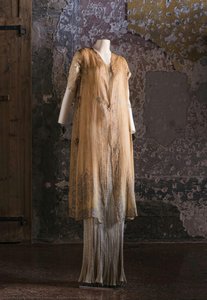
- The Delphos Gown & Artistic Legacy: Perhaps Fortuny’s most iconic creation is the Delphos gown—a masterpiece of textile design that revolutionized women's fashion. Utilizing a technique known as “luminaria,” Fortuny achieved an unprecedented level of textural illusion, creating garments that appeared to shimmer and glow with internal light. This innovative approach continues to inspire designers today, demonstrating Fortuny’s enduring influence on artistic expression and aesthetic innovation.
Fortuny's meticulous attention to detail—from the precise layering of pigments in his paintings to the painstaking weaving process behind the Delphos gown—underscores his commitment to artistic excellence. His work transcends mere visual appeal; it communicates profound emotions and invites contemplation on themes of beauty, spirituality, and the transformative power of art. Mariano Fortuny remains a testament to the boundless potential of creativity and innovation, securing his place as one of Spain’s most celebrated artists.
Further Exploration: For insights into Fortuny's artistic journey and groundbreaking inventions, consult Print sample - Mariano Fortuny - Google Arts & Culture and Print sample - Mariano Fortuny — Google Arts & Culture to delve deeper into his oeuvre.
Preguntas y respuestas
¿De qué está hecho "Print sample"?
"Print sample" está ejecutada en Giclée Print.
¿De qué manera el estilo de "Print sample" se relaciona con la época de su creador?
"Print sample" pertenece al movimiento Orientalist Movement, y su creador trabajó en la época Edad Moderna.
¿Cuál es el color dominante de "Print sample" de Mariano Fortuny?
El color que más destaca en "Print sample" es el Putty (#c3b8a9). El color dominante es muy útil a la hora de combinar una obra de arte con un interior.
Biografía del artista
Early Life and Inspiration
Mariano Fortuny y Marsal (Granada, May 11, 1871 – Venice, May 3, 1949) was a Spanish painter, inventor, sculptor, photographer, architect, and theatrical stage lighting designer. His father, Mariano Fortuny y Marsal, was a genre painter who tragically passed away when Mariano was just three years old, profoundly shaping his formative years. This event led to the family’s relocation to Paris, France, where Mariano's mother introduced him to textiles and fabrics—a pivotal influence on his artistic vision. From a young age, Fortuny demonstrated exceptional talent in painting, drawing, and sculpting, showcasing skills that quickly distinguished him from his peers. He studied at the École Supérieure des Beaux-Arts in Paris alongside Jean-Joseph Benjamin-Constant, absorbing stylistic influences that would permeate his subsequent work. His fascination with Richard Wagner’s operas fueled his artistic explorations and inspired him to delve into theatrical design—a passion he pursued relentlessly throughout his life.Artistic Talents and Inventions
Fortuny's artistic prowess extended beyond painting; he mastered diverse mediums, including photography, sculpture, architecture, etching, and theatrical stage lighting. He revolutionized theater design with the invention of the fortuny cyclorama dome, a quarter dome constructed of plaster or cloth that utilized indirect lighting to create seamless transitions between scenes—a groundbreaking technique that dramatically enhanced visual impact. His treatise “Éclairage scénique” (1904) meticulously documented his discovery of reflecting light off different surfaces, altering its color, intensity, and properties—a scientific breakthrough that underpinned his theatrical innovations. Fortuny’s inventive spirit manifested in over twenty patented inventions between 1901 and 1934, transforming various industries and solidifying his reputation as a visionary innovator. Among his most notable achievements was the creation of the “Delphos gown,” a revolutionary textile design featuring intricate pleats that achieved its characteristic undulating texture through a complex mechanical process—a testament to Fortuny’s meticulous craftsmanship and artistic ingenuity.Notable Contributions and Collaborations
Fortuny gained international acclaim in the 1920s, collaborating with prominent figures such as Richard Wagner and Marcel Proust. He served as stage designer for Wagner's operas, adapting his dome specifically for La Scala opera house in Milan—a feat of engineering that ensured its structural integrity during performances. His work profoundly impacted theatrical aesthetics, elevating visual storytelling to new heights. Fortuny’s artistic legacy extends beyond theater; he contributed significantly to the revival of classical motifs and techniques in decorative arts, influencing generations of artists. He collaborated closely with his brother-in-law Raimundo de Madrazo on numerous paintings—a testament to their shared artistic sensibilities and creative partnership.Legacy and Later Life
Mariano Fortuny’s influence resonated throughout his life, culminating in his relocation to Venice in 1911 where he established a studio dedicated to preserving and disseminating his artistic heritage. He continued to experiment with new materials and techniques, pushing the boundaries of artistic expression—a characteristic trait that defined his creative journey. Fortuny's work inspired Marcel Proust’s masterpiece “À la recherche du temps perdu,” capturing the essence of Parisian intellectual life during the Belle Époque. His final years were marked by a dedication to perfecting his craft and honoring his artistic vision—a poignant reminder of his unwavering commitment to excellence. He passed away peacefully in Venice on May 3, 1949, leaving behind an enduring legacy as one of Spain’s most celebrated artists.Selected Paintings by Mariano Fortuny
- Teagown (Museum of Fine Arts, Boston)
- Portrait of Henriette Fortuny

Mariano Fortuny
1871 - 1949 , España
Datos clave
- Artistic Movement Or Style: Orientalism art
- Artists Or Movements Influenced By This Artist: ['Marcel Proust']
- Artists Who Influenced This Artist: ['Richard Wagner']
- Date Of Birth: May 11, 1871
- Date Of Death: May 3, 1949
- Full Name: Mariano Fortuny y Marsal
- Nationality: Spanish
- Notable Artworks:
- Teagown
- Portrait of Henriette Fortuny
- Place Of Birth: Granada, Spain
Artículos relacionados

Jacopo Tintoretto: Las 25 Obras Maestras del Genio Veneciano | Arte y Decoración en OriginalUniqueArt
Descubre las 25 obras maestras de Jacopo Tintoretto, el genio veneciano del Renacimiento. Explora su arte dramático, composiciones innovadoras y paleta vibrante. Reproducciones de alta calidad en OriginalUniqueArt.com para transformar tu hogar.

Echoes of Time: Exploring the Enduring Appeal & Historical Context of Vintage Art Prints
Explore the captivating world of vintage art prints! Discover their history, collecting tips & enduring appeal. Expert insights on chromolithography and building a legacy collection with OriginalUniqueArt.

Mariano Fortuny: A Fusion of Art, Fashion & Design – Exploring a Venetian Innovator's Legacy
Explore the captivating world of Mariano Fortuny – artist, designer & innovator. Discover his revolutionary textiles, iconic Delphos gown, and lasting influence on art, fashion & interiors. A collector's guide to a Venetian master.

Giclée Prints: Archival Quality & Aesthetic Nuances for the Discerning Collector
Explore the world of giclée prints with OriginalUniqueArt. Learn about archival quality, aesthetic nuances & investment potential. Expert guidance for discerning art collectors seeking museum-quality reproductions and lasting value.

The Enduring Legacy of Fine Art Prints: Technique, History & Aesthetic Impact
Explore the rich history & techniques of fine art prints. Discover investment potential, assess authenticity, and learn how to preserve your collection with expert guidance. Trusted insights for discerning collectors.