
 Ver en contexto
 Enviar
 Compartir
 Detalles
 Guía
Guía

 Descargar
 Similares
 Radiografía
 Presentación de diapositivas
 Preguntas y respuestas
 Estadísticas
La Transición de la Virgen a María

- 59.0 x 53.0 cm


 Ver más
La obra de arte que se muestra en esta página está protegida por las leyes de propiedad intelectual, lo que significa que no podemos crear ni vender legalmente una reproducción idéntica. Esta protección se hace cumplir en virtud de acuerdos internacionales como el Convenio de Berna y por las leyes nacionales, incluidas aquellas establecidas por el Ley de derechos de autor de los EE. UU. - Título 17.
Este método cumple plenamente con las normativas de derechos de autor, ya que no implica la copia ni la duplicación de la obra protegida. En su lugar, se trata de una reinterpretación creativa: una nueva pintura influenciada por la original, pero que no es idéntica a ella.
Giclée / Impresión de arte
Impresiones giclée o en lienzo de calidad de museo con producción rápida y opciones de acabado flexibles. ( Comprar pintura hecha a mano Cambiar a imagen digital)




P118B €10

P118H €10

P118W €10

P438Z €10

P508JH €12

P508YH €12

P805H €10

P805Z €10

P919BZ €10

P919G €10

P919XJ €10

P959ZH €10

P968JZ €12

W106C €8

W218G €10

W218JH €8

W218Y €10

W307PJ €10

W316G €10

W316PJ €8

W316Y €10

W398PJ €8

W4111J €10

W500HY €15

W500JH €15

W692G €12

W849H €8

W940BG €15

W953PJ €8




Elija entre nuestros tamaños predefinidos que respetan las proporciones originales de la obra.

Introduzca el ancho y el alto que necesite para adaptarse a su marco o pared. Una impresión solo puede recortarse, nunca hacerse más grande que la imagen original, por lo que un tamaño con una forma distinta perderá parte de la obra. Le enviaremos una maqueta digital para su aprobación antes de realizar cualquier impresión. La imagen que se muestra en esta página no refleja el recorte real; solo la maqueta lo hace.
Envío a todo el mundo () en 2 semanas en lugar de las 4/5 semanas estándar. (5 noviembre)

Envío exprés gratuito a todo el mundo

Lienzo de lino de alta calidad

Seguro de envío total

Garantía de reembolso de aranceles aduaneros

Garantía de fidelidad cromática exacta

Política de devolución de 100 días (solo por defectos)

Garantía de devolución del 100% del dinero

Descuento por cantidad
 La opción de vidrio solo está disponible en tamaños inferiores a 110 cm.

La Transición de la Virgen a María
Giclée / Impresión de arte
Dimensiones de la reproducción
-


Precio total final
€ 72
Marcel Duchamp's Transition of Virgin into a Bride
Marcel Duchamp’s Transition of Virgin into a Bride, created in 1912, stands as an undeniable cornerstone of avant-garde art and exemplifies Duchamp’s revolutionary approach to Cubism. Measuring 59 x 53 cm and executed in oil on canvas, this artwork transcends mere visual representation; it embodies a profound interrogation of artistic conventions and challenges viewers to reconsider their understanding of beauty and symbolism. Its enduring fascination stems from its ability to encapsulate the spirit of an era defined by intellectual ferment and artistic experimentation.The Artistic Context
The early 20th century witnessed the emergence of groundbreaking movements like Cubism and Dada, fundamentally reshaping Western art’s landscape. Simultaneously, mixed media art—a daring fusion of diverse materials—was gaining considerable traction, mirroring a broader cultural shift toward embracing innovation and blurring traditional boundaries. As meticulously documented in Mixed Media Art: A Comprehensive Overview, this artistic trend wasn’t simply a stylistic novelty but reflected a deeper yearning for new forms of expression—a reaction against the perceived rigidity of academic art and a celebration of conceptual exploration. The Dada movement itself arose from disillusionment with the horrors of World War I, rejecting logic and reason in favor of absurdity and chance as tools for artistic critique.Composition and Symbolism
At first glance, Transition of Virgin into a Bride presents a deceptively simple visual arrangement. The central focus is undeniably the woman’s face—positioned squarely in the middle of the canvas—a deliberate choice that directs the viewer's gaze and invites contemplation. However, beneath this apparent stillness lies an intricate tapestry of shapes and forms that constitute the background. These aren’t merely decorative elements; they actively contribute to the painting’s Cubist aesthetic, fracturing perspective and layering planes to create a dynamic interplay of visual information. Scattered throughout the scene are several chairs—some positioned near the edges of the canvas, others closer to the center—adding depth and spatial complexity. Each chair serves as a symbolic representation of stages or roles within life's journey, reinforcing Duchamp’s intention to convey more than just a surface image.Artistic Influence
Marcel Duchamp’s pioneering spirit profoundly impacted subsequent generations of artists, establishing him as a pivotal figure in the history of painting. His work isn’t merely admired for its aesthetic qualities; it's recognized as a catalyst for artistic discourse and innovation. As eloquently articulated in Western Painting, this tradition encompasses both representational depictions of reality and abstract explorations of form and color—a continuum that stretches from the Renaissance to the present day. Duchamp’s radical departure from conventional artistic practices paved the way for Conceptual Art, where ideas supersede visual elements as primary drivers of creative expression. His influence can be seen in artists who prioritize conceptual frameworks over technical skill, questioning established notions of authorship and originality.Conclusion
Transition of Virgin into a Bride remains an unforgettable masterpiece—a testament to Duchamp’s unwavering commitment to artistic experimentation and his profound engagement with the intellectual currents of his time. Its meticulous composition and evocative symbolism continue to captivate viewers, prompting reflection on themes of transformation, identity, and the very nature of art itself. For those eager to immerse themselves in the legacy of Marcel Duchamp, Painting by 'Marcel Duchamp' | Marcel Duchamp: Transition of Virgin into a Bride and Painting by 'Marcel Duchamp' | Marcel Duchamp: The Passage from Virgin to Bride are available on OriginalUniqueArt—allowing art enthusiasts to own a tangible connection to this seminal work and its enduring impact on the artistic canon. As explored in The History of Painting, Duchamp’s contribution represents an indelible mark upon the ongoing narrative of visual culture—inspiring artists for decades to come. OriginalUniqueArt.com offers exquisite handmade oil painting reproductions of Transition of Virgin into a Bride and countless other masterpieces—bringing the beauty and intellectual depth of these artworks into your home.Preguntas y respuestas
¿Qué paleta y qué color predominante definen a "La Transición de la Virgen a María"?
La identidad cromática de "La Transición de la Virgen a María" de Marcel Duchamp: una paleta Oscuros, dominada por el Nogal (#705236).
¿Qué tono predominante recorre "La Transición de la Virgen a María" de Marcel Duchamp?
"La Transición de la Virgen a María" se inclina hacia un tono Del ocre al sepia.
¿Qué sentimiento transmite "La Transición de la Virgen a María" de Marcel Duchamp dentro de Cubism?
La emoción Romántico de "La Transición de la Virgen a María" acompaña a su estilo Cubism.
Biografía del artista
vida temprana y comienzos artísticos
marcel duchamp, un pintor, escultor, jugador de ajedrez y escritor francés-estadounidense, nació el 28 de julio de 1887 en Blainville-Crevon, Normandía, Francia. Su familia, conocida por sus inclinaciones culturales, fomentó su temprano interés por el arte. El viaje artístico de Duchamp comenzó con estilos postimpresionistas, experimentando con técnicas y temas clásicos.evolución artística y obras notables
- La obra de marcel duchamp está asociada con el cubismo, el arte conceptual y el dadaísmo, aunque fue cauteloso sobre su uso del término dada.
- Una de sus obras más famosas, Fountain (1917), una urinaria firmada 'r. mutt', es un ejemplo de sus readymades, desafiando la noción de lo que constituye el arte.
- Retrato de jugadores de ajedrez (1911), una obra cubista, muestra su interés por el juego y sus aspectos estratégicos.
- A ser mirado (desde el otro lado del vidrio) con un ojo, cerca de, casi una hora (1945) es otra obra notable, que refleja sus inclinaciones dadaístas.
influencia y legado
El impacto de Duchamp en el arte del siglo XX es inmenso. Él, junto con Pablo Picasso y Henri Matisse, definió las artes plásticas a principios del siglo XX. Su enfoque conceptual del arte ha influido en generaciones de artistas.- Explore más obras de Duchamp en OriginalUniqueArt: Marcel Duchamp | obras de arte
- Descubra el Museo Ohara de Arte, Japón, que presenta colecciones de arte occidental, incluidas algunas influenciadas por el estilo de Duchamp: Museo Ohara de Arte, Japón
- Aprenda más sobre Lettrism, un movimiento influenciado por el dadaísmo y el surrealismo, del que Duchamp formó parte: Movimiento artístico Lettrism
conclusión
El enigmático enfoque de arte de Marcel Duchamp, que combina elementos conceptuales y dadaístas, ha dejado una marca indeleble en el mundo del arte. Su legado continúa inspirando a los artistas e influyendo en el desarrollo del arte moderno y contemporáneo. Franck Scurti, un artista francés conocido por su arte conceptual, sigue los pasos de Duchamp, ampliando el legado de este pionero artista.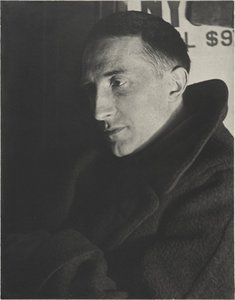
Marcel Duchamp
1887 - 1968 , Francia
Datos clave
- Artistas Influenciados Por: ['Franck Scurti']
- Fecha De Muerte: 1968
- Fecha De Nacimiento: 28 de julio de 1887
- Lugar De Nacimiento: Blainville-sur-Mer, Francia
- Movimiento Artístico:
- Cubismo
- Dadaísmo
- Arte conceptual
- Nacionalidad: Francesa-estadounidense
- Nombre Completo: Marcel Duchamp
- Obras Notables:
- Fuente
- Retrato de jugadores de ajedrez
- La novia desnudada
- L.H.O.O.Q.
- Boîte-en-valise
Artículos relacionados
Marcel Duchamp: Challenging Conventions & Redefining Art in the 20th Century
Explore the revolutionary art of Marcel Duchamp! Discover how his Dadaist readymades challenged artistic conventions & redefined modern art. A deep dive into 'Fountain', conceptual shifts, and his lasting impact.

Maestría y Forma: Las 25 Mejores Obras de Paul Cézanne
Explora las 25 obras maestras de Paul Cézanne y su legado postimpresionista. ¡Descubre toda la colección en OriginalUniqueArt.com!

Deconstructing Reality: Cubism's Evolution, Impact & Enduring Legacy
Explore the revolutionary world of Cubism with expert insights from OriginalUniqueArt. Discover Picasso & Braque's groundbreaking techniques, its philosophical roots, and lasting impact on modern art. Expert appraisal & custom reproductions available.
Deconstruyendo la Realidad: Una Exploración Exhaustiva de la Evolución e Impacto del Cubismo Sintético
Explora en profundidad el Cubismo Sintético: su evolución, innovaciones técnicas y figuras clave como Picasso y Braque. Un análisis exhaustivo para amantes del arte y coleccionistas.
Deconstruyendo la Realidad: El Impacto Revolucionario del Cubismo en el Arte del Siglo XX
Descubra el revolucionario impacto del Cubismo en el arte del siglo XX. Análisis profundo de Picasso, Braque y su legado. Guía para coleccionistas apasionados e inversores.


