
 Ver en contexto
 Enviar
 Compartir
 Detalles
 Guía
Guía

 Descargar
 Similares
 Radiografía
 Presentación de diapositivas
 Preguntas y respuestas
 Estadísticas
El ángulo de la castidad


 Ver más
La obra de arte que se muestra en esta página está protegida por las leyes de propiedad intelectual, lo que significa que no podemos crear ni vender legalmente una reproducción idéntica. Esta protección se hace cumplir en virtud de acuerdos internacionales como el Convenio de Berna y por las leyes nacionales, incluidas aquellas establecidas por el Ley de derechos de autor de los EE. UU. - Título 17.
Este método cumple plenamente con las normativas de derechos de autor, ya que no implica la copia ni la duplicación de la obra protegida. En su lugar, se trata de una reinterpretación creativa: una nueva pintura influenciada por la original, pero que no es idéntica a ella.
Giclée / Impresión de arte
Impresiones giclée o en lienzo de calidad de museo con producción rápida y opciones de acabado flexibles. ( Comprar pintura hecha a mano Cambiar a imagen digital)




P118B €10

P118H €10

P118W €10

P438Z €10

P508JH €12

P508YH €12

P805H €10

P805Z €10

P919BZ €10

P919G €10

P919XJ €10

P959ZH €10

P968JZ €12

W106C €8

W218G €10

W218JH €8

W218Y €10

W307PJ €10

W316G €10

W316PJ €8

W316Y €10

W398PJ €8

W4111J €10

W500HY €15

W500JH €15

W692G €12

W849H €8

W940BG €15

W953PJ €8




Elija entre nuestros tamaños predefinidos que respetan las proporciones originales de la obra.

Introduzca el ancho y el alto que necesite para adaptarse a su marco o pared. Una impresión solo puede recortarse, nunca hacerse más grande que la imagen original, por lo que un tamaño con una forma distinta perderá parte de la obra. Le enviaremos una maqueta digital para su aprobación antes de realizar cualquier impresión. La imagen que se muestra en esta página no refleja el recorte real; solo la maqueta lo hace.
Envío a todo el mundo () en 2 semanas en lugar de las 4/5 semanas estándar. (6 noviembre)

Envío exprés gratuito a todo el mundo

Lienzo de lino de alta calidad

Seguro de envío total

Garantía de reembolso de aranceles aduaneros

Garantía de fidelidad cromática exacta

Política de devolución de 100 días (solo por defectos)

Garantía de devolución del 100% del dinero

Descuento por cantidad
 La opción de vidrio solo está disponible en tamaños inferiores a 110 cm.

El ángulo de la castidad
Giclée / Impresión de arte
Dimensiones de la reproducción
-


Precio total final
€ 72
Introduction to the Painting and its Artist
Marcel Duchamp, a French painter, sculptor, chess player, and writer, is widely recognized for his contributions to modern art. His work is associated with the Dada movement, which emerged in the early 20th century as a cultural revolution that challenged traditional notions of art, culture, and society. The Wedge of Chastity, created by Duchamp in 1954, exemplifies his exploration of male and female genitalia in moulded objects during this period.Description and Analysis of the Painting
The Wedge of Chastity is a plaster sculpture in two sections, partly painted, measuring 2 3/4 x 3 7/8 x 2 1/2 inches (6.9 x 10 x 6.1 cm). The sculpture represents an abstract form that resembles the shape of a wedge, with one end pointed and the other rounded. The surface of the sculpture is smooth, with subtle variations in texture and color. Its muted palette—primarily shades of beige and grey—contrasts sharply with the vibrant hues typically found in classical sculpture, signaling Duchamp’s deliberate rejection of aesthetic conventions. The Wedge of Chastity is often interpreted as a commentary on societal norms and expectations around sexuality and chastity. Duchamp's use of abstract forms and his exploration of male and female genitalia challenge traditional notions of gender and sexuality, inviting viewers to question their own assumptions and biases. This minimalist approach—characterized by its reduction to essential geometric shapes—reflects the Dada movement’s fascination with chance and absurdity.Historical Context and Significance
The Wedge of Chastity is part of a larger body of work that Duchamp created in the 1950s, which included a series of moulded objects based on male and female genitalia. These works exemplify Duchamp's exploration of the relationship between art and everyday life, as well as his interest in challenging traditional notions of beauty and aesthetics. The sculpture arrived during a period marked by profound social upheaval—the aftermath of World War II and the burgeoning Cold War—and mirrored the Dada movement’s rebellious spirit. Duchamp positioned himself at the forefront of this artistic revolt, rejecting the prevailing emphasis on formal perfection and advocating for conceptual art as a means of questioning established hierarchies. The Wedge of Chastity stands as a testament to Duchamp's unwavering conviction that art could transcend mere visual representation, engaging viewers intellectually and emotionally through provocation and ambiguity. Its placement within the broader context of Dada underscores its role as a symbol of artistic liberation—a refusal to conform to accepted standards and an embrace of unconventional ideas.Availability and Reproduction
For those interested in acquiring a reproduction of The Wedge of Chastity, OriginalUniqueArt offers high-quality canvas prints and oil-painted replicas of this iconic work. Our reproductions are meticulously crafted to capture the essence and detail of the original, providing an affordable and accessible way for art lovers to enjoy Duchamp’s masterpiece in their own homes or offices. The Wedge of Chastity by Marcel Duchamp is a significant work that continues to inspire and challenge viewers today. Its exploration of gender, sexuality, and societal norms invites us to question our own assumptions and biases, while its abstract form and use of color and texture demonstrate Duchamp’s mastery of modern art techniques.- For more information on The Wedge of Chastity and other works by Marcel Duchamp, visit OriginalUniqueArt's online collection.
Preguntas y respuestas
¿Está disponible una descarga en alta resolución de "El ángulo de la castidad"?
Puede adquirir una imagen digital de "El ángulo de la castidad" de Marcel Duchamp en su página de Imagen digital de alta resolución: descarga de una imagen digital en alta resolución.
¿Qué sensación transmiten los colores de "El ángulo de la castidad" de Marcel Duchamp?
En "El ángulo de la castidad", los colores de Tonos tierra acompañan a un sentimiento Contemplativo.
¿Qué colores predominan en "El ángulo de la castidad" de Marcel Duchamp?
"El ángulo de la castidad" de Marcel Duchamp utiliza una paleta de Tonos tierra, con el Café intenso (#3b342b) como color dominante.
Biografía del artista
vida temprana y comienzos artísticos
marcel duchamp, un pintor, escultor, jugador de ajedrez y escritor francés-estadounidense, nació el 28 de julio de 1887 en Blainville-Crevon, Normandía, Francia. Su familia, conocida por sus inclinaciones culturales, fomentó su temprano interés por el arte. El viaje artístico de Duchamp comenzó con estilos postimpresionistas, experimentando con técnicas y temas clásicos.evolución artística y obras notables
- La obra de marcel duchamp está asociada con el cubismo, el arte conceptual y el dadaísmo, aunque fue cauteloso sobre su uso del término dada.
- Una de sus obras más famosas, Fountain (1917), una urinaria firmada 'r. mutt', es un ejemplo de sus readymades, desafiando la noción de lo que constituye el arte.
- Retrato de jugadores de ajedrez (1911), una obra cubista, muestra su interés por el juego y sus aspectos estratégicos.
- A ser mirado (desde el otro lado del vidrio) con un ojo, cerca de, casi una hora (1945) es otra obra notable, que refleja sus inclinaciones dadaístas.
influencia y legado
El impacto de Duchamp en el arte del siglo XX es inmenso. Él, junto con Pablo Picasso y Henri Matisse, definió las artes plásticas a principios del siglo XX. Su enfoque conceptual del arte ha influido en generaciones de artistas.- Explore más obras de Duchamp en OriginalUniqueArt: Marcel Duchamp | obras de arte
- Descubra el Museo Ohara de Arte, Japón, que presenta colecciones de arte occidental, incluidas algunas influenciadas por el estilo de Duchamp: Museo Ohara de Arte, Japón
- Aprenda más sobre Lettrism, un movimiento influenciado por el dadaísmo y el surrealismo, del que Duchamp formó parte: Movimiento artístico Lettrism
conclusión
El enigmático enfoque de arte de Marcel Duchamp, que combina elementos conceptuales y dadaístas, ha dejado una marca indeleble en el mundo del arte. Su legado continúa inspirando a los artistas e influyendo en el desarrollo del arte moderno y contemporáneo. Franck Scurti, un artista francés conocido por su arte conceptual, sigue los pasos de Duchamp, ampliando el legado de este pionero artista.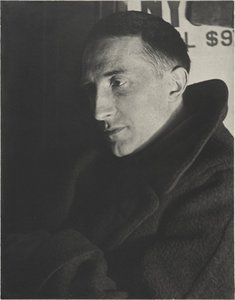
Marcel Duchamp
1887 - 1968 , Francia
Datos clave
- Artistas Influenciados Por: ['Franck Scurti']
- Fecha De Muerte: 1968
- Fecha De Nacimiento: 28 de julio de 1887
- Lugar De Nacimiento: Blainville-sur-Mer, Francia
- Movimiento Artístico:
- Cubismo
- Dadaísmo
- Arte conceptual
- Nacionalidad: Francesa-estadounidense
- Nombre Completo: Marcel Duchamp
- Obras Notables:
- Fuente
- Retrato de jugadores de ajedrez
- La novia desnudada
- L.H.O.O.Q.
- Boîte-en-valise
Artículos relacionados

Más allá de la forma: Un análisis técnico y estético sobre la evolución de la escultura
Descubre la evolución técnica y estética de la escultura, desde el bronce hasta el modernismo. Explora la maestría de la forma ahora.

The Enduring Form: Exploring Themes & Techniques in Sculpture Across Historical Periods
Explore the rich history of sculpture from ancient masterpieces to contemporary innovations. Discover key techniques, influential artists & investment potential for discerning art collectors.

Las 10 Obras Maestras de Bronce que Revolucionaron la Historia del Arte | OriginalUniqueArt
Descubre las 10 esculturas de bronce más influyentes de la historia del arte. Explora obras maestras de Rodin, Degas y otros genios. Encuentra reproducciones de arte de calidad museo en OriginalUniqueArt.com.
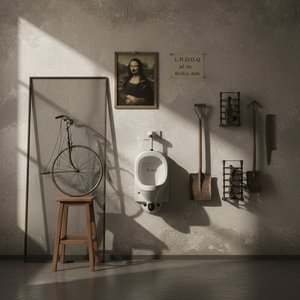
Marcel Duchamp: Challenging Conventions & Redefining Art in the 20th Century
Explore the revolutionary art of Marcel Duchamp! Discover how his Dadaist readymades challenged artistic conventions & redefined modern art. A deep dive into 'Fountain', conceptual shifts, and his lasting impact.

Esculturas de Bronce Legendarias: 10 Obras Maestras que Transformaron el Arte | OriginalUniqueArt
Descubre las 10 esculturas de bronce más legendarias que revolucionaron el arte. Explora la historia de Rodin, Degas y otros maestros del bronce. Encuentra reproducciones de alta calidad e inspiración para tu hogar en OriginalUniqueArt.com.


