

 Ver en contexto
 Enviar
 Compartir
 Detalles

 Descargar
 Similares
 Radiografía
 Presentación de diapositivas
 Estadísticas
Desnuda de pie


 Ver más
Giclée / Impresión de arte
Impresiones giclée o en lienzo de calidad de museo con producción rápida y opciones de acabado flexibles. ( Comprar pintura hecha a mano Cambiar a imagen digital)




P118B $10

P118H $10

P118W $10

P438Z $10

P508JH $12

P508YH $12

P805H $10

P805Z $10

P919BZ $10

P919G $10

P919XJ $10

P959ZH $10

P968JZ $12

W106C $8

W218G $10

W218JH $8

W218Y $10

W307PJ $10

W316G $10

W316PJ $8

W316Y $10

W398PJ $8

W4111J $10

W500HY $15

W500JH $15

W692G $12

W849H $8

W940BG $15

W953PJ $8




Elija entre nuestros tamaños predefinidos que respetan las proporciones originales de la obra.

Puede introducir sus propias dimensiones para adaptarse a un marco o espacio específico. Si el tamaño seleccionado no coincide con las proporciones de la imagen original, recortaremos la obra de arte o extenderemos la imagen con un borde con efecto espejo o de color sólido. Se enviará una maqueta digital para su aprobación antes de que comience la producción.
Tenga en cuenta que la vista previa en pantalla no refleja el recorte o la extensión real. Solo la maqueta mostrará con precisión la composición final.
Aunque existen tamaños personalizados, recomendamos seleccionar una dimensión de la lista predefinida para preservar las proporciones originales.
Envío a todo el mundo () en 2 semanas en lugar de las 4/5 semanas estándar. (8 septiembre)

Envío exprés gratuito a todo el mundo

Lienzo de lino de alta calidad

Seguro de envío total

Garantía de reembolso de impuestos aduaneros

Garantía de fidelidad cromática exacta

Política de devolución de 100 días (solo por defectos)

Garantía de devolución del 100% del dinero

Descuento por cantidad
 La opción de vidrio solo está disponible en tamaños inferiores a 110 cm.

Desnuda de pie
Giclée / Impresión de arte
Dimensiones de la reproducción
-


Precio total final
$ 80
A Bold Challenge to Artistic Conventions: Marcel Duchamp’s Standing Nude
Standing Nude, created in 1910 by Marcel Duchamp, isn't merely a depiction of the human form; it represents a seismic shift within the artistic landscape of its time—a defiant rejection of traditional aesthetics and an assertion of conceptual art’s nascent potential. The painting captures a woman standing naked against a rugged rocky backdrop, her gaze lowered as she extends her arms outwards, embodying both vulnerability and quiet contemplation. This seemingly simple composition belies a profound intellectual engagement with the core questions surrounding artistic creation.The Fauvist Style: Color as Emotion
Duchamp’s stylistic choice—fauvism—was revolutionary in itself. Unlike Impressionists who sought to capture fleeting moments of light and atmosphere, fauvists prioritized expressive color above all else. Artists like Matisse championed bold hues – vibrant reds, yellows, blues – applied with unrestrained spontaneity, prioritizing emotional impact over accurate representation. Duchamp’s use of intense pigments reflects this ethos; the dominant colors in Standing Nude are deliberately jarring against the muted tones of the rock formation, forcing the viewer to confront not just what is seen but how it feels. This deliberate distortion serves as a powerful commentary on the limitations of visual perception and invites contemplation about alternative modes of artistic expression.Technique and Material Considerations
The painting’s execution demonstrates Duchamp's meticulous attention to detail despite his rejection of representational art. While eschewing traditional brushstrokes, Duchamp employed a technique that nonetheless achieved remarkable textural richness. The artist utilized encaustic—a mixture of beeswax and resin—to create a surface that is both durable and capable of capturing subtle nuances in color and tone. This method allowed for layering pigments onto the wax base, resulting in an image that possesses depth and luminosity. Furthermore, Duchamp’s careful consideration of material contributes to the artwork's overall impact, grounding it in a tangible reality while simultaneously pushing boundaries of artistic convention.Historical Context: Dada and Artistic Rebellion
Standing Nude emerged during the turbulent years of Dada—a movement born out of disillusionment with the horrors of World War I and a vehement critique of bourgeois values. Dada artists deliberately undermined accepted artistic standards, embracing chance, absurdity, and anti-rationalism as tools for challenging societal norms. Duchamp’s démarche – presenting a porcelain urinal signed “R. Mutt” – epitomized this rebellious spirit, sparking controversy and redefining the very definition of art. Standing Nude aligns with Dada's broader project of questioning artistic authority and exploring new avenues for creative expression, cementing Duchamp’s legacy as one of the pioneers of conceptual art.Emotional Resonance: Beyond Representation
Ultimately, Standing Nude transcends mere visual representation; it speaks to fundamental questions about beauty, perception, and human experience. The woman's posture conveys a sense of quiet dignity amidst the starkness of the landscape, inviting viewers to consider themes of vulnerability, resilience, and contemplation. Duchamp’s intention wasn’t to depict a specific subject in a conventional manner but rather to provoke an emotional response—to disrupt complacency and stimulate intellectual curiosity. The painting's enduring appeal lies in its ability to resonate with audiences across generations who recognize the profound significance of its conceptual challenge.Biografía del artista
vida temprana y comienzos artísticos
marcel duchamp, un pintor, escultor, jugador de ajedrez y escritor francés-estadounidense, nació el 28 de julio de 1887 en Blainville-Crevon, Normandía, Francia. Su familia, conocida por sus inclinaciones culturales, fomentó su temprano interés por el arte. El viaje artístico de Duchamp comenzó con estilos postimpresionistas, experimentando con técnicas y temas clásicos.evolución artística y obras notables
- La obra de marcel duchamp está asociada con el cubismo, el arte conceptual y el dadaísmo, aunque fue cauteloso sobre su uso del término dada.
- Una de sus obras más famosas, Fountain (1917), una urinaria firmada 'r. mutt', es un ejemplo de sus readymades, desafiando la noción de lo que constituye el arte.
- Retrato de jugadores de ajedrez (1911), una obra cubista, muestra su interés por el juego y sus aspectos estratégicos.
- A ser mirado (desde el otro lado del vidrio) con un ojo, cerca de, casi una hora (1945) es otra obra notable, que refleja sus inclinaciones dadaístas.
influencia y legado
El impacto de Duchamp en el arte del siglo XX es inmenso. Él, junto con Pablo Picasso y Henri Matisse, definió las artes plásticas a principios del siglo XX. Su enfoque conceptual del arte ha influido en generaciones de artistas.- Explore más obras de Duchamp en OriginalUniqueArt: Marcel Duchamp | obras de arte
- Descubra el Museo Ohara de Arte, Japón, que presenta colecciones de arte occidental, incluidas algunas influenciadas por el estilo de Duchamp: Museo Ohara de Arte, Japón
- Aprenda más sobre Lettrism, un movimiento influenciado por el dadaísmo y el surrealismo, del que Duchamp formó parte: Movimiento artístico Lettrism
conclusión
El enigmático enfoque de arte de Marcel Duchamp, que combina elementos conceptuales y dadaístas, ha dejado una marca indeleble en el mundo del arte. Su legado continúa inspirando a los artistas e influyendo en el desarrollo del arte moderno y contemporáneo. Franck Scurti, un artista francés conocido por su arte conceptual, sigue los pasos de Duchamp, ampliando el legado de este pionero artista.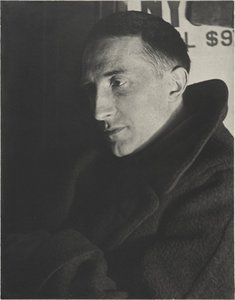
Marcel Duchamp
1887 - 1968 , Francia
Datos clave
- Artistas Influenciados Por: ['Franck Scurti']
- Fecha De Muerte: 1968
- Fecha De Nacimiento: 28 de julio de 1887
- Lugar De Nacimiento: Blainville-sur-Mer, Francia
- Movimiento Artístico:
- Cubismo
- Dadaísmo
- Arte conceptual
- Nacionalidad: Francesa-estadounidense
- Nombre Completo: Marcel Duchamp
- Obras Notables:
- Fuente
- Retrato de jugadores de ajedrez
- La novia desnudada
- L.H.O.O.Q.
- Boîte-en-valise
Artículos relacionados

Esculturas de Bronce Legendarias: 10 Obras Maestras que Transformaron el Arte | OriginalUniqueArt
Descubre las 10 esculturas de bronce más legendarias que revolucionaron el arte. Explora la historia de Rodin, Degas y otros maestros del bronce. Encuentra reproducciones de alta calidad e inspiración para tu hogar en OriginalUniqueArt.com.

The Enduring Form: Exploring Themes & Techniques in Sculpture Across Historical Periods
Explore the rich history of sculpture from ancient masterpieces to contemporary innovations. Discover key techniques, influential artists & investment potential for discerning art collectors.

Las 10 Obras Maestras de Bronce que Revolucionaron la Historia del Arte | OriginalUniqueArt
Descubre las 10 esculturas de bronce más influyentes de la historia del arte. Explora obras maestras de Rodin, Degas y otros genios. Encuentra reproducciones de arte de calidad museo en OriginalUniqueArt.com.
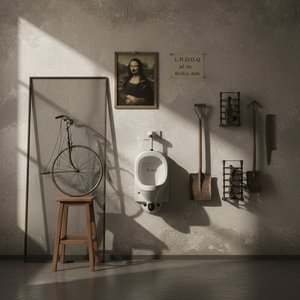
Marcel Duchamp: Challenging Conventions & Redefining Art in the 20th Century
Explore the revolutionary art of Marcel Duchamp! Discover how his Dadaist readymades challenged artistic conventions & redefined modern art. A deep dive into 'Fountain', conceptual shifts, and his lasting impact.

The Enduring Form: Sculpture Across History, Technique & Emotional Resonance
Explore the rich history of sculpture with OriginalUniqueArt. Discover key techniques, influential artists & investment potential for discerning collectors. Expert insights into valuing and collecting timeless masterpieces.


