

 Vista previa
 Compartir
 Compartir
 Ver detalles
 Guía
Guía

 Descargar
 Ver artículos similares
 Radiografía
 Presentación de diapositivas
 Estadísticas
Chocolate grinder No 2, Oil paint, thread and


 Leer más
Giclée / Impresión de arte
Impresiones giclée o en lienzo de calidad de museo con producción rápida y opciones de acabado flexibles. ( Encargar reproducción pintada a mano Ver versión en imagen digital)




P118B $10

P118H $10

P118W $10

P438Z $10

P508JH $12

P508YH $12

P805H $10

P805Z $10

P919BZ $10

P919G $10

P919XJ $10

P959ZH $10

P968JZ $12

W106C $8

W218G $10

W218JH $8

W218Y $10

W307PJ $10

W316G $10

W316PJ $8

W316Y $10

W398PJ $8

W4111J $10

W500HY $15

W500JH $15

W692G $12

W849H $8

W940BG $15

W953PJ $8




Elija entre nuestros tamaños predefinidos que respetan las proporciones originales de la obra.

Puede introducir sus propias dimensiones para adaptarse a un marco o espacio específico. Si el tamaño seleccionado no coincide con las proporciones de la imagen original, recortaremos la obra de arte o extenderemos la imagen con un borde con efecto espejo o de color sólido. Se enviará una maqueta digital para su aprobación antes de que comience la producción.
Tenga en cuenta que la vista previa en pantalla no refleja el recorte o la extensión real. Solo la maqueta mostrará con precisión la composición final.
Aunque existen tamaños personalizados, recomendamos seleccionar una dimensión de la lista predefinida para preservar las proporciones originales.
Envío a todo el mundo () en 2 semanas en lugar de las 4/5 semanas estándar. (27 septiembre)

Envío exprés gratuito a todo el mundo

Lienzo de lino de alta calidad

Seguro de envío completo

Garantía de reembolso de impuestos aduaneros

Garantía de fidelidad cromática exacta

Política de devolución de 100 días (solo por defectos)

Garantía de devolución del 100% del dinero

Oferta por volumen
 La opción de vidrio solo está disponible en tamaños inferiores a 110 cm.

Chocolate grinder No 2, Oil paint, thread and
Giclée / Impresión de arte
Tamaño de la reproducción
-


Precio total
$ 80
A Paradoxical Vision: Reimagining the Everyday
In the vast landscape of early twentieth-century modernism, few works possess the quiet, unsettling magnetism of Marcel Duchamp’s Chocolate Grinder No 2. Painted in 1914, this piece serves as a profound threshold between the structured geometric explorations of Cubism and the radical, intellectual provocations of Dadaism. At first glance, the viewer is presented with a scene that feels deceptively domestic: a yellow chair with a wooden frame, possessing a singular, circular design featuring a central hole. Yet, beneath this seemingly mundane depiction of furniture lies a deliberate disruption of reality. The painting does not merely capture an object; it captures a concept, inviting the observer to look through the physical form and into the void of artistic intention.
The composition is masterfully arranged to evoke a sense of surreal stillness. As the eye wanders across the canvas, one notices the presence of other chairs and a dining table, all sharing an unusual, circular geometry that mirrors the central motif of the primary subject. The inclusion of a figure seated at the table adds a layer of narrative ambiguity, suggesting a moment of quietude that is simultaneously interrupted by the strange, mechanical-like design of the objects. For the collector or interior designer, this work offers a sophisticated tension—a way to introduce a conversation piece into a space that challenges the boundaries between functional decor and high-concept fine art.
Technical Precision and the Language of Form
While Duchamp is often celebrated for his "readymades"—the act of selecting ordinary objects and declaring them art—Chocolate Grinder No 2 reveals a much more traditional, yet equally subversive, technical mastery. Utilizing oil paint to achieve a smooth, luminous surface finish, the artist employs a level of precision that recalls the meticulousness of the Post-Impressionists. The wooden textures of the chair are rendered with such care that one can almost feel the grain beneath the pigment, creating a tactile reality that grounds the more abstract elements of the composition.
The technique serves a dual purpose: it provides a sense of hyper-reality that makes the absurd design of the "grinder" even more jarring. By using the light and shadow characteristic of classical oil painting to define these strange, perforated shapes, Duchamp forces the viewer to confront the object as something tangible and present. This juxtaposition of calculated accuracy with conceptual disruption is where the true magic of the piece resides. It is a technical triumph that uses the tools of tradition to dismantle the very idea of traditional representation.
A Legacy of Intellectual Provocation
To understand the emotional weight of this painting, one must consider the historical turbulence of 1914. As Europe stood on the precipice of World War I, Duchamp was already beginning to reject the aesthetic dogmas that prioritized beauty and craftsmanship over intellectual inquiry. This work embodies the genesis of conceptual art, where the "idea" becomes the primary driver of the creative act. The circular hole in the chair is not merely a design choice; it is a symbolic aperture, a way for Duchamp to puncture the illusion of the canvas and invite the viewer to question what is real and what is constructed.
For those seeking to adorn a contemporary space with art that inspires deep thought, a high-quality reproduction of this masterpiece offers more than just visual appeal. It brings into a room a piece of history—a fragment of the revolutionary spirit that redefined the twentieth century. Whether placed in a minimalist gallery setting or as a focal point in a richly textured study, Chocolate Grinder No 2 remains an enduring symbol of the power of the imagination to transform the ordinary into the extraordinary.
Biografía del artista
vida temprana y comienzos artísticos
marcel duchamp, un pintor, escultor, jugador de ajedrez y escritor francés-estadounidense, nació el 28 de julio de 1887 en Blainville-Crevon, Normandía, Francia. Su familia, conocida por sus inclinaciones culturales, fomentó su temprano interés por el arte. El viaje artístico de Duchamp comenzó con estilos postimpresionistas, experimentando con técnicas y temas clásicos.evolución artística y obras notables
- La obra de marcel duchamp está asociada con el cubismo, el arte conceptual y el dadaísmo, aunque fue cauteloso sobre su uso del término dada.
- Una de sus obras más famosas, Fountain (1917), una urinaria firmada 'r. mutt', es un ejemplo de sus readymades, desafiando la noción de lo que constituye el arte.
- Retrato de jugadores de ajedrez (1911), una obra cubista, muestra su interés por el juego y sus aspectos estratégicos.
- A ser mirado (desde el otro lado del vidrio) con un ojo, cerca de, casi una hora (1945) es otra obra notable, que refleja sus inclinaciones dadaístas.
influencia y legado
El impacto de Duchamp en el arte del siglo XX es inmenso. Él, junto con Pablo Picasso y Henri Matisse, definió las artes plásticas a principios del siglo XX. Su enfoque conceptual del arte ha influido en generaciones de artistas.- Explore más obras de Duchamp en OriginalUniqueArt: Marcel Duchamp | obras de arte
- Descubra el Museo Ohara de Arte, Japón, que presenta colecciones de arte occidental, incluidas algunas influenciadas por el estilo de Duchamp: Museo Ohara de Arte, Japón
- Aprenda más sobre Lettrism, un movimiento influenciado por el dadaísmo y el surrealismo, del que Duchamp formó parte: Movimiento artístico Lettrism
conclusión
El enigmático enfoque de arte de Marcel Duchamp, que combina elementos conceptuales y dadaístas, ha dejado una marca indeleble en el mundo del arte. Su legado continúa inspirando a los artistas e influyendo en el desarrollo del arte moderno y contemporáneo. Franck Scurti, un artista francés conocido por su arte conceptual, sigue los pasos de Duchamp, ampliando el legado de este pionero artista.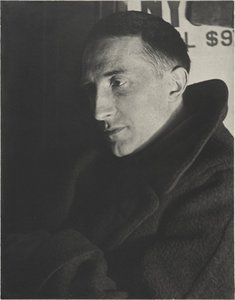
Marcel Duchamp
1887 - 1968 , Francia
Datos clave
- Artistas Influenciados Por: ['Franck Scurti']
- Fecha De Muerte: 1968
- Fecha De Nacimiento: 28 de julio de 1887
- Lugar De Nacimiento: Blainville-sur-Mer, Francia
- Movimiento Artístico:
- Cubismo
- Dadaísmo
- Arte conceptual
- Nacionalidad: Francesa-estadounidense
- Nombre Completo: Marcel Duchamp
- Obras Notables:
- Fuente
- Retrato de jugadores de ajedrez
- La novia desnudada
- L.H.O.O.Q.
- Boîte-en-valise
Artículos relacionados

The Enduring Form: Exploring Themes & Techniques in Sculpture Across Historical Periods
Explore the rich history of sculpture from ancient masterpieces to contemporary innovations. Discover key techniques, influential artists & investment potential for discerning art collectors.

Las 10 Obras Maestras de Bronce que Revolucionaron la Historia del Arte | OriginalUniqueArt
Descubre las 10 esculturas de bronce más influyentes de la historia del arte. Explora obras maestras de Rodin, Degas y otros genios. Encuentra reproducciones de arte de calidad museo en OriginalUniqueArt.com.

Cubism Unveiled: How Picasso and Braque Redefined Reality Through Geometric Abstraction
Explore the revolutionary world of Cubism. Discover how masters Pablo Picasso and Georges Braque dismantled reality through geometric abstraction to redefine modern art history.

The Enduring Form: Sculpture Across History, Technique & Emotional Resonance
Explore the rich history of sculpture with OriginalUniqueArt. Discover key techniques, influential artists & investment potential for discerning collectors. Expert insights into valuing and collecting timeless masterpieces.

Esculturas de Bronce Legendarias: 10 Obras Maestras que Transformaron el Arte | OriginalUniqueArt
Descubre las 10 esculturas de bronce más legendarias que revolucionaron el arte. Explora la historia de Rodin, Degas y otros maestros del bronce. Encuentra reproducciones de alta calidad e inspiración para tu hogar en OriginalUniqueArt.com.


