

 Vista previa
 Compartir
 Compartir
 Ver detalles
 Guía
Guía

 Descargar
 Ver artículos similares
 Radiografía
 Presentación de diapositivas
 Estadísticas
Chocolate Grinder No.2


 Leer más
La obra de arte que se muestra en esta página está protegida por las leyes de propiedad intelectual, lo que significa que no podemos crear ni vender legalmente una reproducción idéntica. Esta protección se hace cumplir en virtud de acuerdos internacionales como el Convenio de Berna y por las leyes nacionales, incluidas aquellas establecidas por el Ley de derechos de autor de los EE. UU. - Título 17.
Este método cumple plenamente con las normativas de derechos de autor, ya que no implica la copia ni la duplicación de la obra protegida. En su lugar, se trata de una reinterpretación creativa: una nueva pintura influenciada por la original, pero que no es idéntica a ella.
Giclée / Impresión de arte
Impresiones giclée o en lienzo de calidad de museo con producción rápida y opciones de acabado flexibles. ( Encargar reproducción pintada a mano Ver versión en imagen digital)




P118B €10

P118H €10

P118W €10

P438Z €10

P508JH €12

P508YH €12

P805H €10

P805Z €10

P919BZ €10

P919G €10

P919XJ €10

P959ZH €10

P968JZ €12

W106C €8

W218G €10

W218JH €8

W218Y €10

W307PJ €10

W316G €10

W316PJ €8

W316Y €10

W398PJ €8

W4111J €10

W500HY €15

W500JH €15

W692G €12

W849H €8

W940BG €15

W953PJ €8




Elija entre nuestros tamaños predefinidos que respetan las proporciones originales de la obra.

Introduzca el ancho y el alto que necesite para adaptarse a su marco o pared. Una impresión solo puede recortarse, nunca hacerse más grande que la imagen original, por lo que un tamaño con una forma distinta perderá parte de la obra. Le enviaremos una maqueta digital para su aprobación antes de realizar cualquier impresión. La imagen que se muestra en esta página no refleja el recorte real; solo la maqueta lo hace.
Envío a todo el mundo () en 2 semanas en lugar de las 4/5 semanas estándar. (22 octubre)

Envío exprés gratuito a todo el mundo

Lienzo de lino de alta calidad

Seguro de envío completo

Garantía de reembolso de impuestos aduaneros

Garantía de fidelidad cromática exacta

Política de devolución de 100 días (solo por defectos)

Garantía de devolución del 100% del dinero

Oferta por volumen
 La opción de vidrio solo está disponible en tamaños inferiores a 110 cm.

Chocolate Grinder No.2
Giclée / Impresión de arte
Tamaño de la reproducción
-


Precio total
€ 70
Chocolate Grinder No.2: A Conceptual Revolution
Marcel Duchamp’s “Chocolate Grinder No.2,” created in 1914, stands as an emblem of Dadaism and a pivotal moment in the history of modern art. More than just a depiction of an everyday object—a chocolate grinder—it embodies Duchamp's radical challenge to artistic conventions and his profound interrogation of what constitutes “art.” This seemingly simple piece sparked considerable debate and continues to fascinate scholars and collectors alike.
Conceptual Framework: Beyond Representation
Duchamp’s approach transcends traditional painting techniques. He aligns with Cubism, Dada, and Conceptual Art, prioritizing ideas over visual aesthetics. The grinder itself is deliberately inverted on a wooden stool—a gesture that disrupts the viewer's expectations of how art should be presented. This inversion symbolizes Duchamp’s rejection of conventional notions of beauty and hierarchy within artistic expression.
Artistic Style and Technique: Geometric Precision
The painting’s style is characterized by geometric forms—circles dominating the composition—reflecting Duchamp's fascination with industrial design and machinery. The subdued color palette contributes to a sense of austerity, emphasizing the materiality of the object itself. Oil paint combined with thread adds textural depth, mirroring the meticulous attention to detail found in other works like “Transition of Virgin into a Bride_Le Passage de la Vierge à la Mariée,” where Duchamp blends Cubist fragmentation with Expressionistic emotion.
Historical Context: Dada and Artistic Rebellion
“Chocolate Grinder No.2” emerged during the turbulent years leading up to World War I, coinciding with the rise of Dadaism—a movement that vehemently opposed rational thought and artistic dogma. Duchamp’s decision to elevate a mundane item into art was a deliberate provocation against the prevailing artistic standards of the time. It mirrored the broader Dadaist impulse to dismantle established hierarchies and question accepted values.
Legacy and Impact: An Enduring Influence
"Chocolate Grinder No.2" resides in the Philadelphia Museum of Art, cementing its place as an icon of 20th-century art. Its influence extends far beyond Dadaism, inspiring movements like Pop Art and Minimalism—demonstrating Duchamp’s enduring legacy as a pioneer of Conceptual Art. As noted in “The Greatest most famous Paintings of all time,” his innovative methodology continues to inspire artists today.
- Artist: Marcel Duchamp
- Year Created: 1914
- Medium: Oil and Thread on Canvas
- Location: Philadelphia Museum of Art
Preguntas y respuestas
¿Qué técnica y estilo caracterizan a "Chocolate Grinder No.2" de Marcel Duchamp?
"Chocolate Grinder No.2" está realizada en Acrílico sobre lienzo, con el estilo La obra de Marcel Duchamp está profundamente influ.
¿Qué estado de ánimo y emoción expresa "Chocolate Grinder No.2" de Marcel Duchamp?
"Chocolate Grinder No.2" de Marcel Duchamp transmite una sensación Reflexivo dentro de un ambiente general Industrial.
¿Es "Chocolate Grinder No.2" de Marcel Duchamp una pintura, un dibujo o un grabado?
En el catálogo, "Chocolate Grinder No.2" de Marcel Duchamp está clasificado como Arte de pared. La categoría ayuda a encontrar obras similares.
Biografía del artista
vida temprana y comienzos artísticos
marcel duchamp, un pintor, escultor, jugador de ajedrez y escritor francés-estadounidense, nació el 28 de julio de 1887 en Blainville-Crevon, Normandía, Francia. Su familia, conocida por sus inclinaciones culturales, fomentó su temprano interés por el arte. El viaje artístico de Duchamp comenzó con estilos postimpresionistas, experimentando con técnicas y temas clásicos.evolución artística y obras notables
- La obra de marcel duchamp está asociada con el cubismo, el arte conceptual y el dadaísmo, aunque fue cauteloso sobre su uso del término dada.
- Una de sus obras más famosas, Fountain (1917), una urinaria firmada 'r. mutt', es un ejemplo de sus readymades, desafiando la noción de lo que constituye el arte.
- Retrato de jugadores de ajedrez (1911), una obra cubista, muestra su interés por el juego y sus aspectos estratégicos.
- A ser mirado (desde el otro lado del vidrio) con un ojo, cerca de, casi una hora (1945) es otra obra notable, que refleja sus inclinaciones dadaístas.
influencia y legado
El impacto de Duchamp en el arte del siglo XX es inmenso. Él, junto con Pablo Picasso y Henri Matisse, definió las artes plásticas a principios del siglo XX. Su enfoque conceptual del arte ha influido en generaciones de artistas.- Explore más obras de Duchamp en OriginalUniqueArt: Marcel Duchamp | obras de arte
- Descubra el Museo Ohara de Arte, Japón, que presenta colecciones de arte occidental, incluidas algunas influenciadas por el estilo de Duchamp: Museo Ohara de Arte, Japón
- Aprenda más sobre Lettrism, un movimiento influenciado por el dadaísmo y el surrealismo, del que Duchamp formó parte: Movimiento artístico Lettrism
conclusión
El enigmático enfoque de arte de Marcel Duchamp, que combina elementos conceptuales y dadaístas, ha dejado una marca indeleble en el mundo del arte. Su legado continúa inspirando a los artistas e influyendo en el desarrollo del arte moderno y contemporáneo. Franck Scurti, un artista francés conocido por su arte conceptual, sigue los pasos de Duchamp, ampliando el legado de este pionero artista.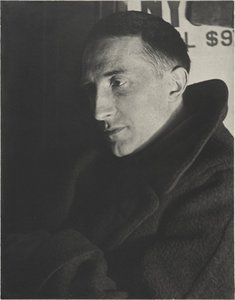
Marcel Duchamp
1887 - 1968 , Francia
Datos clave
- Artistas Influenciados Por: ['Franck Scurti']
- Fecha De Muerte: 1968
- Fecha De Nacimiento: 28 de julio de 1887
- Lugar De Nacimiento: Blainville-sur-Mer, Francia
- Movimiento Artístico:
- Cubismo
- Dadaísmo
- Arte conceptual
- Nacionalidad: Francesa-estadounidense
- Nombre Completo: Marcel Duchamp
- Obras Notables:
- Fuente
- Retrato de jugadores de ajedrez
- La novia desnudada
- L.H.O.O.Q.
- Boîte-en-valise
Artículos relacionados

Beyond Form & Color: Geometric Abstraction's Evolution in 20th/21st Century Art
Explore the evolution of geometric abstraction from Cubism to contemporary art. Discover key artists like Malevich & Mondrian, investment insights, and expert collecting advice at OriginalUniqueArt.

Neo-Abstract Art: The High-Impact Evolution of Modern Visual Energy and Geometric Sophistication
Discover the power of Neo-Abstract art. Explore how bold geometric forms and high-impact visual energy are redefining modern design. Learn to curate sophisticated, high-energy spaces with the latest trends in contemporary abstraction and structural color.

Abstracción Geométrica: 10 Obras Maestras que Transformaron el Arte Moderno | OriginalUniqueArt
Descubre las 10 obras maestras de la abstracción geométrica que revolucionaron el arte moderno. Explora a Mondrian, Malevich y Kandinsky en OriginalUniqueArt.com. Reproducciones de alta calidad para tu hogar.
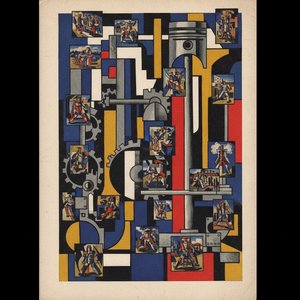
Fernand Léger: Las 25 Obras Maestras del Tubismo y la Vanguardia Francesa | OriginalUniqueArt
Descubre las 25 obras maestras de Fernand Léger, pionero del tubismo y la vanguardia francesa. Explora su estética industrial, composiciones geométricas y vibrantes colores. Reproducciones de arte exclusivas en OriginalUniqueArt.com.
Beyond Form & Color: Geometric Abstraction's Enduring Legacy in Art History
Explore the captivating world of geometric abstraction! Discover its origins, key artists like Malevich & Mondrian, and why this movement remains highly valued by art collectors today. Expert insights at OriginalUniqueArt.


