- Inicio

- Imagen digital
- Man Ray
- Marcel Duchamp
 Comprar impresión Encargar reproducción
 Enviar
 Compartir
 Detalles
 Añadir a favoritos

 Descargar
 Similares
 Radiografía
 Presentación de diapositivas
Marcel Duchamp


 Ver más
Adquiera una imagen digital de alta resolución y optimizada, muy superior a la vista previa en línea.
Cada archivo es preparado meticulosamente por nuestros especialistas internos mediante el uso de herramientas avanzadas y un experto retoque manual. Nos aseguramos de que cada imagen posea una claridad excepcional, una precisión cromática impecable y un detalle minucioso.
El archivo final se entrega por correo electrónico en un plazo de 72 horas, optimizado para su uso inmediato en entornos profesionales, editoriales y de impresión. Esta es la misma calidad en la que confían los estudios de diseño, las editoriales y las galerías de primer nivel.
Imagen Digital
Descarga un archivo de alta resolución para exhibición personal, impresión y proyectos creativos.
Incluido en cada pedido de imagen digital
Entrega digital experta, garantizada.
Al elegir OriginalUniqueArt.com, no solo está adquiriendo una imagen; está recibiendo una obra de arte digital mejorada profesionalmente, elaborada con precisión y respaldada por una garantía de satisfacción. Esto es todo lo que incluye su pedido, automáticamente:

Entrega rápida por email
Recibirá su archivo de imagen digital en alta resolución por correo electrónico en un plazo de 72 horas tras realizar su pedido, listo para su uso inmediato.

Archivo digital optimizado con IA
Su obra de arte se optimiza profesionalmente mediante herramientas avanzadas de IA y edición manual, garantizando el máximo detalle, claridad y precisión cromática.

Reenvío gratuito de por vida
¿Has borrado o perdido tu archivo por error? No te preocupes: te lo volveremos a enviar en cualquier momento, sin coste adicional.

Sin cargos de importación - Siempre
Disfrute de su obra de arte al instante sin aduanas, aranceles ni gastos de envío; las descargas digitales siempre están libres de impuestos.

Garantía de fidelidad de color
Garantizamos que su imagen digital refleje los colores originales con la mayor fidelidad posible, mediante el uso de herramientas profesionales y gestión del color.

Garantía de satisfacción de 60 días
Si no está satisfecho con su imagen digital, la revisaremos o le reembolsaremos el 100% en un plazo de 60 días, sin preguntas.

100% Garantía de devolución de dinero
¿No está satisfecho? Obtenga un reembolso completo dentro de los 60 días posteriores a la recepción de su archivo digital, sin preguntas.

Descuentos por pedidos al por mayor
Compra 3 imágenes, ahorra 10% - Compra 5, ahorra 15% - Compra 10+, ahorra 20%. Ideal para proyectos creativos, galerías y agencias.
Descripción del coleccionable
Marcel Duchamp’s “Man Ray” – A Portrait of Intellectual Intensity
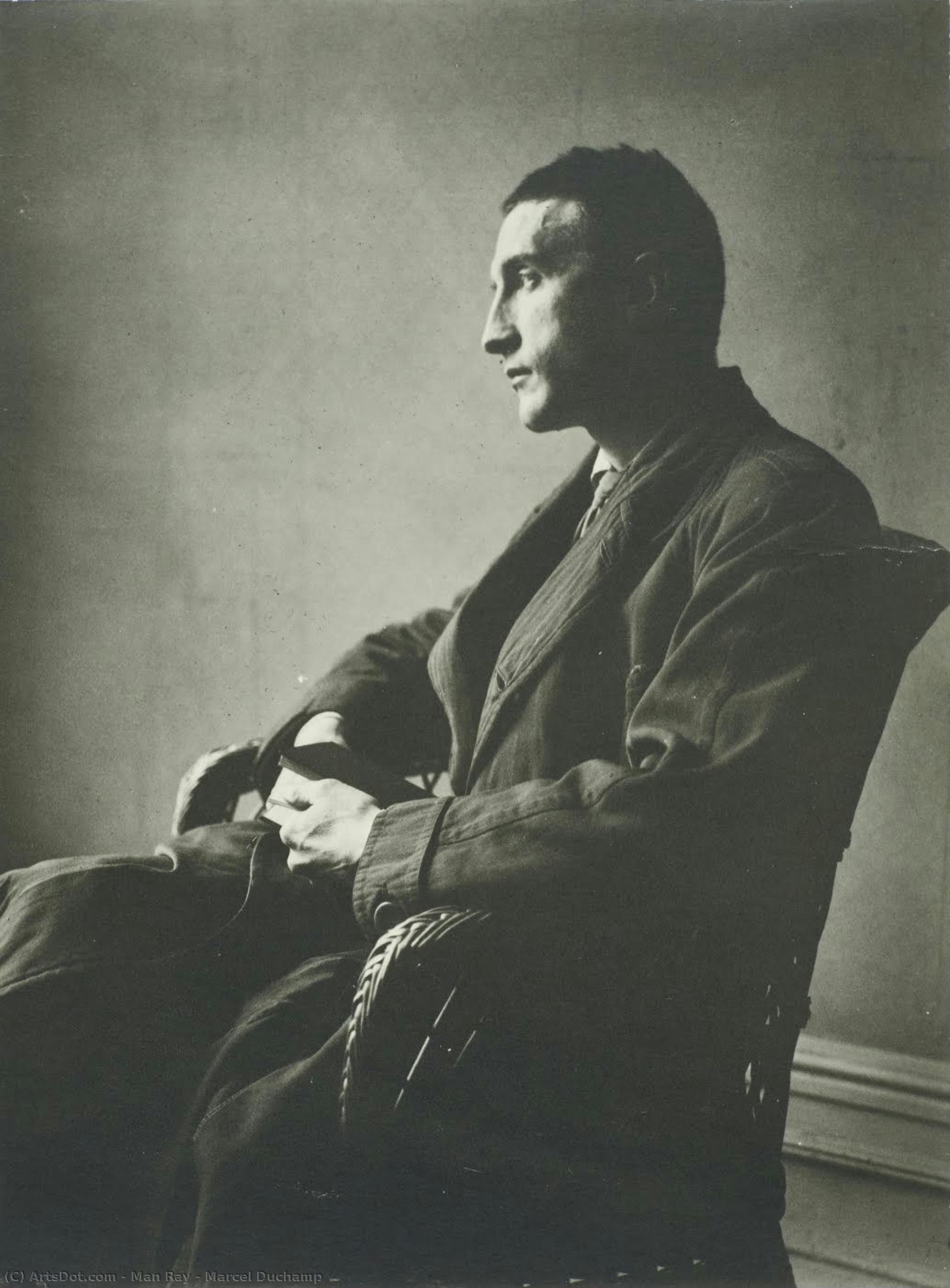
The photograph by Man Ray of Marcel Duchamp, captured in 1920-21, isn't merely a portrait; it’s a carefully constructed tableau of intellectualism and quiet contemplation. More than just a likeness, it embodies the spirit of the era – the burgeoning avant-garde, the questioning of artistic conventions, and the embrace of new perspectives. Duchamp himself, already a pivotal figure in challenging established norms, is presented here with an arresting formality that belies his revolutionary ideas. The image immediately draws the viewer into a space of considered observation, inviting us to decipher the subtle cues within its composition.
Composition and Visual Elements
The photograph’s strength lies in its deliberate asymmetry. Duchamp is positioned slightly off-center, anchoring the frame while simultaneously creating a sense of dynamic movement. The chair he occupies—a sturdy, almost austere piece of furniture—becomes a crucial element, grounding the image and providing a visual counterpoint to Duchamp's more fluid form. Behind him, a glimpse of a couch and another chair adds depth, suggesting a space both familiar and subtly unsettling. Man Ray’s masterful use of lines further enhances this effect; vertical lines are established by Duchamp’s posture and the chair, while diagonal lines trace his gaze and the angle of his body, creating a subtle tension within the image.
Technical Details and Artistic Style
Rendered in stark black and white, the photograph utilizes a grayscale palette that emphasizes form and texture. The diffused lighting, likely achieved through studio techniques, casts soft shadows that define Duchamp’s features without resorting to harsh contrasts. This deliberate choice contributes to the image's overall atmosphere of quiet seriousness. Man Ray’s signature style is evident in his experimental approach to photography – a blend of portraiture with elements of surrealism and artistic exploration. The photograph feels like a carefully considered study, reflecting Duchamp’s own meticulous approach to art.
Symbolic Resonance and Historical Context
Duchamp's expression—serious and contemplative—immediately speaks to his intellectual rigor and his willingness to challenge conventional notions of beauty. The photograph captures a moment of profound introspection, hinting at the complex ideas swirling within his mind. Considering Duchamp’s broader artistic trajectory – his embrace of “readymades” like the flatiron with tacks – this portrait feels particularly significant. It's a visual representation of an artist who was actively dismantling traditional definitions of art and redefining its possibilities. The photograph, alongside other works from that period, offers a window into the intellectual climate of Paris in the early 20th century, a time of radical experimentation and profound artistic shifts.
A Legacy of Innovation
Man Ray’s portrait of Marcel Duchamp is more than just a photograph; it's a document of an era. It captures not only the likeness of a groundbreaking artist but also the spirit of innovation and intellectual daring that defined his work. The image continues to resonate today, serving as a reminder of Duchamp’s profound impact on the history of art and his enduring legacy as a revolutionary thinker.
Biografía del artista
A Life Illuminated by Shadows
Emmanuel Radnitzky, known to the world as Man Ray, was a restless spirit who defied easy categorization. Born in 1890 in Philadelphia to Russian Jewish immigrant parents, his journey from aspiring painter to pioneering photographer and filmmaker embodies the radical artistic ferment of the early 20th century. The shift from “Manny” Radnitzky to the enigmatic “Man Ray” itself speaks volumes about an artist determined to forge a new identity, one unbound by convention. His family’s move to New York City proved pivotal, exposing him to the burgeoning modernist scene and instilling in him a lifelong fascination with experimentation. Early influences included the European avant-garde showcased at Alfred Stieglitz's 291 gallery, and the raw realism of the Ashcan School – a blend that would subtly inform his later work. Though initially dedicated to painting, it was photography that ultimately became Ray’s most potent medium for exploring the boundaries of perception and reality. He wasn’t merely capturing images; he was inventing new ways of *seeing*.- Early Life & Artistic Beginnings: Man Ray’s formative years were marked by a profound engagement with art from a young age. His family’s relocation to Brooklyn instilled in him an appreciation for diverse artistic traditions, fostering his initial interest in painting and sculpture. He honed his skills at the National Academy of Design, absorbing techniques from established masters while simultaneously cultivating his own distinctive vision.
- The Dada Movement & Marcel Duchamp: Ray’s artistic breakthrough arrived with his encounter with Marcel Duchamp around 1915. This pivotal meeting ignited a shared passion for challenging conventional notions of art, propelling him into the heart of Dada—a defiant reaction to the horrors of World War I. Together they championed radical experimentation and questioned established aesthetic standards.
- Surrealism & Collaboration with Dalí: Ray embraced Surrealism’s exploration of the unconscious mind, forging a fruitful partnership with Salvador Dalí. His surrealist works—characterized by dreamlike imagery and unsettling juxtapositions—became emblems of the movement's aesthetic principles.
- Photography Innovations: Ray revolutionized photographic technique through inventions like rayography and solarization. These methods bypassed traditional optics, prioritizing intuition and capturing ephemeral qualities that defied conventional representation. He skillfully manipulated light and shadow to create evocative images that resonated with psychological depth.
- Film Experiments & Legacy: Beyond still photography, Ray ventured into filmmaking, crafting experimental films that pushed the boundaries of cinematic storytelling. His pioneering work influenced subsequent generations of avant-garde filmmakers and cemented his place as a visionary innovator.

Man Ray
1890 - 1976 , Estados Unidos
Información clave
- Artistic Movement Or Style: Dada, Surrealism
- Artists Or Movements Influenced By This Artist: ['Surrealism']
- Artists Who Influenced This Artist: ['Marcel Duchamp']
- Date Of Birth: August 27, 1890
- Date Of Death: November 18, 1976
- Full Name: Emmanuel Radnitzky
- Nationality: American
- Notable Artworks:
- Rayographs
- Le Retour à la Raison
- L'Étoile de Mer
- Place Of Birth: Philadelphia, USA

