

 Vista previa
 Compartir
 Compartir
 Ver detalles
 Guía
Guía

 Descargar
 Ver artículos similares
 Radiografía
 Presentación de diapositivas
 Estadísticas
Boy with Skull
 Oil
Oil- WallArt
- Symbolism
 1893
1893- 19th Century
 95.0 x 66.0 cm
 Museo Ateneo de Arte
 Leer más
Reproducción al óleo hecha a mano
Óleo sobre lienzo pintado a mano en el tamaño y marco de su elección, realizado por encargo por nuestros artistas. ( Cambiar a formato impreso Ver versión en imagen digital)




P118B €10

P118H €10

P118W €10

P438Z €10

P508JH €12

P508YH €12

P805H €10

P805Z €10

P919BZ €10

P919G €10

P919XJ €10

P959ZH €10

P968JZ €12

W106C €8

W218G €10

W218JH €8

W218Y €10

W307PJ €10

W316G €10

W316PJ €8

W316Y €10

W398PJ €8

W4111J €10

W500HY €15

W500JH €15

W692G €12

W849H €8

W940BG €15

W953PJ €8




Elija entre nuestros tamaños predefinidos que respetan las proporciones originales de la obra.

Escriba el ancho y el alto que necesite para adaptarse a su marco o a su pared. Al ser una obra pintada a mano, para un tamaño con una forma distinta, el artista puede pintar un poco más alrededor de la imagen o recortar un poco; usted elige. Le enviaremos una maqueta digital para su aprobación antes de comenzar la pintura. La imagen que se muestra en esta página no refleja el resultado real; solo la maqueta lo hace.
Tras realizar el pedido, el equipo de OriginalUniqueArt.com enviará un correo electrónico al cliente para solicitar instrucciones y proporcionarle una vista previa del boceto.
Envío a todo el mundo () en 3-4 semanas en lugar de las 5 semanas estándar. (24 octubre). Sin comprometer la calidad.

Envío exprés gratuito a todo el mundo

Lienzo de lino de alta calidad

Seguro de envío completo

Garantía de reembolso de impuestos aduaneros

Garantía de fidelidad cromática exacta

Política de devolución de 100 días (solo por defectos)

Garantía de devolución del 100% del dinero

Oferta por volumen
 La opción de vidrio solo está disponible en tamaños inferiores a 110 cm.

Boy with Skull
Técnica de reproducción
Tamaño de la reproducción
-


Precio total
€ 263
A Haunting Encounter with Mortality
In the quiet, somber depths of Magnus Enckell’s 1893 masterpiece, Boy with Skull, we are invited into a moment of profound and unsettling stillness. The painting presents a scene that feels pulled from the periphery of a dream or a dark folk tale, where the innocence of childhood meets the stark reality of death. A young boy sits grounded, his small frame positioned toward the edge of the composition, yet his focus is entirely consumed by the object in his hands: a human skull. There is no fear in his gaze, only a quiet, contemplative curiosity that bridges the gap between the living and the departed. This juxtaposition creates an eerie atmosphere, one that lingers in the mind long after the viewer has looked away, making it a piece that demands emotional engagement.
As a leading figure of the Finnish Symbolist movement, Enckell was a master at navigating the complexities of the human psyche. During this period of his career, his palette remained subdued and melancholic, eschewing the bright colorism he would later adopt with the Septem group. This restraint is vital to the impact of Boy with Skull; the muted tones and soft transitions allow the shadows to breathe, wrapping the subject in a shroud of mystery. The technique emphasizes texture and light in a way that feels almost tactile, as if one could feel the coldness of the bone and the weight of the boy's heavy thoughts. For the collector, this subtlety offers a sophisticated depth, providing a focal point that is both intellectually stimulating and visually serene.
Symbolism and the Weight of Existence
Beyond its surface-level strangeness, the painting serves as a powerful memento mori—a meditation on the inevitability of death. The skull, a universal symbol of mortality, acts as a mirror to the boy's burgeoning consciousness. In the hands of a child, the object loses its terror and becomes an instrument of inquiry, representing the moment when the human spirit begins to grapple with the concept of finitude. Enckell utilizes this symbolism to explore themes of transition and the cyclical nature of life. The composition, which places the boy slightly off-center, creates a sense of imbalance that mirrors the psychological tension inherent in contemplating one's own end.
For interior designers and curators of fine art, this piece offers an unparalleled opportunity to introduce narrative depth into a space. It is not merely a decoration but a conversation starter, a work that brings a sense of historical gravity and philosophical inquiry to a room. Whether placed in a dimly lit study or as a striking centerpiece in a contemporary gallery setting, the painting’s ability to evoke both unease and wonder makes it an extraordinary acquisition for those who appreciate art that challenges the boundaries of the seen and the unseen.
Preguntas y respuestas
¿Qué paleta y qué color predominante definen a "Boy with Skull"?
"Boy with Skull" de Magnus Enckell utiliza una paleta de Earthy, con el Rosy Brown (#d5b87b) como color dominante.
¿Qué museo alberga la obra original "Boy with Skull"?
"Boy with Skull" de Magnus Enckell se encuentra en exhibición en Museo Ateneo de Arte, Helsinki, Finlandia. La información del museo se refiere a la obra original, no a reproducciones.
¿En qué estancia del hogar quedaría bien una reproducción de "Boy with Skull"?
El espacio recomendado para "Boy with Skull" de Magnus Enckell es un Living Room. Por supuesto, esta sugerencia puede adaptarse a su interiorismo.
Biografía del artista
El surgimiento de una visión simbolista
Nacido en la ciudad costera de Hamina en 1870, Knut Magnus Enckell estaba destinado a convertirse en una piedra angular de la Edad de Oro finlandesa. Su viaje inicial fue uno de profunda transición, moviéndose desde los paisajes tranquilos de su juventud hacia las vibrantes corrientes intelectuales de París. Tras sus estudios iniciales en Helsinki bajo la guía de Gunnar Berndtson, Enckell buscó el riguroso entrenamiento de la Académie Julian, donde la influencia de maestros como Jules-Joseph Lefebvre y Jean-Joseph Benjamin-Constant comenzó a moldear su ojo artístico. Aunque su educación temprana estuvo arraigada en el Naturalismo predominante de la época, un impulso más profundo e introspectivo pronto comenzó a agitarse en su obra, alejándolo de la mera representación hacia los enigmáticos y evocadores reordenes del Simbolismo.Una transformación de luz y color
La trayectoria de la carrera de Enckell está marcada por una notable metamorfosis estética que reflejó las mareas cambiantes del modernismo europeo. En sus años formativos, sus lienzos se caracterizaron por una paleta tenue, casi sombría, que capturaba las profundidades melancólicas de la psique humana. Sin embargo, a partir de 1902, ocurrió un cambio dramático; las sombras se retiraron para dar paso a un colorismo cada vez más brillante y luminoso. Como figura líder del grupo Septem, Enckell abrazó un nuevo lenguaje de luz, desafiando los límites del arte finlandés a través de tonos audaces y vibrantes. Esta evolución no fue meramente técnica sino espiritual, ya que su uso de colores radiantes le permitió explorar temas que anteriormente estaban envueltos en tonos apagados, aportando una nueva vitalidad al movimiento simbolista.El tapiz del mito y la psique
La obra de Enckell es una exploración cautivadora de lo invisible, donde la mitología, el teatro y el alma humana convergen sobre el lienzo. Sus obras a menudo se sienten como sueños febriles o leyendas susurradas, capturando momentos de profunda tensión psicológica y belleza etérea. Poseía una capacidad única para fundir el mundo tangible con el subconsciente, creando escenas que resuenan tanto con misterio como con gracia. Entre sus contribuciones más evocadoras se encuentran:- Fantasia (1895): Una acuarela inquietantemente bella que utiliza pinceladas impresionistas para representar una figura mitológica sumergida en el agua, evocando temas de la naturaleza y una profunda melancolía.
- Midsummer Day Service in Lohja Church (1899): Una pintura al óleo atmosférica que captura la solemnidad de la ceremonia religiosa finlandesa a través de tonos cálidos e intrincados detalles góticos.
- Boy with Skull: Una exploración conmovedora de la mortalidad y las facetas más oscuras y existenciales de sus exploraciones simbolistas.
Un legado perdurable en el arte finlandés
Más allá de su maestría técnica, Magnus Enckell sigue siendo una figura de inmensa importancia histórica. Fue más que un simple pintor; fue un influyente cultural que ayudó a redefinir la identidad del arte finlandés en el escenario internacional. Su capacidad para oscilar entre ser un tradicionalista y un reformador radical le permitió dejar una huella indeleble en el panorama del arte europeo de principios del siglo XX. Hoy en día, su legado se preserva en las grandes instituciones de Finlandia, erigiéndose como testimonio de una vida dedicada a perseguir la luz a través de las sombras del espíritu humano.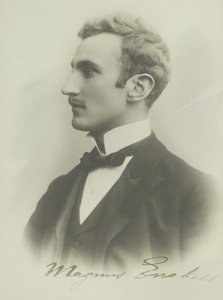
Magnus Enckell
1870 - 1925 , Finlandia
Artículos relacionados

The Subdued Palette: Emotional Resonance & Aesthetic Impact of Muted Tones in Art
Explore the captivating world of muted tones in art! Discover Tonalism's history, Whistler’s influence & how subtle color palettes evoke emotion. Find serene landscapes and expert advice for integrating these timeless pieces into your home with OriginalUniqueArt.

Akseli Gallen-Kallela: Shaping Finnish Identity Through National Romanticism & Symbolism
Explore the captivating world of Akseli Gallen-Kallela, Finland's iconic National Romantic painter. Discover his symbolic landscapes, Kalevala illustrations & lasting impact on Finnish identity. Expert analysis & high-quality reproductions at OriginalUniqueArt.
Albert Edelfelt: A Pioneer of Finnish Realism & International Impressionist Circles
Explore the life & work of Albert Edelfelt, a pioneering Finnish Realist painter who bridged Impressionism & national identity. Discover his masterpieces and lasting influence on art history.

The Subdued Palette: Exploring Emotional Resonance & Aesthetic Impact in Muted Artworks
Explore the power of muted colors in art! Discover the history, psychology & techniques behind serene palettes. Find inspiration & expert advice for creating emotionally resonant spaces with OriginalUniqueArt.
The Subdued Resonance: Exploring Emotional Depth & Artistic Nuance within Muted Color Palettes
Explore the captivating world of muted colors in art & design! Discover historical context, psychological effects, techniques, and inspiration for creating serene spaces. Elevate your aesthetic with OriginalUniqueArt.