

 Vista previa
 Compartir
 Compartir
 Ver detalles
 Guía
Guía

 Descargar
 Ver artículos similares
 Radiografía
 Presentación de diapositivas
 Estadísticas
Gelmeroda IX


 Leer más
Giclée / Impresión de arte
Impresiones giclée o en lienzo de calidad de museo con producción rápida y opciones de acabado flexibles. ( Encargar reproducción pintada a mano Ver versión en imagen digital)




P118B €10

P118H €10

P118W €10

P438Z €10

P508JH €12

P508YH €12

P805H €10

P805Z €10

P919BZ €10

P919G €10

P919XJ €10

P959ZH €10

P968JZ €12

W106C €8

W218G €10

W218JH €8

W218Y €10

W307PJ €10

W316G €10

W316PJ €8

W316Y €10

W398PJ €8

W4111J €10

W500HY €15

W500JH €15

W692G €12

W849H €8

W940BG €15

W953PJ €8




Elija entre nuestros tamaños predefinidos que respetan las proporciones originales de la obra.

Puede introducir sus propias dimensiones para adaptarse a un marco o espacio específico. Si el tamaño seleccionado no coincide con las proporciones de la imagen original, recortaremos la obra de arte o extenderemos la imagen con un borde con efecto espejo o de color sólido. Se enviará una maqueta digital para su aprobación antes de que comience la producción.
Tenga en cuenta que la vista previa en pantalla no refleja el recorte o la extensión real. Solo la maqueta mostrará con precisión la composición final.
Aunque existen tamaños personalizados, recomendamos seleccionar una dimensión de la lista predefinida para preservar las proporciones originales.
Envío a todo el mundo () en 2 semanas en lugar de las 4/5 semanas estándar. (6 octubre)

Envío exprés gratuito a todo el mundo

Lienzo de lino de alta calidad

Seguro de envío completo

Garantía de reembolso de impuestos aduaneros

Garantía de fidelidad cromática exacta

Política de devolución de 100 días (solo por defectos)

Garantía de devolución del 100% del dinero

Oferta por volumen
 La opción de vidrio solo está disponible en tamaños inferiores a 110 cm.

Gelmeroda IX
Giclée / Impresión de arte
Tamaño de la reproducción
-


Precio total
€ 69
A Study in Quiet Community: Interpreting Gelmeroda IX
To stand before this evocative scene, captured in the timeless interplay of black and white, is to step across a threshold into a moment suspended between memory and permanence. Gelmeroda IX presents us with a tableau vivant centered around an imposing church structure, its large tower rising like a steadfast sentinel against an unseen sky. The composition is richly populated, not by dramatic action, but by the quiet gathering of humanity. Observe the figures arranged across the foreground—a cluster on the left, a smaller grouping near the center, and a solitary presence drawing the eye toward the right. These individuals seem caught in the amber glow of history, their postures suggesting stories untold, whispers carried on the breeze that seems to perpetually drift through this square.
The Echoes of Place and Time
The architectural backbone of the painting—the church itself—speaks volumes about enduring community life. It is more than just a building; it is the anchor point for generations, a repository of shared rituals and collective memory. The inclusion of the clock in the upper left corner serves as a subtle yet profound reminder: while time marches relentlessly forward, the human connection depicted here seems to exist outside its strict measurement. This juxtaposition—the relentless tick-tock against the timeless gathering—lends the piece an immediate sense of nostalgia, inviting the viewer to contemplate their own passage through moments of shared grace.
Feininger's Vision: Technique and Atmosphere
The hand of Lyonel Feininger is unmistakable. While the specific medium lends itself to a monochromatic study, one can appreciate the masterful handling of tonal values that give depth to every plane. The contrast between the deep shadows clinging to the recessed areas of the church and the brighter planes catching the light on the figures imbues the scene with dramatic yet gentle illumination. Feininger possesses a gift for rendering atmosphere; here, it is an atmosphere thick with history, perhaps tinged with the quiet solemnity characteristic of early 20th-century European life. The overall effect is one of profound stillness, making the viewer pause their own hurried pace to absorb the scene’s gentle rhythm.
Symbolism and Emotional Resonance for the Modern Collector
For the art lover or interior designer seeking a piece that transcends mere decoration, Gelmeroda IX offers deep symbolic resonance. The church often symbolizes faith, community structure, or enduring belief—concepts universally appealing. The gathering of people suggests belonging, while the monochrome palette strips away the distraction of color, forcing an engagement with form, gesture, and emotional weight. Reproducing this work allows one to bring a piece of contemplative quietude into a modern space. It functions as a visual meditation, perfect for a study, a gallery wall, or a reception area where thoughtful conversation is desired.
To own a reproduction of Gelmeroda IX is to curate not just an image, but a feeling—a beautiful ache for moments passed and the enduring comfort found within community bonds. It whispers tales of steadfastness against the backdrop of ever-changing time.
Preguntas y respuestas
¿Qué espacio se sugiere para "Gelmeroda IX" de Lyonel Feininger?
Una reproducción de "Gelmeroda IX" encaja perfectamente en un Living Room.
¿De qué manera "Gelmeroda IX" de Lyonel Feininger vincula el Expressionism con el país de origen del artista?
"Gelmeroda IX" conecta el movimiento Expressionism con Estados Unidos de América a través del lugar de nacimiento de su creador.
¿Dónde puedo comprar una reproducción pintada a mano de "Gelmeroda IX" de Lyonel Feininger?
"Gelmeroda IX" está disponible como una reproducción al óleo pintada a mano sobre lienzo de lino. El pedido puede realizarse en esta página, con una variedad de tamaños a elegir.
¿Dónde puedo comprar una lámina de "Gelmeroda IX" de Lyonel Feininger?
Para obtener una impresión de "Gelmeroda IX" de Lyonel Feininger, simplemente pídala en esta página: una impresión de bellas artes sobre lienzo de algodón o papel de lienzo de archivo.
¿Quién creó "Gelmeroda IX"?
"Gelmeroda IX" fue creada por Lyonel Feininger. La información en esta página describe la obra original de Lyonel Feininger.
¿Dónde puedo ver el original de "Gelmeroda IX" de Lyonel Feininger?
La obra original "Gelmeroda IX" de Lyonel Feininger se encuentra en Museo Folkwang, Essen, Alemania. Una reproducción permite que la obra se exhiba en su hogar.
¿Cómo se combinan el contraste y la armonía en "Gelmeroda IX"?
La composición cromática de "Gelmeroda IX" de Lyonel Feininger combina un contraste Statement con una armonía Discordant Palette.
Biografía del artista
Primeros Años y Carrera: De Caricaturista a Artista de Bellas Artes
- Nacimiento y Familia: Lyonel Charles Adrian Feininger nació el 17 de julio de 1871 en Nueva York. Su padre, Karl Feininger, era un violinista y compositor alemán-estadounidense, y su madre, Elizabeth Feininger, una cantante estadounidense. Este trasfondo artístico influyó significativamente en su desarrollo temprano.
- Educación Temprana y Viajes Europeos: En 1887, a los 16 años, Feininger viajó a Europa para estudiar música pero pronto cambió su enfoque hacia el arte. Estudió dibujo en Hamburgo y Berlín.
- Carrera de Arte Comercial: A partir de 1894, Feininger estableció una exitosa carrera como caricaturista para varias revistas alemanas, francesas y estadounidenses. Sus tiras cómicas, como "The Kin-der-Kids" y "Wee Willie Winkie's World", obtuvieron un considerable éxito y mostraron su estilo gráfico único.
- Transición a las Bellas Artes: Después de una temporada de 20 años en el arte comercial, Feininger hizo la transición a las bellas artes a los 36 años. Esto marcó un punto de inflexión significativo en su viaje artístico.
Expresionismo e Influencia Bauhaus
- Unirse a Grupos Expresionistas: Feininger se convirtió en un destacado exponente del expresionismo, uniéndose a grupos influyentes como Die Brücke, Novembergruppe y Gruppe 1919. Su trabajo durante este período reflejó el énfasis del movimiento en la expresión emocional y la experiencia subjetiva.
- Primera Exposición Individual: Su primera exposición individual en la Galería Sturm de Berlín (1917) fue un momento clave, estableciéndolo como una figura destacada en el mundo del arte.
- Maestro Bauhaus: En 1919, Walter Gropius nombró a Feininger como el primer miembro de la facultad en la Bauhaus, una escuela innovadora de arte y diseño. Sirvió como maestro artista a cargo del taller de grabado, influyendo significativamente a numerosos estudiantes.
- Estilo Artístico: Su trabajo se caracterizó por formas prismáticamente rotas, colores translúcidos y referencias a la arquitectura y el mar, alineándolo con el modernismo clásico.
Obras Principales y Desarrollo Artístico
- Primeras Pinturas Marinas: Durante las vacaciones de verano en la isla de Usedom (1909-1918), Feininger creó numerosas pinturas marinas que representan el mar Báltico, mostrando su estilo evolutivo.
- Obras Notables: Algunas de sus obras más significativas incluyen "Werder I" (acuarela), "Gaberndorf II" (papel) y "Barcos" (cubismo, óleo sobre lienzo). Estas piezas ejemplifican su mezcla única de técnicas expresionistas y temas arquitectónicos.
- Obras Fotográficas: Entre 1928 y mediados de la década de 1950, Feininger produjo una cantidad considerable de obras fotográficas, demostrando su versatilidad como artista.
- Composiciones Musicales: También compuso varias piezas para piano y fugas para órgano, revelando otra faceta de su talento artístico.
Años Posteriores y Legado
- Emigración a los Estados Unidos: Debido al ascenso del Partido Nazi en 1933, Feininger emigró a los Estados Unidos con su esposa.
- Continuación de la Práctica Artística: Continuó pintando y creando arte durante toda su vida, manteniendo un estilo distintivo.
- Muerte y Reconocimiento: Lyonel Feininger murió el 13 de enero de 1956. Su trabajo ha dejado una huella indeleble en el mundo del arte, inspirando a artistas y entusiastas con su mezcla única de expresionismo, experimentación gráfica y temas arquitectónicos.
- Significado Histórico: Como figura clave tanto en el expresionismo como en el movimiento Bauhaus, las contribuciones de Feininger moldearon significativamente el curso del arte moderno. Su innovador uso del color, la forma y la perspectiva continúa resonando con el público hoy en día.

Lyonel Feininger
1871 - 1956 , Estados Unidos de América
Datos clave
- Artistas Influenciados: ['Ludwig Hirschfeld Mack']
- Fecha De Fallecimiento: 13 de enero de 1956
- Fecha De Nacimiento: 17 de julio de 1871
- Lugar De Nacimiento: Nueva York, EE. UU.
- Movimiento Artístico: Expresionismo, Cubismo
- Nacionalidad: Germano-estadounidense
- Nombre Completo: Lyonel Charles Adrian Feininger
- Obras Notables:
- Werder I
- Gaberndorf II
- Barcos
Artículos relacionados

Lyonel Feininger: Bridging Expressionism & Cubism – A Study of Spiritual Geometry
Explore the captivating world of Lyonel Feininger, a pivotal figure bridging Expressionism & Cubism. Discover his architectural visions, Bauhaus influence, and enduring legacy in modern art history. Learn more at OriginalUniqueArt.
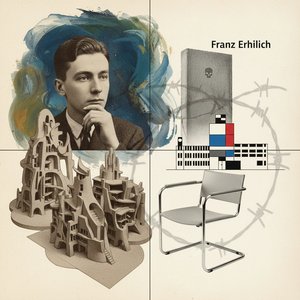
Franz Ehrlich: Bridging Expressionism, Bauhaus & the Shadows of History
Explore the life of Franz Ehrlich, a pivotal Bauhaus architect whose career spanned Expressionism, resistance during Nazi Germany, and GDR reconstruction. Discover his complex legacy & view museum-quality reproductions at OriginalUniqueArt.

Cubism Unveiled: How Picasso and Braque Redefined Modern Art through Geometric Revolution
Explore the revolutionary world of Cubism. Discover how Pablo Picasso and Georges Braque dismantled perspective to redefine modern art through geometric innovation and analytical mastery. An essential guide for art students, collectors, and history enthusiasts.
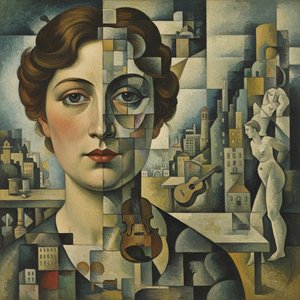
Deconstruyendo la Realidad: El Impacto Revolucionario del Cubismo en el Arte del Siglo XX
Descubra el revolucionario impacto del Cubismo en el arte del siglo XX. Análisis profundo de Picasso, Braque y su legado. Guía para coleccionistas apasionados e inversores.

Deconstruyendo la Realidad: Fundamentos Estéticos y Filosóficos del Expresionismo Cubista
Explora los fundamentos estéticos y filosóficos del Expresionismo Cubista. Análisis profundo de Picasso, Braque y su impacto en el arte moderno. Guía experta para coleccionistas.

