Ver en contexto
 Enviar
 Compartir
 Detalles
 Guía
Guía

 Descargar
 Similares
 Radiografía
 Presentación de diapositivas
 Estadísticas
Tormenta en Cabo Ampelio
 Óleo sobre lienzo
- Arte de pared
- Expressionist Style
 1912
1912 49.0 x 61.0 cm
 Staatliche Kunstsammlungen Dresden
 Ver más
Reproducción al óleo hecha a mano
Óleo sobre lienzo pintado a mano en el tamaño y marco de su elección, realizado por encargo por nuestros artistas. ( Cambiar a impresiones Cambiar a imagen digital)




P118B €10

P118H €10

P118W €10

P438Z €10

P508JH €12

P508YH €12

P805H €10

P805Z €10

P919BZ €10

P919G €10

P919XJ €10

P959ZH €10

P968JZ €12

W106C €8

W218G €10

W218JH €8

W218Y €10

W307PJ €10

W316G €10

W316PJ €8

W316Y €10

W398PJ €8

W4111J €10

W500HY €15

W500JH €15

W692G €12

W849H €8

W940BG €15

W953PJ €8




Elija entre nuestros tamaños predefinidos que respetan las proporciones originales de la obra.

Indique el ancho y el alto que necesite para adaptarse a su marco o pared. Al tratarse de una obra pintada a mano, si requiere un tamaño con una proporción distinta, el artista puede pintar un poco más alrededor de la imagen o recortarla ligeramente; usted elige. Le enviaremos una maqueta digital para su aprobación antes de comenzar la pintura. La imagen que se muestra en esta página no refleja el resultado real; solo la maqueta lo hace.
Tras realizar el pedido, el equipo de OriginalUniqueArt.com enviará un correo electrónico al cliente para solicitar instrucciones y proporcionarle una vista previa del boceto.
Envío a todo el mundo () en 3-4 semanas en lugar de las 5 semanas estándar. (26 octubre). Sin comprometer la calidad.

Envío exprés gratuito a todo el mundo

Lienzo de lino de alta calidad

Seguro de envío total

Garantía de reembolso de aranceles aduaneros

Garantía de fidelidad cromática exacta

Política de devolución de 100 días (solo por defectos)

Garantía de devolución del 100% del dinero

Descuento por cantidad
 La opción de vidrio solo está disponible en tamaños inferiores a 110 cm.

Tormenta en Cabo Ampelio
Técnica de reproducción
Dimensiones de la reproducción
-


Precio total final
€ 263
Storm at Capo d'Ampeglio: A Dramatic Encounter Between Man and Nature
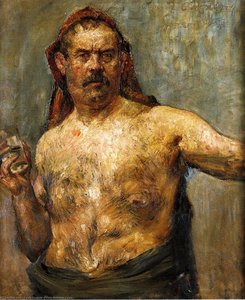
Lovis Corinth’s *Storm at Capo d'Ampeglio* (1912) isn’t merely a depiction of the rugged coastline of Liguria; it’s an embodiment of Expressionist fervor, capturing a visceral confrontation between humanity and the untamed power of the sea. Painted shortly after Corinth suffered a debilitating stroke – a pivotal moment that irrevocably altered his artistic trajectory – this monumental canvas transcends simple landscape representation to become a profound meditation on resilience and vulnerability.- Subject Matter: The painting portrays a tempestuous seascape dominated by towering waves crashing against jagged rocks, illuminated by an overcast sky. Amidst the drama of the storm, figures—presumably Corinth himself and his wife Charlotte—stand defiantly on the shore, attempting to assert control over the overwhelming forces of nature.
- Style & Technique: Corinth’s masterful brushwork is characterized by thick impasto – a technique where paint is applied in heavy layers – creating a palpable sense of texture and dynamism. The artist eschews meticulous detail, prioritizing expressive gesture and conveying emotion above precise realism. This stylistic choice aligns perfectly with the burgeoning Expressionist movement, which sought to depict inner psychological states rather than objective appearances.
- Historical Context: Corinth’s work emerged during a period of significant artistic upheaval in Germany. The Secession movement, spearheaded by artists like Corinth and Gustav Klimt, rejected academic conventions and championed individualism and emotional intensity as guiding principles. *Storm at Capo d'Ampeglio* reflects this spirit of rebellion against established norms, mirroring the broader anxieties and aspirations of its time.
- Symbolism: The storm itself serves as a potent symbol of adversity—a challenge to overcome—while the figures on the shore represent humanity’s struggle for survival in the face of overwhelming odds. Corinth's deliberate use of vertical brushstrokes contributes to this sense of instability and emphasizes the dominance of the natural world over human endeavor.
- Emotional Impact: Viewing *Storm at Capo d'Ampeglio* evokes a feeling of awe and apprehension. The artist’s expressive handling of paint captures the raw energy of the storm, conveying both its destructive force and its sublime beauty. It compels contemplation on themes of courage, perseverance, and the inescapable influence of external forces on human experience—themes that resonate deeply within Corinth's own personal struggles following his stroke.
Lovis Corinth: Bridging Impressionism & Expressionism – A Study of Artistic Evolution
Corinth’s artistic journey was marked by a gradual shift from the luminous landscapes of Impressionism to the emotionally charged canvases of Expressionism, driven by his own physical limitations. This transformation wasn't merely stylistic; it represented a fundamental rethinking of art’s role in conveying human emotion and confronting existential anxieties. As he wrestled with the consequences of his stroke—a devastating blow that threatened to extinguish his creative flame—Corinth embraced a bolder, more visceral approach to painting, cementing his legacy as one of Germany’s most influential artists of the early 20th century. His work continues to inspire admiration for its uncompromising honesty and its ability to capture the essence of human experience amidst turbulent circumstances.Preguntas y respuestas
¿Qué sentimiento transmite "Tormenta en Cabo Ampelio" de Lovis Corinth dentro de Expressionist Style?
"Tormenta en Cabo Ampelio" transmite un tono emocional Poderoso dentro del movimiento Expressionist Style.
¿Es "Tormenta en Cabo Ampelio" de dominio público?
En cuanto a los derechos de autor, "Tormenta en Cabo Ampelio" es en el dominio público: sus derechos de autor han expirado.
¿A qué movimiento y a qué época pertenece "Tormenta en Cabo Ampelio" de Lovis Corinth?
"Tormenta en Cabo Ampelio" pertenece al movimiento Expressionist Style, y su creador trabajó en la época Siglo XIX.
Biografía del artista
Primeros años y educación
Lovis Corinth, nacido Franz Heinrich Louis el 21 de julio de 1858 en Tapiau, Prusia, fue un artista y escritor alemán cuya obra madura como pintor y grabador realizó una síntesis del impresionismo y el expresionismo. La vida temprana de Corinth se caracterizó por su talento para dibujar, lo que le llevó a estudiar pintura en la Academia de Königsberg en 1876.Desarrollo artístico
El desarrollo artístico de Corinth fue influenciado por varias figuras clave y movimientos:- El trabajo temprano de Lovis Corinth era naturalista en su enfoque, alentado por su instructor Otto Günther.
- Estudió bajo Ludwig von Löfftz en la Academia de Bellas Artes de Múnich, que enfatizaba la cuidadosa observación de los colores y los valores.
- Corinth también fue influenciado por Courbet y la Escuela Barbizon, así como por las obras de Rubens durante su tiempo en Amberes.
Obras notables y estilo
Algunas de las obras notables de Corinth incluyen:- En el Matadero (78 x 89 cm, Staatsgalerie Stuttgart, Alemania), que muestra su uso del óleo sobre lienzo.
- Autorretrato (47 x 53 cm, Kunsthalle Bremen, Alemania), demostrando su habilidad en el dibujo.
- Semi desnudo femenino con sombrero (283 x 383 cm, Kunstpalast, Düsseldorf, Alemania), destacando su uso del lápiz.
Legado y vida posterior
La vida posterior de Corinth se marcó por su presidencia de la Secesión de Berlín desde 1915 hasta 1925. También publicó numerosos ensayos sobre historia del arte, incluido "Das Erlenen der Malerei" ("Sobre aprender a pintar") en 1908. Corinth falleció el 17 de julio de 1925, después de un derrame cerebral en 1911 que lo había paralizado parcialmente. Enlaces clave:
Lovis Corinth
1858 - 1925 , Países Bajos
Datos clave
- Artistas Que Influyeron:
- Courbet
- Rubens
- Löfftz
- Fecha De Fallecimiento: 17 de julio de 1925
- Fecha De Nacimiento: 21 de julio de 1858
- Influenciado A Artistas:
- Kirchner
- Beckmann
- Baselitz
- Lugar De Nacimiento: Tauwade, Países Bajos
- Movimiento Artístico: Impresionismo y Expresionismo
- Nacionalidad: Alemán
- Nombre Completo: Lovis Corinth (Franz Heinrich Louis)
- Obras Notables:
- En el Matadero
- Autorretrato
- Mujer semi-nuda con sombrero
Artículos relacionados

Expresionismo Figurado: Intensidad Emocional y Realidad Subjetiva en el Arte del Siglo XX
Explora la intensidad emocional del Expresionismo Figurado alemán. Descubre sus orígenes, artistas clave como Munch y Kirchner, y su legado en el arte moderno. Análisis experto y profundo.

Lovis Corinth: Bridging Impressionism & Expressionism – A Study of Artistic Evolution
Explore the fascinating artistic journey of Lovis Corinth, a pivotal figure bridging Impressionism & Expressionism. Discover his evolution, key works, and lasting impact on modern art with OriginalUniqueArt.
Expresionismo: 10 Obras Maestras que Revolucionaron el Arte |
Descubre las 10 obras maestras del Expresionismo que marcaron un hito en la historia del arte. Explora a Munch, Kirchner y Kandinsky en . Reproducciones de arte de museo para transformar tu hogar.

Expresionismo Alemán: 10 Obras Maestras que Transformaron el Arte | OriginalUniqueArt
Descubre las 10 obras maestras del Expresionismo Alemán: Kirchner, Munch y más. Explora la historia, técnica y emoción detrás de estos lienzos icónicos. Reproducciones de arte de museo en OriginalUniqueArt.com. ¡Inspira tu hogar con arte!

The Raw Emotion of Expressionism: A Deep Dive into its History, Characteristics & Enduring Influence
Explore the raw emotion of Expressionism with OriginalUniqueArt. Discover its history, key artists like Kirchner & Munch, and lasting influence on modern art. Expert insights for collectors & enthusiasts.