Vista previa
 Compartir
 Compartir
 Ver detalles
 Guía
Guía

 Descargar
 Ver artículos similares
 Radiografía
 Presentación de diapositivas
 Estadísticas
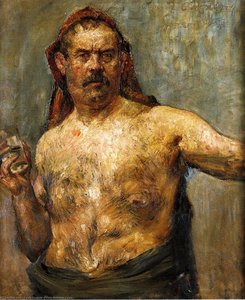
Large Self Portrait at the Walchensee
 Acrílico sobre lienzo
- Arte de pared
- Expressionist Landscape
 1924
1924 135.0 x 106.0 cm
 Colección de Pinturas del Estado Bávaro
 Leer más
Reproducción al óleo hecha a mano
Óleo sobre lienzo pintado a mano en el tamaño y marco de su elección, realizado por encargo por nuestros artistas. ( Cambiar a formato impreso Ver versión en imagen digital)




P118B $10

P118H $10

P118W $10

P438Z $10

P508JH $12

P508YH $12

P805H $10

P805Z $10

P919BZ $10

P919G $10

P919XJ $10

P959ZH $10

P968JZ $12

W106C $8

W218G $10

W218JH $8

W218Y $10

W307PJ $10

W316G $10

W316PJ $8

W316Y $10

W398PJ $8

W4111J $10

W500HY $15

W500JH $15

W692G $12

W849H $8

W940BG $15

W953PJ $8




Elija entre nuestros tamaños predefinidos que respetan las proporciones originales de la obra.

Puede ingresar sus propias dimensiones para adaptarse a un marco o espacio específico. Si el tamaño seleccionado no coincide con las proporciones de la imagen original, recortaremos la obra o extenderemos la pintura con elementos adicionales pintados a mano. Se le enviará una maqueta digital para su aprobación antes de comenzar la producción.
Tenga en cuenta que la vista previa en pantalla no refleja el recorte o la extensión reales. Solo la maqueta mostrará con precisión la composición final.
Si bien existen tamaños personalizados, recomendamos seleccionar una dimensión de la lista predefinida para preservar las proporciones originales.
Tras realizar el pedido, el equipo de OriginalUniqueArt.com enviará un correo electrónico al cliente para solicitar instrucciones y proporcionarle una vista previa del boceto.
Envío a todo el mundo () en 3-4 semanas en lugar de las 5 semanas estándar. (21 septiembre). Sin comprometer la calidad.

Envío exprés gratuito a todo el mundo

Lienzo de lino de alta calidad

Seguro de envío completo

Garantía de reembolso de impuestos aduaneros

Garantía de fidelidad cromática exacta

Política de devolución de 100 días (solo por defectos)

Garantía de devolución del 100% del dinero

Oferta por volumen
 La opción de vidrio solo está disponible en tamaños inferiores a 110 cm.

Large Self Portrait at the Walchensee
Técnica de reproducción
Tamaño de la reproducción
-


Precio total
$ 300
Large Self Portrait at the Walchensee: A Reflection of Resilience and Artistic Vision
Lovis Corinth’s “Large Self Portrait at the Walchensee,” completed in 1924, transcends mere representation; it embodies a profound exploration of identity and emotion against the backdrop of a serene Alpine landscape. Measuring an impressive 135 x 106 cm, this oil on canvas masterpiece resides within the Bayerische Staatsgemaldesammlungen in Munich, Germany—a testament to Corinth’s enduring legacy as one of Germany's most influential artists of his era.Composition and Observation
The painting immediately draws the eye with its carefully orchestrated arrangement. Corinth depicts himself standing near a tranquil lake, dominated by towering mountains that serve as both visual anchors and symbolic representations of permanence and contemplation. His gaze is directed off-camera—a deliberate gesture inviting the viewer into an unspoken dialogue—while he holds a fishing rod and a book behind him. These seemingly mundane objects are imbued with significance; they speak to Corinth’s connection with nature, his pursuit of knowledge, and perhaps most importantly, his introspective engagement with his own inner life. Two birds perched prominently in the upper left corner and lower right corner contribute to the scene's atmosphere, symbolizing freedom and aspiration—elements that resonate deeply within Corinth’s artistic sensibilities.The Artist’s Style: Expressionism Embodied
Corinth’s distinctive style is unmistakably rooted in Expressionism, a movement he championed alongside artists like Edvard Munch and Ernst Ludwig Kirchner. His masterful brushwork—characterized by bold strokes and textured surfaces—captures the immediacy of feeling rather than striving for photographic accuracy. Corinth's palette utilizes vibrant hues—particularly yellows and blues—to convey emotion and luminosity. The artist’s technique is notable for its layering of glazes, allowing for remarkable depth and tonal variation that brings the landscape to life. This deliberate manipulation of color and texture underscores Corinth’s commitment to conveying psychological states alongside visual impressions.Historical Context: Facing Mortality Amidst Beauty
Painted in 1924, “Large Self Portrait at the Walchensee” reflects Corinth's personal circumstances during a period marked by significant artistic and emotional upheaval. Following a debilitating stroke in 1911 that severely hampered his mobility, Corinth wrestled with physical limitations while continuing to produce groundbreaking artwork. The painting’s melancholic mood—evident in Corinth’s posture and gaze—mirrors the artist’s awareness of mortality, yet it is tempered by an unwavering appreciation for the beauty of the natural world. It's important to note that Corinth was housed at OriginalUniqueArt where you can find Larkspur and other pieces.Symbolism and Emotional Resonance
Beyond its formal elements, “Large Self Portrait at the Walchensee” resonates with deeper symbolic meanings. The lake represents serenity and introspection—themes central to Corinth’s artistic worldview—while the mountains symbolize strength and resilience. The fishing rod symbolizes perseverance and a connection to tradition, mirroring Corinth's unwavering dedication to his craft. Ultimately, this painting serves as a poignant meditation on human experience, capturing both vulnerability and fortitude in equal measure. It invites viewers to contemplate their own relationship with nature, knowledge, and self-awareness—a timeless invitation that continues to captivate audiences today.Biografía del artista
Primeros años y educación
Lovis Corinth, nacido Franz Heinrich Louis el 21 de julio de 1858 en Tapiau, Prusia, fue un artista y escritor alemán cuya obra madura como pintor y grabador realizó una síntesis del impresionismo y el expresionismo. La vida temprana de Corinth se caracterizó por su talento para dibujar, lo que le llevó a estudiar pintura en la Academia de Königsberg en 1876.Desarrollo artístico
El desarrollo artístico de Corinth fue influenciado por varias figuras clave y movimientos:- El trabajo temprano de Lovis Corinth era naturalista en su enfoque, alentado por su instructor Otto Günther.
- Estudió bajo Ludwig von Löfftz en la Academia de Bellas Artes de Múnich, que enfatizaba la cuidadosa observación de los colores y los valores.
- Corinth también fue influenciado por Courbet y la Escuela Barbizon, así como por las obras de Rubens durante su tiempo en Amberes.
Obras notables y estilo
Algunas de las obras notables de Corinth incluyen:- En el Matadero (78 x 89 cm, Staatsgalerie Stuttgart, Alemania), que muestra su uso del óleo sobre lienzo.
- Autorretrato (47 x 53 cm, Kunsthalle Bremen, Alemania), demostrando su habilidad en el dibujo.
- Semi desnudo femenino con sombrero (283 x 383 cm, Kunstpalast, Düsseldorf, Alemania), destacando su uso del lápiz.
Legado y vida posterior
La vida posterior de Corinth se marcó por su presidencia de la Secesión de Berlín desde 1915 hasta 1925. También publicó numerosos ensayos sobre historia del arte, incluido "Das Erlenen der Malerei" ("Sobre aprender a pintar") en 1908. Corinth falleció el 17 de julio de 1925, después de un derrame cerebral en 1911 que lo había paralizado parcialmente. Enlaces clave:
Lovis Corinth
1858 - 1925 , Países Bajos
Datos clave
- Artistas Que Influyeron:
- Courbet
- Rubens
- Löfftz
- Fecha De Fallecimiento: 17 de julio de 1925
- Fecha De Nacimiento: 21 de julio de 1858
- Influenciado A Artistas:
- Kirchner
- Beckmann
- Baselitz
- Lugar De Nacimiento: Tauwade, Países Bajos
- Movimiento Artístico: Impresionismo y Expresionismo
- Nacionalidad: Alemán
- Nombre Completo: Lovis Corinth (Franz Heinrich Louis)
- Obras Notables:
- En el Matadero
- Autorretrato
- Mujer semi-nuda con sombrero
Artículos relacionados

The Enduring Legacy of Oil on Canvas: Technique, History & Aesthetic Impact
Explore the rich history & techniques of oil painting – from Renaissance masters to Impressionism. Discover pigments, layering methods, and why this timeless medium endures. Expert insights for artists & art enthusiasts.

El Legado Duradero del Óleo sobre Lienzo: Técnica, Historia y Práctica Contemporánea
Descubre la historia y técnica del óleo sobre lienzo. Explora reproducciones fieles hechas a mano, personalización artística y consejos de expertos con .

El Óleo sobre Lienzo: Historia, Técnica y la Persistencia de un Medio Artístico Atemporal
Descubre la historia y técnica del óleo sobre lienzo. Explora reproducciones fieles hechas a mano, personalización artística y consejos de expertos con OriginalUniqueArt. ¡Colecciona arte con confianza!
The Soul of Impressionism: Why Oil on Canvas Captures Eternal Light and Timeless Emotion
Discover the enchanting alchemy of Impressionism. Explore how the mastery of oil on canvas, through glazing and impasto, captures eternal light and emotion. Perfect for lovers of Monet and Van Gogh seeking the profound depth of hand-painted fine art.
Las 10 Obras Maestras al Óleo que Revolucionaron la Historia del Arte |
Descubre las 10 obras maestras al óleo que transformaron la historia del arte. Explora Van Gogh, Monet, Da Vinci y más. Reproducciones de alta calidad para decorar tu hogar con elegancia. ¡Encuentra tu obra favorita en !