Ver en contexto
 Enviar
 Compartir
 Detalles
 Guía
Guía

 Descargar
 Similares
 Radiografía
 Presentación de diapositivas
 Preguntas y respuestas
 Estadísticas
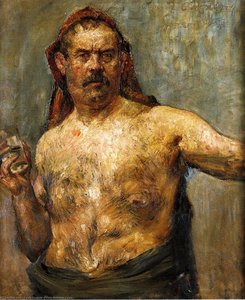
Ecce Homo

- 190.0 x 150.0 cm


 Ver más
Giclée / Impresión de arte
Impresiones giclée o en lienzo de calidad de museo con producción rápida y opciones de acabado flexibles. ( Comprar pintura hecha a mano Cambiar a imagen digital)




P118B €10

P118H €10

P118W €10

P438Z €10

P508JH €12

P508YH €12

P805H €10

P805Z €10

P919BZ €10

P919G €10

P919XJ €10

P959ZH €10

P968JZ €12

W106C €8

W218G €10

W218JH €8

W218Y €10

W307PJ €10

W316G €10

W316PJ €8

W316Y €10

W398PJ €8

W4111J €10

W500HY €15

W500JH €15

W692G €12

W849H €8

W940BG €15

W953PJ €8




Elija entre nuestros tamaños predefinidos que respetan las proporciones originales de la obra.

Introduzca el ancho y el alto que necesite para adaptarse a su marco o pared. Una impresión solo puede recortarse, nunca hacerse más grande que la imagen original, por lo que un tamaño con una forma distinta perderá parte de la obra. Le enviaremos una maqueta digital para su aprobación antes de realizar cualquier impresión. La imagen que se muestra en esta página no refleja el recorte real; solo la maqueta lo hace.
Envío a todo el mundo () en 2 semanas en lugar de las 4/5 semanas estándar. (8 noviembre)

Envío exprés gratuito a todo el mundo

Lienzo de lino de alta calidad

Seguro de envío total

Garantía de reembolso de aranceles aduaneros

Garantía de fidelidad cromática exacta

Política de devolución de 100 días (solo por defectos)

Garantía de devolución del 100% del dinero

Descuento por cantidad
 La opción de vidrio solo está disponible en tamaños inferiores a 110 cm.

Ecce Homo
Giclée / Impresión de arte
Dimensiones de la reproducción
-


Precio total final
€ 72
A Vision of Suffering and Grace: Lovis Corinth’s Ecce Homo
In the profound depths of 1925, a year that marked both a creative zenith and the final chapter for the German master Lovis Corinth, there emerged a work of staggering emotional intensity: Ecce Homo. This oil on canvas masterpiece, currently housed within the prestigious Kunstmuseum Basel, serves as a visceral window into one of history's most poignant moments. The painting captures the biblical moment of "Behold the Man," presenting a scene that transcends mere religious iconography to touch upon the universal essence of human vulnerability and resilience. Through his masterful command of the medium, Corinth invites the viewer into a space where the divine and the mortal collide under a heavy, atmospheric sky.
The composition is a masterclass in dramatic tension, centered around the figure of Jesus Christ, whose presence dominates the canvas with a quiet yet overwhelming gravity. Adorned with the crown of thorns, he stands flanked by two other figures, creating a triangular stability that is paradoxically disrupted by the raw, expressive energy of the brushwork. Corinth utilizes chiaroscuro—the dramatic interplay of light and shadow—to sculpt the forms of the men, lending them a sculptural weight that feels almost tangible. This technique does more than create depth; it directs the eye through a landscape of sorrow, where the stark highlights on the central figure’s face contrast sharply with the encroaching darkness, mirroring the spiritual struggle at the heart of the narrative.
Beyond the human drama, Corinth weaves subtle layers of symbolism into the periphery of the scene to enhance its dynamic movement. In the background, the presence of two horses and the delicate silhouettes of three birds drifting in the sky introduce a sense of life continuing amidst the tragedy. These elements provide a breath of naturalism that prevents the painting from becoming purely a study of grief, instead grounding the crucifixion in a living, breathing world. The artist’s ability to synthesize the structured traditions of Impressionism with the raw, emotive power of Expressionism allows the background to pulse with an almost restless energy, ensuring that every inch of the 190 x 150 cm canvas vibrates with life.
For the discerning collector or interior designer, a reproduction of Ecce Homo offers more than just a decorative element; it provides a profound focal point for any curated space. The painting’s rich textures and somber palette make it an ideal centerpiece for rooms designed to evoke contemplation, sophistication, and depth. Whether placed in a quiet study or a grand gallery-style living area, the work commands attention through its historical significance and its ability to stir the soul. Owning a high-quality hand-painted reproduction allows one to bring the heavy, transformative atmosphere of Corinth’s late period into the modern home, serving as a timeless reminder of the beauty found within the most profound human struggles.
Preguntas y respuestas
¿Cómo se combinan el contraste y la armonía en "Ecce Homo"?
El análisis cromático de "Ecce Homo" de Lovis Corinth presenta un Statement contraste y una Balanced Harmony armonía.
¿Dónde y para qué uso se recomienda "Ecce Homo"?
Se recomienda el uso de (Focal) y su ubicación en (Living Room) para "Ecce Homo" de Lovis Corinth.
¿Puedo usar la realidad aumentada para ver "Ecce Homo" de Lovis Corinth en mi habitación?
"Ecce Homo" cuenta con una vista previa en realidad aumentada: la página de Vista previa en RA de la obra permite visualizarla en su propio espacio mediante un dispositivo compatible.
Biografía del artista
Primeros años y educación
Lovis Corinth, nacido Franz Heinrich Louis el 21 de julio de 1858 en Tapiau, Prusia, fue un artista y escritor alemán cuya obra madura como pintor y grabador realizó una síntesis del impresionismo y el expresionismo. La vida temprana de Corinth se caracterizó por su talento para dibujar, lo que le llevó a estudiar pintura en la Academia de Königsberg en 1876.Desarrollo artístico
El desarrollo artístico de Corinth fue influenciado por varias figuras clave y movimientos:- El trabajo temprano de Lovis Corinth era naturalista en su enfoque, alentado por su instructor Otto Günther.
- Estudió bajo Ludwig von Löfftz en la Academia de Bellas Artes de Múnich, que enfatizaba la cuidadosa observación de los colores y los valores.
- Corinth también fue influenciado por Courbet y la Escuela Barbizon, así como por las obras de Rubens durante su tiempo en Amberes.
Obras notables y estilo
Algunas de las obras notables de Corinth incluyen:- En el Matadero (78 x 89 cm, Staatsgalerie Stuttgart, Alemania), que muestra su uso del óleo sobre lienzo.
- Autorretrato (47 x 53 cm, Kunsthalle Bremen, Alemania), demostrando su habilidad en el dibujo.
- Semi desnudo femenino con sombrero (283 x 383 cm, Kunstpalast, Düsseldorf, Alemania), destacando su uso del lápiz.
Legado y vida posterior
La vida posterior de Corinth se marcó por su presidencia de la Secesión de Berlín desde 1915 hasta 1925. También publicó numerosos ensayos sobre historia del arte, incluido "Das Erlenen der Malerei" ("Sobre aprender a pintar") en 1908. Corinth falleció el 17 de julio de 1925, después de un derrame cerebral en 1911 que lo había paralizado parcialmente. Enlaces clave:
Lovis Corinth
1858 - 1925 , Países Bajos
Datos clave
- Artistas Que Influyeron:
- Courbet
- Rubens
- Löfftz
- Fecha De Fallecimiento: 17 de julio de 1925
- Fecha De Nacimiento: 21 de julio de 1858
- Influenciado A Artistas:
- Kirchner
- Beckmann
- Baselitz
- Lugar De Nacimiento: Tauwade, Países Bajos
- Movimiento Artístico: Impresionismo y Expresionismo
- Nacionalidad: Alemán
- Nombre Completo: Lovis Corinth (Franz Heinrich Louis)
- Obras Notables:
- En el Matadero
- Autorretrato
- Mujer semi-nuda con sombrero
Artículos relacionados
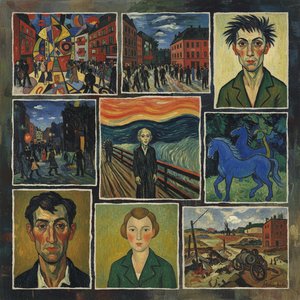
Expresionismo Pictórico: 10 Obras Maestras que Definieron un Movimiento Revolucionario | OriginalUniqueArt
Descubre las 10 obras maestras del expresionismo que revolucionaron el arte moderno. Explora la historia de Munch, Kirchner, Kandinsky y más. Reproducciones de alta calidad para decorar tu hogar con emoción y estilo en OriginalUniqueArt.com.
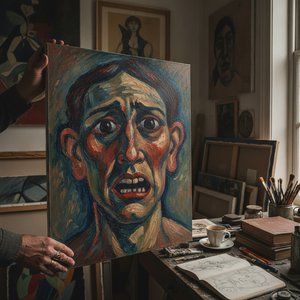
The Soul of Subjectivity: A Collector's Guide to the Raw Emotion and Lasting Power of Expressionist Art
Discover the profound power of Expressionist art. From the raw intensity of Edvard Munch to the visceral textures of Neo-Expressionism, explore how subjective emotion and distorted reality define this movement. An expert guide for discerning collectors seeking depth and soul in fine art.
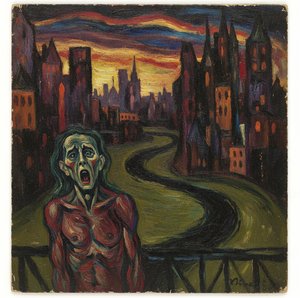
Unleashing Emotion: A Definitive Guide to the Power and Legacy of Expressionist Painting
Explore the profound emotional depth of Expressionist painting. From the bold colors of Emil Nolde to the distorted forms of Kirchner, discover how this movement redefined art through raw feeling and visceral texture in our expert guide to art history.
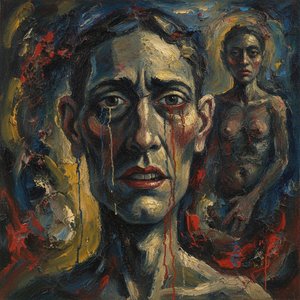
Beyond the Surface: The Raw Emotion and Subjective Truth of Expressionist Portraiture
Explore the profound emotional depth of Expressionist portraiture. From Edvard Munch to Francis Bacon, discover how masters used distortion and color to reveal inner truths. Learn about this pivotal movement and find museum-quality oil reproductions for your collection.

Unmasking Emotion: A Definitive Guide to the Psychological Depth of Expressionist Portraiture
Explore the profound psychological depth of Expressionist portraiture. From Munch to Schiele, discover how distorted forms and visceral brushstrokes unmask raw human emotion in this definitive guide for art enthusiasts and collectors.