Cambiar a impresiones
 Ver más







































 Para obras de arte o reproducciones que midan más de 105 cm (aproximadamente 41 pulgadas) en cualquiera de sus lados, el marco se enviará como un kit desmontado. Este método garantiza una entrega segura y evita daños durante el transporte.


Head of a Girl - Leonardo da Vinci
Leonardo da Vinci’s “Head of a Girl,” created around 1483 in Milan during the Early Renaissance, stands as an exquisite testament to his unparalleled mastery of observation and artistic expression. This deceptively simple sketch transcends mere representation; it embodies the very essence of humanist ideals prevalent at the time—a profound engagement with human anatomy and emotion captured with breathtaking precision.- Artist: Leonardo da Vinci (1452 – 1519)
- Date: c. 1483
- Location: Palazzo Reale di Torino, Turin, Italy
- Medium: Silverpoint on Prepared Paper
The technique of silverpoint—using a stylus dipped in molten silver—allowed Da Vinci to achieve an astonishing level of realism unattainable with tempera or fresco. Unlike other painting methods of the era, silverpoint demanded meticulous attention to detail and painstaking layering of lines, resulting in a surface texture that subtly captures the nuances of light and shadow. This careful approach is evident throughout the drawing, particularly in the rendering of the girl’s face.
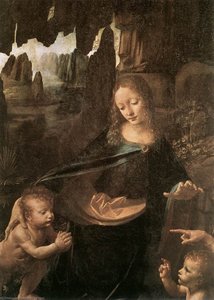
More than just a portrait, “Head of a Girl” serves as a pivotal study for Da Vinci's larger masterpiece, “The Virgin of the Rocks.” Scholars believe this preparatory sketch meticulously analyzed proportions and facial expressions—a cornerstone of Da Vinci’s scientific method—to inform the depiction of Mary Magdalene and Saint John in the iconic painting. The drawing exemplifies Da Vinci’s dedication to capturing not merely what he saw but also what he understood about human psychology.
The composition itself is remarkably restrained, focusing entirely on the girl's face. Her gaze directs directly at the viewer, conveying a sense of quiet contemplation and vulnerability. The artist skillfully employs hatching—parallel lines drawn close together—to sculpt the contours of her head and face, creating depth and volume without resorting to shading techniques common in other artworks of the period. This masterful use of line contributes significantly to the drawing’s emotional impact.
“Head of a Girl” continues to inspire admiration for its understated beauty and technical brilliance. Its timeless appeal resides not only in Da Vinci's artistic skill but also in his profound understanding of human anatomy and emotion—qualities that resonate powerfully across centuries. For those seeking to experience the grandeur of Renaissance art firsthand, OriginalUniqueArt offers exceptional reproductions of Da Vinci’s creations, including “Leonardo Da Vinci: Head of a girl” and “Study on the proportions of head and eyes,” allowing you to immerse yourself in the legacy of one of history's greatest geniuses.
- Symbolism: Represents humanist ideals—a deep engagement with human anatomy and emotion.
- Context: Preparatory study for “The Virgin of the Rocks.”
- Emotional Impact: Captures quiet contemplation, vulnerability, and a direct gaze at the viewer.
Explore more about Da Vinci’s artistic journey and discover stunning reproductions at OriginalUniqueArt.
Preguntas y respuestas
¿En qué año se creó "Cabeza de una niña" de Leonardo da Vinci?
"Cabeza de una niña" data de 1483. Esta fecha sitúa la obra dentro de la trayectoria de Leonardo da Vinci y de su época.
¿A qué periodo pertenece "Cabeza de una niña" de Leonardo da Vinci?
"Cabeza de una niña" pertenece a la época Renacimiento.
¿Qué origen nacional sustenta el Este dibujo pertenece al movimiento Otros debido a de "Cabeza de una niña"?
"Cabeza de una niña" vincula el movimiento Este dibujo pertenece al movimiento Otros debido a con Italia a través del lugar de nacimiento de su creador.
 Ver en contexto
 Enviar
 Compartir
 Detalles
 Guía
Guía

 Descargar
 Similares
 Radiografía
 Presentación de diapositivas
 Preguntas y respuestas
 Estadísticas