Ver en contexto
 Enviar
 Compartir
 Detalles
 Guía
Guía

 Descargar
 Similares
 Radiografía
 Presentación de diapositivas
 Preguntas y respuestas
 Estadísticas
Design for a wall decoration

- 180.0 x 216.0 cm


 Ver más
Giclée / Impresión de arte
Impresiones giclée o en lienzo de calidad de museo con producción rápida y opciones de acabado flexibles. ( Comprar pintura hecha a mano Cambiar a imagen digital)




P118B €10

P118H €10

P118W €10

P438Z €10

P508JH €12

P508YH €12

P805H €10

P805Z €10

P919BZ €10

P919G €10

P919XJ €10

P959ZH €10

P968JZ €12

W106C €8

W218G €10

W218JH €8

W218Y €10

W307PJ €10

W316G €10

W316PJ €8

W316Y €10

W398PJ €8

W4111J €10

W500HY €15

W500JH €15

W692G €12

W849H €8

W940BG €15

W953PJ €8




Elija entre nuestros tamaños predefinidos que respetan las proporciones originales de la obra.

Introduzca el ancho y el alto que necesite para adaptarse a su marco o pared. Una impresión solo puede recortarse, nunca hacerse más grande que la imagen original, por lo que un tamaño con una forma distinta perderá parte de la obra. Le enviaremos una maqueta digital para su aprobación antes de realizar cualquier impresión. La imagen que se muestra en esta página no refleja el recorte real; solo la maqueta lo hace.
Envío a todo el mundo () en 2 semanas en lugar de las 4/5 semanas estándar. (6 noviembre)

Envío exprés gratuito a todo el mundo

Lienzo de lino de alta calidad

Seguro de envío total

Garantía de reembolso de aranceles aduaneros

Garantía de fidelidad cromática exacta

Política de devolución de 100 días (solo por defectos)

Garantía de devolución del 100% del dinero

Descuento por cantidad
 La opción de vidrio solo está disponible en tamaños inferiores a 110 cm.

Design for a wall decoration
Giclée / Impresión de arte
Dimensiones de la reproducción
-


Precio total final
€ 72
Design for a Wall Decoration - Leonaert Bramer
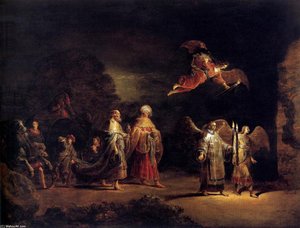
Leonaert Bramer’s “Design for a wall decoration,” created in 1645, stands as a testament to the Baroque fascination with dramatic nocturnal landscapes and intricate storytelling—a style that cemented his reputation as “Leonardo della Notte.” More than just a visual representation, this drawing embodies the spirit of its time, reflecting Delft’s artistic prowess during the Golden Age and offering valuable insights into the creative process of one of Holland's most celebrated painters.Composition and Narrative Depth
The artwork’s composition is deliberately dense, populated with figures arranged in a manner that suggests a theatrical scene unfolding within an architectural framework—likely conceived as inspiration for a monumental decorative panel. A central figure dominates the view, positioned with his back to the viewer, while another gazes forward slightly behind him, establishing a dynamic interplay of perspectives and inviting contemplation. Several seated individuals contribute to the visual tapestry, creating layers of depth and complexity that underscore the narrative intent. The arched doorway framing the scene serves as a focal point, guiding the eye inward and reinforcing the sense of enclosure—a characteristic element of Baroque art designed to immerse the viewer in an emotionally charged experience.Technique: Cross-Hatching and Illusionistic Rendering
Bramer’s masterful technique is evident in the extensive use of cross-hatching and fine lines meticulously applied to render textures and tonal variations with remarkable precision. These lines aren't merely descriptive; they actively sculpt the image, conveying a palpable sense of roughness on clothing surfaces and stone walls alike—a deliberate stylistic choice that contributes to the overall illusionistic effect. The varying density of lines simulates light reflection, creating subtle gradations of color and enhancing the realism of the depiction. This painstaking attention to detail reflects Bramer’s dedication to capturing not just what he saw but also how it felt—a hallmark of Baroque artistry aimed at transporting the viewer into another realm.Symbolism and Contextual Significance
The drawing's symbolism transcends its immediate visual elements, hinting at broader themes of power, piety, and human drama. The central figure’s attire – reminiscent of Middle Eastern influences – speaks to the artistic currents circulating in Europe during Bramer’s era, reflecting a fascination with exotic cultures and traditions. Furthermore, the architectural setting—particularly the archway—represents stability and grandeur, mirroring the aspirations of aristocratic patrons who commissioned such artworks. “Design for a wall decoration” exemplifies the Baroque preoccupation with conveying moral lessons through visual spectacle—a tradition rooted in Renaissance humanist ideals and fueled by religious fervor.Emotional Resonance: A Window into Baroque Aesthetics
Ultimately, Bramer’s drawing transcends mere decorative function; it aspires to evoke emotion and inspire contemplation. The artist's ability to capture the atmosphere of darkness and illumination—characteristic of nocturnal scenes—demonstrates a profound understanding of Baroque aesthetics. Like many artworks from this period, “Design for a wall decoration” seeks to engage the viewer on an intellectual and emotional level, prompting reflection on themes of faith, honor, and human experience. It remains a captivating example of artistic innovation and stylistic mastery—a timeless masterpiece that continues to resonate with audiences today.- Artist: Leonaert Bramer
- Date: 1645
- Medium: Pen on Paper
- Size: 180 x 216 cm
Preguntas y respuestas
¿Para qué uso se recomienda una impresión de "Design for a wall decoration"?
Se recomienda una reproducción de "Design for a wall decoration" de Leonaert Bramer para Accent, basándose en el tema, la atmósfera y los colores de la obra.
¿Cuál es la técnica y las dimensiones de "Design for a wall decoration" de Leonaert Bramer?
La obra original "Design for a wall decoration" de Leonaert Bramer es una pieza de Acrylic On Canvas con unas dimensiones de 180 x 216 cm. La técnica y el tamaño describen la obra original.
¿Qué paleta de colores y qué emoción evocan "Design for a wall decoration"?
La paleta Neutrals de "Design for a wall decoration" de Leonaert Bramer armoniza con su tono emocional Mysterious. El color es una de las formas en que una obra transmite sentimiento.
Biografía del artista
Leonaert Bramer: Una Vida en el Arte y la Intriga
- Nacido: Delft, Países Bajos (1596)
- Fallecido: 1674
Leonaert Bramer, también conocido como Leonard, fue un prolífico pintor holandés del siglo XVII. Es reconocido por sus escenas de género, obras religiosas y pinturas históricas, a menudo caracterizadas por sus escenarios nocturnos y detalles exóticos. Su vida estuvo marcada por extensos viajes, innovación artística e implicación en la vibrante escena cultural de Delft.
Primeros Años y Estancia Italiana
- Primeros Viajes: En 1614, a los 18 años, Bramer emprendió un viaje significativo que lo llevó por varias ciudades europeas, llegando finalmente a Roma en 1616.
- Bentvueghels y Vida Romana: Se convirtió en parte de los Bentvueghels, un grupo de artistas del norte que residían en Roma, ganándose el apodo de "Nestelghat" (Inquieto). Su tiempo en Italia no estuvo exento de incidentes, incluyendo una pelea con Claude Lorraine.
- Desarrollo Artístico en Italia: Bramer pasó un tiempo considerable en Roma, Mantua y Venecia, desarrollando sus habilidades y adquiriendo el sobrenombre de “Leonardo delle Notti” o "Leonardo de la Noche" debido a su afición por las escenas nocturnas. Dominó la pintura al fresco durante este período.
Regreso a Delft y Estilo Artístico
- Afiliación al Gremio: Regresando a Delft en 1628, Bramer se unió al Gremio de San Lucas en 1629.
- Patronazgo: Recibió el patrocinio de figuras prominentes como miembros de la Casa de Orange, así como funcionarios locales.
- Diversas Actividades Artísticas: Más allá de la pintura, Bramer diseñó para empresas de tapices y creó murales y techos, algunos empleando técnicas ilusionistas. Sus frescos, aunque ahora perdidos debido a las condiciones climáticas, fueron una característica notable de los edificios civiles de Delft.
- Estilo Único: El estilo de Bramer se caracteriza por su energía nerviosa y la hábil representación de la reflexión de la luz. A menudo favorecía temas italianos sobre los típicos sujetos holandeses como paisajes o bodegones.
Influencias y Relaciones Notables
- Influencias Artísticas: Bramer fue influenciado por Adam Elsheimer y el pintor de frescos Agostino Tassi.
- Relación con Johannes Vermeer: Jugó un papel significativo en la defensa de Johannes Vermeer cuando su futura suegra intentó impedir su matrimonio, sugiriendo una posible relación de mentoría entre los dos artistas. Se especula que Bramer pudo haber sido el maestro de Vermeer.
- El "Álbum Bramer": Esta colección de dibujos (1642-1654) proporciona información valiosa sobre las colecciones y prácticas artísticas de Delft en ese momento.
Legado y Significado Histórico
- Personalidad Intrincante: Bramer es considerado una figura intrigante en el arte holandés del siglo XVII debido a sus viajes, diversas actividades artísticas e implicación en varios círculos sociales.
- Visión Artística Única: Su preferencia por temas italianos y escenas nocturnas lo distinguieron de muchos de sus contemporáneos.
- Contribución a la Escena Artística de Delft: El trabajo de Bramer contribuyó significativamente a la vibrante escena artística de Delft, influyendo en generaciones posteriores de artistas.
- Reconocimiento Póstumo: A pesar de una venta de sus obras tras su muerte, el legado de Bramer ha sido reevaluado en tiempos recientes, consolidando su lugar como una figura importante en la historia del arte holandés.

Leonaert Bramer
1596 - 1674 , Países Bajos
Datos clave
- Artistas Que Influyeron:
- Adam Elsheimer
- Agostino Tassi
- Fecha De Muerte: 1674
- Fecha De Nacimiento: 24 de diciembre de 1596
- Lugar De Nacimiento: Delft, Países Bajos
- Movimiento Artístico: Barroco, Pintura de género
- Nacionalidad: Holandés
- Nombre Completo: Leonaert Bramer
- Obras Notables:
- El dolor de Hécuba
- Abraham y los tres ángeles
- Vanitas (Viena)
Artículos relacionados

Los 10 Maestros del Barroco Holandés: Obras que Definen una Época | OriginalUniqueArt
Descubre los 10 imprescindibles del Barroco holandés: Rembrandt, Vermeer y más. Explora la historia, técnica y belleza de estas obras maestras. Reproducciones de arte en OriginalUniqueArt.com para decorar tu hogar con elegancia.

Los 10 Maestros del Siglo de Oro Holandés: Arte, Historia y Decoración Exclusiva
Descubre los 10 imprescindibles del Siglo de Oro Holandés: Rembrandt, Vermeer y más. Explora la historia, técnica y belleza de estos lienzos clásicos. Encuentra reproducciones de arte exclusivas para decorar tu hogar en .

Golden Light & Dutch Skies: The Timeless Magic of Dutch Golden Age Landscapes
Discover the breathtaking beauty of Dutch Golden Age landscapes. Explore the mastery of light, chiaroscuro, and 17th-century realism through an expert art history lens, celebrating the enduring legacy of the Dutch Masters for discerning collectors and art lovers.

Reflejos de una Época Dorada: La Pintura Barroca Holandesa y la Innovación Cultural
Descubra la riqueza y el detalle de la pintura barroca holandesa del Siglo de Oro. Explore las obras maestras de Rembrandt, Vermeer y otros artistas clave. Análisis experto e historia cultural.

Chiaroscuro and Character: A Definitive Guide to Light and Shadow in the Dutch Baroque Era
Explore the dramatic mastery of the Dutch Baroque era. Discover how masters like Rembrandt used chiaroscuro to transform everyday life into timeless art. An expert guide for collectors and enthusiasts seeking to understand the profound interplay of light and shadow.