

 Ver en contexto
 Enviar
 Compartir
 Detalles

 Descargar
 Similares
 Radiografía
 Presentación de diapositivas
 Estadísticas
People
 Acrylic
- WallArt
- Minimalist Abstract Expression
 2003
2003 101.0 x 102.0 cm
 Museo de Arte Moderno de Buenos Aires
 Ver más
Giclée / Impresión de arte
Impresiones giclée o en lienzo de calidad de museo con producción rápida y opciones de acabado flexibles. ( Comprar pintura hecha a mano Cambiar a imagen digital)




P118B $10

P118H $10

P118W $10

P438Z $10

P508JH $12

P508YH $12

P805H $10

P805Z $10

P919BZ $10

P919G $10

P919XJ $10

P959ZH $10

P968JZ $12

W106C $8

W218G $10

W218JH $8

W218Y $10

W307PJ $10

W316G $10

W316PJ $8

W316Y $10

W398PJ $8

W4111J $10

W500HY $15

W500JH $15

W692G $12

W849H $8

W940BG $15

W953PJ $8




Elija entre nuestros tamaños predefinidos que respetan las proporciones originales de la obra.

Puede introducir sus propias dimensiones para adaptarse a un marco o espacio específico. Si el tamaño seleccionado no coincide con las proporciones de la imagen original, recortaremos la obra de arte o extenderemos la imagen con un borde con efecto espejo o de color sólido. Se enviará una maqueta digital para su aprobación antes de que comience la producción.
Tenga en cuenta que la vista previa en pantalla no refleja el recorte o la extensión real. Solo la maqueta mostrará con precisión la composición final.
Aunque existen tamaños personalizados, recomendamos seleccionar una dimensión de la lista predefinida para preservar las proporciones originales.
Envío a todo el mundo () en 2 semanas en lugar de las 4/5 semanas estándar. (14 septiembre)

Envío exprés gratuito a todo el mundo

Lienzo de lino de alta calidad

Seguro de envío total

Garantía de reembolso de impuestos aduaneros

Garantía de fidelidad cromática exacta

Política de devolución de 100 días (solo por defectos)

Garantía de devolución del 100% del dinero

Descuento por cantidad
 La opción de vidrio solo está disponible en tamaños inferiores a 110 cm.

People
Giclée / Impresión de arte
Dimensiones de la reproducción
-


Precio total final
$ 80
A Dense Tapestry of Circles: Exploring León David Ferrari’s “People”
León David Ferrari (1920 – 2013), an Argentine conceptual artist whose career spanned decades of artistic activism and profound reflection, bequeathed to the art world a singular vision—one that interrogated societal norms through meticulously crafted visual language. His work consistently challenged established ideologies, mirroring his unwavering commitment to social justice and intellectual freedom. Ferrari’s oeuvre is characterized by its confrontational spirit and its ability to provoke contemplation on complex themes of identity and power dynamics.Subject Matter and Conceptual Resonance
“People,” created in 2003, eschews traditional representational imagery entirely. Instead, it presents a field of densely packed dark circles against a muted grey backdrop—a deceptively simple composition that belies its considerable conceptual depth. The title itself is deliberately ambiguous, prompting viewers to consider the circles as symbolic representations of individuals or perhaps as metaphors for collective consciousness. Ferrari’s intention wasn't merely to depict something tangible; he aimed to communicate an emotional response – a feeling of overwhelming presence and interconnectedness—a core concern that permeated much of his artistic practice.Style and Technique: Minimalism Embodied
Ferrari’s stylistic approach aligns perfectly with the tenets of minimalism, prioritizing form over content and reducing visual elements to their bare essentials. The artwork exemplifies this aesthetic through its painstaking execution – a technique rooted in pointillism but devoid of chromatic vibrancy. Utilizing graphite pencils or ink pens on paper or canvas, Ferrari meticulously applied countless small circles across the surface, achieving an astonishing level of textural complexity despite the apparent simplicity of the method. This deliberate repetition underscores the artist’s fascination with patterns and their capacity to convey profound ideas.Historical Context: Argentina Under Dictatorship
Ferrari's artistic output was inextricably linked to the turbulent political landscape of Argentina during his lifetime, particularly the repressive military dictatorship that gripped the nation from 1976 to 1983. His art served as a powerful tool for resistance against censorship and oppression—a visual declaration of defiance against authoritarian rule. Pieces like “Western and Christian Civilization,” featuring the crucified Christ atop an American fighter jet, directly confronted governmental propaganda and questioned prevailing moral values. This engagement with political discourse solidified Ferrari’s reputation as a courageous voice advocating for artistic freedom and social reform.Symbolism: Density and Discomfort
The overwhelming density of circles within “People” contributes significantly to its symbolic weight. The repetition evokes feelings of anonymity, confinement, and perhaps even unease—themes that resonate deeply with Ferrari's broader critique of societal structures. Furthermore, the lack of perspective diminishes any illusion of depth, reinforcing the artwork’s flatness and emphasizing the importance of visual texture as a conduit for emotional expression. It invites viewers to consider not just what is seen but how it feels – prompting introspection on issues of isolation and collective responsibility.Emotional Impact: A Quiet Confrontation
Ultimately, “People” transcends mere visual decoration; it delivers a subtle yet potent emotional punch. Ferrari’s masterful manipulation of form and texture compels contemplation on fundamental questions about human existence and the role of art in challenging accepted beliefs. The artwork's understated elegance serves as a reminder that profound artistic statements can emerge from seemingly unassuming compositions—a testament to Ferrari’s enduring legacy as an artist who dared to confront uncomfortable truths with unwavering conviction.Biografía del artista
A Life Marked by Protest and Artistic Expression
León David Ferrari, an Argentine contemporary conceptual artist, left an indelible mark on the art world with his provocative works that challenged the status quo. Born in Buenos Aires, Argentina on September 3, 1920, Ferrari’s life was a testament to the power of artistic expression as a form of dissent. Early influences shaped his worldview and fueled his creative endeavors.Early Life and Career
Ferrari's artistic journey began in the early 1950s, coinciding with Argentina’s turbulent political landscape. Immediately disillusioned by governmental policies and imperialistic ambitions, he channeled his frustration into art—a medium capable of conveying complex ideas and questioning established norms. This conviction is vividly reflected in “Western and Christian Civilization,” a monumental piece created in 1965 that depicts Jesus Christ crucified on an American fighter jet. The artwork sparked considerable controversy upon its unveiling, highlighting Ferrari’s unwavering commitment to artistic critique and his willingness to confront uncomfortable truths.Notable Works and Exhibitions
Ferrari's oeuvre encompasses diverse mediums and stylistic explorations. Among his most celebrated creations are “Untitled (Paper),” a striking lithograph that exemplifies his mastery of printmaking techniques—a medium he skillfully utilized throughout his career. Similarly, "Banheiros Series," featuring minimalist prints, demonstrates his penchant for simplicity and conceptual rigor. These works gained recognition through exhibitions at institutions like Buenos Aires Museum of Modern Art (BUENOS AIRES), cementing Ferrari’s position as a pivotal figure in Argentine art history.Influences and Artistic Development
Ferrari's artistic trajectory was profoundly impacted by the pioneering ideas of Marcel Duchamp and Yves Klein, artists who championed conceptual art—a movement that prioritized concept over traditional aesthetics. Embracing this paradigm shift, Ferrari interrogated notions of representation and challenged viewers to reconsider their perceptions of reality. His exploration of symbolism and his engagement with religious themes further enriched his artistic vocabulary, resulting in works imbued with intellectual depth and emotional resonance.Legacy and Impact
León David Ferrari’s prolific career spanned from 1954 until his passing in July 25, 2013. Despite facing criticism—including vehement opposition from Pope Francis during Bergoglio's tenure—Ferrari remained steadfast in his artistic convictions. His enduring legacy resides not merely in the artworks themselves but also in their capacity to provoke dialogue and inspire contemplation about societal injustices. Ferrari’s contribution to Argentine art continues to resonate today, serving as a powerful reminder that art possesses the transformative potential to reshape perspectives and confront uncomfortable realities. Explore león david ferrari's artworks at OriginalUniqueArt.com.
León David Ferrari
1920 - 2013 , Argentina
Datos clave
- Artistic Movement Or Style: Arte Conceptual
- Artists Or Movements Influenced By This Artist:
- Minimalismo
- Neoexpresionismo
- Artists Who Influenced This Artist:
- Marcel Duchamp
- Yves Klein
- Date Of Birth: Septiembre 3, 1920
- Date Of Death: Julio 25, 2013
- Full Name: León David Ferrari
- Nationality: Argentino
- Notable Artworks:
- São Paulo Asociación Premio
- Sin título (Papel)
- Cristo sobre avión estadounidense
- Place Of Birth: Buenos Aires, Argentina
Artículos relacionados

The Soul of Color: A Journey into the Emotional Resonance of Lyrical Abstraction
Embark on a cultural journey through Lyrical Abstraction. Explore how masters like Kandinsky used color and motion to translate emotion into visual poetry. Discover the profound beauty of abstract expressionism and learn to curate emotional resonance in your own art collection.

Abstracción Geométrica: 10 Obras Maestras que Transformaron el Arte Moderno | OriginalUniqueArt
Descubre las 10 obras maestras de la abstracción geométrica que revolucionaron el arte moderno. Explora a Mondrian, Malevich y Kandinsky en OriginalUniqueArt.com. Reproducciones de alta calidad para tu hogar.

Expresionismo Abstracto: 10 Obras Maestras que Transformaron el Arte |
Descubre las 10 obras maestras del Expresionismo Abstracto: Pollock, Rothko y más. Explora la historia, técnica y significado de estos lienzos icónicos. Reproducciones de arte exclusivas en .

Kandinsky: Las 25 Obras Maestras del Pionero de la Abstracción | OriginalUniqueArt
Descubre las 25 obras maestras de Wassily Kandinsky, pionero del arte abstracto. Explora su expresionismo, composiciones únicas y la historia detrás de cada cuadro. Reproducciones de alta calidad para decorar tu hogar con arte moderno en OriginalUniqueArt.com.
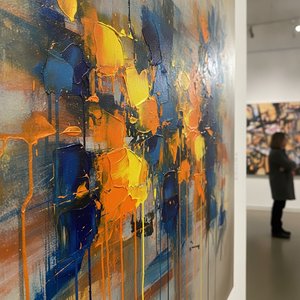
Beyond the Lines: Mastering the High-Impact World of Contemporary Abstraction
Master the high-impact world of contemporary abstraction. Discover how bold colors, textures, and modern movements like Abstract Expressionism can transform your space with premium, high-energy art curated for the design-conscious professional.

