
 Vista previa
 Compartir
 Compartir
 Ver detalles

 Descargar
 Ver similares
 Radiografía
 Presentación de diapositivas
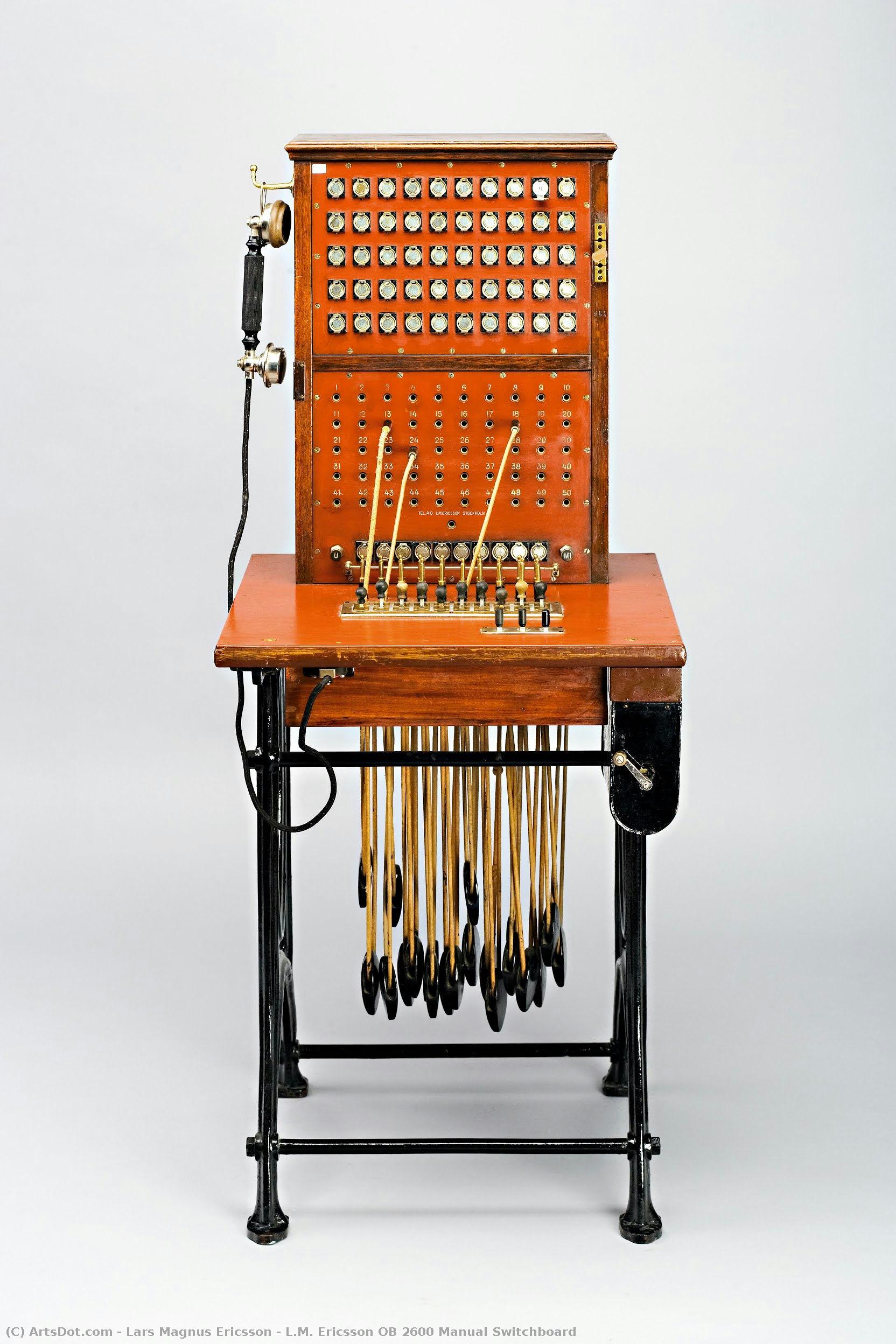
L.M. Ericsson OB 2600 Manual Switchboard
 1900
1900 135.0 x 57.0 cm
 Fundación Portuguesa das Comunicações
 Leer más
Adquiera una imagen digital de alta resolución y optimizada, muy superior a la vista previa en línea.
Cada archivo es preparado meticulosamente por nuestros especialistas internos mediante el uso de herramientas avanzadas y un experto retoque manual. Nos aseguramos de que cada imagen posea una claridad excepcional, una precisión cromática impecable y un detalle minucioso.
El archivo final se entrega por correo electrónico en un plazo de 72 horas, optimizado para su uso inmediato en entornos profesionales, editoriales y de impresión. Esta es la misma calidad en la que confían los estudios de diseño, las editoriales y las galerías de primer nivel.
Imagen Digital
Descarga un archivo de alta resolución para exhibición personal, impresión y proyectos creativos. ( Pedir impresión Encargar reproducción pintada a mano)
Incluido en cada compra de imágenes digitales
Entrega digital experta, garantizada.
Al elegir OriginalUniqueArt.com, no solo está adquiriendo una imagen; está recibiendo una obra de arte digital mejorada profesionalmente, elaborada con precisión y respaldada por una garantía de satisfacción. Esto es todo lo que incluye su pedido, automáticamente:

Entrega rápida por email
Recibirá su archivo de imagen digital en alta resolución por correo electrónico en un plazo de 72 horas tras realizar su pedido, listo para su uso inmediato.

Archivo digital optimizado por IA
Su obra de arte se optimiza profesionalmente mediante herramientas avanzadas de IA y edición manual, garantizando el máximo detalle, claridad y precisión cromática.

Reenvío gratuito de por vida
¿Has borrado o perdido tu archivo por error? No te preocupes: te lo volveremos a enviar en cualquier momento, sin coste adicional.

Sin gastos de importación, siempre
Disfrute de su obra de arte al instante sin aduanas, aranceles ni gastos de envío; las descargas digitales siempre están libres de impuestos.

Garantía de precisión de color
Garantizamos que su imagen digital refleje los colores originales con la mayor fidelidad posible, mediante el uso de herramientas profesionales y gestión del color.

Garantía de satisfacción de 60 días
Si no está satisfecho con su imagen digital, la revisaremos o le reembolsaremos el 100% en un plazo de 60 días, sin preguntas.

100% Garantía de devolución de dinero
¿No está satisfecho? Obtenga un reembolso completo dentro de los 60 días posteriores a la recepción de su archivo digital, sin necesidad de explicaciones.

Descuentos por volumen
Compra 3 imágenes, ahorra 10% - Compra 5, ahorra 15% - Compra 10+, ahorra 20%. Ideal para proyectos creativos, galerías y agencias.
Descripción del coleccionable
Biografía del artista
A Pioneer of Communication: Lars Magnus Ericsson
Lars Magnus Ericsson (1846-1926) stands as a monumental figure in the annals of technological innovation, primarily recognized for establishing Ericsson—a global telecom powerhouse that continues to shape our interconnected world today. Born in Nordenmässa, Sweden, his early life was marked by hardship following his father’s untimely death and subsequent labor as a miner, experiences which instilled within him a resilience and determination that would define his entire career trajectory. Despite limited formal education beyond the village school for five years, Ericsson demonstrated an extraordinary aptitude for mechanics and instrumentation from a remarkably young age—constructing Sweden's inaugural telephone line at just seventeen years old. This formative achievement foreshadowed his lifelong fascination with harnessing scientific principles to improve human life.- Early Influences & Apprenticeship: Ericsson’s intellectual curiosity blossomed during his apprenticeship under Öllers & Co., where he honed his skills in instrument making and collaborated closely with Alexander Graham Bell, refining Bell's telephone design—a pivotal step toward simplifying its cumbersome construction. The meticulous craftsmanship of Öllers & Co., combined with Bell’s groundbreaking research, profoundly impacted Ericsson’s artistic vision, fostering a dedication to precision and innovation that would permeate his entire inventive journey.
- Founding Ericsson & Innovation: Recognizing the transformative potential of telephony, Ericsson partnered with Carl Johan Andersson to establish a workshop in Stockholm in 1876, analyzing existing telephone technologies and crafting his own versions inspired by Siemens telephones. This visionary undertaking cemented Ericsson’s commitment to pushing boundaries and challenging conventional wisdom. He approached this endeavor not merely as a mechanical task but as an artistic exploration—a deliberate effort to reimagine established designs with elegance and efficiency.
The Birth of a Telecom Giant
Ericsson's entrepreneurial spirit propelled him beyond mere tinkering; he established Telefonaktiebolaget LM Ericsson, capitalizing on Bell’s advancements and Siemens’ innovations. This strategic foresight resulted in the creation of a company that would rapidly ascend to prominence—a testament to his astute understanding of market dynamics and technological trends. Notably, Ericsson spearheaded the development of Bluetooth technology, solidifying its position as one of the foremost innovators in wireless communication. His unwavering belief in harnessing scientific breakthroughs for societal benefit underscored his artistic ethos – a conviction that innovation should elevate human experience.- Notable Designs: Ericsson’s legacy extends beyond corporate success; he produced iconic telephone designs—the OB 2600 Manual Switchboard and the Wall Phone—which exemplify his commitment to both functionality and aesthetic elegance. These creations represent a significant contribution to industrial design history, demonstrating a masterful blend of form and function that continues to inspire contemporary designers.
A Legacy of Persistence & Vision
Ericsson’s personal life was marked by profound loss—the premature deaths of his son Johan and grandson Lars Magnus Jr., tragedies that underscored the fragility of human existence yet fueled his unwavering dedication to his craft. Despite facing considerable challenges, he remained steadfast in his belief in technological progress and consistently championed innovation—a perspective reflected in his skepticism regarding patents and his admiration for Siemens’ approach to technological advancement. He viewed invention not as a solitary pursuit but as an ongoing dialogue with the natural world – a conviction that shaped his artistic sensibility and drove him to create enduring symbols of human ingenuity.- Recognition & Remembrance: Though Ericsson shunned public acclaim, he commanded immense respect from his employees—a testament to his integrity and leadership qualities. His final resting place at Hågelby gård serves as a poignant reminder of his enduring influence on Swedish history and culture – a solemn celebration of a life dedicated to advancing human understanding through scientific exploration.
Historical Significance
Lars Magnus Ericsson’s impact transcends the realm of engineering; he embodies the spirit of transformative innovation—a figure whose unwavering dedication to improving human life continues to inspire generations of inventors and thinkers. His pioneering work in telephony fundamentally altered communication patterns, fostering global connectivity and shaping the contours of the 21st century. Ericsson remains a beacon of ingenuity – an artist who sculpted not just metal and glass but also the very fabric of our interconnected world.
Lars Magnus Ericsson
1846 - 1926 , Suecia
Datos clave
- Artistic Movement Or Style: Industrial Diseño
- Artists Who Influenced This Artist: ['Siemens & Halske']
- Date Of Birth: 5 de mayo de 1846
- Date Of Death: 17 de diciembre de 1926
- Full Name: Lars Magnus Ericsson
- Nationality: Sueco
- Notable Artworks:
- L. M. ERICSSON AC110 Desk Telephone
- L.M. Ericsson OB 2600 Manual Switchboard
- Place Of Birth: Nordenmässa, Suecia

