

 Vista previa
 Compartir
 Compartir
 Ver detalles
 Guía
Guía

 Descargar
 Ver artículos similares
 Radiografía
 Presentación de diapositivas
 Estadísticas
Revolving
 Acrylic On Canvas
- WallArt
- Dada Merz Collage
 1919
1919 123.0 x 89.0 cm
 MoMA
MoMA
 Leer más
Reproducción al óleo hecha a mano
Óleo sobre lienzo pintado a mano en el tamaño y marco de su elección, realizado por encargo por nuestros artistas. ( Cambiar a formato impreso Ver versión en imagen digital)




P118B $10

P118H $10

P118W $10

P438Z $10

P508JH $12

P508YH $12

P805H $10

P805Z $10

P919BZ $10

P919G $10

P919XJ $10

P959ZH $10

P968JZ $12

W106C $8

W218G $10

W218JH $8

W218Y $10

W307PJ $10

W316G $10

W316PJ $8

W316Y $10

W398PJ $8

W4111J $10

W500HY $15

W500JH $15

W692G $12

W849H $8

W940BG $15

W953PJ $8




Elija entre nuestros tamaños predefinidos que respetan las proporciones originales de la obra.

Puede ingresar sus propias dimensiones para adaptarse a un marco o espacio específico. Si el tamaño seleccionado no coincide con las proporciones de la imagen original, recortaremos la obra o extenderemos la pintura con elementos adicionales pintados a mano. Se le enviará una maqueta digital para su aprobación antes de comenzar la producción.
Tenga en cuenta que la vista previa en pantalla no refleja el recorte o la extensión reales. Solo la maqueta mostrará con precisión la composición final.
Si bien existen tamaños personalizados, recomendamos seleccionar una dimensión de la lista predefinida para preservar las proporciones originales.
Tras realizar el pedido, el equipo de OriginalUniqueArt.com enviará un correo electrónico al cliente para solicitar instrucciones y proporcionarle una vista previa del boceto.
Envío a todo el mundo () en 3-4 semanas en lugar de las 5 semanas estándar. (26 septiembre). Sin comprometer la calidad.

Envío exprés gratuito a todo el mundo

Lienzo de lino de alta calidad

Seguro de envío completo

Garantía de reembolso de impuestos aduaneros

Garantía de fidelidad cromática exacta

Política de devolución de 100 días (solo por defectos)

Garantía de devolución del 100% del dinero

Oferta por volumen
 La opción de vidrio solo está disponible en tamaños inferiores a 110 cm.

Revolving
Técnica de reproducción
Tamaño de la reproducción
-


Precio total
$ 300
A Dance with Chaos: Kurt Schwitters’ “Revolving”
Kurt Schwitters' "Revolving," painted in 1919, isn’t merely a painting; it’s an embodiment of the tumultuous spirit of the post-World War I era. Emerging from the wreckage of established order and grappling with the profound anxieties of a rapidly changing world, Schwitters created a visual language that rejects traditional representation in favor of raw emotion and fragmented experience. This work, executed in oil and mixed media on canvas within a wooden frame, is a cornerstone of his “Merz” project – a lifelong exploration into the possibilities of assemblage and abstraction, born from the debris of war and the desire to forge something new from the remnants of the old.
The painting immediately assaults the senses with its vibrant, almost frenetic energy. Bold circles dominate the composition, swirling and intersecting in a dynamic dance that suggests perpetual motion – hence the title. These aren’t serene, idealized forms; they are rough-hewn, imperfect, and imbued with an unsettling sense of instability. Scattered amongst these central motifs are smaller, more fragmented shapes: triangles, squares, and irregular patches of color—blues, greens, yellows, and oranges—that seem to be caught in a perpetual state of flux. Schwitters deliberately avoids precise lines or defined edges, opting instead for a technique that blends brushstrokes with the application of found materials – cord, wire mesh, cardboard, and even small objects – creating a textured surface that invites tactile exploration.
The Genesis of Merz: A Response to Rupture
To understand “Revolving,” one must delve into the context of Schwitters’ artistic development. Prior to 1918, he worked primarily in an expressionist style, influenced by artists like Kandinsky and Munch. However, the devastation of World War I irrevocably shattered his previous aesthetic sensibilities. He felt that traditional academic training was utterly inadequate for confronting the societal collapse and psychological trauma of the time. As Schwitters himself described it, “Everything had broken down and new things had to be made out of the fragments; and this is Merz.”
The term "Merz" – derived from a fragment of text in the phrase “Commerz und Privatbank” (commerce and private bank) – represents Schwitters’ innovative approach to art-making. He began collecting discarded materials—odds and ends, scraps of paper, broken objects—and incorporating them into his paintings, sculptures, and installations. This process wasn't about creating beautiful objects; it was a deliberate act of dismantling and reassembling the world around him, reflecting the fractured state of society and the artist’s own internal turmoil. “Revolving” exemplifies this perfectly – a chaotic yet strangely compelling composition built from the discarded fragments of modern life.
Symbolism in Motion: Circles and the Wheel
The recurring motif of circles within "Revolving" is particularly significant. Schwitters himself described his fascination with the “wheel,” viewing it as a metaphor for human activity, progress, and even destruction. The large central circle can be interpreted as representing the cyclical nature of time, the relentless turning of events, or perhaps the dizzying speed of modern life. The smaller circles orbiting this dominant form suggest a sense of contained energy, hinting at potential movement and transformation.
Furthermore, the painting’s title – “Revolving” – is not merely descriptive; it carries a profound symbolic weight. It speaks to the constant state of flux, the perpetual motion of ideas and emotions, and the inescapable feeling that everything is in a state of becoming. The work invites us to contemplate our own place within this dynamic system, questioning notions of stability and permanence.
A Legacy of Fragmentation: Schwitters and Modernism
"Revolving" stands as a pivotal work in Kurt Schwitters’ oeuvre and a crucial document in the development of modern art. It foreshadows the principles of Dadaism and Surrealism, emphasizing abstraction, chance, and the exploration of subconscious imagery. Schwitters' embrace of found objects and his rejection of traditional artistic conventions paved the way for later artists working with assemblage and collage, including Max Ernst and Joseph Cornell.
Today, “Revolving” continues to resonate with viewers, offering a powerful meditation on themes of chaos, transformation, and the enduring human need to find meaning in a world perpetually in motion. Its vibrant colors, dynamic composition, and evocative symbolism make it a captivating work of art that invites repeated contemplation and offers a glimpse into the mind of one of the 20th century’s most innovative artists.
Biografía del artista
Kurt Schwitters: Una vida en Merz
Primeros años y formación
- Nacimiento: 20 de junio de 1887, en Hannover, Alemania.
- Schwitters fue hijo único de Eduard y Henriette Schwitters. Su padre era copropietario de una tienda de ropa femenina.
- La situación financiera de la familia mejoró tras la venta del negocio en 1898, lo que les permitió vivir de las rentas de las propiedades adquiridas.
- Estudió arte en la Academia de Dresde entre 1909 y 1915, compartiendo aulas con artistas como Otto Dix y George Grosz, aunque aparentemente desconocía la obra de estos en aquel entonces.
- Schwitters sufrió su primera crisis epiléptica en 1901, lo que más tarde le eximió del servicio militar durante un periodo de la Primera Guerra Mundial.
Desarrollo artístico y el nacimiento de Merz
- Inicialmente, Schwitters trabajó con un estilo postimpresionista, y sus primeras obras reflejaban claramente esta influencia.
- La devastación de la Primera Guerra Mundial impactó profundamente su dirección artística. Sintió que la formación académica tradicional carecía de sentido ante el colapso de la sociedad.
- “En la guerra, las cosas estaban en un terrible caos… todo se había roto y había que crear cosas nuevas a partir de los fragmentos; y eso es Merz”.
- Alrededor de 1918, comenzó a crear collages abstractos utilizando objetos encontrados: trozos de papel, billetes y otros materiales desechados.
- El término “Merz” surgió de un fragmento de texto (“Commerz und Privatbank”) recortado de un anuncio e incorporado en una de sus primeras obras, *Das Merzbild* (1918-19).
Obras clave y estilos artísticos
- Merz Pictures: Estos collages son, posiblemente, la contribución más famosa de Schwitters. Representan una ruptura radical con el arte tradicional, abrazando el azar y la estética de la vida cotidiana.
- Merzbau: Una construcción arquitectónica monumental dentro de su hogar en Hannover, que evolucionó continuamente durante décadas. Era la encarnación tridimensional de los principios de Merz: un espacio laberíntico lleno de nichos, grutas y objetos encontrados.
- Assemblage y Arte de Instalación: Schwitters fue pionero en estas formas, desdibujando las fronteras entre la pintura, la escultura y la arquitectura.
- También trabajó en poesía, sonido, diseño gráfico y tipografía, explorando una amplia gama de medios artísticos.
Influencias y conexiones
- Sus primeras influencias incluyeron el postimpresionismo, pero rápidamente trascendió estas convenciones.
- Aunque estuvo asociado al Dadaísmo, Schwitters mantuvo una identidad artística propia. Inicialmente fue rechazado por algunos dadaístas debido a sus vínculos con el expresionismo.
Vida tardía y legado
- Ante la creciente persecución del régimen nazi debido a su “arte degenerado”, Schwitters huyó de Alemania en 1937.
- Pasó un tiempo en Noruega e Inglaterra, continuando la creación de obras Merz a pesar de las difíciles circunstancias. Fue brevemente internado como extranjero enemigo durante la Segunda Guerra Mundial.
- Fallecimiento: 8 de enero de 1948, en Ambleside, Inglaterra.
- La obra de Kurt Schwitters influyó profundamente en las generaciones posteriores de artistas, particularmente en aquellos vinculados al Pop Art, el Minimalismo y el Arte Conceptual.
- Su uso innovador de objetos encontrados y su exploración de la relación entre el arte y la vida cotidiana continúan resonando en el público contemporáneo.
Significado histórico
- La estética Merz de Schwitters desafió las nociones tradicionales de belleza artística y autoría.
- Expandió la definición de arte al incorporar materiales no artísticos y borrar las líneas entre diferentes disciplinas.
- Su obra permanece como un poderoso testimonio del potencial creativo de la fragmentación, la reconstrucción y la aceptación del azar.

Kurt Schwitters
1887 - 1948 , Alemania
Datos clave
- Birth Date: 20 de junio de 1887
- Birth Place: Hanover, Alemania
- Death Date: 1948
- Movement:
- Dadaísmo
- Constructivismo
- Surrealismo
- Merz
- Name: Kurt Schwitters
- Nationality: Alemán
- Notable Works:
- Cuadros Merz
- Merzbau
Artículos relacionados

Lyrical Abstraction: The High-Energy Soul of Modern Art’s Most Vibrant Movement
Dive into the high-energy world of Lyrical Abstraction. Explore how bold colors, fluid motion, and emotional depth define this modern masterpiece movement. Discover iconic artists and learn to bring this vibrant, soulful energy into your contemporary space.

Abstracción Geométrica: 10 Obras Maestras que Transformaron el Arte Moderno | OriginalUniqueArt
Descubre las 10 obras maestras de la abstracción geométrica que revolucionaron el arte moderno. Explora a Mondrian, Malevich y Kandinsky en OriginalUniqueArt.com. Reproducciones de alta calidad para tu hogar.

Expresionismo Abstracto: 10 Obras Maestras que Transformaron el Arte |
Descubre las 10 obras maestras del Expresionismo Abstracto: Pollock, Rothko y más. Explora la historia, técnica y significado de estos lienzos icónicos. Reproducciones de arte exclusivas en .

Kandinsky: Las 25 Obras Maestras del Pionero de la Abstracción | OriginalUniqueArt
Descubre las 25 obras maestras de Wassily Kandinsky, pionero del arte abstracto. Explora su expresionismo, composiciones únicas y la historia detrás de cada cuadro. Reproducciones de alta calidad para decorar tu hogar con arte moderno en OriginalUniqueArt.com.
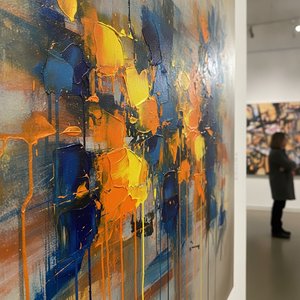
Beyond the Lines: Mastering the High-Impact World of Contemporary Abstraction
Master the high-impact world of contemporary abstraction. Discover how bold colors, textures, and modern movements like Abstract Expressionism can transform your space with premium, high-energy art curated for the design-conscious professional.