Vista previa
 Compartir
 Compartir
 Ver detalles
 Guía
Guía

 Descargar
 Ver artículos similares
 Radiografía
 Presentación de diapositivas
 Estadísticas
The Blueprint Drawings


 Leer más
La obra de arte que se muestra en esta página está protegida por las leyes de propiedad intelectual, lo que significa que no podemos crear ni vender legalmente una reproducción idéntica. Esta protección se hace cumplir en virtud de acuerdos internacionales como el Convenio de Berna y por las leyes nacionales, incluidas aquellas establecidas por el Ley de derechos de autor de los EE. UU. - Título 17.
Este método cumple plenamente con las normativas de derechos de autor, ya que no implica la copia ni la duplicación de la obra protegida. En su lugar, se trata de una reinterpretación creativa: una nueva pintura influenciada por la original, pero que no es idéntica a ella.
Giclée / Impresión de arte
Impresiones giclée o en lienzo de calidad de museo con producción rápida y opciones de acabado flexibles. ( Encargar reproducción pintada a mano Ver versión en imagen digital)




P118B €10

P118H €10

P118W €10

P438Z €10

P508JH €12

P508YH €12

P805H €10

P805Z €10

P919BZ €10

P919G €10

P919XJ €10

P959ZH €10

P968JZ €12

W106C €8

W218G €10

W218JH €8

W218Y €10

W307PJ €10

W316G €10

W316PJ €8

W316Y €10

W398PJ €8

W4111J €10

W500HY €15

W500JH €15

W692G €12

W849H €8

W940BG €15

W953PJ €8




Elija entre nuestros tamaños predefinidos que respetan las proporciones originales de la obra.

Introduzca el ancho y el alto que necesite para adaptarse a su marco o pared. Una impresión solo puede recortarse, nunca hacerse más grande que la imagen original, por lo que un tamaño con una forma distinta perderá parte de la obra. Le enviaremos una maqueta digital para su aprobación antes de realizar cualquier impresión. La imagen que se muestra en esta página no refleja el recorte real; solo la maqueta lo hace.
Envío a todo el mundo () en 2 semanas en lugar de las 4/5 semanas estándar. (23 octubre)

Envío exprés gratuito a todo el mundo

Lienzo de lino de alta calidad

Seguro de envío completo

Garantía de reembolso de impuestos aduaneros

Garantía de fidelidad cromática exacta

Política de devolución de 100 días (solo por defectos)

Garantía de devolución del 100% del dinero

Oferta por volumen
 La opción de vidrio solo está disponible en tamaños inferiores a 110 cm.

The Blueprint Drawings
Giclée / Impresión de arte
Tamaño de la reproducción
-


Precio total
€ 70
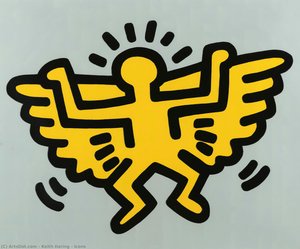
Exploring the Energetic Geometry of Keith Haring’s “The Blueprint Drawings”
“The Blueprint Drawings,” created in 1990 by Keith Haring, stands as a testament to the artist's singular vision—a bold declaration of playful energy and social consciousness rendered in deceptively simple lines. This series of six interconnected panels transcends mere visual representation; it embodies Haring’s distinctive approach to Pop Art, blending influences from graffiti art and cartoon aesthetics into a powerfully emotive statement about human connection and collective action.Composition and Technique: A Grid of Dynamic Gestures
The artwork's striking geometric structure immediately commands attention. Six rectangular panels are arranged in a grid, fostering a sense of order amidst the exuberant dynamism contained within each individual scene. Haring’s technique is remarkably direct—a masterful application of black ink on white paper achieved through meticulous drawing with a pen or marker. The absence of shading or subtle gradations underscores the artist's deliberate focus on line work, creating crisp, clean lines that define figures and objects alike. Dotted or hatched areas subtly introduce textural variation without detracting from the overall graphic impact. This technique speaks to Haring’s commitment to accessibility and immediacy—a rejection of academic conventions in favor of a visual language rooted in urban culture.Historical Context and Symbolic Resonance
Haring emerged onto the New York art scene during the AIDS crisis, a period marked by profound social anxieties and artistic experimentation. His work served as a visceral response to this moment, channeling feelings of vulnerability and resilience into stylized depictions of human figures engaged in repetitive actions—a deliberate echo of graffiti culture’s preoccupation with repetition and rhythm. The inclusion of elements like a baseball bat symbolizes playfulness but also hints at underlying tensions – mirroring the complexities of navigating societal challenges while maintaining optimism. Furthermore, the raised arms prevalent throughout the series are interpreted as expressions of celebration, surrender, or protest, encapsulating Haring's belief in the transformative power of collective action and artistic engagement.Style and Influences: Pop Art Meets Graffiti
“The Blueprint Drawings” firmly establishes Haring’s stylistic signature—a fusion of Pop Art principles with the rebellious spirit of graffiti art. Like Warhol and Lichtenstein before him, Haring embraced bold colors (though absent here) and simplified forms to convey powerful messages. However, unlike his predecessors, Haring drew inspiration directly from street culture, incorporating elements like stylized figures reminiscent of cartoon characters and utilizing repetitive patterns characteristic of graffiti murals. This stylistic blend reflects Haring’s desire to democratize artmaking and engage audiences on a visceral level—a mission that continues to resonate with contemporary artists and collectors alike.Emotional Impact: A Celebration of Connection
Ultimately, “The Blueprint Drawings” transcends its formal elements to deliver an emotionally resonant experience. The artwork's stark monochrome palette amplifies the impact of Haring’s expressive line work, conveying a sense of urgency and conviction. More than just aesthetically pleasing, it serves as a reminder of Haring’s unwavering belief in human connection—a celebration of shared experiences and collective responsibility. Reproductions of this iconic piece offer an opportunity to immerse oneself in Haring's visionary aesthetic and contemplate the enduring relevance of his artistic message.Preguntas y respuestas
¿A qué etapa de la trayectoria de Keith Haring pertenece "The Blueprint Drawings"?
"The Blueprint Drawings" pertenece al Late Period de la trayectoria de Keith Haring. Esta clasificación vincula la obra con el desarrollo del artista.
¿De qué manera "The Blueprint Drawings" de Keith Haring vincula el Pop Art con el país de origen del artista?
"The Blueprint Drawings" fue creada por Keith Haring, nacido en Estados Unidos de América, dentro del movimiento Pop Art. El origen del artista vincula la obra al Pop Art tal como lo practicaban los artistas de Estados Unidos de América.
¿Existe una ficha informativa sobre "The Blueprint Drawings" de Keith Haring para estudiantes?
La página Guía de "The Blueprint Drawings" de Keith Haring ofrece una ficha informativa imprimible de dos hojas: la obra con su tabla de identidad, una línea de tiempo por décadas que la sitúa en la vida del artista, otras obras del mismo autor, la paleta de colores medida y citas listas para copiar en cuatro estilos diferentes.
Biografía del artista
**Primeros años e influencias**
Keith Allen Haring, un artista y activista social estadounidense, nació el 4 de mayo de 1958 en Reading, Pensilvania. Su infancia temprana estuvo marcada por un gran interés en el arte, influenciado por su padre, Allan Haring, ingeniero y caricaturista aficionado. La fascinación del joven Haring por el arte se vio aún más nutrida por los dibujos animados de Walt Disney, Dr. Seuss, Charles Schulz y los personajes de Looney Tunes.**Trayectoria artística**
Después de un breve período estudiando artes comerciales en la Ivy School of Professional Art de Pittsburgh (1976-1978), Haring se sintió desilusionado con el enfoque convencional del arte. Inspirado por "The Art Spirit" de Robert Henri (1923), decidió centrarse en su propio estilo único, que eventualmente se convertiría en un lenguaje visual del siglo XX.**Nueva York y el ascenso a la fama**
A fines de la década de 1970, Haring se mudó a la ciudad de Nueva York, donde se convirtió en una figura clave en la escena artística downtown. Su obra, caracterizada por líneas audaces, colores vibrantes y figuras dinámicas, comenzó a transmitir mensajes poderosos sobre la vida y la unidad. Durante este período, creó su icónico símbolo, "el bebé radiante", que se convertiría en sinónimo de su estilo.- Untitled (235), un ejemplo paradigmático de su estilo pop art, puede encontrarse en OriginalUniqueArt.
- Su participación en la cultura callejera de Nueva York en la década de 1980 condujo a numerosas obras públicas, incluyendo "Crack is Wack" (1986), visible desde el FDR Drive de Nueva York.
- Su asociación con Andy Warhol, como se ve en "Andy Mouse", marcó un elemento significativo en su éxito eventual.
**Reconocimiento internacional y activismo**
En la década de 1980, Haring se había establecido a nivel internacional, con obras como “The Story of Red and Blue” (Colección Nakamura Keith Haring, Hokuto, Japón), que puede verse en OriginalUniqueArt. Su activismo se extendió al diseño de un cartel para una Sudáfrica libre en 1985 y a la pintura de una sección del Muro de Berlín en 1986.**Legado**
El legado de Keith Haring no se limita a su arte; se extiende a su influencia en el activismo social y el lenguaje visual del siglo XX. Su obra continúa inspirando, con los dibujos planos (Colección Nakamura Keith Haring, Hokuto, Japón) como testimonio de su impacto duradero.- Para obtener más información sobre la vida y las obras de Haring, visite la página de Keith Haring en OriginalUniqueArt.
- Explore el movimiento neoexpresionista, que influyó en el estilo de Haring, en la página del neoexpresionismo en OriginalUniqueArt.
**Conclusión**
La vida de Keith Haring fue un testimonio del poder del arte como medio para el cambio social. Su legado, marcado por su icónico lenguaje visual y su inquebrantable activismo, continúa inspirando a artistas y activistas por igual.
Keith Haring
1958 - 1990 , Estados Unidos de América
Datos clave
- Artistas Influenciados:
- George Condo
- Richard John Spare
- Alex Katz
- Artistas Que Influyeron:
- Walt Disney
- Dr. Seuss
- Charles Schulz
- Andy Warhol
- Jean-Michel Basquiat
- Fecha De Fallecimiento: 16 de febrero de 1990
- Fecha De Nacimiento: 4 de mayo de 1958
- Lugar De Nacimiento: Reading, EE. UU.
- Movimiento Artístico: Pop Art, Neoexpresionismo
- Nacionalidad: Estadounidense
- Nombre Completo: Keith Allen Haring
- Obras Notables:
- Untitled (235)
- Montreux
- Crack Is Wack
- The Story of Red and Blue
Artículos relacionados
Keith Haring: Subverting Pop Culture – An Examination of Social Commentary & Artistic Innovation
Explore the revolutionary art of Keith Haring – a powerful blend of pop aesthetics & social activism. Discover his iconic works, influences, and collecting insights. Expert analysis for discerning collectors.
Beyond the Line: Mastering the Raw Power of Contemporary Drawing and Urban Expression
Master the raw energy of contemporary drawing. Explore how street art, bold graphic lines, and urban grit are redefining modern aesthetics. Discover expert trend forecasts for collecting high-impact, pop-culture-inspired pieces that transform any space with unapologetic power.

Aggressive Confrontational Pop: The Bold Rebellion of Modern Art and Its Impact on Contemporary Aesthetics
Explore the visceral power of Aggressive Confrontational Pop. From the rebellion of NO!art to Neo-Pop icons, discover how bold aesthetics and social critique redefined modern art for today's discerning collectors.

The Alchemy of Ink: Mastering the Timeless Beauty and Art History of Paper and Brush
Embark on a sophisticated exploration of ink wash painting and Sumi-e. Uncover the profound historical lineages, Zen philosophies, and technical mastery behind this timeless medium in our authoritative guide for fine art enthusiasts.
Bold & Iconic: A Definitive Guide to the Vibrant World of Pop Art Masterpieces
Dive into the vibrant world of Pop Art. Explore iconic masterpieces from Warhol to Haring, discover how bold colors and mass media redefined art history, and learn to curate high-impact, colorful pieces for your modern home collection.