

 Vista previa
 Compartir
 Compartir
 Ver detalles
 Guía
Guía

 Descargar
 Ver artículos similares
 Radiografía
 Presentación de diapositivas
 Estadísticas
Daturas
 Pastel
- Symbolism
 1900
1900- 19th Century
 47.0 x 63.0 cm
 Fondo de Arte Lituano
 Leer más
Reproducción al óleo hecha a mano
Óleo sobre lienzo pintado a mano en el tamaño y marco de su elección, realizado por encargo por nuestros artistas. ( Cambiar a formato impreso Ver versión en imagen digital)




P118B €10

P118H €10

P118W €10

P438Z €10

P508JH €12

P508YH €12

P805H €10

P805Z €10

P919BZ €10

P919G €10

P919XJ €10

P959ZH €10

P968JZ €12

W106C €8

W218G €10

W218JH €8

W218Y €10

W307PJ €10

W316G €10

W316PJ €8

W316Y €10

W398PJ €8

W4111J €10

W500HY €15

W500JH €15

W692G €12

W849H €8

W940BG €15

W953PJ €8




Elija entre nuestros tamaños predefinidos que respetan las proporciones originales de la obra.

Puede ingresar sus propias dimensiones para adaptarse a un marco o espacio específico. Si el tamaño seleccionado no coincide con las proporciones de la imagen original, recortaremos la obra o extenderemos la pintura con elementos adicionales pintados a mano. Se le enviará una maqueta digital para su aprobación antes de comenzar la producción.
Tenga en cuenta que la vista previa en pantalla no refleja el recorte o la extensión reales. Solo la maqueta mostrará con precisión la composición final.
Si bien existen tamaños personalizados, recomendamos seleccionar una dimensión de la lista predefinida para preservar las proporciones originales.
Tras realizar el pedido, el equipo de OriginalUniqueArt.com enviará un correo electrónico al cliente para solicitar instrucciones y proporcionarle una vista previa del boceto.
Envío a todo el mundo () en 3-4 semanas en lugar de las 5 semanas estándar. (11 octubre). Sin comprometer la calidad.

Envío exprés gratuito a todo el mundo

Lienzo de lino de alta calidad

Seguro de envío completo

Garantía de reembolso de impuestos aduaneros

Garantía de fidelidad cromática exacta

Política de devolución de 100 días (solo por defectos)

Garantía de devolución del 100% del dinero

Oferta por volumen
 La opción de vidrio solo está disponible en tamaños inferiores a 110 cm.

Daturas
Técnica de reproducción
Tamaño de la reproducción
-


Precio total
€ 259
A Symphony of Pastel Petals
In the delicate, ephemeral strokes of Kazimierz Stabrowski’s "Daturas," we find ourselves transported to the turn of the 20th century, an era where the boundaries between reality and dream began to blur. This exquisite pastel work is far more than a mere botanical study; it is a vibrant, breathing testament to the vitality of nature. The composition unfolds with an organic, almost spontaneous energy, capturing the essence of the Datura flower in all its sprawling glory. Each blossom, rendered with a masterful touch, seems to pulse with life against the soft, textured backdrop. The artist utilizes the unique properties of pastel to create a sense of depth and luminosity, where the brilliant whites and subtle nuances of color dance across the surface, inviting the viewer to linger on every petal and leaf.
The technique employed by Stabrowski reveals a profound understanding of light and texture. By utilizing a slightly sketchy, impressionistic approach, he avoids the rigidity of scientific illustration, opting instead to convey the impression of the plant's movement and spirit. The interplay of light across the various sizes and shapes of the flowers creates a rhythmic visual melody, where at least thirteen distinct blooms emerge from the canvas, each possessing its own unique character. This soft-focus, tactile quality makes the artwork feel incredibly intimate, as if one is leaning in to catch the faint, nocturnal scent of these famous blossoms.
Symbolism and the Spirit of an Era
To understand "Daturas," one must look toward the cultural landscape of early 20th-century Lithuania and Poland. During this period, the cultivation of Daturas was a mark of elegance in manor houses, representing a connection to both botanical beauty and the refined lifestyle of the landed gentry. Stabrowski, a master of the Symbolist movement, imbues these flowers with a deeper, more spiritual resonance. The white blossoms, often associated with purity and the ethereal, reflect his fascination with the unseen realms—a passion that would later lead him to found the Theosophical Society in Poland. In this piece, the vitality of the plant serves as a metaphor for the enduring strength of nature amidst the shifting tides of human history.
There is a hauntingly beautiful quality to the work, a sense of romanticism that speaks to the soul. The way the flowers occupy the space—sometimes bold and prominent, sometimes receding into the soft shadows—mirrors the complexity of memory and emotion. For the collector or the lover of fine art, this painting offers a window into a lost world of elegance and mysticism, making it an evocative centerpiece for any curated collection.
An Elegant Addition to the Modern Interior
For interior designers and connoisseurs of fine decor, "Daturas" presents a magnificent opportunity to introduce a sense of historical depth and organic warmth into a living space. The artwork’s palette, characterized by its luminous whites and natural greens, possesses a versatile elegance that complements both classical and contemporary settings. Whether placed in a sun-drenched morning room or a sophisticated, moody study, the painting acts as a focal point that commands attention through subtlety rather than force.
A high-quality reproduction of this masterpiece allows the timeless charm of Stabrowski’s vision to reside within your home. It brings with it an atmosphere of tranquility and intellectual curiosity, serving as a conversation piece that bridges the gap between the botanical world and the heights of human artistic achievement. Investing in such a piece is not merely about decoration; it is about surrounding oneself with the enduring beauty of the Symbolist tradition and the quiet, powerful grace of the natural world.
Preguntas y respuestas
¿Cómo se combinan la emoción y la ocasión de regalo en "Daturas" de Kazimierz Stabrowski?
El tono Joyful de "Daturas" de Kazimierz Stabrowski combina a la perfección con su ocasión de regalo recomendada: Mother's Day.
¿A qué se debe el estado de los derechos de autor de "Daturas"?
El estado de los derechos de autor de "Daturas" - en el dominio público: sus derechos de autor han expirado - se deriva del fallecimiento del artista en 1929.
¿En qué año se creó "Daturas" de Kazimierz Stabrowski?
"Daturas" data de 1900. La fecha sitúa la obra dentro de la trayectoria de Kazimierz Stabrowski y de su época.
¿Es "Daturas" más bien clara o más bien oscura en su conjunto?
"Daturas" de Kazimierz Stabrowski presenta un nivel de brillo de brilliant, con una luminancia de Bright Balance.
¿Qué edad tenía Kazimierz Stabrowski cuando se creó "Daturas"?
Kazimierz Stabrowski realizó "Daturas" a la edad de 31. El artista nació en 1869 y la obra data de 1900.
¿Qué tema y atmósfera combina "Daturas" de Kazimierz Stabrowski?
"Daturas" muestra flowers, daturas, white blossoms, pastel texture, floral arrangement, y su atmósfera es Romantic.
¿Quién creó "Daturas"?
"Daturas" fue creada por Kazimierz Stabrowski. La información en esta página describe la obra original de Kazimierz Stabrowski.
Biografía del artista
Kazimierz Stabrowski (1869-1929): A Dreamer of Symbolism
Kazimierz Stabrowski, a luminary of Polish art and philosophy, was born in Kruglany near Nowogródek, Belarus, on November 21, 1869. His familial roots lay deep within the Polish landed gentry (*ziemiaństwo*), shaping his worldview and fostering an appreciation for tradition alongside intellectual curiosity. From a young age, Stabrowski demonstrated exceptional artistic talent, propelling him toward intensive studies at Białystok’s Real School before embarking on a formative journey to St Petersburg's Imperial Academy of Arts in 1887. There, under the tutelage of Pavel Chistyakov and later Ilya Repin, he honed his skills and absorbed the stylistic nuances of Russian academic painting—a crucial step in establishing his artistic identity.Artistic Style and Notable Works
Stabrowski’s oeuvre is instantly recognizable for its ethereal beauty and profound symbolic depth. He eschewed mere representation, opting instead to distill emotion and spiritual contemplation into meticulously crafted landscapes and portraits. His magnum opus, *The Snow Maiden* (1891), exemplifies this distinctive approach—a haunting tableau imbued with melancholic grace and capturing the essence of folklore and myth. The painting’s delicate pastel hues and evocative composition continue to resonate with audiences today, cementing Stabrowski's place as a pioneer of Symbolist art in Poland. Beyond *The Snow Maiden*, Stabrowski produced numerous other masterpieces, including *Rome. Fontana Dei Cavalli Marini* (1896), which showcased his mastery of monumental scale and dramatic lighting—a testament to his ambition and artistic vision.Founding the Theosophical Society in Poland
Stabrowski’s artistic pursuits were inextricably linked to his intellectual passions, particularly his fascination with Eastern mysticism and occultism. Recognizing the burgeoning interest in these esoteric traditions within Polish society, he spearheaded the establishment of the first lodges of the Theosophical Society in Poland in 1897—a bold initiative that cemented his reputation as a visionary thinker and social reformer. This endeavor reflected Stabrowski’s belief in the interconnectedness of art and spirituality, arguing that creative expression could illuminate hidden truths and foster profound personal transformation. He served as Secretary of the Warsaw Theosophical Society until 1908, actively promoting its principles and engaging in scholarly debates concerning metaphysical concepts.Academic Career and Artistic Legacy
Stabrowski’s dedication to artistic education profoundly impacted the trajectory of Polish art history. He became director of the Academy of Fine Arts in Warsaw from 1904 until 1909, nurturing a new generation of artists—including Mikalojus Konstantinas Čiurlionis—and shaping the aesthetic sensibilities of his time. His influence extended beyond pedagogical endeavors; he served as a juror at prestigious exhibitions and championed innovative artistic approaches. Stabrowski’s paintings were celebrated internationally, earning acclaim for their technical brilliance and expressive power. Pieces like *Vision I–III* (Sketches for Annunciation) exemplify his ability to convey complex emotions through subtle visual cues—a hallmark of his distinctive style. His legacy continues to inspire artists and scholars alike, ensuring that Kazimierz Stabrowski’s contribution to Polish art remains eternally cherished.Selected Works
- Snow Maiden (1891): Lithuanian Art Fund, Vilnius
- Rome. Fontana Dei Cavalli Marini: Private Collection
- White Night in Petersburg: Musée d’Orsay

Kazimierz Stabrowski
1869 - 1929 , Bielorrusia
Datos clave
- Artistic Movement Or Style: Symbolism
- Artists Who Influenced This Artist:
- Gustav Klimt
- Jean Sibelius
- Date Of Birth: November 21, 1869
- Date Of Death: June 10, 1929
- Full Name: Kazimierz Stabrowski
- Nationality: Polish
- Notable Artworks:
- Snow Maiden
- Trees
- Place Of Birth: Kruplyany, Belarus
Artículos relacionados

Blossoms of Time: A Historical Journey Through Flower Painting
Explore the captivating history of flower painting! Discover Dutch masters, symbolic meanings, & botanical art. Expert insights & high-quality reproductions at OriginalUniqueArt.

Blanco Sublime: Los 10 Cuadros Más Famosos Dominados por la Luz y el Color
Descubre los 10 cuadros blancos más emblemáticos de la historia del arte. Explora Monet, Van Gogh y Klimt, y su magistral uso de la luz y el color. Encuentra reproducciones de alta calidad e inspírate para tu decoración en .
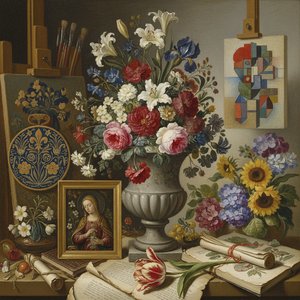
Blossoming Symbolism: A Historical Journey Through Flowers in Western Painting
Explore the rich history of flower symbolism in Western painting! Discover how artists from the Renaissance to Modernism used blossoms to convey meaning, emotion & beauty. Learn about iconic artworks and movements.

La Sutileza del Pastel: Técnica, Historia y Resonancia Emocional en el Arte
Descubre la sutileza del pastel: técnica, historia y artistas clave como Degas y Renoir. Guías expertas sobre materiales, conservación y cómo expresar emociones a través de este bello arte.

Blossoms of Time: A Historical & Aesthetic Exploration of Floral Painting Across Cultures
Explore the rich history of floral painting! Discover symbolism, techniques & masterpieces from Van Huysum to O'Keeffe. Expert insights for art lovers & collectors at OriginalUniqueArt.
