

 Ver en contexto
 Enviar
 Compartir
 Detalles

 Descargar
 Similares
 Radiografía
 Presentación de diapositivas
 Estadísticas
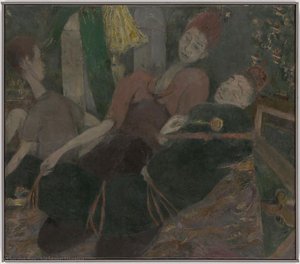
Untitled
 2010
2010 153.0 x 117.0 cm
 Ver más
Adquiera una imagen digital de alta resolución y optimizada, muy superior a la vista previa en línea.
Cada archivo es preparado meticulosamente por nuestros especialistas internos mediante el uso de herramientas avanzadas y un experto retoque manual. Nos aseguramos de que cada imagen posea una claridad excepcional, una precisión cromática impecable y un detalle minucioso.
El archivo final se entrega por correo electrónico en un plazo de 72 horas, optimizado para su uso inmediato en entornos profesionales, editoriales y de impresión. Esta es la misma calidad en la que confían los estudios de diseño, las editoriales y las galerías de primer nivel.
Imagen Digital
Descarga un archivo de alta resolución para exhibición personal, impresión y proyectos creativos. ( Cambiar a Impresión Comprar pintura hecha a mano)
Incluido en cada pedido de imágenes digitales
Entrega digital experta, garantizada.
Al elegir OriginalUniqueArt.com, no solo está adquiriendo una imagen; está recibiendo una obra de arte digital mejorada profesionalmente, elaborada con precisión y respaldada por una garantía de satisfacción. Esto es todo lo que incluye su pedido, automáticamente:

Entrega rápida por email
Recibirá su archivo de imagen digital en alta resolución por correo electrónico en un plazo de 72 horas tras realizar su pedido, listo para su uso inmediato.

Archivo digital optimizado por IA
Su obra de arte se optimiza profesionalmente mediante herramientas avanzadas de IA y edición manual, garantizando el máximo detalle, claridad y precisión cromática.

Reenvío gratuito de por vida
¿Has borrado o perdido tu archivo por error? No te preocupes: te lo volveremos a enviar en cualquier momento, sin coste adicional.

Sin gastos de importación, siempre
Disfrute de su obra de arte al instante sin aduanas, aranceles ni gastos de envío; las descargas digitales siempre están libres de impuestos.

Garantía de fidelidad de color
Garantizamos que su imagen digital refleje los colores originales con la mayor fidelidad posible, mediante el uso de herramientas profesionales y gestión del color.

Garantía de satisfacción de 100 días
Si no está satisfecho con su imagen digital, la revisaremos o le reembolsaremos el 100% en un plazo de 100 días, sin preguntas.

100% Garantía de devolución de dinero
¿No está satisfecho? Obtenga un reembolso completo dentro de los 100 días posteriores a la recepción de su archivo digital, sin preguntas.

Descuentos por pedidos grandes
Compra 3 imágenes, ahorra 10% - Compra 5, ahorra 15% - Compra 10+, ahorra 20%. Ideal para proyectos creativos, galerías y agencias.
Biografía del artista
A Cartography of the Imaginary: The World of Kai Althoff
Kai Althoff, born in Cologne, Germany, in February 1966, is an artist who resists easy categorization. He isn’t simply a painter, sculptor, or video artist; rather, he's a conjurer of worlds—complex, layered environments that feel simultaneously ancient and utterly contemporary. His work operates within a fascinating tension between historical reference and deeply personal expression, creating allegorical spaces brimming with symbolism and emotional resonance. Althoff doesn’t present narratives so much as fragments of them, echoes of stories half-remembered or never fully formed, inviting the viewer to participate in their reconstruction. This deliberate ambiguity is central to his practice, fostering a sense of unease and prompting introspection.Early Influences & Artistic Development
Althoff’s artistic journey wasn't linear. Emerging from a vibrant Cologne art scene, he initially explored music alongside visual arts, forming bands like Workshop with Christoph Rath, Stefan Mohr, and Stephan Abry, and later Subtle Tease with Justus Köhncke. This immersion in sound profoundly shaped his aesthetic sensibility—a rhythmic layering of elements, a fascination with dissonance, and an embrace of the ephemeral. His early paintings already hinted at the concerns that would define his mature work: a preoccupation with Germanic folklore, religious iconography (particularly medieval and Gothic imagery), and the expressive power of German Expressionism. However, it wasn’t merely imitation; Althoff began to *reconfigure* these sources, introducing collaged techniques and a deliberately naive figuration that disrupted traditional notions of skill and mastery. He wasn't interested in replicating the past but rather excavating its emotional core, stripping away polish to reveal raw vulnerability. The influence of artists like Max Beckmann and Ernst Ludwig Kirchner is palpable, yet Althoff’s work quickly developed a unique voice—one characterized by a haunting lyricism and a refusal to adhere to any single stylistic convention.Collaborative Visions & Site-Specific Installations
A defining aspect of Althoff's career has been his embrace of collaboration. He frequently works with other artists, creating projects that blur the boundaries between individual authorship. His 2004 installation *Kolten Flynn*, created with Lutz Braun for the 4th Berlin Biennale, exemplifies this approach. The work consisted of three vitrines draped in red foil, filled with a child’s paintings, drawings, and abandoned materials—a poignant tableau evoking memory, loss, and the fragmented nature of identity. This wasn't simply an exhibition *of* objects but rather the creation of a psychological space, a miniature world charged with unspoken narratives. Similarly, his collaboration with Yair Oelbaum on *There We Will Be Buried* (2010) took the form of a dramatic play, performed live and later adapted for various venues including the Whitney Museum of American Art. The play centered around two single mothers searching for a lost daughter, exploring themes of abandonment, grief, and the complexities of familial relationships. These collaborative projects demonstrate Althoff’s interest in performance, theater, and the power of collective storytelling. *Die kleine bushaltestelle (gerüstbau)* (Little Bus Stop , 2012), performed with Isa Genzken, further cemented his reputation for absurdist humor and unconventional artistic expression.Themes & Symbolism: Allegories of Human Experience
Althoff’s work is deeply symbolic, drawing on a vast reservoir of cultural references—from religious parables to popular culture ephemera. Recurring motifs include figures with elongated limbs and distorted features, architectural fragments suggesting decaying grandeur, and landscapes that feel both familiar and alien. His characters often inhabit imaginary worlds that serve as allegories for human experience and emotion. They are not portraits in the traditional sense but rather archetypes—representations of longing, despair, or spiritual yearning. The use of collage is particularly significant, allowing Althoff to juxtapose disparate images and create unexpected associations. This technique reflects his interest in fragmentation and the subjective nature of memory. He often incorporates found objects into his work, imbuing them with new meaning and challenging conventional notions of artistic value. The overall effect is one of dreamlike disorientation, inviting viewers to question their own perceptions and interpretations. His paintings are not meant to be deciphered but rather experienced—felt on an emotional level.Historical Significance & Contemporary Relevance
Kai Althoff’s work occupies a unique position within contemporary art. He resists categorization, blending historical reference with deeply personal expression in a way that is both intellectually stimulating and emotionally resonant. His influence can be seen in the work of younger artists who are similarly interested in exploring themes of memory, identity, and the fragmented nature of experience.- His embrace of collaboration challenges traditional notions of authorship.
- His use of collage and found objects expands the boundaries of painting and sculpture.
- His exploration of symbolism and allegory invites viewers to engage with art on a deeper level.
Kai Althoff
1966 -