
![Pas Mèche [nothing Doing] — Jules Bastien-lepage](/media/artworks/images-full/0a/a4/0aa443b038cfee7a0eeae71195adba8a.jpg)
 Ver en contexto
 Enviar
 Compartir
 Detalles
 Guía
Guía

 Descargar
 Similares
 Radiografía
 Presentación de diapositivas
 Estadísticas
Pas Mèche [Nothing Doing]


 Ver más
Giclée / Impresión de arte
Impresiones giclée o en lienzo de calidad de museo con producción rápida y opciones de acabado flexibles. ( Comprar pintura hecha a mano Cambiar a imagen digital)




P118B €10

P118H €10

P118W €10

P438Z €10

P508JH €12

P508YH €12

P805H €10

P805Z €10

P919BZ €10

P919G €10

P919XJ €10

P959ZH €10

P968JZ €12

W106C €8

W218G €10

W218JH €8

W218Y €10

W307PJ €10

W316G €10

W316PJ €8

W316Y €10

W398PJ €8

W4111J €10

W500HY €15

W500JH €15

W692G €12

W849H €8

W940BG €15

W953PJ €8




Elija entre nuestros tamaños predefinidos que respetan las proporciones originales de la obra.

Introduzca el ancho y el alto que necesite para adaptarse a su marco o pared. Una impresión solo puede recortarse, nunca hacerse más grande que la imagen original, por lo que un tamaño con una forma distinta perderá parte de la obra. Le enviaremos una maqueta digital para su aprobación antes de realizar cualquier impresión. La imagen que se muestra en esta página no refleja el recorte real; solo la maqueta lo hace.
Envío a todo el mundo () en 2 semanas en lugar de las 4/5 semanas estándar. (26 octubre)

Envío exprés gratuito a todo el mundo

Lienzo de lino de alta calidad

Seguro de envío total

Garantía de reembolso de aranceles aduaneros

Garantía de fidelidad cromática exacta

Política de devolución de 100 días (solo por defectos)

Garantía de devolución del 100% del dinero

Descuento por cantidad
 La opción de vidrio solo está disponible en tamaños inferiores a 110 cm.
![Pas Mèche [Nothing Doing]](/static/images/originaluniqueart/artworks/painting.a1e74a1cb7dc.png)
Pas Mèche [Nothing Doing]
Giclée / Impresión de arte
Dimensiones de la reproducción
-


Precio total final
€ 70
A Moment Frozen in Rural France: Jules Bastien-Lepage’s *Pas Mèche*
Jules Bastien-Lepage's *Pas Mèche* (Nothing Doing), painted in 1882, isn’t merely a portrait; it’s a carefully constructed tableau of rural life imbued with a quiet dignity and an unspoken narrative. The painting depicts a young boy, likely a barge worker, standing on the edge of a small village road, his gaze direct and unwavering. He is a figure of remarkable composure amidst what appears to be a mundane scene – a worn brown jacket, raggedy trousers, and large, unlaced boots speak to a life of hard work and simple means. Yet, within this apparent ordinariness lies a profound sense of observation and a subtle suggestion of melancholy. Bastien-Lepage, a pivotal figure in the transition from Realism to Naturalism, masterfully captures not just an image but also a feeling—a poignant awareness of time passing and the quiet realities of peasant existence. The title itself, *Pas Mèche*, is a French slang phrase meaning “Nothing Doing,” hinting at a state of weary resignation or perhaps simply a moment’s pause before returning to labor.The Naturalist Approach: Light, Texture, and Observation
Bastien-Lepage's artistic approach was deeply rooted in the tenets of Naturalism, a movement that sought to depict life as it truly was—without idealization or romantic embellishment. He achieved this through meticulous observation and a masterful understanding of light and texture. Unlike the polished surfaces favored by earlier academic painters, Bastien-Lepage employed loose, visible brushstrokes, allowing the canvas to breathe and revealing the materiality of his subjects. The paint itself seems almost tactile—one can practically feel the roughness of the boy’s clothing and the weathered surface of the road beneath his feet. He utilized a muted palette dominated by earthy browns, greens, and greys, reflecting the colors of the rural landscape he so faithfully rendered. Crucially, Bastien-Lepage spent considerable time *en plein air* (outdoors), directly observing his subjects in their natural environment, ensuring an unparalleled level of accuracy and authenticity in his depictions. This commitment to direct observation is evident in the boy’s posture, the way the light falls across his face, and the subtle details of the surrounding village.Symbolism Within Simplicity: The Tools of Labor
Beyond the immediate depiction of the boy, *Pas Mèche* is rich with symbolic elements. The fishing rod clutched in his hand immediately establishes his profession—a barge worker who would have been responsible for guiding and controlling the boats navigating the canals and rivers of France. The horn slung across his back was a vital tool for communication, alerting lockmasters to the approach of a boat. These seemingly simple objects – the rod, the horn, the worn boots – represent not just labor but also a connection to tradition, community, and the rhythms of rural life. The boy’s direct gaze is particularly significant; it suggests an awareness beyond his years, perhaps a recognition of the limitations imposed upon him by his circumstances. His stillness conveys a quiet dignity—a refusal to be defined solely by his humble profession.A Legacy of Rural Realism
Jules Bastien-Lepage’s *Pas Mèche* stands as a cornerstone of French Naturalist painting, profoundly influencing generations of artists. His ability to capture the essence of rural life with such honesty and sensitivity resonated deeply with audiences seeking an alternative to the idealized depictions prevalent in academic art. Born in 1848 and tragically dying at just thirty-six, Bastien-Lepage’s brief but impactful career left behind a body of work that continues to captivate viewers today. *Pas Mèche* exemplifies his signature style—a blend of meticulous observation, evocative light, and a profound understanding of the human condition. It's a painting that invites contemplation, prompting us to consider the lives of those who labor unseen and the quiet beauty found in the most unassuming corners of the world. Reproductions of *Pas Mèche* offer a valuable opportunity to bring this poignant work into any interior space, serving as a reminder of France’s rich artistic heritage and the enduring power of simple, honest representation.Preguntas y respuestas
¿Cuál es el tamaño de impresión recomendado para "Pas Mèche [Nothing Doing]" de Jules Bastien-Lepage?
El tamaño de impresión recomendado para "Pas Mèche [Nothing Doing]" de Jules Bastien-Lepage es Medium.
¿Cuál es el formato de "Pas Mèche [Nothing Doing]"?
El formato de "Pas Mèche [Nothing Doing]" es Portrait, un dato útil para planificar la ubicación de una reproducción.
¿A qué etapa de la trayectoria de Jules Bastien-Lepage pertenece "Pas Mèche [Nothing Doing]" (1882)?
Dada su fecha de 1882, "Pas Mèche [Nothing Doing]" se sitúa en el Mature Period de Jules Bastien-Lepage.
Biografía del artista
Jules Bastien-Lepage: Pionero del Naturalismo
- Nacido: Damvillers, Francia (1848)
- Fallecido: 1884
Jules Bastien-Lepage fue un pintor francés estrechamente asociado con el inicio del naturalismo, un estilo artístico que surgió del movimiento realista y allanó el camino para el desarrollo del impresionismo. Sus representaciones al aire libre de la vida campesina en el campo fueron muy influyentes en muchos artistas internacionales.
Vida Temprana y Formación
Bastien-Lepage nació en 1848 en el pueblo de Damvillers, Meuse, donde pasó su infancia. Comenzó su formación artística bajo la tutela de su padre, que también era artista, antes de trasladarse a París en 1867 para estudiar en la École des Beaux-Arts. Allí, trabajó con Alexandre Cabanel y desarrolló sus habilidades como pintor.
Estilo Artístico e Influencias
El estilo de Bastien-Lepage se caracteriza por intrincados trazos y una paleta pura bañada con cálida luz natural. Se centró principalmente en los suburbios occidentales de París, pintando al aire libre siguiendo la tradición del plein air. Su obra estuvo influenciada por el movimiento realista, pero también sacó inspiración de otros artistas, como George Clausen y Tom Roberts.
- Características Clave: Trazos intrincados, paleta pura, cálida luz natural, pintura al aire libre (plein air).
- Influencias: Movimiento Realista, George Clausen, Tom Roberts.
Obras Principales y Reconocimiento
Bastien-Lepage logró un temprano éxito en 1874 con su pintura "Retrato de mi Abuelo", que obtuvo el reconocimiento de la crítica y recibió una medalla de tercer grado. También ganó renombre por sus pinturas históricas, incluyendo “Juana de Arco”, ahora expuesta en el Musée d'Orsay de París.
- Obras Notables:
- "Retrato de mi Abuelo" (1874)
- “Juana de Arco” (Musée d’Orsay, París)
- "Segando el Heno" (Les Foins) – reconocido como líder de la emergente escuela naturalista.
- "En Octubre - recolectando patatas"
- "A la Hora de la Cosecha"
- "Laura, Lady Alma Tadema"
- "Sarah Bernhardt" (1879) – un retrato que le valió importantes encargos.
- "Paisaje con carbón, invierno"
Tras el éxito de "Segando el Heno", Bastien-Lepage fue reconocido como líder de la emergente escuela naturalista. En 1883, un crítico podía proclamar que “todo el mundo pinta tanto hoy en día como m. bastien-lepage que m. bastien-lepage parece pintar como todo el mundo”. Esta fama le valió importantes encargos, incluido un retrato de Sarah Bernhardt en 1879.
Naturalismo y Legado
El naturalismo fue un movimiento artístico que surgió como reacción a la revolución industrial y su impacto en la sociedad. Representaba a la clase trabajadora y a los pobres, centrándose en sus luchas y dificultades. El movimiento comenzó en Francia y se extendió por Europa, convirtiéndose en un estilo artístico ampliamente reconocido.
- Significado: Bastien-Lepage fue una figura significativa en el desarrollo del naturalismo y el impresionismo. Sus pinturas continúan siendo celebradas por su belleza y profundidad emocional, y su influencia puede verse en muchos artistas que le siguieron.

Jules Bastien-Lepage
1848 - 1884 , Francia
Datos clave
- Artistas Influenciados: ['Impresionismo']
- Artistas Que Influyeron:
- Alexandre Cabanel
- George Clausen
- Tom Roberts
- Fecha De Nacimiento: 1848
- Lugar De Nacimiento: Damvillers, Francia
- Movimiento Artístico: Naturalismo, Realismo
- Nacionalidad: Francés
- Nombre Completo: Jules Bastien-Lepage
- Obras Notables:
- Retrato de mi abuelo
- Juana de Arco
- Segando heno (Les Foins)
- Sarah Bernhardt
Artículos relacionados

Echoes of Rural Life: Art's Enduring Representations of the Countryside
Explore the rich history of rural life in art! Discover masterpieces from Millet to Mauve & beyond. Learn about Realism, Barbizon School & find inspiration for your home with OriginalUniqueArt.

Léon Augustin L'Hermitte: Capturing the Soul of French Rural Life
Discover the captivating realist paintings of Léon Augustin L'Hermitte, masterfully depicting French rural life. Explore his technique, influences & legacy – a cornerstone of 19th-century art.

The Enduring Legacy of Oil on Canvas: Technique, History & Aesthetic Impact
Explore the rich history & techniques of oil painting – from Renaissance masters to Impressionism. Discover pigments, layering methods, and why this timeless medium endures. Expert insights for artists & art enthusiasts.

El Óleo sobre Lienzo: Historia, Técnica y la Persistencia de un Medio Artístico Atemporal
Descubre la historia y técnica del óleo sobre lienzo. Explora reproducciones fieles hechas a mano, personalización artística y consejos de expertos con OriginalUniqueArt. ¡Colecciona arte con confianza!
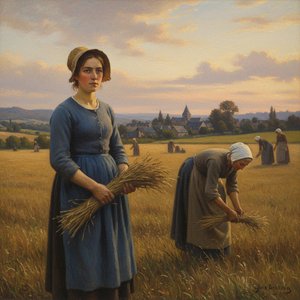
Jules Breton: Capturing the Poetic Soul of French Rural Life
Explore the captivating world of Jules Breton, master of French Realism. Discover his iconic paintings of rural life, learn about his artistic journey, and find high-quality reproductions to elevate your art collection at OriginalUniqueArt.


