Ver en contexto
 Enviar
 Compartir
 Detalles
 Guía
Guía

 Descargar
 Similares
 Radiografía
 Presentación de diapositivas
 Q&A
Q&A Estadísticas
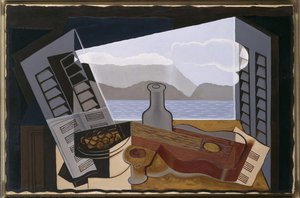
Harlequin with guitar - -

- 116.0 x 89.0 cm


 Ver más
Giclée / Impresión de arte
Impresiones giclée o en lienzo de calidad de museo con producción rápida y opciones de acabado flexibles. ( Comprar pintura hecha a mano Cambiar a imagen digital)




P118B €10

P118H €10

P118W €10

P438Z €10

P508JH €12

P508YH €12

P805H €10

P805Z €10

P919BZ €10

P919G €10

P919XJ €10

P959ZH €10

P968JZ €12

W106C €8

W218G €10

W218JH €8

W218Y €10

W307PJ €10

W316G €10

W316PJ €8

W316Y €10

W398PJ €8

W4111J €10

W500HY €15

W500JH €15

W692G €12

W849H €8

W940BG €15

W953PJ €8




Elija entre nuestros tamaños predefinidos que respetan las proporciones originales de la obra.

Introduzca el ancho y el alto que necesite para adaptarse a su marco o pared. Una impresión solo puede recortarse, nunca hacerse más grande que la imagen original, por lo que un tamaño con una forma distinta perderá parte de la obra. Le enviaremos una maqueta digital para su aprobación antes de realizar cualquier impresión. La imagen que se muestra en esta página no refleja el recorte real; solo la maqueta lo hace.
Envío a todo el mundo () en 2 semanas en lugar de las 4/5 semanas estándar. (2 noviembre)

Envío exprés gratuito a todo el mundo

Lienzo de lino de alta calidad

Seguro de envío total

Garantía de reembolso de aranceles aduaneros

Garantía de fidelidad cromática exacta

Política de devolución de 100 días (solo por defectos)

Garantía de devolución del 100% del dinero

Descuento por cantidad
 La opción de vidrio solo está disponible en tamaños inferiores a 110 cm.

Harlequin with guitar - -
Giclée / Impresión de arte
Dimensiones de la reproducción
-


Precio total final
€ 71
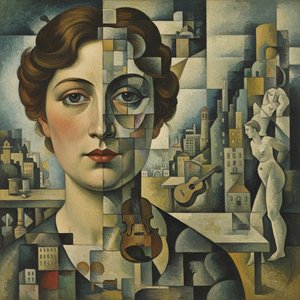
A Fragmented Portrait of Musical Reverie: Exploring Juan Gris’s Harlequin with Guitar
Juan Gris's “Harlequin with Guitar,” completed in 1919, stands as a cornerstone of Synthetic Cubism—a movement that irrevocably altered the landscape of artistic expression. More than just a depiction of a musician, this painting embodies the intellectual and aesthetic ambitions of its time, reflecting a profound engagement with geometric abstraction and a masterful manipulation of color and texture. Created in Paris during Gris’s formative years as an artist, it captures a moment of contemplative stillness amidst the dynamism of Cubist innovation.The Genesis of Geometric Harmony
Gris's approach to Cubism distinguishes him from his contemporaries like Picasso and Braque; he prioritized harmony and balance within fractured forms—a deliberate antithesis to the chaotic fragmentation championed by other artists. This pursuit of equilibrium is immediately apparent in “Harlequin with Guitar.” The central figure, a harlequin musician, isn’t rendered as a conventional portrait but rather dissected into interlocking planes of color and shape. These geometric elements – cubes, cylinders, cones—are juxtaposed against a muted backdrop featuring two additional figures, subtly hinting at an ensemble performance yet maintaining a sense of profound solitude. This careful orchestration speaks to Gris's belief that abstraction could convey emotion just as effectively as realism.Technique and Material Considerations
Executed in oil on canvas, “Harlequin with Guitar” exemplifies the Synthetic Cubist technique pioneered by Gris and his peers. Unlike Analytical Cubism’s focus on breaking down objects into constituent parts, Synthetic Cubism incorporates collage—specifically paper fragments—to enrich the visual experience. These paper inclusions aren't merely decorative; they contribute to the overall textural complexity of the painting and subtly disrupt the rigid geometric structure. The artist meticulously applied pigment with a brush, layering colors to achieve luminous effects and creating subtle gradations that heighten the sense of depth.Historical Context: Embracing Modernity’s Disquiet
The painting emerged during a period of intense intellectual ferment—the aftermath of World War I—characterized by anxieties about tradition and an eagerness to embrace new artistic languages. Cubism responded directly to these concerns, rejecting perspectival illusion and embracing the challenge of representing multiple viewpoints simultaneously. Gris's decision to depict a musician wasn’t arbitrary; it served as a deliberate provocation against academic conventions, asserting that art could explore psychological states alongside visual representation. The inclusion of the paper collage underscores this broader cultural preoccupation with experimentation and disruption.Symbolism Beyond Representation
While “Harlequin with Guitar” eschews literal depiction, its symbolism resonates deeply. The harlequin figure itself—a traditional theatrical character—represents adaptability and transformation—themes central to the Cubist project. The guitar symbolizes musical expression and contemplation, mirroring Gris’s own artistic sensibilities. Furthermore, the muted backdrop serves as a counterpoint to the vibrant geometric forms, suggesting an inner world of thought and emotion that transcends outward appearances.Emotional Resonance: A Quiet Intensity
Despite its formal austerity, “Harlequin with Guitar” possesses a palpable emotional intensity. The harlequin’s gaze—directed slightly off-center—captures a moment of introspection, inviting the viewer to contemplate the complexities of human experience. The subtle interplay of color and texture contributes to this feeling of quiet contemplation, creating an artwork that transcends mere visual stimulation and speaks to the profound beauty of geometric abstraction. It remains a testament to Gris’s ability to convey emotion through form—a remarkable achievement within the context of early 20th-century art.Preguntas y respuestas
¿Qué forma y dimensiones tiene "Harlequin with guitar - -" de Juan Gris?
"Harlequin with guitar - -" de Juan Gris tiene las proporciones de una obra en Portrait de 116 x 89 cm.
¿Qué representa "Harlequin with guitar - -"?
Los temas de "Harlequin with guitar - -" son cubism, guitar, harlequin, portrait, geometric, collage, madrid.
¿De qué manera se relacionan los colores de "Harlequin with guitar - -" de Juan Gris con su carga emocional?
La paleta Dark de "Harlequin with guitar - -" de Juan Gris armoniza con su tono emocional Reflective. El color es una de las formas en que una obra transmite sentimiento.
Biografía del artista
Juan Gris: Pionero del Cubismo
- Nacimiento: 23 de marzo de 1887, Madrid, España
- Fallecimiento: 11 de mayo de 1927
Primeros Años y Desarrollo Artístico
José Victoriano González-Pérez, conocido como Juan Gris, nació en Madrid, España. Su vida temprana incluyó estudiar ingeniería en la Escuela de Artes y Ciencias desde 1902 hasta 1904. Durante este tiempo, contribuyó con dibujos a publicaciones locales, demostrando una aptitud temprana para la representación visual. De 1904 a 1905, Gris estudió pintura con José Moreno Carbonero, desarrollando aún más sus habilidades artísticas. En 1905, adoptó el seudónimo Juan Gris, un nombre que se convertiría en sinónimo de su estilo distintivo.
Influencias Parisinas y el Ascenso del Cubismo
Un momento crucial en la carrera de Gris llegó en 1906 cuando se mudó a París. Este traslado lo expuso a una vibrante comunidad artística, donde se hizo amigo de figuras influyentes como Henri Matisse, Georges Braque y Fernand Léger. Fue profundamente influenciado por Pablo Picasso, inicialmente presentando ilustraciones humorísticas a revistas como *L'Assiette au Beurre*, *Le Rire*, *Le Charivari* y *Le Cri de Paris*. Alrededor de 1910, Gris comenzó a pintar seriamente, dedicándose a desarrollar un estilo cubista personal. Se alejó de la ilustración satírica hacia composiciones más abstractas.
Obras Clave y Estilo Artístico
La producción artística de Juan Gris se caracteriza por varias características clave:
- Claridad y Orden: Su obra enfatizaba la claridad y el orden, influyendo en el estilo purista defendido por Amédée Ozenfant y Charles Edouard Jeanneret (Le Corbusier).
- Estructura Geométrica: El "período cristalino" de Gris, ejemplificado en obras como *Naturaleza muerta frente a una ventana abierta* y *Place Ravignan* (1915), mostraba una fuerte estructura geométrica.
- Cubismo Sintético: Después de 1913, Gris abrazó el Cubismo Sintético, utilizando técnicas como papier collé o collage extensivamente. Esto implicaba incorporar materiales del mundo real en sus pinturas, agregando textura y profundidad.
Obras notables incluyen:
- Guitarra frente al mar (1925): Demuestra su simplicidad y adherencia a los principios cubistas.
- Homenaje a Pablo Picasso (1912): Su primera exposición en el Salon des Indépendants, un testimonio de su creciente reconocimiento dentro del mundo del arte.
Legado y Significado Histórico
La contribución de Juan Gris al Cubismo es significativa. Se movió más allá de la fase analítica anterior del movimiento hacia un enfoque más estructurado y sintético. Su énfasis en la claridad, las formas geométricas y la incorporación de objetos cotidianos en sus composiciones lo estableció como una figura líder en el arte del siglo XX. Su obra continúa siendo celebrada por su rigor intelectual y belleza estética, influyendo en generaciones posteriores de artistas.

Juan Gris
1887 - 1927 , España
Datos clave
- Artistas Que Influyeron:
- Pablo Picasso
- Georges Braque
- Henri Matisse
- Fecha De Fallecimiento: 11 de mayo de 1927
- Fecha De Nacimiento: 23 de marzo de 1887
- Influenciado Por:
- Amédée Ozenfant
- Charles Edouard Jeanneret
- Lugar De Nacimiento: Madrid, España
- Movimiento Artístico: Cubismo, Cubismo Sintético
- Nacionalidad: Española
- Nombre Completo: Juan Gris
- Obras Notables:
- Guitarra frente al mar
- Homenaje a Pablo Picasso
- Naturaleza muerta ante ventana
- Place Ravignan
- Frutero, vaso y periódico
Artículos relacionados

Maestría Cubista: Las 25 mejores obras de Georges Braque
Explora las 25 obras maestras de Georges Braque y el cubismo. Encuentra reproducciones de museo en OriginalUniqueArt.com.
Cubism Unveiled: How Picasso and Braque Redefined Reality Through Geometric Abstraction
Explore the revolutionary world of Cubism. Discover how masters Pablo Picasso and Georges Braque dismantled reality through geometric abstraction to redefine modern art history.
Juan Gris: Cubist Deconstruction & Synthesis – A Comprehensive Exploration
Explore the revolutionary art of Juan Gris – a master of Cubism. Discover his unique approach to deconstruction, vibrant Synthetic Cubist works, and lasting influence on modern art. Expert analysis for collectors.
Deconstruyendo la Identidad: El Retrato Cubista como Espejo del Siglo XX
Explora la fascinante historia del retrato cubista con OriginalUniqueArt. Análisis de Picasso, Braque, Dalí y más. Guía para coleccionistas exigentes e inversión en arte moderno.
Deconstruyendo la Realidad: El Impacto Revolucionario del Cubismo en el Arte del Siglo XX
Descubra el revolucionario impacto del Cubismo en el arte del siglo XX. Análisis profundo de Picasso, Braque y su legado. Guía para coleccionistas apasionados e inversores.