Vista previa
 Compartir
 Compartir
 Ver detalles
 Guía
Guía

 Descargar
 Ver artículos similares
 Radiografía
 Presentación de diapositivas
 Estadísticas
Flowers


 Leer más
Giclée / Impresión de arte
Impresiones giclée o en lienzo de calidad de museo con producción rápida y opciones de acabado flexibles. ( Encargar reproducción pintada a mano Ver versión en imagen digital)




P118B €10

P118H €10

P118W €10

P438Z €10

P508JH €12

P508YH €12

P805H €10

P805Z €10

P919BZ €10

P919G €10

P919XJ €10

P959ZH €10

P968JZ €12

W106C €8

W218G €10

W218JH €8

W218Y €10

W307PJ €10

W316G €10

W316PJ €8

W316Y €10

W398PJ €8

W4111J €10

W500HY €15

W500JH €15

W692G €12

W849H €8

W940BG €15

W953PJ €8




Elija entre nuestros tamaños predefinidos que respetan las proporciones originales de la obra.

Introduzca el ancho y el alto que necesite para adaptarse a su marco o pared. Una impresión solo puede recortarse, nunca hacerse más grande que la imagen original, por lo que un tamaño con una forma distinta perderá parte de la obra. Le enviaremos una maqueta digital para su aprobación antes de realizar cualquier impresión. La imagen que se muestra en esta página no refleja el recorte real; solo la maqueta lo hace.
Envío a todo el mundo () en 2 semanas en lugar de las 4/5 semanas estándar. (21 octubre)

Envío exprés gratuito a todo el mundo

Lienzo de lino de alta calidad

Seguro de envío completo

Garantía de reembolso de impuestos aduaneros

Garantía de fidelidad cromática exacta

Política de devolución de 100 días (solo por defectos)

Garantía de devolución del 100% del dinero

Oferta por volumen
 La opción de vidrio solo está disponible en tamaños inferiores a 110 cm.

Flowers
Giclée / Impresión de arte
Tamaño de la reproducción
-


Precio total
€ 70
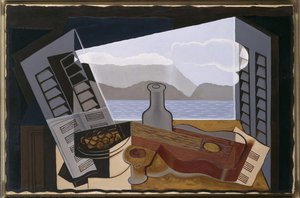
A Symphony of Cubist Geometry
In the vibrant tapestry of early twentieth-century modernism, few works capture the intellectual rigor and sensory richness of Juan Gris quite like his 1914 masterpiece, Flowers. This painting serves as a profound window into the analytical mind of a Spanish visionary who sought to deconstruct reality only to rebuild it with more potent, structural truth. At first glance, the viewer is greeted by a bustling, complex arrangement: a central vase overflowing with blossoms, anchored amidst a sea of scattered books, delicate cups, and the bright, citrusy warmth of oranges. It is a composition that refuses to be ignored, demanding an active gaze that navigates through layers of overlapping planes and intersecting lines.
The painting transcends mere still life, moving into the realm of Synthetic Cubism. Unlike the fragmented, almost monochromatic explorations of his predecessors, Gris utilizes a more structured approach where color and form coalesce to create a sense of rhythmic stability. The objects—the books, the bowls, and the fruit—are not merely depicted; they are architecturally integrated into the canvas. Each element is treated with a mathematical precision that speaks to Gris’s early training in engineering, allowing the viewer to experience the tension between the organic softness of the flowers and the rigid, geometric boundaries of the surrounding objects.
The Poetry of Form and Light
Technically, Flowers is a triumph of balance and tonal harmony. The artist employs a sophisticated palette where the bright, sun-drenched hues of the oranges provide a striking counterpoint to the more muted, earthy tones of the books and ceramics. Through masterful brushwork, Gris creates a tactile quality that invites the eye to linger on the texture of the petals and the smooth glaze of the cups. The light does not simply fall upon the objects; it seems to emerge from within the very intersections of the geometric shapes, creating a luminous depth that breathes life into the static arrangement.
For the discerning collector or interior designer, this piece offers an unparalleled opportunity to introduce a sense of intellectual sophistication and historical weight into a space. The painting’s ability to command attention through its complex composition makes it a perfect focal point for a contemporary gallery, a refined study, or a curated living area. It is more than a decoration; it is a conversation starter that bridges the gap between the classical tradition of the still life and the radical innovations of the modern era.
A Timeless Emotional Resonance
Beyond its formal brilliance, there is an undeniable emotional pulse within this work. There is a certain nostalgic intimacy in the arrangement of everyday items—the remnants of a quiet afternoon spent reading or sharing tea. This sense of domesticity, layered beneath the complex Cubist structure, creates a poignant connection with the viewer. It evokes a feeling of organized chaos, a reflection of the modern human experience where beauty and complexity are inextricably linked.
Owning a high-quality reproduction of this 1914 treasure allows one to inhabit the world of Juan Gris, bringing the spirit of Parisian avant-garde into the home. It serves as a constant reminder of the power of perspective and the enduring allure of finding order within complexity. Whether viewed as an exploration of geometric theory or a celebration of life's simple textures, Flowers remains a breathtaking testament to the transformative power of art.
Preguntas y respuestas
¿Qué paleta y qué color predominante definen a "Flowers"?
La identidad cromática de "Flowers" de Juan Gris: una paleta Dark, dominada por el Bronze (#c37539).
¿Puedo ver una vista de rayos X de "Flowers" de Juan Gris?
La vista de rayos X de "Flowers" de Juan Gris se encuentra en la página Rayos X de la obra: un examen interactivo de la imagen a través de once capas ópticas.
¿Qué sentimiento transmiten los colores de "Flowers" de Juan Gris?
La paleta Dark de "Flowers" de Juan Gris armoniza con su tono emocional Reflective. El color es una de las formas en que una obra transmite sentimiento.
Biografía del artista
Juan Gris: Pionero del Cubismo
- Nacimiento: 23 de marzo de 1887, Madrid, España
- Fallecimiento: 11 de mayo de 1927
Primeros Años y Desarrollo Artístico
José Victoriano González-Pérez, conocido como Juan Gris, nació en Madrid, España. Su vida temprana incluyó estudiar ingeniería en la Escuela de Artes y Ciencias desde 1902 hasta 1904. Durante este tiempo, contribuyó con dibujos a publicaciones locales, demostrando una aptitud temprana para la representación visual. De 1904 a 1905, Gris estudió pintura con José Moreno Carbonero, desarrollando aún más sus habilidades artísticas. En 1905, adoptó el seudónimo Juan Gris, un nombre que se convertiría en sinónimo de su estilo distintivo.
Influencias Parisinas y el Ascenso del Cubismo
Un momento crucial en la carrera de Gris llegó en 1906 cuando se mudó a París. Este traslado lo expuso a una vibrante comunidad artística, donde se hizo amigo de figuras influyentes como Henri Matisse, Georges Braque y Fernand Léger. Fue profundamente influenciado por Pablo Picasso, inicialmente presentando ilustraciones humorísticas a revistas como *L'Assiette au Beurre*, *Le Rire*, *Le Charivari* y *Le Cri de Paris*. Alrededor de 1910, Gris comenzó a pintar seriamente, dedicándose a desarrollar un estilo cubista personal. Se alejó de la ilustración satírica hacia composiciones más abstractas.
Obras Clave y Estilo Artístico
La producción artística de Juan Gris se caracteriza por varias características clave:
- Claridad y Orden: Su obra enfatizaba la claridad y el orden, influyendo en el estilo purista defendido por Amédée Ozenfant y Charles Edouard Jeanneret (Le Corbusier).
- Estructura Geométrica: El "período cristalino" de Gris, ejemplificado en obras como *Naturaleza muerta frente a una ventana abierta* y *Place Ravignan* (1915), mostraba una fuerte estructura geométrica.
- Cubismo Sintético: Después de 1913, Gris abrazó el Cubismo Sintético, utilizando técnicas como papier collé o collage extensivamente. Esto implicaba incorporar materiales del mundo real en sus pinturas, agregando textura y profundidad.
Obras notables incluyen:
- Guitarra frente al mar (1925): Demuestra su simplicidad y adherencia a los principios cubistas.
- Homenaje a Pablo Picasso (1912): Su primera exposición en el Salon des Indépendants, un testimonio de su creciente reconocimiento dentro del mundo del arte.
Legado y Significado Histórico
La contribución de Juan Gris al Cubismo es significativa. Se movió más allá de la fase analítica anterior del movimiento hacia un enfoque más estructurado y sintético. Su énfasis en la claridad, las formas geométricas y la incorporación de objetos cotidianos en sus composiciones lo estableció como una figura líder en el arte del siglo XX. Su obra continúa siendo celebrada por su rigor intelectual y belleza estética, influyendo en generaciones posteriores de artistas.

Juan Gris
1887 - 1927 , España
Datos clave
- Artistas Que Influyeron:
- Pablo Picasso
- Georges Braque
- Henri Matisse
- Fecha De Fallecimiento: 11 de mayo de 1927
- Fecha De Nacimiento: 23 de marzo de 1887
- Influenciado Por:
- Amédée Ozenfant
- Charles Edouard Jeanneret
- Lugar De Nacimiento: Madrid, España
- Movimiento Artístico: Cubismo, Cubismo Sintético
- Nacionalidad: Española
- Nombre Completo: Juan Gris
- Obras Notables:
- Guitarra frente al mar
- Homenaje a Pablo Picasso
- Naturaleza muerta ante ventana
- Place Ravignan
- Frutero, vaso y periódico
Artículos relacionados
Deconstructing Reality: A Comprehensive Exploration of Cubist Still Life
Explore the revolutionary world of Cubist Still Life with OriginalUniqueArt. Discover Picasso & Braque's groundbreaking techniques, its philosophical roots, and lasting impact on modern art. Expert insights for collectors.
Juan Gris: Cubist Deconstruction & Synthesis – A Comprehensive Exploration
Explore the revolutionary art of Juan Gris – a master of Cubism. Discover his unique approach to deconstruction, vibrant Synthetic Cubist works, and lasting influence on modern art. Expert analysis for collectors.

Cubist Still Life: Redefining Reality Through Fragmented Forms and Geometric Abstraction
Explore the profound evolution of Cubist still life, from Cézanne's structural foundations to the fragmented brilliance of Braque and Léger. Discover how geometric abstraction redefined reality through a sophisticated lens of form, color, and modern artistic mastery.

The Bountiful Still Life: Symbolism & Artistic Representation of Fruit Across Art History
Explore the rich history of still life painting & the symbolism of fruit across art movements. Discover masterpieces from Caravaggio to Cézanne with OriginalUniqueArt – expert guidance & museum-quality reproductions.

Paul Cézanne: Las 25 Obras Maestras que Definieron el Arte Moderno | OriginalUniqueArt
Descubre las 25 obras maestras de Paul Cézanne que revolucionaron el arte moderno. Explora su técnica, inspiración y significado en paisajes, bodegones y retratos. Reproducciones de alta calidad para decorar tu hogar con arte inolvidable. ¡Explora la colección completa en OriginalUniqueArt.com!