
 Ver en contexto
 Enviar
 Compartir
 Detalles

 Descargar
 Similares
 Radiografía
 Presentación de diapositivas
 Estadísticas
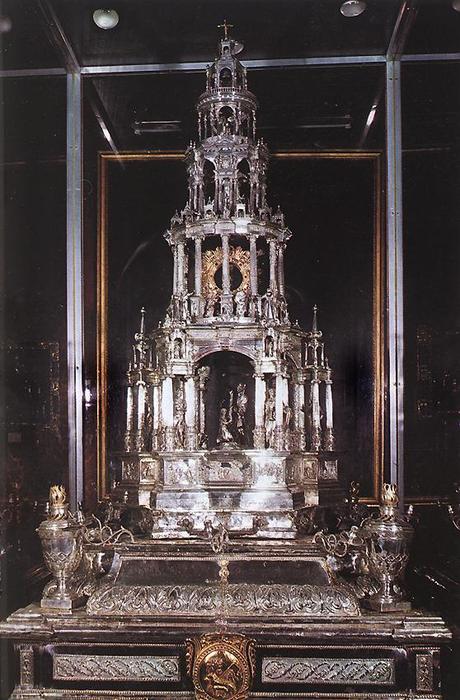
Monstrance

 Ver más
Reproducción al óleo hecha a mano
Óleo sobre lienzo pintado a mano en el tamaño y marco de su elección, realizado por encargo por nuestros artistas. ( Cambiar a Impresión Cambiar a imagen digital)




































Elija entre nuestros tamaños predefinidos que respetan las proporciones originales de la obra.

Puede ingresar sus propias dimensiones para adaptarse a un marco o espacio específico. Si el tamaño seleccionado no coincide con las proporciones de la imagen original, recortaremos la obra o extenderemos la pintura con elementos adicionales pintados a mano. Se le enviará una maqueta digital para su aprobación antes de comenzar la producción.
Tenga en cuenta que la vista previa en pantalla no refleja el recorte o la extensión reales. Solo la maqueta mostrará con precisión la composición final.
Si bien existen tamaños personalizados, recomendamos seleccionar una dimensión de la lista predefinida para preservar las proporciones originales.
Tras realizar el pedido, el equipo de OriginalUniqueArt.com enviará un correo electrónico al cliente para solicitar instrucciones y proporcionarle una vista previa del boceto.
Envío a todo el mundo () en 3-4 semanas en lugar de las 5 semanas estándar. (13 septiembre). Sin comprometer la calidad.

Envío exprés gratuito a todo el mundo

Lienzo de lino de alta calidad

Seguro de envío total

Garantía de reembolso de impuestos aduaneros

Garantía de fidelidad cromática exacta

Política de devolución de 100 días (solo por defectos)

Garantía de devolución del 100% del dinero

Descuento por cantidad
 La opción de vidrio solo está disponible en tamaños inferiores a 110 cm.

Monstrance
Técnica de reproducción
Dimensiones de la reproducción
-


Precio total final
$ 300
Biografía del artista
The Golden Legacy of Juan de Arfe
In the grand tapestry of the Spanish Golden Age, few names resonate with the same blend of technical precision and spiritual fervor as Juan de Arfe. Born in León around 1535, Arfe emerged from a lineage that bridged the gap between Northern European craftsmanship and the burgeoning Renaissance spirit of Spain. His formative years were deeply shaped by his German heritage, specifically through the influence of his father, Enrique de Arfe, a skilled goldsmith practicing in Cologne. This ancestral connection to the meticulous traditions of German metalwork provided Juan with an unparalleled foundation in goldsmithing, engraving, and anatomy—disciplines that would later allow him to transcend the boundaries of mere decoration and enter the realm of high art.
As Arfe’s journey took him through the intellectual hubs of Toledo and Salamanca, his artistic identity began to coalesce around a profound commitment to religious devotion. He was not merely a craftsman of precious metals; he was an artist who understood how light, proportion, and material could serve as conduits for the divine. His move to Seville in 1580 marked a transformative era in his career, as he began to accept prestigious commissions from the most influential ecclesiastical patrons of the age. It was here that his work began to embody the very essence of the Baroque—a style characterized by dramatic intensity, intricate detail, and an overwhelming sense of grandeur.
A Masterpiece of Devotion and Detail
The pinnacle of Arfe’s creative life is undoubtedly his monumental contribution to the Seville Cathedral. His creation of the custodia, or portable tabernacle, remains one of the most breathtaking achievements in the history of Spanish liturgical art. This work was far more than a vessel for the Eucharist; it was a sculptural narrative in precious metal. Collaborating with the influential Canon Francisco Pacheco, Arfe infused the piece with intricate reliefs that depicted biblical landscapes and sacred stories with a level of detail that seemed almost miraculous. Through his mastery of relief carving and goldsmithing, he managed to marry humanist ideals of classical proportion with the profound, emotive symbolism required by the Catholic Church.
Beyond this singular masterpiece, Arfe’s versatility allowed him to leave an indelible mark on various mediums. His repertoire included:
- Liturgical Objects: Exquisite monstrances and chalices that served as focal points for worship in cathedrals across Ávila, Burgos, and Seville.
- Sculpture and Architecture: A rare ability to apply the precision of a goldsmith to larger-scale sculptural forms and architectural elements.
- Artistic Theory: His scholarly treatise, “De varia commensuración,” which explored the mathematical and aesthetic principles of proportion, cementing his status as an intellectual force in the Spanish art world.
Historical Significance and Enduring Influence
The death of Juan de Arfe in Madrid in 1603 did not signal the end of his influence; rather, it marked the beginning of a legacy that would ripple through subsequent generations of Spanish masters. His rigorous approach to anatomy and his ability to imbue inanimate metal with life provided a blueprint for the next wave of Baroque sculptors, such as the legendary Gregorio Fernández. Arfe’s work stood at the intersection of several worlds: the meticulous precision of the German goldsmithing tradition, the intellectual rigor of the Renaissance, and the emotional theatricality of the Baroque.
Today, the remnants of his genius can still be found in the hallowed halls of institutions like the Diocesan Museum of Valladolid. To view his work is to witness a moment in history when art was the primary language of faith—a time when every etched line and gilded surface was designed to lift the soul toward the heavens. Arfe remains a pivotal figure, a master who proved that through the disciplined hand of an artist, even the hardest metals could be made to sing with the glory of the divine.

juan de arfe
1535 - 1603 , Spain
Datos clave
- Artistic Movement Or Style: Baroque Spanish Art
- Artists Or Movements Influenced By This Artist: ['Ottinger']
- Artists Who Influenced This Artist: ['Gregorio Fernandez']
- Date Of Birth: León, Spain (1535)
- Date Of Death: 1603
- Full Name: Juan de Arfe
- Nationality: Spanish
- Notable Artworks: ['Monstrance & Works at Diocesan Museum']
- Place Of Birth: Valladolid