

 Ver en contexto
 Enviar
 Compartir
 Detalles
 Guía
Guía

 Descargar
 Similares
 Radiografía
 Presentación de diapositivas
 Estadísticas
Vita somnium breve
 Acrílico sobre lienzo
- Arte de pared
- Art Nouveau Modern
 1906
1906 163.0 x 143.0 cm
 Museo Nacional en Cracovia
 Ver más
Giclée / Impresión de arte
Impresiones giclée o en lienzo de calidad de museo con producción rápida y opciones de acabado flexibles. ( Comprar pintura hecha a mano Cambiar a imagen digital)




P118B €10

P118H €10

P118W €10

P438Z €10

P508JH €12

P508YH €12

P805H €10

P805Z €10

P919BZ €10

P919G €10

P919XJ €10

P959ZH €10

P968JZ €12

W106C €8

W218G €10

W218JH €8

W218Y €10

W307PJ €10

W316G €10

W316PJ €8

W316Y €10

W398PJ €8

W4111J €10

W500HY €15

W500JH €15

W692G €12

W849H €8

W940BG €15

W953PJ €8




Elija entre nuestros tamaños predefinidos que respetan las proporciones originales de la obra.

Introduzca el ancho y el alto que necesite para adaptarse a su marco o pared. Una impresión solo puede recortarse, nunca hacerse más grande que la imagen original, por lo que un tamaño con una forma distinta perderá parte de la obra. Le enviaremos una maqueta digital para su aprobación antes de realizar cualquier impresión. La imagen que se muestra en esta página no refleja el recorte real; solo la maqueta lo hace.
Envío a todo el mundo () en 2 semanas en lugar de las 4/5 semanas estándar. (27 octubre)

Envío exprés gratuito a todo el mundo

Lienzo de lino de alta calidad

Seguro de envío total

Garantía de reembolso de aranceles aduaneros

Garantía de fidelidad cromática exacta

Política de devolución de 100 días (solo por defectos)

Garantía de devolución del 100% del dinero

Descuento por cantidad
 La opción de vidrio solo está disponible en tamaños inferiores a 110 cm.

Vita somnium breve
Giclée / Impresión de arte
Dimensiones de la reproducción
-


Precio total final
€ 70
Vita Somnium Breve: A Window Into Polish Symbolism
Józef Mehoffer’s “Vita Somnium Breve” (Life is a Short Dream), completed in 1906, stands as a cornerstone of Art Nouveau stained glass artistry and embodies the spirit of Young Poland – a movement dedicated to reviving Polish national identity after centuries of partitions. Created by Krakowski Zakład Witrażów i Mozaiki S.G. Żeleński, this monumental window is housed in the National Museum of Kraków and offers a mesmerizing glimpse into Mehoffer’s artistic vision and the aesthetic sensibilities of his time. ### Artistic Style and Technique: The Fluid Embrace of Art Nouveau Mehoffer's approach to stained glass aligns perfectly with the tenets of Art Nouveau – a style characterized by organic forms, flowing lines, and intricate ornamentation inspired by nature. Unlike the rigid geometric patterns prevalent in earlier styles, “Vita Somnium Breve” eschews harsh angles for graceful curves that mimic branches and foliage, creating an immersive visual experience. The artist skillfully employs a technique known as *vitrographie*, meticulously transferring a painted design onto molten glass using a stylus – a painstaking process demanding exceptional precision and artistic skill. This method ensures the vibrant colors and delicate details of Mehoffer’s original conception are faithfully reproduced in the stunning reproduction available on OriginalUniqueArt.com. ### Symbolism Rooted in Folklore and Myth The imagery depicted within the window is rich with symbolic references to Polish folklore and mythology. Dominating the composition is a serene forest scene populated by figures representing humanity – women, children, and men – engaged in contemplative poses. These individuals are positioned amongst stylized trees whose branches intertwine, symbolizing interconnectedness and resilience. The central figure, bathed in luminous light, embodies wisdom and contemplation, reflecting the melancholic beauty inherent in the fleeting nature of existence—the very essence captured in the artwork’s title. The artist deliberately utilizes color to convey emotion; greens and blues evoke tranquility and harmony, while subtle hints of gold illuminate key elements, symbolizing spiritual enlightenment. ### Historical Context: Young Poland and Artistic Renewal “Vita Somnium Breve” emerged during a period of fervent artistic renewal within Poland – the Young Poland movement (Młoda Polska). Following the humiliating defeat in the Russo-Polish War of 1893–94, artists like Mehoffer sought to revitalize Polish culture through expressive art forms that championed national identity and spiritual values. Stained glass was considered a particularly potent medium for conveying these ideals, serving as both decorative embellishment and visual embodiment of Poland’s heritage. The window's creation coincided with a broader fascination with symbolism and mysticism—themes prevalent in European artistic circles at the time—demonstrating Mehoffer’s engagement with contemporary intellectual currents. ### Emotional Impact: A Meditation on Life’s Transient Beauty Ultimately, “Vita Somnium Breve” transcends mere visual spectacle; it invites contemplation on the profound themes of life and death, memory and imagination. The artist's masterful manipulation of color and form creates an atmosphere of serene melancholy—a poignant reminder that beauty exists even amidst impermanence. Viewing this reproduction allows one to reconnect with the artistic spirit of Young Poland and appreciate Mehoffer’s enduring legacy as a visionary painter who transformed glass into a vehicle for conveying timeless truths. Explore the breathtaking detail and vibrant hues of “Vita Somnium Breve” today on OriginalUniqueArt.com – where you can acquire a high-quality print that captures the essence of this iconic masterpiece.Preguntas y respuestas
¿En qué técnica está ejecutada "Vita somnium breve" de Józef Mehoffer?
La técnica de "Vita somnium breve" de Józef Mehoffer es Acrílico sobre lienzo. Las reproducciones pretenden recrear la apariencia de esta técnica.
¿Puedo pedir una reproducción al óleo de "Vita somnium breve"?
"Vita somnium breve" está disponible como una reproducción al óleo pintada a mano sobre lienzo de lino. Puede realizar su pedido en la página de Reproducción al óleo pintada a mano, con una variedad de tamaños disponibles.
¿Cómo puedo adquirir una copia digital de "Vita somnium breve" de Józef Mehoffer?
Puede adquirir una imagen digital de "Vita somnium breve" de Józef Mehoffer en su página de Imagen digital de alta resolución: descarga de una imagen digital en alta resolución.
Biografía del artista
Una vida de color y cristal
Józef Mehoffer llegó al mundo en Ropczyce, Polonia, en 1869, aunque su camino hacia el caballete no fue inmediato. Antes de entregarse al pincel, se dedicó a los estudios de derecho, un rumbo que solo cambió tras recibir un regalo de pinturas que le reveló una vocación distinta. Buscó formación académica en la Academia de Bellas Artes de Cracovia bajo la tutela de Władysław Łuszczkiewicz, expandiendo más tarde sus horizontes mediante estudios en Viena y París, en la Académie Colarossi. Este periodo de errancia por los grandes centros artísticos de Europa le permitió absorber las diversas corrientes de su época.
Su obra se convirtió en un puente entre las tradiciones académicas de sus maestros, como Jan Matejendio, y la vanguardia emergente. Se desplazaba con naturalidad entre la pintura de caballete y las demandas monumentales de las artes decorativas. Ya fuera trabajando en retratos, paisajes o intrincadas ilustraciones de libros, Mehoffer buscaba una fusión de forma y color. Su estilo evolucionó hasta incluir elementos del postimpresionismo y el movimiento de la Secesión, utilizando a menudo paletas audaces y líneas fluidas que reflejaban el espíritu orgánico del Art Nouveau.
La luz de Friburgo
Si bien su presencia se sintió en toda Polonia, Mehoffer alcanzó un reconocimiento significativo gracias a su labor en Suiza. Entre 1895 y 1936, dedicó décadas a un ciclo de trece composiciones de vitrales para la Catedral de San Nicolás en Friburgo. Esta empresa requirió una inmensa precisión técnica, ya que trataba el emplomado no solo como una necesidad estructural, sino como una línea gráfica autónoma. Seleccionó vidrios de diversos espesores y texturas, empleando el baño de plata y el negro vítreo para manipular la forma en que la luz atravesaba las ventanas.
El éxito de estos vitrales le otorgó atención internacional. En la Exposición Universal de París de 1900, su vidriera titulada Los Mártires obtuvo una medalla de oro. Este periodo de su vida fue testigo de cómo fusionaba motivos del folclore polaco con la sofisticada estética del Art Nouveau europeo. Su capacidad para traducir temas religiosos y simbólicos complejos en cristal luminoso sigue siendo una parte central de su identidad profesional.
Un legado decorativo
La producción creativa de Mehoffer fue notablemente amplia, negándose a ser confinada a un solo medio. Fue tanto diseñador de mobiliario, textiles y carteles como pintor de lienzos. Su mano pudo hallarse en los mosaicos de la Catedral Armenia de Lviv y en los frescos de la Catedral de Wawel. En 1897, ayudó a fundar la sociedad Sztuka, una organización que buscaba afirmar la independencia del arte polaco frente a la influencia de las potencias ocupantes.
En sus últimos años, Mehoffer estableció su hogar y estudio en la calle Krupnicza, en Cracovia. Esta casa, que adquirió en 1932, se convirtió en un centro de encuentros musicales y literarios, reflejando su papel como figura de la intelectualidad polaca. Vivió los profundos cambios de principios del siglo XX, continuando su labor incluso durante las penurias de la Segunda Guerra Mundial. Cuando falleció en Wadowice en 1946, dejó tras de sí una obra que abarcó la transición desde la tradición del siglo XIX hasta la era decorativa moderna.

Józef Mehoffer
1869 - 1946 , Francia
Datos clave
- Artistic Movement Or Style:
- Young Poland
- Post-Impressionism
- Secession
- Art Nouveau
- Symbolism
- Artists Who Influenced This Artist:
- Jan Matejko
- Władysław Łuszczkiewicz
- Henri Matisse
- Date Of Birth: 1869
- Date Of Death: 1946
- Full Name: Józef Mehoffer
- Nationality: Polaco
- Notable Artworks:
- Vita somnium breve
- Three Kings
- The Farewell
- The Muse
- Medusa
- Place Pigalle in Paris
- Place Of Birth: Ropczyce, Polonia
Artículos relacionados
Jan Matejko: Historical Narrative & National Identity in 19th-Century Polish Painting
Explore the powerful historical paintings of Jan Matejko, Poland's national artist. Discover his iconic works & learn how he shaped Polish identity in the 19th century. High-quality reproductions available.
Art Nouveau: 10 Obras Maestras que Definieron un Movimiento Revolucionario |
Descubre las 10 obras maestras del Art Nouveau que revolucionaron el arte. Explora la belleza de Mucha, Klimt y más. Reproducciones de museo en para un hogar con estilo. ¡Inspírate ahora!
Stanisław Wyspiański: Symbolism, National Identity & the Polish Secession
Explore the life & work of Stanisław Wyspiański, a pivotal figure in Polish Symbolism and the Young Poland movement. Discover his iconic paintings, dramas, and stained glass designs reflecting national identity & artistic innovation.
Luminous Masterpieces: The Captivating Beauty and Timeless Elegance of Stained Glass Artworks
Embark on a visual journey through the luminous world of stained glass art. Discover the exquisite craftsmanship, historical significance, and captivating beauty of masterworks from Art Nouveau to the Gothic era, curated for the discerning fine art enthusiast.
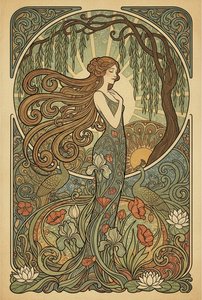
La Línea Fluida y la Forma Floreciente: Explorando el Legado Estético del Art Nouveau
Descubre el legado del Art Nouveau: su historia, influencias y artistas clave como Van de Velde y Boccioni. Un análisis profundo de este movimiento estético revolucionario.
