- Inicio

- Imagen digital
- Joseph Nicéphore Niépce
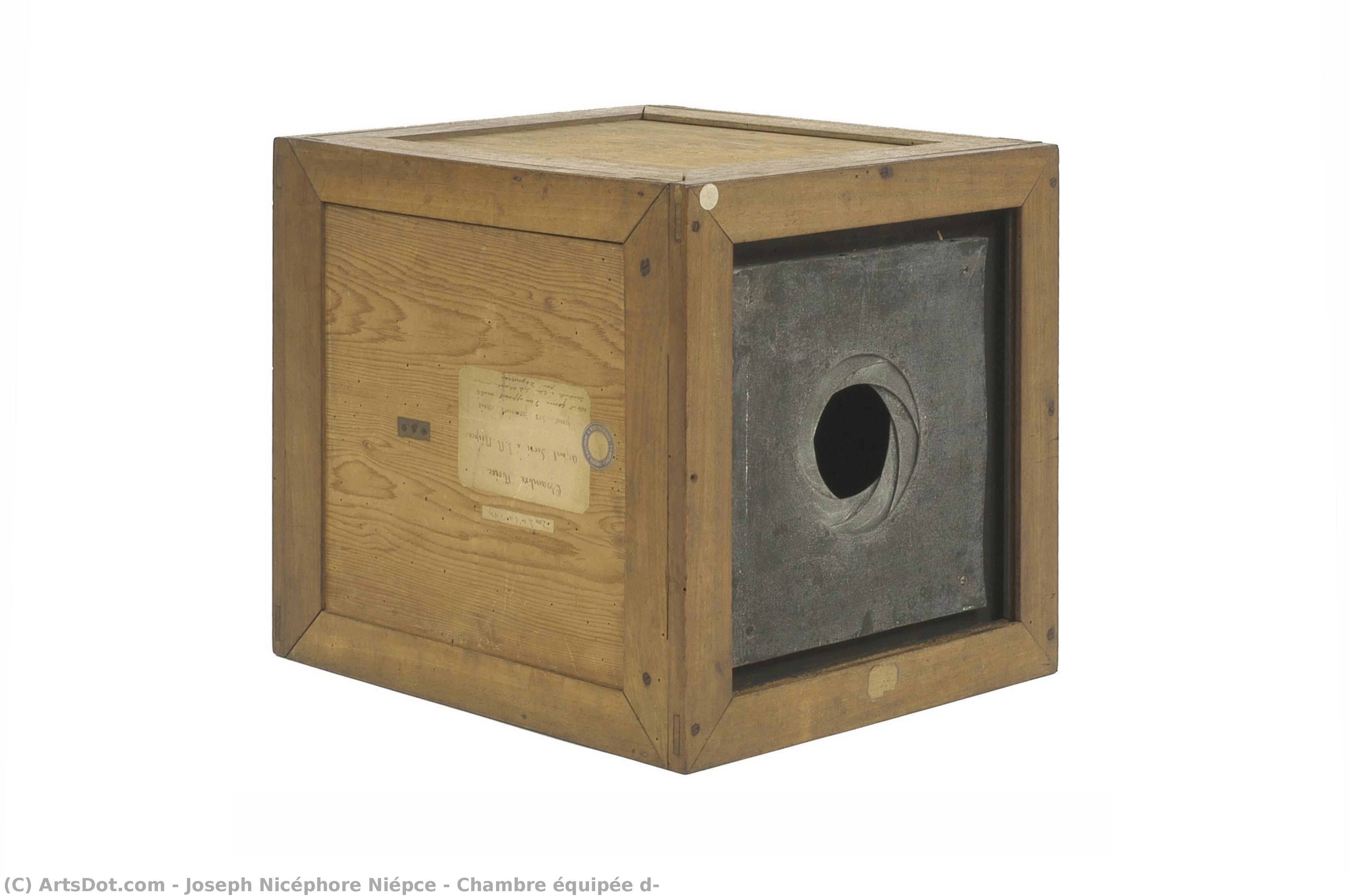
- Chambre équipée d
 Comprar impresión Encargar reproducción
 Enviar
 Compartir
 Detalles
 Añadir a favoritos

 Descargar
 Similares
 Radiografía
 Presentación de diapositivas
Chambre équipée d


 Ver más
Adquiera una imagen digital de alta resolución y optimizada, muy superior a la vista previa en línea.
Cada archivo es preparado meticulosamente por nuestros especialistas internos mediante el uso de herramientas avanzadas y un experto retoque manual. Nos aseguramos de que cada imagen posea una claridad excepcional, una precisión cromática impecable y un detalle minucioso.
El archivo final se entrega por correo electrónico en un plazo de 72 horas, optimizado para su uso inmediato en entornos profesionales, editoriales y de impresión. Esta es la misma calidad en la que confían los estudios de diseño, las editoriales y las galerías de primer nivel.
Imagen Digital
Descarga un archivo de alta resolución para exhibición personal, impresión y proyectos creativos.
Incluido en cada pedido de imagen digital
Entrega digital experta, garantizada.
Al elegir OriginalUniqueArt.com, no solo está adquiriendo una imagen; está recibiendo una obra de arte digital mejorada profesionalmente, elaborada con precisión y respaldada por una garantía de satisfacción. Esto es todo lo que incluye su pedido, automáticamente:

Entrega rápida por email
Recibirá su archivo de imagen digital en alta resolución por correo electrónico en un plazo de 72 horas tras realizar su pedido, listo para su uso inmediato.

Archivo digital optimizado con IA
Su obra de arte se optimiza profesionalmente mediante herramientas avanzadas de IA y edición manual, garantizando el máximo detalle, claridad y precisión cromática.

Reenvío gratuito de por vida
¿Has borrado o perdido tu archivo por error? No te preocupes: te lo volveremos a enviar en cualquier momento, sin coste adicional.

Sin cargos de importación - Siempre
Disfrute de su obra de arte al instante sin aduanas, aranceles ni gastos de envío; las descargas digitales siempre están libres de impuestos.

Garantía de fidelidad de color
Garantizamos que su imagen digital refleje los colores originales con la mayor fidelidad posible, mediante el uso de herramientas profesionales y gestión del color.

Garantía de satisfacción de 60 días
Si no está satisfecho con su imagen digital, la revisaremos o le reembolsaremos el 100% en un plazo de 60 días, sin preguntas.

100% Garantía de devolución de dinero
¿No está satisfecho? Obtenga un reembolso completo dentro de los 60 días posteriores a la recepción de su archivo digital, sin preguntas.

Descuentos por pedidos al por mayor
Compra 3 imágenes, ahorra 10% - Compra 5, ahorra 15% - Compra 10+, ahorra 20%. Ideal para proyectos creativos, galerías y agencias.
Biografía del artista
Joseph Nicéphore Niépce: The Father of Photography
Joseph Nicéphore Niépce (1765 – 1833) stands as an undeniable titan in the annals of artistic innovation, yet his legacy transcends mere visual representation. He wasn’t a painter wielding brushstrokes; rather, he was a physicist and inventor who fundamentally reshaped our understanding of capturing light and transforming it into enduring images—a feat that irrevocably altered the course of art history itself. Born in Chalon-sur-Saône, France, Niépce's life unfolded against the backdrop of the turbulent Napoleonic era, shaping his intellectual pursuits and ultimately propelling him to become one of the earliest pioneers of photography.Early Life and Scientific Foundations
Niépce’s upbringing instilled within him a profound appreciation for scientific inquiry—a trait nurtured by his father’s legal profession and reinforced by his own studies at Angers Cathedral School, where he mastered mathematics and experimental methodology. This intellectual fervor would prove instrumental in his groundbreaking discoveries. Notably, Niépce's brother Claude, equally passionate about invention, tragically succumbed to mental illness in England, leaving Niépce burdened with the responsibility of managing the family estate and continuing their collaborative research endeavors. The influence of Claude’s unwavering dedication to the Pyréolophore—a revolutionary internal combustion engine conceived by the brothers—served as a constant reminder of the boundless potential for scientific advancement. He was baptized Joseph but adopted the name Nicéphore, in honour of Saint Nicephorus I of Constantinople, while studying at the Oratorian college in Angers. At the college he learned science and the experimental method, rapidly achieving success and graduating to work as a professor of the college.The Pyréolophore: A Vision Ahead of Its Time
Beyond his photographic pursuits, Niépce’s brilliance shone through in his tireless experimentation with alternative energy sources. The Pyréolophore represents more than just an engine; it embodies Niépce's audacious ambition to harness the power of fire—a concept deeply rooted in alchemical traditions and reflecting a broader fascination with transforming natural phenomena into practical applications. Though initially hampered by technical challenges and plagued by Claude’s debilitating illness, Niépce persevered, demonstrating remarkable resilience and unwavering commitment to his scientific vision. The Pyréolophore stands as testament to Niépce's belief that science could unlock new frontiers of human ingenuity. He tirelessly pursued refinements to the engine’s design, driven by a conviction that it held the key to unlocking unprecedented levels of efficiency and transforming industrial processes. His brother Claude’s unwavering dedication to this ambitious project served as an inspiration—a symbol of collaborative innovation and the pursuit of transformative breakthroughs.The Birth of Photography: Heliography and the Window at Le Gras
Niépce's true artistic triumph arrived in the mid-1820s with his pioneering development of heliography—a technique he termed “sun drawing.” Inspired by the camera obscura, a darkened room equipped with a pinhole aperture that projects an inverted image onto a surface, Niépce sought to replicate this mesmerizing phenomenon permanently. His meticulous efforts culminated in 1826-1827 with the creation of *View from the Window at Le Gras*, arguably the world’s oldest surviving photograph. This monumental achievement—a bitumen of Judea coated pewter plate exposed for eight hours under direct sunlight—marked a pivotal moment in artistic history, demonstrating that images could be captured and preserved without resorting to laborious manual copying. It signaled an unprecedented shift toward objective observation and representation—values that would soon permeate the artistic landscape. He painstakingly documented the courtyard, outbuildings, and trees outside his home from Le Gras, France, utilizing a carefully calibrated camera obscura and applying a revolutionary chemical process to fix the image onto pewter. This groundbreaking endeavor defied conventional artistic conventions—challenging established notions of perspective and representation while simultaneously establishing a new paradigm for visual art.Collaboration with Daguerre: Shaping Photographic Innovation
Recognizing the transformative potential of heliography, Niépce forged a crucial partnership with Louis-Jacques-Mande Daguerre—a Parisian painter who possessed complementary skills in artistry and technical expertise. Together, they refined Niépce’s process, resulting in the daguerreotype—a photographic technique that produced remarkably detailed images on silver-plated sheets. Although Daguerre secured patent rights for his invention, Niépce's foundational contribution remained indispensable to its success. Their collaboration exemplifies the spirit of scientific inquiry and artistic innovation—a synergy that irrevocably altered the trajectory of visual art and cemented Niépce’s place as the progenitor of photography. He tirelessly pursued refinements to Daguerre’s process, driven by a conviction that it would elevate photographic artistry to new heights. ### Legacy and Enduring Influence Joseph Nicéphore Niépce’s legacy extends far beyond his individual inventions; he fundamentally reshaped our perception of how images could be created and disseminated. His unwavering dedication to scientific experimentation—coupled with his artistic sensibility—established a paradigm for future generations of artists and inventors alike. The enduring fascination with Niépce's pioneering work underscores the profound impact of his discoveries on art history, demonstrating that true innovation arises from blending intellectual curiosity with creative vision. He remains an inspirational figure—a testament to the transformative power of scientific exploration and artistic expression. His contribution to photography is recognized as a cornerstone of modern visual culture, forever altering our understanding of representation and observation.
Joseph Nicéphore Niépce
1765 - 1833 , Francia
Información clave
- Artistic Movement Or Style: Fotografía temprana
- Artists Or Movements Influenced By This Artist: ['Daguerreotype']
- Artists Who Influenced This Artist: ['Camera obscura']
- Date Of Birth: March 7, 1765
- Full Name: Joseph Nicéphore Niépce
- Nationality: Francés
- Notable Artworks: ['Vista desde la ventana en Le Gras']
- Place Of Birth: Chalon-sur-Saône, Francia

