

 Enviar
 Compartir
 Detalles
 Guía
Guía

 Descargar
 Similares
 Presentación de diapositivas
 Estadísticas
Brooch


 Ver más
Reproducción al óleo hecha a mano
Óleo sobre lienzo pintado a mano en el tamaño y marco de su elección, realizado por encargo por nuestros artistas. ( Cambiar a impresiones Cambiar a imagen digital)




































Elija entre nuestros tamaños predefinidos que respetan las proporciones originales de la obra.

Indique el ancho y el alto que necesite para adaptarse a su marco o pared. Al tratarse de una obra pintada a mano, si requiere un tamaño con una proporción distinta, el artista puede pintar un poco más alrededor de la imagen o recortarla ligeramente; usted elige. Le enviaremos una maqueta digital para su aprobación antes de comenzar la pintura. La imagen que se muestra en esta página no refleja el resultado real; solo la maqueta lo hace.
Tras realizar el pedido, el equipo de OriginalUniqueArt.com enviará un correo electrónico al cliente para solicitar instrucciones y proporcionarle una vista previa del boceto.
Envío a todo el mundo () en 3-4 semanas en lugar de las 5 semanas estándar. (25 octubre). Sin comprometer la calidad.

Envío exprés gratuito a todo el mundo

Lienzo de lino de alta calidad

Seguro de envío total

Garantía de reembolso de aranceles aduaneros

Garantía de fidelidad cromática exacta

Política de devolución de 100 días (solo por defectos)

Garantía de devolución del 100% del dinero

Descuento por cantidad
 La opción de vidrio solo está disponible en tamaños inferiores a 110 cm.

Brooch
Técnica de reproducción
Dimensiones de la reproducción
-


Precio total final
€ 263
A Jewel of the Vienna Secession
In the delicate interplay of light and color, the Brooch by Josef Hoffmann emerges as a breathtaking testament to the dawn of modern design. Created around 1910, this exquisite piece serves as more than mere ornamentation; it is a window into the soul of the Wiener Werkstätte era. The artwork presents a mesmerizing close-up of stained glass artistry, where deep, velvety blues collide with vibrant, pulsating reds. At its heart, a pristine white letter 'M' stands as a focal point of geometric clarity, anchored within an intricate web of design that speaks to the precision and elegance of the early 20th-century avant-garde.
The technique employed in this piece reflects the mastery of Hoffmann, a man who redefined the boundaries between architecture and decorative arts. The use of stained glass creates a luminous effect, where light does not simply hit the surface but seems to emanate from within the very fibers of the composition. This translucency allows the bold red border to frame the central motif with a rhythmic intensity, drawing the eye inward toward the delicate white calligraphy. For the discerning collector or interior designer, this piece offers a sophisticated way to introduce a sense of historical grandeur and structural beauty into a contemporary space.
The Legacy of Geometric Elegance
To understand the emotional resonance of this work, one must look to the historical context of its creator. As a founding member of the Vienna Secession, Hoffmann sought to break free from the suffocating traditions of academic art, favoring instead a language of functionalism and geometric purity. This brooch embodies that revolution. The stark contrast between the primary colors and the sharp, clean lines of the central letter evokes a sense of organized passion—a controlled explosion of color that feels both ancient in its glasswork tradition and strikingly modern in its minimalist execution.
Integrating such a piece into a curated collection or a high-end interior provides an immediate touchpoint of intellectual luxury. It invites conversation about the transition from the flowing, organic curves of Art Nouveau to the structured, rhythmic patterns of Art Deco. Whether displayed as a focal point in a gallery setting or used as inspiration for textile and glass decor, the Brooch remains a timeless symbol of an era when every small object was treated with the reverence of a masterpiece. It is an invitation to experience the brilliance of Hoffmann’s vision, where every fragment of color tells a story of architectural precision and artistic liberation.
Preguntas y respuestas
¿Qué tan intensos son los colores de "Brooch"?
"Brooch" de Josef Hoffmann presenta una saturación de Subtle Color y una intensidad de Balanced.
¿Quién es el autor y en qué fecha se creó "Brooch"?
Josef Hoffmann creó "Brooch" en 1910.
¿Cuál es el formato de "Brooch"?
El formato de "Brooch" es Square, un dato útil para planificar la ubicación de una reproducción.
Biografía del artista
Josef Hoffmann fue un arquitecto y diseñador austro-moravo de gran relevancia histórica. Formó parte del grupo de fundadores de la Secesión de Viena y fue cofundador de la Wiener Werkstätte. Su obra arquitectónica más célebre es el Palacio Stoclet, en Bruselas (1905–1911), una pieza pionera de la arquitectura moderna y el Art Déco, que representa la cumbre del estilo de la Secesión de Viena.

Josef Hoffmann
1870 - 1956 , Croacia
Datos clave
- Artistas O Movimientos Influenciados Por Este Artista: ['Wiener Werkstätte']
- Fecha De Fallecimiento: 1956
- Fecha De Nacimiento: 1870
- Lugar De Nacimiento: Příbor, Croacia
- Movimiento O Estilo Artístico: Secesión de Viena, Art Deco, Modernismo
- Nacionalidad: Austro-moravo
- Nombre Completo: Josef Maria Gustav Hoffmann
- Obras Notables: ['Palacio Stoclet']
Artículos relacionados
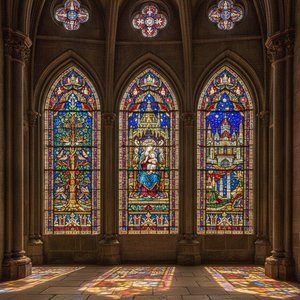
Luminous Masterpieces: The Captivating Beauty and Timeless Elegance of Stained Glass Artworks
Embark on a visual journey through the luminous world of stained glass art. Discover the exquisite craftsmanship, historical significance, and captivating beauty of masterworks from Art Nouveau to the Gothic era, curated for the discerning fine art enthusiast.

Crimson Threads of Narrative: Exploring Symbolism & Representation in Artworks Featuring the Red Dress
Explore the rich symbolism of the red dress in art history! From ancient power displays to iconic portraits like Cézanne’s 'Madame Cezanne', discover the cultural and artistic significance behind this captivating color. Expert analysis & insights.

Blanco Sublime: Los 10 Cuadros Más Famosos Dominados por la Luz y el Color
Descubre los 10 cuadros blancos más emblemáticos de la historia del arte. Explora Monet, Van Gogh y Klimt, y su magistral uso de la luz y el color. Encuentra reproducciones de alta calidad e inspírate para tu decoración en .

Las 10 Obras Maestras del Azul Pizarra: Arte, Historia y Decoración
Descubre las 10 pinturas más famosas dominadas por el azul pizarra. Explora la historia, técnica y belleza de Monet, Van Gogh y otros maestros. Encuentra reproducciones de arte exclusivas para decorar tu hogar en .
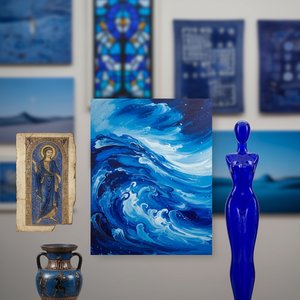
The Allure of Azure: Exploring the Symbolic & Aesthetic Depths of Blue in Art History
Explore the rich history of blue in art! Discover its symbolism, from ancient pigments to modern masterpieces by Kandinsky & Seurat. Uncover the psychological impact and cultural meanings behind this captivating hue.
