
 Vista previa
 Compartir
 Compartir
 Ver detalles

 Descargar
 Ver similares
 Radiografía
 Presentación de diapositivas
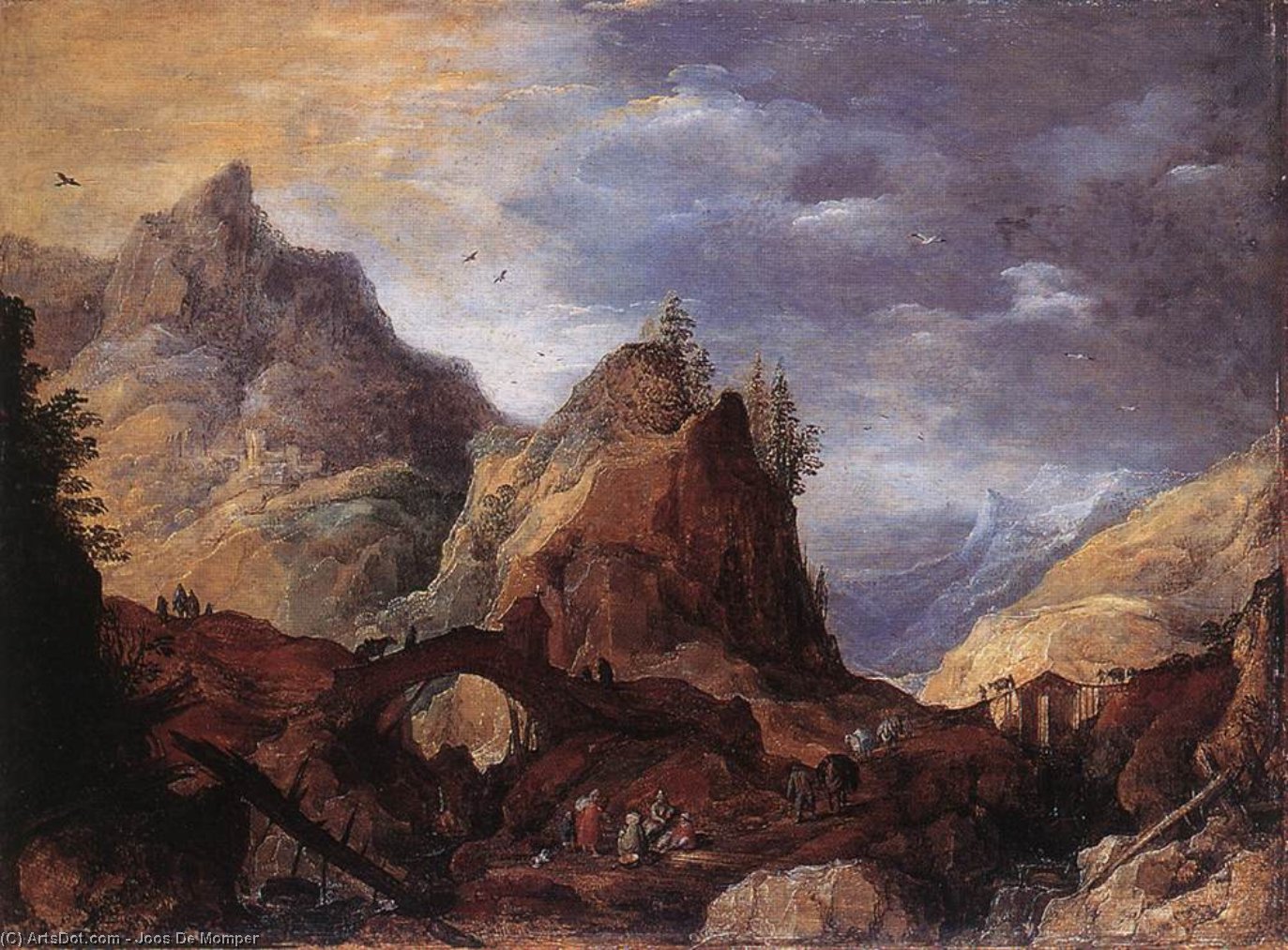
Mountain Scene with Bridges
 Oil On Panel
- Flemish Landscape
 1600
1600 53.0 x 71.0 cm
 Museo Wallraf-Richartz
 Leer más
Adquiera una imagen digital de alta resolución y optimizada, muy superior a la vista previa en línea.
Cada archivo es preparado meticulosamente por nuestros especialistas internos mediante el uso de herramientas avanzadas y un experto retoque manual. Nos aseguramos de que cada imagen posea una claridad excepcional, una precisión cromática impecable y un detalle minucioso.
El archivo final se entrega por correo electrónico en un plazo de 72 horas, optimizado para su uso inmediato en entornos profesionales, editoriales y de impresión. Esta es la misma calidad en la que confían los estudios de diseño, las editoriales y las galerías de primer nivel.
Imagen Digital
Descarga un archivo de alta resolución para exhibición personal, impresión y proyectos creativos. ( Pedir impresión Encargar reproducción pintada a mano)
Incluido en cada compra de imágenes digitales
Entrega digital experta, garantizada.
Al elegir OriginalUniqueArt.com, no solo está adquiriendo una imagen; está recibiendo una obra de arte digital mejorada profesionalmente, elaborada con precisión y respaldada por una garantía de satisfacción. Esto es todo lo que incluye su pedido, automáticamente:

Entrega rápida por email
Recibirá su archivo de imagen digital en alta resolución por correo electrónico en un plazo de 72 horas tras realizar su pedido, listo para su uso inmediato.

Archivo digital optimizado por IA
Su obra de arte se optimiza profesionalmente mediante herramientas avanzadas de IA y edición manual, garantizando el máximo detalle, claridad y precisión cromática.

Reenvío gratuito de por vida
¿Has borrado o perdido tu archivo por error? No te preocupes: te lo volveremos a enviar en cualquier momento, sin coste adicional.

Sin gastos de importación, siempre
Disfrute de su obra de arte al instante sin aduanas, aranceles ni gastos de envío; las descargas digitales siempre están libres de impuestos.

Garantía de precisión de color
Garantizamos que su imagen digital refleje los colores originales con la mayor fidelidad posible, mediante el uso de herramientas profesionales y gestión del color.

Garantía de satisfacción de 60 días
Si no está satisfecho con su imagen digital, la revisaremos o le reembolsaremos el 100% en un plazo de 60 días, sin preguntas.

100% Garantía de devolución de dinero
¿No está satisfecho? Obtenga un reembolso completo dentro de los 60 días posteriores a la recepción de su archivo digital, sin necesidad de explicaciones.

Descuentos por volumen
Compra 3 imágenes, ahorra 10% - Compra 5, ahorra 15% - Compra 10+, ahorra 20%. Ideal para proyectos creativos, galerías y agencias.
Descripción del coleccionable
A Panoramic Vision of Alpine Majesty – Joos de Momper’s “Mountain Scene with Bridges”
Joos de Momper the Younger's "Mountain Scene with Bridges" is not merely a landscape painting; it’s an invitation to step into a vast, meticulously rendered realm of alpine grandeur. Completed around 1600, this oil-on-oak-panel masterpiece resides within the Wallraf–Richartz Museum in Cologne, yet its influence and evocative power extend far beyond the confines of that institution. De Momper, a pivotal figure bridging the late Mannerist and burgeoning Baroque periods in Flemish art, masterfully captures a dramatic mountain vista—a scene brimming with both serene beauty and subtle, almost imperceptible tension. The painting’s immediate impact lies in its sheer scale; it's a panoramic sweep of rugged peaks, crystalline streams, and distant, hazy horizons, creating an illusion of limitless space. The composition is carefully balanced, drawing the eye through a series of receding planes—from the foreground bridges, worn and weathered, to the towering summits that seem to pierce the very heavens.A Masterclass in Atmospheric Perspective and Color
De Momper’s technical skill is immediately apparent in his nuanced approach to atmospheric perspective. He employs a sophisticated layering of color – a gradual shift from warm browns and ochres in the foreground to cooler greens, blues, and violets in the distant mountains—to convincingly simulate depth and distance. This technique, rooted in the principles of linear perspective but imbued with a distinctly Flemish sensibility, is not simply about creating visual accuracy; it’s about evoking a profound sense of atmosphere and mood. The subtle gradations of light and shadow imbue the scene with an almost palpable sense of airiness and vastness. Notice how he uses broken color—small patches of vibrant hue interspersed within larger areas of muted tones—to suggest reflected light on distant surfaces, adding to the illusion of depth and realism. The brushwork itself is remarkably controlled, yet retains a delicate quality that prevents the scene from feeling overly rigid or artificial.Echoes of Bruegel and the Rise of the Flemish Landscape
De Momper’s work stands as a crucial link between the more emotionally charged landscapes of Pieter Brueghel the Elder and the emerging realism of the early 17th century. Like Brueghel, he frequently depicted scenes of human activity within the vastness of nature—in this case, four figures traversing the bridges, suggesting a journey or perhaps a moment of contemplation amidst the grandeur of the mountains. However, unlike Bruegel’s often satirical and overtly dramatic depictions, de Momper's landscapes possess a quieter, more contemplative quality. He was heavily influenced by Joachim Patinir, whose monumental mountain scenes had set the standard for landscape composition in the preceding century. De Momper builds upon this tradition, refining the techniques of perspective and atmospheric rendering to create an image that is both visually stunning and psychologically resonant.Symbolism and Emotional Resonance
Beyond its technical brilliance, “Mountain Scene with Bridges” resonates with a subtle symbolic depth. The mountains themselves—ancient, enduring symbols of strength, stability, and spiritual aspiration—dominate the composition, reminding us of our own smallness in the face of nature’s immensity. The bridges, worn and weathered by time, represent connection – both physical and metaphorical – between different points in space and perhaps even between different realms of experience. The figures traversing these bridges invite us to consider our own journeys through life, our aspirations, and our relationship with the natural world. The overall effect is one of serene contemplation—a reminder of the beauty and power that can be found in the quiet moments of connection with nature. It’s a painting that speaks not just to the eye but also to the soul, inviting viewers to lose themselves in its vastness and contemplate their place within it.A Timeless Masterpiece – Reproductions and Beyond
Reproductions of “Mountain Scene with Bridges” offer an accessible way to experience the profound beauty and technical mastery of this remarkable painting. Whether displayed as a statement piece in a grand salon or incorporated into a more intimate interior space, its panoramic scale and evocative atmosphere will undoubtedly captivate viewers. Consider framing it within a classic wooden frame to further enhance its historical resonance, or exploring options for digitally enhancing the image to create a truly immersive experience. This painting is not merely decoration; it’s an investment in art—a timeless masterpiece that speaks to the enduring power of nature and the human spirit.Biografía del artista
Joos de Momper - Un Pionero del Paisaje Flamenco
Joos de Momper el Joven (Amberes, 1564-5 de febrero de 1635), también conocido como Josse de Momper, fue uno de los más importantes paisajistas flamencos entre Pieter Brueghel el Viejo y Pedro Pablo Rubens. La influencia de Brueghel es evidente en muchos cuadros de Momper. Su nombre también se escribe como Joost, Joes o Jodocus.Joos de Momper el Joven fue aprendiz primero con su padre, el pintor Bartholomäus de Momper. Entró a formar parte de la guilda de san Lucas o gremio de pintores en 1581, formando parte de la junta directiva en 1611. En los años 1580, viajó a Italia a estudiar arte, conociendo, entre otros, a Lodewijk Toeput (Pozzoserrato en Treviso). Para el año 1594 ya estaba de vuelta en Amberes, donde se le documenta como partícipe en la decoración para el recibimiento del archiduque Ernesto.
Se asumió que en los años 1580 viajó a Italia para estudiar arte. La evidencia de este viaje fue proporcionada cuando paisajes impresionistas en la iglesia de S. Vitale en Roma, anteriormente atribuidos a Paul Bril, fueron dados a Joos de Momper el Joven.
En 1590 se casó con Elisabeth Gobijn. La pareja tuvo 10 hijos de los cuales Philippe de Momper fue pintor.
Estilo y Influencias
Como Abraham Bloemaert en Utrecht, de Momper simboliza el paso del manierismo al barroco en Amberes. De Momper pintó principalmente paisajes, el género por el que fue bien considerado en vida. Pintó tanto paisajes de fantasía como realistas. Los primeros siguen una gradación de color manierista convencional: marrón en el primer plano, verde grisáceo después y azul en el fondo; adopta en estos paisajes un punto de vista más bien alto. En cambio, en sus paisajes más realistas el punto de vista adoptado es más bajo y los colores más naturales.
Su influencia fue proporcionada por Pieter Brueghel el Viejo, cuyo estilo panorámico tuvo un impacto profundo en la obra de Momper. De Momper no sólo copiaba Brueghel; él absorbía su espíritu, adaptándolo a su propia visión y forjando un estilo que conectaba los principios manieristas del siglo XVI con el creciente realismo del siglo XVII.
Obras Destacadas
Paisaje fluvial con cacería de jabalíes, h. 1600 - Rijksmuseum, Ámsterdam
Helicón o Visita de Minerva a las Musas - Museo Real de Bellas Artes de Amberes, en Bélgica
Mercado flamenco y lavadero - Museo del Prado, Madrid
Paisaje con la tentación de Cristo - Galería Nacional de Praga
Escena de montaña con puentes - Museo Wallraf-Richartz, Colonia
Legado Histórico
Joos de Momper fue reconocido por Karel van Mander en su influyente Schilder-boeck (Book of Painters), un libro clave para comprender el arte flamenco del siglo XVII. Su retrato fue incluso grabado por Anthony van Dyck—un honor raro que destaca su posición dentro de la comunidad artística.
Además, Joos de Momper fue nombrado miembro de la junta directiva de la guilda de san Lucas en 1611, lo que demuestra el reconocimiento público y prestigio que disfrutaba durante su vida. También entrenó varios alumnos, incluyendo Louis de Caullery y su hijo Philippe de Momper, asegurando así la continuación de su legado artístico.
Hoy en día, las obras de Joos de Momper pueden encontrarse en museos y colecciones privadas alrededor del mundo, ofreciendo una visión fascinante de la rica cultura visual flamenca del siglo XVII. Él fue un maestro artesano que dio vida a paisajes impresionistas, invitando al espectador a perderse en su belleza y contemplar las maravillas del mundo natural.

Joos de Momper
1564 - 1635 , Bélgica
Datos clave
- Artistic Movement Or Style: Paisaje barroco
- Artists Or Movements Influenced By This Artist: ['Leonardo da Vinci']
- Artists Who Influenced This Artist:
- Pieter Brueghel el Viejo
- Lodewijk Toeput
- Date Of Birth: 1564
- Date Of Death: 1635
- Full Name: Joos de Momper el Joven
- Nationality: Flamenco
- Notable Artworks:
- Paisaje fluvial con cacería de jabalíes
- Helicón o Visita de Minerva a las Musas
- Place Of Birth: Amberes, Bélgica

