Neoclassicism
Wesley (John Jackson)
John Jackson (1778–1831) creó Wesley. Pertenece al movimiento Neoclassicism. Está realizado en Oil On Canvas.
- Oil On Canvas

 Ver en contexto

 Óleo pintado a mano
 Enviar
 Compartir
 Ficha técnica


 Descargar
 Similares
 Radiografía
 Presentación de diapositivas
 Preguntas y respuestas

 Estadísticas
Wesley en breve
- Título
- Wesley
- Artista
- John Jackson (1778–1831)
- Lugar de nacimiento del artista
- Lastingham, Reino Unido
- Técnica
- Oil On Canvas
- Movimiento
- Neoclassicism
- Época
- Early Modern
- Tema
- portrait, clergy, dignified, formal, neoclassical, authority
¿Qué representa Wesley?
Identification of the Portrait of Wesley
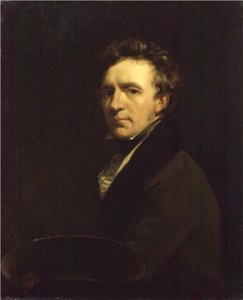
In this portrait, titled Wesley, the artist John Jackson presents a formal and dignified depiction of his subject. The work focuses on an elderly man, whose presence suggests the weight of a significant role, likely that of a clergyman or a judge. There is a quiet authority in his steady, contemplative expression, which meets the viewer with a sense of seasoned wisdom. The portrait captures a moment of stillness, focusing on the character and intellect of the sitter through a direct and serious gaze.
The subject is rendered in traditional clerical attire, which provides immediate insight into his social standing and professional life. He wears a long white wig and a black robe, accented by a stole that emphasizes his religious or judicial vocation. This specific choice of clothing, combined with the formal composition, establishes the sitter as a man of importance and discipline. The dark, indistinct background ensures that the viewer's attention remains fixed entirely upon the man and the textures of his garments.
Composition and Visual Elements
The composition is centered on the subject's head and shoulders, creating an immediate sense of presence. This focused arrangement draws the eye directly to the man's face, where a serious and contemplative expression suggests a life of deep thought. He is dressed in traditional clerical attire, characterized by a long white wig and a black robe that anchors the figure within the frame. The background remains dark and indistinct, a murky expanse that prevents distraction and pushes the subject into the foreground.
Lighting is used with a deliberate, dramatic intent. Strong highlights strike the face and the folds of the robes, carving out the form against the shadows. This chiaroscuro effect provides a sense of volume and weight to the figure. While the portrait feels intimate, the perspective is linear, utilizing subtle converging lines to suggest a sense of depth within the space. The interplay of light and shadow defines the contours of the clothing and the texture of the hair, grounding the figure in a tangible, physical reality.
Technique and Artistic Materials
The work is executed in oil paints on canvas, a choice that allows for a profound sense of depth and presence. Jackson employs a meticulous technique, characterized by careful observation and skillful brushwork that defines the contours of the face and the heavy folds of the clerical attire. There is a deliberate precision in how the light is handled, creating a sense of solidity through the careful application of pigment.
The texture of the piece is notably rich and layered. Through the use of impasto techniques, the artist has built up the surface to create a tangible quality, particularly visible in the rendering of the white wig and the heavy robes. This tactile approach provides a physical weight to the subject, ensuring that the interplay of light and shadow feels grounded and real rather than merely painted.
Related Works by John Jackson
Beyond this portrait, Jackson’s oeuvre reveals a consistent interest in the psychological depth of his subjects. His catalog includes Reginald Macdonald, a work that reflects his ability to handle formal portraiture. He also produced several self-portraits, which offer a more intimate look at the artist himself, providing a glimpse into his own character and the introspective nature of his practice. These works demonstrate his capacity to move between the public persona of a sitter and the private reality of the individual.
The artist’s technical range is further evidenced by his various studies, such as Flaxman. In these pieces, one can observe his command over oil textures and his specific approach to directional lighting. His ability to manipulate light and shadow is a recurring element across his various commissions. Whether working on a formal portrait or a focused study, Jackson maintained a commitment to capturing the essential presence of the person before him.
Imágenes en alta resolución de Wesley
John Jackson, Wesley. Dominio público
Preguntas sobre Wesley respondidas
¿En qué técnica está ejecutada "Wesley" de John Jackson?
La técnica de "Wesley" de John Jackson es Oil On Canvas. Las reproducciones pretenden recrear la apariencia de esta técnica.
¿Qué representa "Wesley"?
Los temas presentes en "Wesley" de John Jackson incluyen portrait, clergy, dignified, formal, neoclassical, authority, wisdom, religious, los cuales resumen la temática de la obra.
¿Se puede reproducir libremente la imagen de "Wesley" de John Jackson?
"Wesley" de John Jackson es de en el dominio público: sus derechos de autor han expirado. Este estado determina cómo se puede reproducir la imagen de la obra.
¿Quién es el artista detrás de "Wesley"?
El artista detrás de "Wesley" es John Jackson. La obra está catalogada bajo el nombre de John Jackson.
¿A qué movimiento artístico pertenece "Wesley" de John Jackson?
El movimiento asociado con "Wesley" de John Jackson es Neoclassicism. Esta clasificación sitúa la obra entre artistas y obras relacionadas.
¿A qué etapa de la trayectoria de John Jackson pertenece "Wesley"?
Dentro de la trayectoria de John Jackson, "Wesley" pertenece al Mature Period. Esta etapa permite compararla con otras obras del artista.
¿Es "Wesley" de John Jackson de dominio público y por qué?
"Wesley" de John Jackson es de en el dominio público: sus derechos de autor han expirado. La vigencia de los derechos de autor se cuenta a partir del fallecimiento del artista, que tuvo lugar en 1831.
¿Qué elementos de la obra de John Jackson se encuentran en "Wesley"?
"Wesley" comparte con otras obras de John Jackson su estilo Neoclassicism y sus temas recurrentes: reflects jackson's skill, demonstrates mastery, typical of his portraits, established style, classical ideals, roman portraiture, neoclassical style, formal composition.
¿Cómo se relaciona el tema de "Wesley" con la temática habitual de John Jackson?
Los temas recurrentes de John Jackson incluyen reflects jackson's skill, demonstrates mastery, typical of his portraits, established style, classical ideals, roman portraiture, neoclassical style, formal composition; "Wesley" se centra en portrait, clergy, dignified, formal, neoclassical, authority, wisdom, religious.
Sobre el artista, John Jackson
1778–1831, Reino Unido
John Jackson
Primeros Años y Aprendizaje: Un Comienzo Reacio John Jackson, nacido en la pintoresca aldea de Yorkshire, Lastingham, el 31 de mayo de 1778, se embarcó por un camino muy alejado de su destino inicial. Su padre, un práctico sastre, imaginaba un oficio similar para su hijo, y el joven John fue aprendiz acorde a ello. Sin embargo, incluso entre los tejidos y las costuras, floreció una innegable inclinación artística en él. Dibujaba en secreto retratos de amigos y conocidos, una silenciosa rebelión contra las expectativas familiares.
Otras obras de John Jackson
 Retrato de un hombre1822
 Reverendo William Holwell Carr1827
 Retrato de un caballero1810
 Frederick, duque de York (1763-1827)1822
Ensayos sobre Wesley
 Del Concepto al Lienzo: La Maestría y el Proceso de la Pintura al Óleo PersonalizadaDescubra la maestría técnica detrás de la pintura al óleo personalizada. Explore el arte desde el concepto hasta el lienzo hoy mismo.
 25 retratos clave de François Clouet: una guía de sus obras más importantesExplora los 25 retratos más icónicos de François Clouet y el Renacimiento francés. ¡Descubre su colección completa en OriginalUniqueArt.com!
 John Collier: 25 de sus pinturas más icónicas entre retratos y mitologíaExplora 25 obras clave de John Collier y su estilo prerrafaelita. Descubre su arte en OriginalUniqueArt.com.