

 Ver en contexto
 Enviar
 Compartir
 Detalles
 Guía
Guía

 Descargar
 Similares
 Radiografía
 Presentación de diapositivas
 Q&A
Q&A Estadísticas
Sir Giles Rooke (1743–1808)
 Oil On Canvas
- WallArt
- Impressionism
 19th Century
 125.0 x 99.0 cm
 Merton College
 Ver más
Giclée / Impresión de arte
Impresiones giclée o en lienzo de calidad de museo con producción rápida y opciones de acabado flexibles. ( Comprar pintura hecha a mano Cambiar a imagen digital)




P118B €10

P118H €10

P118W €10

P438Z €10

P508JH €12

P508YH €12

P805H €10

P805Z €10

P919BZ €10

P919G €10

P919XJ €10

P959ZH €10

P968JZ €12

W106C €8

W218G €10

W218JH €8

W218Y €10

W307PJ €10

W316G €10

W316PJ €8

W316Y €10

W398PJ €8

W4111J €10

W500HY €15

W500JH €15

W692G €12

W849H €8

W940BG €15

W953PJ €8




Elija entre nuestros tamaños predefinidos que respetan las proporciones originales de la obra.

Introduzca el ancho y el alto que necesite para adaptarse a su marco o pared. Una impresión solo puede recortarse, nunca hacerse más grande que la imagen original, por lo que un tamaño con una forma distinta perderá parte de la obra. Le enviaremos una maqueta digital para su aprobación antes de realizar cualquier impresión. La imagen que se muestra en esta página no refleja el recorte real; solo la maqueta lo hace.
Envío a todo el mundo () en 2 semanas en lugar de las 4/5 semanas estándar. (30 octubre)

Envío exprés gratuito a todo el mundo

Lienzo de lino de alta calidad

Seguro de envío total

Garantía de reembolso de aranceles aduaneros

Garantía de fidelidad cromática exacta

Política de devolución de 100 días (solo por defectos)

Garantía de devolución del 100% del dinero

Descuento por cantidad
 La opción de vidrio solo está disponible en tamaños inferiores a 110 cm.

Sir Giles Rooke (1743–1808)
Giclée / Impresión de arte
Dimensiones de la reproducción
-


Precio total final
€ 71
A Presence of Judicial Dignity
In this commanding portrait, John Hoppner captures the formidable essence of Sir Giles Rooke, an English judge whose life was defined by the gravity of the law and the weight of intellectual pursuit. The sitter is presented with a striking intensity, his gaze meeting the viewer directly with a stern, unwavering expression that commands immediate respect. Dressed in a vibrant red coat accented by crisp white trim, Rooke embodies the high-society elegance of his era, yet there is an underlying sense of duty and solemnity that transcends mere fashion. The artist masterfully employs a rich, tonal palette to sculpt the man's features, using light to highlight the texture of his wig and the flowing lines of his beard, creating a three-dimensional presence that feels almost tangible within the frame.
The composition is far more than a simple study of a single face; it is a window into a broader social and intellectual milieu. While Rooke remains the central focus, the background reveals glimpses of other figures, suggesting a world of movement and shared history just beyond his immediate orbit. This layering of subjects adds a narrative depth to the piece, hinting at the interconnected lives of the London elite during this period. Near the bottom corner, the subtle inclusion of what appears to be a book or a piece of paper serves as a quiet nod to the scholarly and legal foundations of Rooke's life, grounding his aristocratic appearance in the reality of his professional vocation.
Mastery of Light and Character
Technically, the work showcases Hoppner’s celebrated ability to manipulate light and shadow, a skill heavily influenced by the great Reynolds. The artist utilizes a masterful handling of chiaroscuro, allowing deep shadows to recede into the background while pulling the subject forward through luminous highlights on the face and clothing. This technique does not merely illuminate; it breathes life into the portrait, imbuing the sitter with a psychological complexity that invites long periods of contemplation. The brushwork, characterized by a certain breadth and freedom, avoids unnecessary fussiness, opting instead for a fluid elegance that emphasizes the character of the subject over minute, distracting details.
For the discerning collector or interior designer, this reproduction offers more than just a decorative element; it provides a focal point of historical prestige. The painting’s emotional impact lies in its ability to evoke the atmosphere of an era defined by Enlightenment values and judicial authority. Whether placed in a stately library, a formal study, or a sophisticated gallery space, the portrait of Sir Giles Rooke brings with it an air of timeless sophistication and intellectual rigor. It is a piece that speaks of legacy, power, and the enduring strength of a well-lived life, making it an inspiring acquisition for those who appreciate art that tells a profound story.
Preguntas y respuestas
¿Dónde se recomienda exhibir el formato Portrait de "Sir Giles Rooke (1743–1808)"?
El formato Portrait de "Sir Giles Rooke (1743–1808)" de John Hoppner es ideal para un Living Room. El formato y el espacio orientan conjuntamente la ubicación de una reproducción.
¿Presenta "Sir Giles Rooke (1743–1808)" un fuerte contraste entre luces y sombras?
"Sir Giles Rooke (1743–1808)" de John Hoppner presenta un contraste Bold entre sus zonas de luz y sombra.
¿Cuál es el tono predominante en "Sir Giles Rooke (1743–1808)"?
Un tono Warm Sunset Tones recorre "Sir Giles Rooke (1743–1808)" de John Hoppner.
Biografía del artista
Una vida de arte y patrocinio real
John Hoppner, un destacado pintor de retratos inglés, dejó una huella imborrable en el mundo del arte con su vibrante paleta de colores. Nacido en Whitechapel, Londres, en 1758, hijo de padres alemanes, la vida de Hoppner se caracterizó por el patrocinio real y la brillantez artística.Primeros años y formación
- A temprana edad, Hoppner se convirtió en cantante del coro en la capilla real, pero su inclinación hacia el arte lo llevó a ingresar a la Royal Academy en 1775.
- En 1778, recibió una medalla de plata por dibujo desde vida y, en 1782, la medalla de oro para pintura histórica con su obra sobre "El rey Lear".
Ascenso a la fama y obras notables
John Hoppner's los retratos de mujeres y niños fueron considerados sus obras más exitosas por jueces competentes. Su toque, caracterizado por amplitud y libertad, dio a sus pinturas un ligero reflejo del encanto de Reynolds. Obras notables incluyen:- Sra. Jordan como Viola en "Noche de reyes", ahora en English Heritage (Londres, Reino Unido), que muestra su dominio sobre la pintura de retratos.
- Sus retratos del príncipe de Gales, el duque y la duquesa de York, Lord Rodney y Lord Nelson, que fueron colgados en los apartamentos estatales de St James's Palace, demuestran sus altas conexiones sociales.
Evolución artística e influencias
John Hoppner demostró una habilidad particular para capturar la personalidad y el carácter de sus sujetos, especialmente mujeres y niños. Su estilo se caracteriza por pinceladas sueltas y un uso audaz del color, lo que le valió comparaciones con Thomas Gainsborough y Joshua Reynolds, aunque desarrolló un enfoque más espontáneo y menos formal. Su formación en la Royal Academy le proporcionó una base sólida en las técnicas clásicas de retrato, pero Hoppner se apartó de la rigidez académica para crear obras más vivas y expresivas.Legado y vida posterior
John Hoppner's la vida estuvo marcada por una enfermedad crónica del hígado. Murió el 23 de enero de 1810. A pesar de esto, su legado perdura a través de sus vibrantes retratos que siguen cautivando a los amantes del arte.- Explore más obras de John Hoppner en https://OriginalUniqueArt.com/@/johnhoppner.
- Descubra el contexto más amplio del arte británico en https://en.wikipedia.org/wiki/art_of_the_united_kingdom.
Lectura adicional y exploración
Para profundizar en el mundo del arte británico, considere lo siguiente:- Descubriendo las obras de arte de Dyram Park, Reino Unido
- Sir Edwin Landseer Lutyens, un arquitecto inglés conocido por sus adaptaciones imaginativas.

John Hoppner
1758 - 1810 , Reino Unido
Datos clave
- Estilo Artístico: Retrato, historicismo
- Fecha De Muerte: 1810
- Fecha De Nacimiento: 1758
- Influencias Artísticas: ['Joshua Reynolds']
- Lugar De Nacimiento: Whitechapel, Reino Unido
- Nacionalidad: Británico
- Nombre Completo: John Hoppner
- Obras Notables:
- Mrs. Jordan como Viola
- Príncipe de Gales
- Duque y Duquesa de York
Artículos relacionados

Mastering Light & Elegance: The Top 25 John Singer Sargent Artworks
Step into the Gilded Age with our curated guide to the top 25 John Singer Sargent masterpieces. Explore the elegance of his iconic portraits and breathtaking light. Find museum-quality art reproductions for your decor. Discover all masterpieces on OriginalUniqueArt.com.
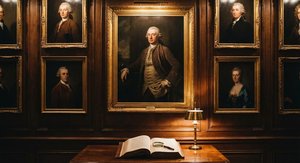
Sir Joshua Reynolds: Las 25 Obras Maestras del Retrato Inglés | OriginalUniqueArt
Descubre las 25 obras maestras de Sir Joshua Reynolds, el pintor inglés que elevó el retrato a la categoría de arte. Explora su técnica clásica, estilo rococó y significado histórico en OriginalUniqueArt.com. ¡Encuentra reproducciones de alta calidad para tu hogar!

Las 25 mejores obras de Sir Joshua Reynolds: Maestría y Grandeza
Explora las 25 obras maestras de Sir Joshua Reynolds y su Grand Style. ¡Descubre toda la colección en OriginalUniqueArt.com!

Las 25 mejores obras de Sir Joshua Reynolds: Maestría y Estilo Grandioso
Explora las 25 obras maestras de Sir Joshua Reynolds y su Grand Style. ¡Descubre toda la colección en OriginalUniqueArt.com!

Las 25 mejores obras de Sir Joshua Reynolds: Maestría y Grandeza
Explora el Grand Style de Sir Joshua Reynolds y sus 25 obras maestras. ¡Descubre este legado en OriginalUniqueArt.com!


