
 Ver en contexto
 Enviar
 Compartir
 Detalles
 Guía
Guía

 Descargar
 Similares
 Radiografía
 Presentación de diapositivas
 Q&A
Q&A Estadísticas
Tulip Tree, Greenwich

- 109.0 x 76.0 cm


 Ver más
Giclée / Impresión de arte
Impresiones giclée o en lienzo de calidad de museo con producción rápida y opciones de acabado flexibles. ( Comprar pintura hecha a mano Cambiar a imagen digital)




P118B €10

P118H €10

P118W €10

P438Z €10

P508JH €12

P508YH €12

P805H €10

P805Z €10

P919BZ €10

P919G €10

P919XJ €10

P959ZH €10

P968JZ €12

W106C €8

W218G €10

W218JH €8

W218Y €10

W307PJ €10

W316G €10

W316PJ €8

W316Y €10

W398PJ €8

W4111J €10

W500HY €15

W500JH €15

W692G €12

W849H €8

W940BG €15

W953PJ €8




Elija entre nuestros tamaños predefinidos que respetan las proporciones originales de la obra.

Introduzca el ancho y el alto que necesite para adaptarse a su marco o pared. Una impresión solo puede recortarse, nunca hacerse más grande que la imagen original, por lo que un tamaño con una forma distinta perderá parte de la obra. Le enviaremos una maqueta digital para su aprobación antes de realizar cualquier impresión. La imagen que se muestra en esta página no refleja el recorte real; solo la maqueta lo hace.
Envío a todo el mundo () en 2 semanas en lugar de las 4/5 semanas estándar. (1 noviembre)

Envío exprés gratuito a todo el mundo

Lienzo de lino de alta calidad

Seguro de envío total

Garantía de reembolso de aranceles aduaneros

Garantía de fidelidad cromática exacta

Política de devolución de 100 días (solo por defectos)

Garantía de devolución del 100% del dinero

Descuento por cantidad
 La opción de vidrio solo está disponible en tamaños inferiores a 110 cm.

Tulip Tree, Greenwich
Giclée / Impresión de arte
Dimensiones de la reproducción
-


Precio total final
€ 71
A Serene Vision of American Impressionism
To gaze upon John Henry Twachtman's Tulip Tree, Greenwich is to step directly into a moment suspended in time—a breath of late afternoon tranquility captured on canvas. This painting, executed in 1901, is far more than a mere depiction of a landscape; it is an immersion into the very essence of American leisure and natural beauty at the turn of the twentieth century. Twachtman masterfully translates the ephemeral quality of light filtering through foliage, creating a scene that whispers of quiet contemplation. The composition draws the eye deep into the verdant expanse, where the stately presence of the central tree anchors the entire gathering of soft greens and muted tones.
Mastery in Brushstroke and Color
Technically, the work is a breathtaking testament to American Impressionism. Twachtman’s signature touch shines through in the application of paint itself. Observe the soft, feathery brushstrokes; they do not merely describe grass or leaves; they evoke the feeling of wind passing through them. This technique allows the light and shadow to play across the surface with an almost luminous quality. The palette is deliberately restrained—a symphony of muted colors that eschews harsh contrasts for a pervasive sense of calm. It is this careful handling of tone, rather than dramatic color shifts, that imbues Tulip Tree, Greenwich with its profound sense of peace.
The Narrative of Leisure and Place
Within the foreground's gentle sweep of grass and the background's scattered trees, two figures appear in the distance. They are small against the grandeur of nature, yet their presence is crucial; they provide scale and a subtle narrative thread. One can almost hear the soft murmur of conversation or the rhythmic crunch of footsteps on gravel. These figures invite the viewer to participate in the scene, suggesting that life’s greatest pleasures are often found in simple communion—a leisurely walk through a beautiful, sun-dappled park. It speaks to an era when the appreciation for cultivated natural spaces was blossoming across America.
Enduring Emotional Resonance
The emotional impact of this piece is one of profound serenity. For the collector or designer seeking art that elevates a space from merely decorated to truly inhabited, Tulip Tree, Greenwich offers an immediate balm. It whispers of escape, of slowing down, and of appreciating the delicate balance between human activity and untamed nature. Owning a reproduction allows one to bring this carefully curated atmosphere—this pocket of pastoral calm—into your own home or gallery, making it a perennial source of gentle inspiration.
Preguntas y respuestas
¿Cuántas personas ven "Tulip Tree, Greenwich"?
Existe una página de Estadísticas para "Tulip Tree, Greenwich". En ella se detallan las visitas mensuales de la obra y de otras piezas del artista, con desgloses por país e idioma.
¿Cuánta luz parecen reflejar los colores de "Tulip Tree, Greenwich"?
"Tulip Tree, Greenwich" de John Henry Twachtman tiene una luminancia de Gentle Luminance. La luminancia describe cuánta luz parecen reflejar los colores.
¿A qué periodo histórico pertenece "Tulip Tree, Greenwich" de John Henry Twachtman?
"Tulip Tree, Greenwich" pertenece a la época 19th Century.
Biografía del artista
Primeros años y desarrollo artístico
John Henry Twachtman, pintor estadounidense, nació el 4 de agosto de 1853 en Cincinnati, Ohio. Su viaje artístico comenzó bajo la tutela de Frank Duveneck en su ciudad natal. Esta formación fundamental sentó las bases para sus futuras exploraciones en varios movimientos artísticos.Etapa europea y evolución artística
Entre 1875 y 1877, Twachtman asistió a la Academia de Bellas Artes de Múnich, donde perfeccionó sus habilidades en una técnica sombría y con pinceladas sueltas. Este período se caracterizó por su visita a Venecia con William Merritt Chase, ampliando aún más sus horizontes artísticos. Sus paisajes de esta época reflejan las influencias de su educación europea.Interludio parisino y tonalismo
De 1883 a 1885, Twachtman estudió en la Académie Julian en París, lo que cambió significativamente su estilo hacia un enfoque tonalista suave, grisáceo y verdoso. Este período se considera a menudo el apogeo de su carrera, con obras notables como *Arques-la-Bataille* (en la colección del Museo Metropolitano de Arte de Nueva York) y *Primavera* (en la colección del Museo de Arte de Cincinnati).Regreso a América e influencia de Cos Cob
Tras regresar a Estados Unidos, Twachtman se estableció en Connecticut, comprando una granja en Greenwich. Su presencia en la colonia de arte de Cos Cob fue fundamental, impulsando las pasiones creativas de sus amigos y estudiantes con su arte, conversación y enseñanza.Legado y obras destacadas
El trabajo posterior de Twachtman se caracteriza por una técnica impresionista altamente personal, a menudo representando paisajes nevados de su granja y jardín. Su serie de vibrantes escenas en Gloucester, Massachusetts, anticipó un estilo más modernista en el arte americano.- Paisaje 3 (200 x 152 cm, Museo Metropolitano de Arte, Nueva York, tonalismo, óleo)
- El dique holandés (tonalismo, óleo)
- Más obras de John Henry Twachtman
Referencias:

John Henry Twachtman
1853 - 1902 , Estados Unidos de América
Datos clave
- Artistas Que Influyeron:
- Frank Duveneck
- William Merritt Chase
- Fecha De Muerte: 8 de agosto de 1902
- Fecha De Nacimiento: 4 de agosto de 1853
- Influenciado A Artistas:
- Marsden Hartley
- Arthur Dove
- Milton Avery
- Lugar De Nacimiento: Cincinnati, EE. UU.
- Movimiento Artístico: Impresionismo americano, Tonalismo
- Nacionalidad: Estadounidense
- Nombre Completo: John Henry Twachtman
- Obras Notables:
- Paisaje 3
- The Holland Dyke
Artículos relacionados

John Henry Twachtman: Atmospheric Impressionism & the American Landscape
Explore the captivating landscapes of John Henry Twachtman, a pivotal American Impressionist & Tonalist painter. Discover his artistic evolution, key works, and lasting influence on early 20th-century art.

Maestría y Forma: Las 25 Mejores Obras de Paul Cézanne
Explora las 25 obras maestras de Paul Cézanne y su legado postimpresionista. ¡Descubre toda la colección en OriginalUniqueArt.com!

Los 10 Maestros del Paisaje Impresionista: Obras que Cambiaron la Historia del Arte
Descubre los 10 lienzos impresionistas que revolucionaron el arte. Monet, Renoir y más… Explora la historia, técnica y belleza de cada obra maestra. Encuentra reproducciones de alta calidad para tu hogar en OriginalUniqueArt.com.

Los 10 Maestros del Paisaje Impresionista: Obras que Cambiaron la Historia del Arte
Descubre los 10 lienzos impresionistas que revolucionaron el arte. Explora la historia de Monet, Van Gogh y Renoir, sus técnicas y colores vibrantes. Encuentra reproducciones de alta calidad para decorar tu hogar en OriginalUniqueArt.com
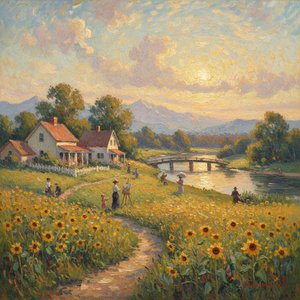
Capturando la Luz de una Nación: Explorando el Movimiento Impresionista Americano
Descubre el fascinante mundo del Impresionismo Americano. Explora a sus maestros, técnicas innovadoras y su legado perdurable. ¡Encuentra reproducciones de arte exclusivas en OriginalUniqueArt!


