

 Ver en contexto
 Enviar
 Compartir
 Detalles
 Guía
Guía

 Descargar
 Similares
 Radiografía
 Presentación de diapositivas
 Estadísticas
Landscape
 Impressionism
 1896
1896 33.0 x 33.0 cm
 Ver más
Reproducción al óleo hecha a mano
Óleo sobre lienzo pintado a mano en el tamaño y marco de su elección, realizado por encargo por nuestros artistas. ( Cambiar a impresiones Cambiar a imagen digital)




P118B €10

P118H €10

P118W €10

P438Z €10

P508JH €12

P508YH €12

P805H €10

P805Z €10

P919BZ €10

P919G €10

P919XJ €10

P959ZH €10

P968JZ €12

W106C €8

W218G €10

W218JH €8

W218Y €10

W307PJ €10

W316G €10

W316PJ €8

W316Y €10

W398PJ €8

W4111J €10

W500HY €15

W500JH €15

W692G €12

W849H €8

W940BG €15

W953PJ €8




Elija entre nuestros tamaños predefinidos que respetan las proporciones originales de la obra.

Indique el ancho y el alto que necesite para adaptarse a su marco o pared. Al tratarse de una obra pintada a mano, si requiere un tamaño con una proporción distinta, el artista puede pintar un poco más alrededor de la imagen o recortarla ligeramente; usted elige. Le enviaremos una maqueta digital para su aprobación antes de comenzar la pintura. La imagen que se muestra en esta página no refleja el resultado real; solo la maqueta lo hace.
Tras realizar el pedido, el equipo de OriginalUniqueArt.com enviará un correo electrónico al cliente para solicitar instrucciones y proporcionarle una vista previa del boceto.
Envío a todo el mundo () en 3-4 semanas en lugar de las 5 semanas estándar. (26 octubre). Sin comprometer la calidad.

Envío exprés gratuito a todo el mundo

Lienzo de lino de alta calidad

Seguro de envío total

Garantía de reembolso de aranceles aduaneros

Garantía de fidelidad cromática exacta

Política de devolución de 100 días (solo por defectos)

Garantía de devolución del 100% del dinero

Descuento por cantidad
 La opción de vidrio solo está disponible en tamaños inferiores a 110 cm.

Landscape
Técnica de reproducción
Dimensiones de la reproducción
-


Precio total final
€ 263
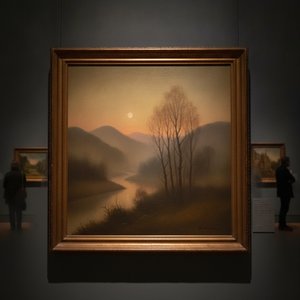
A Symphony of Atmosphere: John Henry Twachtman’s 1896 Landscape
John Henry Twachtman's *Landscape*, created in 1896, is a quintessential example of American Impressionism subtly infused with the emerging principles of Tonalism. Measuring a delicate 33 x 33 cm, this pastel work isn’t about grand narratives or meticulous detail; it’s an intimate study of mood and light, capturing a fleeting moment of tranquility along a quiet riverbank. The scene depicts a serene waterway bordered by trees, their forms softened and blended through the masterful application of pastel. Unlike the vibrant, broken color of French Impressionism, Twachtman favors a restrained palette – muted greens, golds, and subtle blues – creating an atmosphere of peaceful contemplation. This isn’t simply *a* landscape; it's an evocation of a feeling, a sensory experience translated onto paper.Technique & The Allure of Pastel
Twachtman’s choice of pastel is crucial to the painting’s effect. Unlike oil or acrylic, pastel allows for direct application of pure pigment, resulting in a velvety texture and luminous quality. He doesn't blend extensively; instead, he layers colors, allowing them to optically mix in the viewer’s eye. This technique contributes to the work’s ethereal feel, as if the scene is gently dissolving before us. The photo description highlights the “granulated surface” and “visible brushstrokes,” emphasizing the materiality of the pastel itself – a deliberate choice that distinguishes Twachtman's approach from smoother, more polished techniques. The soft application enhances the reflective quality of the water, creating an illusion of depth without relying on harsh lines or strong contrasts.Tonalism & The American Voice
While influenced by Impressionism gained during his European travels, Twachtman carved out a distinctly *American* artistic identity through Tonalism. This movement, flourishing in the late 19th century, prioritized atmospheric effects and emotional resonance over precise representation. Landscape embodies this perfectly. The emphasis isn’t on identifying specific trees or plants but rather on experiencing the overall mood – a sense of quietude, solitude, and harmony with nature. Twachtman wasn't merely depicting what he *saw*; he was conveying how it *felt* to be present in that landscape. Comparing this work to his other paintings like *Path in the Hills, Branchville, Connecticut*, reveals a consistent exploration of these themes – serene landscapes rendered with a poetic sensibility.Symbolism & Emotional Resonance
The solitary tree featured prominently in the composition can be interpreted as a symbol of resilience and enduring beauty amidst the ever-changing natural world. The reflective water suggests introspection and the passage of time, inviting viewers to contemplate their own connection to nature and the fleeting moments of life. The overall emotional impact is one of serenity and peaceful melancholy – a feeling that resonates deeply with those seeking respite from the complexities of modern life. This painting isn’t just a decorative object; it's an invitation to pause, breathe, and reconnect with the natural world.- Artist: John Henry Twachtman
- Painting Title: Landscape
- Medium: Pastel
- Date: 1896
- Size: 33 x 33 cm
Preguntas y respuestas
¿Qué lugar ocupa "Landscape" dentro de la obra de John Henry Twachtman?
"Landscape" comparte con otras obras de John Henry Twachtman su estilo Impressionism y sus temas recurrentes: impressionism, tonalism, nature observation, pastel techniques, american landscape, rural life", peaceful atmosphere, "serene.
¿Cómo equilibra la luz y la sombra "Landscape"?
"Landscape" de John Henry Twachtman presenta un nivel de brillo de brilliant, con una luminancia de Bright Balance.
¿A qué etapa de la trayectoria de John Henry Twachtman pertenece "Landscape"?
"Landscape" representa el Mature Period de John Henry Twachtman.
Biografía del artista
Primeros años y desarrollo artístico
John Henry Twachtman, pintor estadounidense, nació el 4 de agosto de 1853 en Cincinnati, Ohio. Su viaje artístico comenzó bajo la tutela de Frank Duveneck en su ciudad natal. Esta formación fundamental sentó las bases para sus futuras exploraciones en varios movimientos artísticos.Etapa europea y evolución artística
Entre 1875 y 1877, Twachtman asistió a la Academia de Bellas Artes de Múnich, donde perfeccionó sus habilidades en una técnica sombría y con pinceladas sueltas. Este período se caracterizó por su visita a Venecia con William Merritt Chase, ampliando aún más sus horizontes artísticos. Sus paisajes de esta época reflejan las influencias de su educación europea.Interludio parisino y tonalismo
De 1883 a 1885, Twachtman estudió en la Académie Julian en París, lo que cambió significativamente su estilo hacia un enfoque tonalista suave, grisáceo y verdoso. Este período se considera a menudo el apogeo de su carrera, con obras notables como *Arques-la-Bataille* (en la colección del Museo Metropolitano de Arte de Nueva York) y *Primavera* (en la colección del Museo de Arte de Cincinnati).Regreso a América e influencia de Cos Cob
Tras regresar a Estados Unidos, Twachtman se estableció en Connecticut, comprando una granja en Greenwich. Su presencia en la colonia de arte de Cos Cob fue fundamental, impulsando las pasiones creativas de sus amigos y estudiantes con su arte, conversación y enseñanza.Legado y obras destacadas
El trabajo posterior de Twachtman se caracteriza por una técnica impresionista altamente personal, a menudo representando paisajes nevados de su granja y jardín. Su serie de vibrantes escenas en Gloucester, Massachusetts, anticipó un estilo más modernista en el arte americano.- Paisaje 3 (200 x 152 cm, Museo Metropolitano de Arte, Nueva York, tonalismo, óleo)
- El dique holandés (tonalismo, óleo)
- Más obras de John Henry Twachtman
Referencias:

John Henry Twachtman
1853 - 1902 , Estados Unidos de América
Datos clave
- Artistas Que Influyeron:
- Frank Duveneck
- William Merritt Chase
- Fecha De Muerte: 8 de agosto de 1902
- Fecha De Nacimiento: 4 de agosto de 1853
- Influenciado A Artistas:
- Marsden Hartley
- Arthur Dove
- Milton Avery
- Lugar De Nacimiento: Cincinnati, EE. UU.
- Movimiento Artístico: Impresionismo americano, Tonalismo
- Nacionalidad: Estadounidense
- Nombre Completo: John Henry Twachtman
- Obras Notables:
- Paisaje 3
- The Holland Dyke
Artículos relacionados

Evocations of Place: A Historical Journey Through Landscape Art
Explore the rich history of landscape art with OriginalUniqueArt. Discover renowned artists, movements like Impressionism & Romanticism, and expert guidance for collecting timeless pieces. Find your perfect serene escape today!
Tonalism Explained: The Art of Mood, Mist, and Masterful Color in Landscape Painting
Discover the evocative world of Tonalism. Explore how masters like Whistler and Tryon used mist, shadow, and subtle color to capture profound mood and atmosphere in landscape art. An expert guide for fine art enthusiasts and collectors.

Paisajes Románticos: 10 Obras Maestras que Definieron un Movimiento Artístico
Descubre los 10 paisajes románticos más influyentes de artistas como Caspar David Friedrich y Turner. Explora la belleza, el simbolismo y las técnicas del movimiento romántico. Reproducciones de arte exclusivas en OriginalUniqueArt.com.

Los 10 Maestros del Paisaje Impresionista: Obras que Cambiaron la Historia del Arte
Descubre los 10 lienzos impresionistas que revolucionaron el arte. Monet, Renoir y más… Explora la historia, técnica y belleza de cada obra maestra. Encuentra reproducciones de alta calidad para tu hogar en OriginalUniqueArt.com.

Los 10 Maestros del Paisaje Impresionista: Obras que Cambiaron la Historia del Arte
Descubre los 10 lienzos impresionistas que revolucionaron el arte. Explora la historia de Monet, Van Gogh y Renoir, sus técnicas y colores vibrantes. Encuentra reproducciones de alta calidad para decorar tu hogar en OriginalUniqueArt.com


