Ver en contexto
 Enviar
 Compartir
 Detalles
 Guía
Guía

 Descargar
 Similares
 Radiografía
 Presentación de diapositivas
 Q&A
Q&A Estadísticas
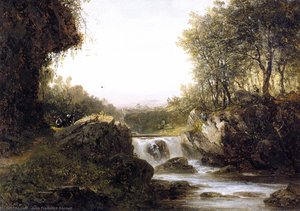
Waterfall


 Ver más
Giclée / Impresión de arte
Impresiones giclée o en lienzo de calidad de museo con producción rápida y opciones de acabado flexibles. ( Comprar pintura hecha a mano Cambiar a imagen digital)




P118B €10

P118H €10

P118W €10

P438Z €10

P508JH €12

P508YH €12

P805H €10

P805Z €10

P919BZ €10

P919G €10

P919XJ €10

P959ZH €10

P968JZ €12

W106C €8

W218G €10

W218JH €8

W218Y €10

W307PJ €10

W316G €10

W316PJ €8

W316Y €10

W398PJ €8

W4111J €10

W500HY €15

W500JH €15

W692G €12

W849H €8

W940BG €15

W953PJ €8




Elija entre nuestros tamaños predefinidos que respetan las proporciones originales de la obra.

Introduzca el ancho y el alto que necesite para adaptarse a su marco o pared. Una impresión solo puede recortarse, nunca hacerse más grande que la imagen original, por lo que un tamaño con una forma distinta perderá parte de la obra. Le enviaremos una maqueta digital para su aprobación antes de realizar cualquier impresión. La imagen que se muestra en esta página no refleja el recorte real; solo la maqueta lo hace.
Envío a todo el mundo () en 2 semanas en lugar de las 4/5 semanas estándar. (28 octubre)

Envío exprés gratuito a todo el mundo

Lienzo de lino de alta calidad

Seguro de envío total

Garantía de reembolso de aranceles aduaneros

Garantía de fidelidad cromática exacta

Política de devolución de 100 días (solo por defectos)

Garantía de devolución del 100% del dinero

Descuento por cantidad
 La opción de vidrio solo está disponible en tamaños inferiores a 110 cm.

Waterfall
Giclée / Impresión de arte
Dimensiones de la reproducción
-


Precio total final
€ 71
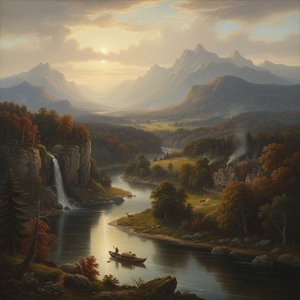
The Serene Majesty of Kensett’s Cascading Waters
In the heart of the mid-19th century, a period defined by the profound spiritual connection between humanity and the untamed American wilderness, John Frederick Kensett captured a moment of eternal motion. His painting, Waterfall, serves as a breathtaking window into the Hudson River School’s mastery of landscape. The composition draws the eye immediately to the central torrent, where water descends with a rhythmic grace, carving its path through ancient, steadfast rocks. This is not merely a depiction of a geological feature; it is an invitation to witness the vitality of nature. As the viewer gazues into the depth of the scene, the interplay between the rugged textures of the stone and the fluid transparency of the falling water creates a sense of profound movement, pulling one into the very soul of the forest.
Kensett, a master of the Luminist style, utilizes light not just as an illumination, but as a primary subject. Through delicate brushwork and a sophisticated understanding of atmospheric perspective, he imbues the scene with a luminous quality that feels almost transcendental. The way the light catches the spray of the falls and filters through the distant, verdant trees suggests a world bathed in a divine, quiet glow. This technique transforms the physical landscape into a spiritual experience, where the boundaries between the earth and the heavens seem to blur. For the collector or interior designer, this piece offers more than just visual beauty; it provides an atmospheric anchor that brings a sense of tranquility and light-filled air into any curated space.
A Legacy of Light and Landscape
To understand the emotional resonance of Waterfall, one must look to Kensett’s journey from an engraver in Connecticut to a leading figure in the American art scene. His early training in the precision of engraving is evident in the meticulous detail found within the rocky outcrops and the structural integrity of the landscape. However, his time studying in Europe allowed him to infuse this technical rigor with a poetic sensitivity to light. This painting stands as a testament to that evolution—a perfect marriage of structural accuracy and ethereal beauty. It captures the essence of the American landscape during an era of great expansion and wonder, reflecting a period when nature was viewed as a cathedral of infinite complexity.
Integrating such a masterpiece into a modern interior allows for a sophisticated dialogue between history and contemporary design. The painting’s palette of earthy tones, deep greens, and brilliant whites provides a versatile foundation for various decor styles, from classic traditionalism to organic minimalism. It acts as a focal point that commands attention through its quiet strength rather than through loud colors. For those seeking to evoke feelings of peace, stability, and awe, Kensett’s Waterfall offers an enduring connection to the sublime beauty of the natural world, making it a timeless choice for any discerning art lover.
Preguntas y respuestas
¿Cuál es el tono predominante en "Waterfall"?
Un tono Ochre to Sepia recorre "Waterfall" de John Frederick Kensett.
¿Qué tan armoniosos son los colores de "Waterfall" de John Frederick Kensett?
La armonía cromática de "Waterfall" se describe como Unified Palette.
¿A qué artista se le atribuye "Waterfall"?
El artista detrás de "Waterfall" es John Frederick Kensett. La obra está catalogada bajo el nombre de John Frederick Kensett.
Biografía del artista
Una vida dedicada a capturar paisajes serenos
John Frederick Kensett, un artista y grabador estadounidense, nació el 22 de marzo de 1816 en Cheshire, Connecticut. Como miembro de la segunda generación de los artistas de la Escuela del Río Hudson, las obras características de Kensett se distinguen por sus cualidades serenas y luminosas, celebrando los aspectos trascendentales de la naturaleza.Vida temprana y formación
Kensett asistió a la Academia Cheshire y estudió grabado con su padre, Thomas Kensett. Posteriormente trabajó como grabador en New Haven hasta 1838, luego se mudó a Nueva York para trabajar en grabados de billetes bancarios. En 1840, Kensett viajó a Europa para estudiar pintura, perfeccionando sus talentos junto a Benjamin Champney.Establecimiento del estudio y estilo luminista
Después de establecer su estudio en Nueva York, Kensett viajó extensamente por el noreste y las Montañas Rocosas de Colorado, capturando la esencia de estos paisajes. Su estilo evolucionó desde la Escuela tradicional del Río Hudson hasta un enfoque más refinado, luminista, caracterizado por pinceladas desinhibidas que transmiten cualidades de luz atmosférica.- Mount Washington from the Valley of Conway (1851), una pintura icónica, fue comprada por la Unión de Arte Americano y distribuida a 13.000 suscriptores.
- Eaton's Neck, Long Island (1872), un ejemplo primordial del estilo luminista de Kensett, se encuentra ahora en la colección del Museo Metropolitano de Arte en Nueva York.
Desarrollo artístico e influencias
La obra temprana de Kensett debió mucho a la influencia de Thomas Cole, pero desde el principio se distinguió por una preferencia por colores más fríos y un interés en topografías menos dramáticas, favoreciendo la contención tanto en la paleta como en la composición. Durante su estancia en Europa, Kensett desarrolló una apreciación y afinidad por la pintura de paisajes holandesa del siglo XVII. Su viaje a Europa junto con Asher Durand y John William Casilear fue crucial para su desarrollo artístico, permitiéndole estudiar las técnicas de los maestros europeos y refinar su propio estilo.Legado y contribuciones
Kensett fue un fundador del Museo Metropolitano de Arte y miembro titular de la Academia Nacional de Diseño. Su obra, ampliamente aclamada durante su vida, continúa influyendo en la pintura de paisajes. Obras clave:- Sunset Sky (ca. 1870), Museo Metropolitano de Arte, Nueva York
- Three Mile Harbor (ca. 1860), Museo de Bellas Artes, Tallahassee

John Frederick Kensett
1816 - 1872 , Estados Unidos de América
Datos clave
- Artistas Que Influyeron:
- Thomas Cole
- Benjamin Champney
- Fecha De Fallecimiento: 14 de diciembre de 1872
- Fecha De Nacimiento: 22 de marzo de 1816
- Lugar De Nacimiento: Cheshire, EE. UU.
- Movimiento Artístico: Hudson River School, Luminismo
- Nacionalidad: Estadounidense
- Nombre Completo: John Frederick Kensett
- Obras Notables:
- Mount Washington from the Valley of Conway
- Eaton's Neck, Long Island
- Sunset Sky
- Three Mile Harbor
Artículos relacionados

Wild & Untamed: The High-Impact Energy of American Romanticism and the Hudson River School
Experience the raw power of American Romanticism. Explore the high-impact energy of the Hudson River School through premium, hand-painted oil reproductions that capture the sublime beauty and untamed spirit of the American wilderness for discerning collectors.
Robert Spencer: Luminism, Narrative & the American Landscape Tradition
Explore the captivating world of Luminism & the Hudson River School with our expert analysis. Discover the history, artists, and enduring beauty of 19th-century American landscape painting. Find museum-quality reproductions at OriginalUniqueArt.
Los 10 Maestros del Río Hudson: Obras que Definieron un Movimiento Artístico
Descubre los 10 lienzos más emblemáticos de la Escuela del Río Hudson. Explora las obras maestras de Thomas Cole, Church y Bierstadt que capturan la belleza del paisaje americano. Encuentra reproducciones de arte exclusivas en OriginalUniqueArt.com.
El Sublime Paisaje Americano: Explorando el Movimiento de la Escuela del Río Hudson
Descubre la Escuela del Río Hudson: un movimiento artístico clave en la historia de la pintura estadounidense. Explora su estética romántica, sus artistas más destacados y el concepto del sublime paisaje americano.
Capturing the American Spirit: A Journey Through Iconic Landscapes and the Legacy of the Hudson River School
Explore the profound beauty of American art history. From the Hudson River School to iconic landscapes, discover a curated journey through the masterpieces that defined a nation's spirit and the enduring legacy of American Romanticism.