

 Vista previa
 Compartir
 Compartir
 Ver detalles
 Guía
Guía

 Descargar
 Ver artículos similares
 Radiografía
 Presentación de diapositivas
 Estadísticas
Untitled (D2XALP)
 Oil On Canvas
- WallArt
 1872
1872- 19th Century
 39.0 x 78.0 cm
 Museo Metropolitano de Arte
 Leer más
Reproducción al óleo hecha a mano
Óleo sobre lienzo pintado a mano en el tamaño y marco de su elección, realizado por encargo por nuestros artistas. ( Cambiar a formato impreso Ver versión en imagen digital)




P118B €10

P118H €10

P118W €10

P438Z €10

P508JH €12

P508YH €12

P805H €10

P805Z €10

P919BZ €10

P919G €10

P919XJ €10

P959ZH €10

P968JZ €12

W106C €8

W218G €10

W218JH €8

W218Y €10

W307PJ €10

W316G €10

W316PJ €8

W316Y €10

W398PJ €8

W4111J €10

W500HY €15

W500JH €15

W692G €12

W849H €8

W940BG €15

W953PJ €8




Elija entre nuestros tamaños predefinidos que respetan las proporciones originales de la obra.

Puede ingresar sus propias dimensiones para adaptarse a un marco o espacio específico. Si el tamaño seleccionado no coincide con las proporciones de la imagen original, recortaremos la obra o extenderemos la pintura con elementos adicionales pintados a mano. Se le enviará una maqueta digital para su aprobación antes de comenzar la producción.
Tenga en cuenta que la vista previa en pantalla no refleja el recorte o la extensión reales. Solo la maqueta mostrará con precisión la composición final.
Si bien existen tamaños personalizados, recomendamos seleccionar una dimensión de la lista predefinida para preservar las proporciones originales.
Tras realizar el pedido, el equipo de OriginalUniqueArt.com enviará un correo electrónico al cliente para solicitar instrucciones y proporcionarle una vista previa del boceto.
Envío a todo el mundo () en 3-4 semanas en lugar de las 5 semanas estándar. (11 octubre). Sin comprometer la calidad.

Envío exprés gratuito a todo el mundo

Lienzo de lino de alta calidad

Seguro de envío completo

Garantía de reembolso de impuestos aduaneros

Garantía de fidelidad cromática exacta

Política de devolución de 100 días (solo por defectos)

Garantía de devolución del 100% del dinero

Oferta por volumen
 La opción de vidrio solo está disponible en tamaños inferiores a 110 cm.

Untitled (D2XALP)
Técnica de reproducción
Tamaño de la reproducción
-


Precio total
€ 259
John Frederick Kensett: A Pioneer of Luminism
John Frederick Kensett (March 22, 1816 – December 14, 1872) was an American landscape painter and engraver born in Cheshire, Connecticut. He stands as a pivotal figure within the second generation of the Hudson River School of artists—a movement that championed the transcendental beauty of America’s natural landscapes and sought to capture their ethereal light. Unlike his predecessors who often employed dramatic compositions and rich color palettes, Kensett distinguished himself through a refined Luminist style characterized by subtle brushstrokes and an unwavering focus on atmospheric illumination – a technique profoundly influenced by Dutch masters like Jacob Maris and Isaac Israelson. His artistic vision aimed to convey not merely what the eye perceives but also what the soul feels when confronted with the sublime grandeur of nature.The Essence of Tranquility: Lake George
Kensett’s “Lake George,” completed in 1872, exemplifies this Luminist aesthetic perfectly. The painting depicts a serene expanse of Lake George nestled amidst rolling hills and snow-capped mountains—a scene that immediately transports the viewer to the Adirondack wilderness during autumn. Rather than striving for theatrical grandeur, Kensett meticulously rendered the lake’s surface with an almost imperceptible shimmer, achieved through delicate glazing techniques – applying thin layers of translucent paint over underlying colors to create depth and luminosity. This masterful manipulation of light is paramount to conveying the painting's mood: a profound sense of peace and contemplation.Composition and Color Palette: Restraint and Resonance
The horizontal orientation of “Lake George” emphasizes the vastness of the lake, mirroring the expansive horizon line which dominates approximately one-third of the canvas. The lower right section is anchored by a rocky outcrop—a grounding element that balances the airy expanse above. Kensett’s color palette leans heavily on cool tones – blues and greens – reflecting the dominant hues of the lake and surrounding foliage. Subtle reds appear in the rocks, providing visual warmth against the coolness of the overall composition. These colors aren't vibrant or assertive; instead, they blend seamlessly to create a harmonious effect that resonates with tranquility.Technique and Materials: Brushstrokes as Vessels of Light
Kensett’s brushwork is remarkably understated—almost invisible to the untrained eye. He employed loose, blended strokes to build up layers of color, prioritizing tonal gradations over precise delineation. Glazes – thin washes of translucent pigment – played a crucial role in achieving atmospheric perspective and enhancing the painting's luminous quality. These meticulous techniques underscore Kensett’s dedication to capturing not just the visual appearance of Lake George but also its intangible essence—the feeling of stillness and connection with the natural world.Symbolism and Legacy: Transcendental Vision
“Lake George” transcends mere representation; it embodies the Luminist philosophy's belief in perceiving nature as a conduit for spiritual insight. The painting’s quiet grandeur invites viewers to pause, observe, and contemplate—a deliberate response to the transcendentalist movement’s emphasis on experiencing the sublime beauty of God’s creation. Kensett’s enduring legacy lies in his unwavering commitment to capturing light and atmosphere with unparalleled sensitivity—a contribution that continues to inspire artists and collectors alike. His masterpiece remains a testament to the power of observation and the transformative potential of art.Preguntas y respuestas
¿Cómo puedo ver "Untitled (D2XALP)" de John Frederick Kensett en formato de presentación?
El diaporama de "Untitled (D2XALP)" puede verse en la página Presentación de diapositivas de la obra.
¿Quién creó "Untitled (D2XALP)"?
"Untitled (D2XALP)" se atribuye a John Frederick Kensett.
¿Cuál es la luminosidad percibida de "Untitled (D2XALP)" de John Frederick Kensett?
La luminosidad percibida de "Untitled (D2XALP)" de John Frederick Kensett es brilliant. Puede armonizarse con la luz del espacio destinado.
¿Cuál es la fecha de creación de "Untitled (D2XALP)" de John Frederick Kensett?
La creación de "Untitled (D2XALP)" de John Frederick Kensett data de 1872.
¿A qué edad creó John Frederick Kensett "Untitled (D2XALP)"?
John Frederick Kensett tenía 56 años cuando creó "Untitled (D2XALP)" en 1872. La edad se calcula a partir del año de nacimiento del artista, 1816.
¿De qué está hecho "Untitled (D2XALP)"?
La técnica de "Untitled (D2XALP)" de John Frederick Kensett es Oil On Canvas. Las reproducciones pretenden recrear la apariencia de esta técnica.
¿Qué espacio se sugiere para "Untitled (D2XALP)" de John Frederick Kensett?
El espacio recomendado para "Untitled (D2XALP)" de John Frederick Kensett es un Living Room. Por supuesto, esta sugerencia puede adaptarse a su interiorismo.
Biografía del artista
Una vida dedicada a capturar paisajes serenos
John Frederick Kensett, un artista y grabador estadounidense, nació el 22 de marzo de 1816 en Cheshire, Connecticut. Como miembro de la segunda generación de los artistas de la Escuela del Río Hudson, las obras características de Kensett se distinguen por sus cualidades serenas y luminosas, celebrando los aspectos trascendentales de la naturaleza.Vida temprana y formación
Kensett asistió a la Academia Cheshire y estudió grabado con su padre, Thomas Kensett. Posteriormente trabajó como grabador en New Haven hasta 1838, luego se mudó a Nueva York para trabajar en grabados de billetes bancarios. En 1840, Kensett viajó a Europa para estudiar pintura, perfeccionando sus talentos junto a Benjamin Champney.Establecimiento del estudio y estilo luminista
Después de establecer su estudio en Nueva York, Kensett viajó extensamente por el noreste y las Montañas Rocosas de Colorado, capturando la esencia de estos paisajes. Su estilo evolucionó desde la Escuela tradicional del Río Hudson hasta un enfoque más refinado, luminista, caracterizado por pinceladas desinhibidas que transmiten cualidades de luz atmosférica.- Mount Washington from the Valley of Conway (1851), una pintura icónica, fue comprada por la Unión de Arte Americano y distribuida a 13.000 suscriptores.
- Eaton's Neck, Long Island (1872), un ejemplo primordial del estilo luminista de Kensett, se encuentra ahora en la colección del Museo Metropolitano de Arte en Nueva York.
Desarrollo artístico e influencias
La obra temprana de Kensett debió mucho a la influencia de Thomas Cole, pero desde el principio se distinguió por una preferencia por colores más fríos y un interés en topografías menos dramáticas, favoreciendo la contención tanto en la paleta como en la composición. Durante su estancia en Europa, Kensett desarrolló una apreciación y afinidad por la pintura de paisajes holandesa del siglo XVII. Su viaje a Europa junto con Asher Durand y John William Casilear fue crucial para su desarrollo artístico, permitiéndole estudiar las técnicas de los maestros europeos y refinar su propio estilo.Legado y contribuciones
Kensett fue un fundador del Museo Metropolitano de Arte y miembro titular de la Academia Nacional de Diseño. Su obra, ampliamente aclamada durante su vida, continúa influyendo en la pintura de paisajes. Obras clave:- Sunset Sky (ca. 1870), Museo Metropolitano de Arte, Nueva York
- Three Mile Harbor (ca. 1860), Museo de Bellas Artes, Tallahassee

John Frederick Kensett
1816 - 1872 , Estados Unidos de América
Datos clave
- Artistas Que Influyeron:
- Thomas Cole
- Benjamin Champney
- Fecha De Fallecimiento: 14 de diciembre de 1872
- Fecha De Nacimiento: 22 de marzo de 1816
- Lugar De Nacimiento: Cheshire, EE. UU.
- Movimiento Artístico: Hudson River School, Luminismo
- Nacionalidad: Estadounidense
- Nombre Completo: John Frederick Kensett
- Obras Notables:
- Mount Washington from the Valley of Conway
- Eaton's Neck, Long Island
- Sunset Sky
- Three Mile Harbor
Artículos relacionados
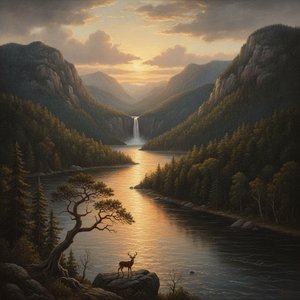
Epic Landscapes & Wild Nature: The Power of the Hudson River School's Sublime Artistry
Explore the breathtaking power of the Hudson River School. Journey through epic American landscapes, from Thomas Cole's sublime vistas to Luminist light, and discover how these timeless masterpieces continue to inspire modern collectors and art lovers worldwide.
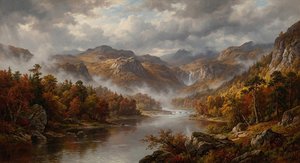
Los 10 Maestros del Río Hudson: Obras que Definieron un Movimiento Artístico
Descubre los 10 lienzos más emblemáticos de la Escuela del Río Hudson. Explora las obras maestras de Thomas Cole, Church y Bierstadt que capturan la belleza del paisaje americano. Encuentra reproducciones de arte exclusivas en OriginalUniqueArt.com.
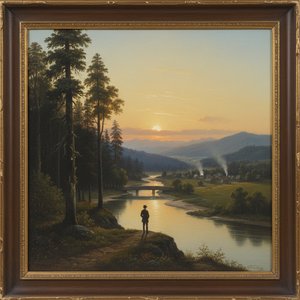
Robert Spencer: Luminism, Narrative & the American Landscape Tradition
Explore the captivating world of Luminism & the Hudson River School with our expert analysis. Discover the history, artists, and enduring beauty of 19th-century American landscape painting. Find museum-quality reproductions at OriginalUniqueArt.
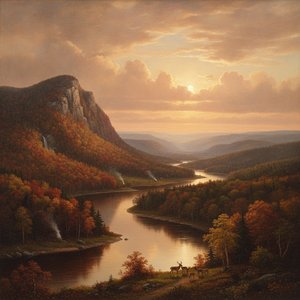
The Hudson River School: A Definitive Guide to America's Romantic Landscape Tradition
Explore the profound legacy of the Hudson River School. Discover how masters like Thomas Cole captured the American sublime through Romanticism and Luminism. A definitive guide for art historians and collectors seeking to understand America's wild beauty.

El Sublime Paisaje Americano: Explorando el Movimiento de la Escuela del Río Hudson
Descubre la Escuela del Río Hudson: un movimiento artístico clave en la historia de la pintura estadounidense. Explora su estética romántica, sus artistas más destacados y el concepto del sublime paisaje americano.


