

 Ver en contexto
 Enviar
 Compartir
 Detalles

 Descargar
 Similares
 Radiografía
 Presentación de diapositivas
El concierto


 Ver más
Giclée / Impresión de arte
Impresiones giclée o en lienzo de calidad de museo con producción rápida y opciones de acabado flexibles. ( Comprar pintura hecha a mano Comprar imagen)




P118B $10

P118H $10

P118W $10

P438Z $10

P508JH $12

P508YH $12

P805H $10

P805Z $10

P919BZ $10

P919G $10

P919XJ $10

P959ZH $10

P968JZ $12

W106C $8

W218G $10

W218JH $8

W218Y $10

W307PJ $10

W316G $10

W316PJ $8

W316Y $10

W398PJ $8

W4111J $10

W500HY $15

W500JH $15

W692G $12

W849H $8

W940BG $15

W953PJ $8




Elija entre nuestros tamaños predefinidos que respetan las proporciones originales de la obra.

Puede introducir sus propias dimensiones para adaptarse a un marco o espacio específico. Si el tamaño seleccionado no coincide con las proporciones de la imagen original, recortaremos la obra de arte o extenderemos la imagen con un borde con efecto espejo o de color sólido. Se enviará una maqueta digital para su aprobación antes de que comience la producción.
Tenga en cuenta que la vista previa en pantalla no refleja el recorte o la extensión real. Solo la maqueta mostrará con precisión la composición final.
Aunque existen tamaños personalizados, recomendamos seleccionar una dimensión de la lista predefinida para preservar las proporciones originales.
Envío a todo el mundo () en 2 semanas en lugar de las 4/5 semanas estándar. (31 agosto)

Envío exprés gratuito a todo el mundo

Lienzo de lino de alta calidad

Seguro de envío total

Garantía de reembolso de impuestos aduaneros

Garantía de fidelidad cromática exacta

Política de devolución de 60 días (solo por defectos)

Garantía de devolución del 100% del dinero

Descuento por cantidad
 La opción de vidrio solo está disponible en tamaños inferiores a 110 cm.

El concierto
Giclée / Impresión de arte
Dimensiones de la reproducción
-


Precio total final
$ 80
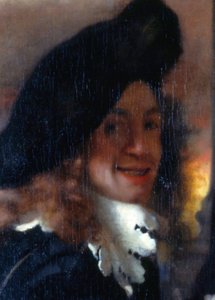
The Concert (detail): A Window Into Delft’s Golden Age
Johannes Vermeer’s “The Concert,” housed at the Isabella Stewart Gardner Museum in Boston, transcends mere depiction; it embodies the very essence of Dutch Baroque artistry—a masterful fusion of observation and illusion that continues to captivate viewers centuries later. Completed around 1665-66, this diminutive canvas (measuring approximately 28.5 x 25.5 inches) isn’t merely a snapshot of domestic life; it's an exquisitely crafted meditation on light, perspective, and the subtle nuances of human interaction. Vermeer, considered one of the titans of the Dutch Golden Age, achieved his remarkable success not through grand commissions or flamboyant displays of wealth, but rather through painstaking attention to detail and an unwavering dedication to capturing the quiet beauty of everyday moments—a philosophy that profoundly shaped his artistic vision.Artistic Style and Technique: Mastering Light and Shadow
Vermeer’s distinctive style is instantly recognizable by its pervasive use of chiaroscuro – the dramatic interplay between light and shadow – a technique perfected during this period to create an unparalleled sense of depth and realism. Unlike many artists who relied on idealized representations, Vermeer meticulously studied natural phenomena, particularly how sunlight penetrates windows and illuminates interiors. This dedication to scientific observation is evident in “The Concert,” where Vermeer skillfully renders the soft glow emanating from the windowpane, bathing the room in a warm luminescence that casts intricate shadows across the walls and furniture. The artist’s brushstrokes are delicate yet purposeful, layering pigments with remarkable precision to achieve an astonishing level of textural detail—from the velvety sheen of the harpsichord lid to the subtle folds of fabric draped over the chairs.Historical Context: Delft During Vermeer's Time
Delft in 1665 was a thriving center of commerce and artistic innovation, fueled by the burgeoning prosperity of the Dutch Republic following its independence from Spain. The city’s intellectual climate fostered experimentation with new ideas and techniques, attracting artists like Vermeer who sought to elevate genre painting—scenes depicting ordinary life—to the highest levels of artistic achievement. Vermeer's patrons were typically wealthy merchants and professionals who appreciated his ability to convey atmosphere and emotion through subtle visual cues. “The Concert” reflects this cultural milieu, portraying a scene from the upper bourgeoisie – a family gathering for musical instruction – capturing not only the physical appearance of the room but also the psychological state of its inhabitants. The inclusion of books on the walls speaks to Delft’s reputation as a hub of learning and scholarship during the Golden Age.Symbolism: Beyond Representation
Beyond its technical brilliance, “The Concert” is laden with symbolic significance. The harpsichord itself represents refinement and intellectual pursuits—a symbol deeply ingrained in Dutch culture at the time. The woman playing the instrument embodies grace and composure, while her attentive gaze suggests a connection to the music and to each other. The muted colors of the room contribute to the painting’s overall mood of tranquility and intimacy, inviting viewers into a space where beauty resides not in grand spectacle but in quiet contemplation. Vermeer's masterful composition directs the eye towards the central figure—the woman at the harpsichord—creating a focal point that anchors the entire scene within its frame. The inclusion of the window provides an escape from the confines of the room, hinting at the broader world beyond and suggesting a connection to nature’s rhythms.Emotional Impact: Capturing Human Connection
Ultimately, “The Concert” succeeds in conveying a profound sense of human emotion—a feeling of warmth, serenity, and intellectual engagement. Vermeer's ability to capture fleeting moments of beauty and connection is unparalleled, reminding us that art can illuminate the complexities of human experience with remarkable sensitivity. It’s a painting that lingers in the memory long after viewing, prompting reflection on themes of family, education, and the pursuit of artistic excellence—a testament to Vermeer’s enduring legacy as one of the greatest painters of all time.Biografía del artista
vida y carrera
johannes vermeer, una figura destacada en la edad de oro holandesa, nació en octubre de 1632 en Delft, Países Bajos. Es conocido por sus cautivadoras escenas domésticas que ofrecen una mirada íntima a la vida de la clase media durante este período. La carrera artística de Vermeer estuvo marcada por un manejo profundo de la luz y un meticuloso enfoque en la pintura. La familia de Vermeer estuvo involucrada en el comercio artístico, con su padre, Reijnier Jansz, siendo un comerciante de arte. Esta exposición probablemente influyó en la decisión de Vermeer de seguir una carrera en la pintura. Se casó con Catharina Bolnes, una mujer católica, en abril de 1653 y tuvieron dos hijos juntos.Estilo artístico y obras notables
Las pinturas de Vermeer se caracterizan por el uso de pigmentos costosos y un énfasis en la vida cotidiana. Algunas de sus obras más notables incluyen:- La carta de amor (c. 1665), una obra maestra que muestra la habilidad de Vermeer para capturar los matices de la vida doméstica.
- Vista de Delft (c. 1660-1670), un cuadro que ejemplifica la capacidad de Vermeer para equilibrar la luz y la composición.
- La hilandera (c. 1659-1660), una obra que destaca la atención al detalle y la fascinación de Vermeer por las actividades cotidianas de las mujeres.
Legado y redescubrimiento
El modesto éxito de Vermeer durante su vida dio paso a la oscuridad después de su muerte. Sin embargo, su redescubrimiento en el siglo XIX por Gustav Friedrich Waagen y Théophile Thoré-Bürger condujo a un aumento significativo en su popularidad. Hoy en día, Vermeer es reconocido como uno de los pintores más grandes del edad de oro holandesa, con sus obras muy apreciadas por coleccionistas y museos de todo el mundo.- Descubra más sobre la vida y obra de Vermeer en OriginalUniqueArt.com.
- Explore la colección del Museo Mauritshuis, que presenta muchas de las obras maestras de Vermeer, en OriginalUniqueArt.com.
- Aprenda más sobre la edad de oro holandesa y su influencia en la pintura occidental en wikipedia.
Johannes Vermeer
1632 - 1675 , Países Bajos
Datos clave
- Artistas Que Influyeron:
- Pieter de Hooch
- Gerard ter Borch
- Estilo Artístico: Barroco, Realismo
- Fecha De Muerte: Diciembre 1675
- Fecha De Nacimiento: Octubre 1632
- Lugar De Nacimiento: Delft, Países Bajos
- Nacionalidad: Holandés
- Nombre Completo: Johannes Vermeer
- Obras Notables:
- La carta de amor
- Vista de Delft
- La hilandera
- La joven con la perla
- El concierto
Artículos relacionados

Los 10 Maestros del Barroco Holandés: Obras que Definen una Época | OriginalUniqueArt
Descubre los 10 imprescindibles del Barroco holandés: Rembrandt, Vermeer y más. Explora la historia, técnica y belleza de estas obras maestras. Reproducciones de arte en OriginalUniqueArt.com para decorar tu hogar con elegancia.

Los 10 Maestros del Siglo de Oro Holandés: Arte, Historia y Decoración Exclusiva
Descubre los 10 imprescindibles del Siglo de Oro Holandés: Rembrandt, Vermeer y más. Explora la historia, técnica y belleza de estos lienzos clásicos. Encuentra reproducciones de arte exclusivas para decorar tu hogar en .

Johannes Vermeer: Light, Intimacy & the Dutch Golden Age – A Comprehensive Exploration
Explore the life, techniques & enduring legacy of Johannes Vermeer, a master of Dutch Golden Age painting. Discover symbolism in his iconic works like 'The Milkmaid' and learn about his revolutionary use of light.

Reflejos de una Época Dorada: La Pintura Barroca Holandesa y la Innovación Cultural
Descubra la riqueza y el detalle de la pintura barroca holandesa del Siglo de Oro. Explore las obras maestras de Rembrandt, Vermeer y otros artistas clave. Análisis experto e historia cultural.

Drama Barroca: Llevando la Grandeza y la Emoción a los Interiores Contemporáneos
Descubre cómo el drama y la grandeza del arte barroco pueden transformar tus interiores. Guía experta, inspiración y reproducciones de alta calidad en .



