 Preview
 Comprar impresión Comprar imagen en alta resolución
 Enviar
 Compartir
 Detalles
 Añadir a favoritos

 Descargar
 Similares
 Radiografía
 Presentación de diapositivas
Pegasus


 Ver más
Reproducción al óleo hecha a mano
Óleo sobre lienzo pintado a mano en el tamaño y marco de su elección, realizado por encargo por nuestros artistas.




































Elija entre nuestros tamaños predefinidos que respetan las proporciones originales de la obra.

Puede ingresar sus propias dimensiones para adaptarse a un marco o espacio específico. Si el tamaño seleccionado no coincide con las proporciones de la imagen original, recortaremos la obra o extenderemos la pintura con elementos adicionales pintados a mano. Se le enviará una maqueta digital para su aprobación antes de comenzar la producción.
Tenga en cuenta que la vista previa en pantalla no refleja el recorte o la extensión reales. Solo la maqueta mostrará con precisión la composición final.
Si bien existen tamaños personalizados, recomendamos seleccionar una dimensión de la lista predefinida para preservar las proporciones originales.
Tras realizar el pedido, el equipo de OriginalUniqueArt.com enviará un correo electrónico al cliente para solicitar instrucciones y proporcionarle una vista previa del boceto.
Entrega mundial () en 3-4 semanas en lugar de las 5 semanas estándar. (25 julio). Sin compromisos con la calidad.

Envío exprés gratuito a todo el mundo

Lienzo de lino de alta calidad

Seguro de envío total

Garantía de reembolso de impuestos aduaneros

Garantía de fidelidad de color

Política de devolución de 60 días (solo por defectos)

Garantía de devolución del 100% del dinero

Descuento por pedido múltiple
 La opción de vidrio solo está disponible en tamaños inferiores a 110 cm.

Pegasus
Técnica de reproducción
Tamaño de la reproducción
-


Precio total final
-
Descripción de la obra
The Frenetic Spirit of Neo-Expressionism
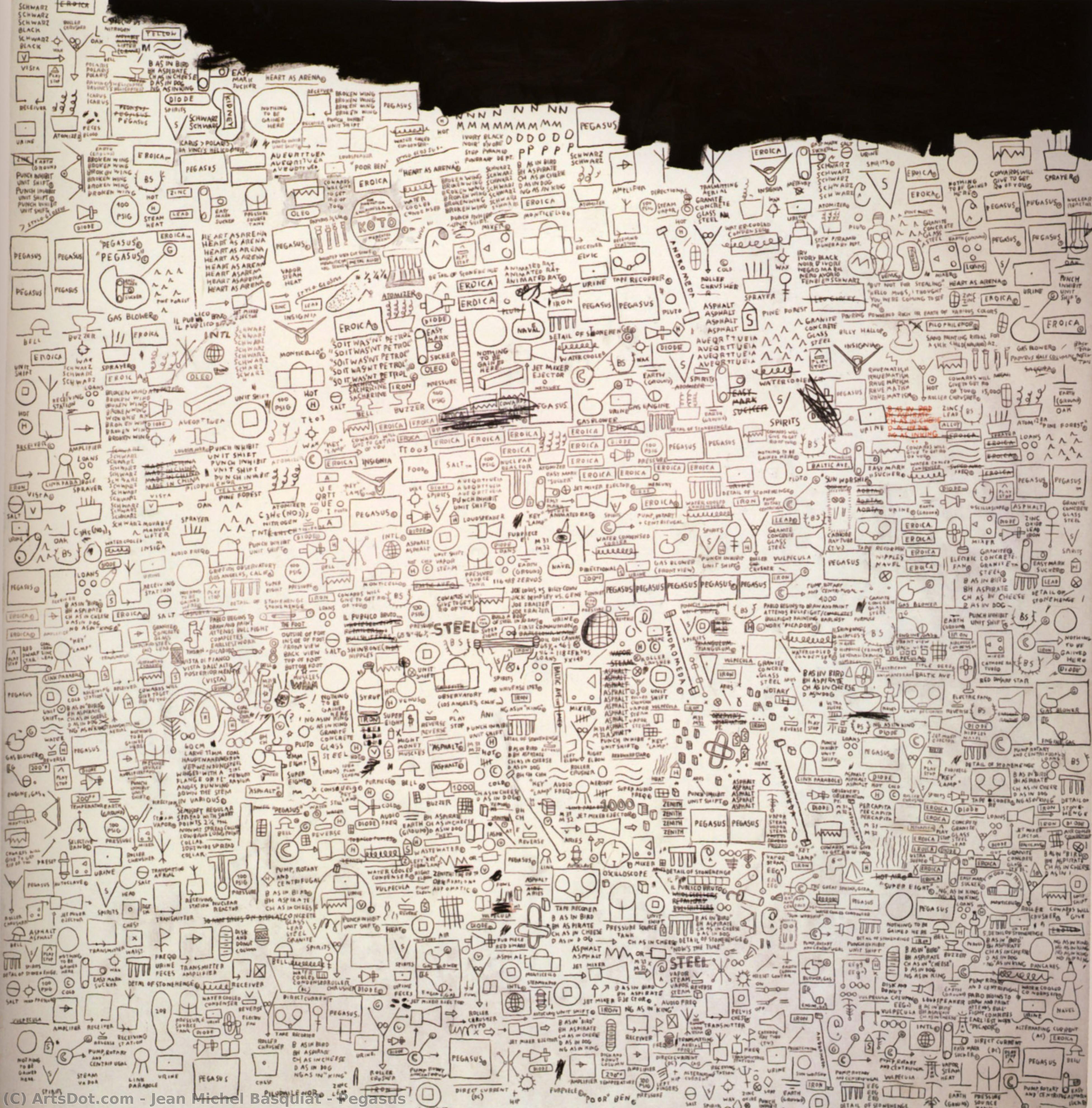
In the landscape of late twentieth-century art, few figures loom as large or as provocatively as Jean-Michel Basquiat. His 1987 masterpiece, Pegasus, serves as a visceral window into the mind of an artist who bridged the gap between the gritty streets of New York City and the hallowed halls of high art. The work is a breathtaking explosion of energy, characterized by a dense, almost claustrophively layered composition that captures the pulse of the 1980s urban experience. At first glance, the viewer is met with a chaotic symphony of white space interrupted by an intricate web of scribbled lines, geometric shapes, and cryptic text fragments. It is a piece that does not merely sit on a wall; it vibrates with a restless, intellectual urgency that demands the observer's full attention.
The composition is masterfully disorienting, eschewing traditional perspective in favor of a flattened, multi-dimensional plane where every mark carries equal weight. This lack of a singular focal point forces the eye to wander, much like a wandering thought, through a labyrinth of squares, triangles, and circles. The palette is strikingly disciplined, relying heavily on a monochromatic foundation of stark black and brilliant white, punctuated only by subtle, earthy hints of brown and red. This restraint prevents the visual noise from becoming overwhelming, instead directing the viewer's focus toward the raw, tactile quality of the medium—a blend of acrylic paint, oil stick, and ink that suggests a spontaneous, improvisational dance between the artist and the canvas.
Symbolism and the Mythic Flight
Emerging from this whirlwind of symbols is the central figure: the Pegasus. Rendered in a simplified, almost primal style, the winged horse acts as a powerful anchor amidst the surrounding frenzy. In classical mythology, Pegasus represents inspiration, poetic genius, and the ability to transcend the earthly realm. Within the context of Basquiat’s work, this mythical creature takes on a deeper, more complex layer of meaning. Surrounded by anatomical references, textual fragments, and street-art aesthetics, the Pegasus becomes a symbol of aspiration—a desperate, beautiful attempt to find flight and transcendence amidst the overwhelming noise of modern existence.
The interplay between the text and the imagery creates a narrative that feels both ancient and contemporary. The scribbled words and symbols function as a visual language of social commentary, echoing Basquiat's roots in the SAMO graffiti movement. There is an inherent tension here: the struggle between the desire for intellectual clarity and the inescapable chaos of the human condition. For the collector or interior designer, this piece offers more than just aesthetic beauty; it provides a profound emotional resonance. It captures that universal feeling of anxiety and excitement, making it a commanding centerpiece for any space that seeks to celebrate the raw power of human creativity and the enduring quest for meaning.
A Timeless Addition to the Modern Collection
For those looking to curate a collection defined by depth and historical significance, Pegasus stands as an essential acquisition. As a high-quality reproduction, this artwork brings the transformative energy of Neo-Expressionism into the contemporary home or gallery. The piece is particularly suited for sophisticated interiors where a bold, conversational element is desired—places where the interplay of light and shadow can highlight the simulated textures of oil stick and acrylic. It serves as a testament to Basquiat's enduring legacy, offering a tactile connection to an era of unparalleled artistic revolution.
Biografía del artista
A Brooklyn Beginning and the Rise of SAMO
Jean-Michel Basquiat emerged onto the 1980s art scene as a force of raw energy and intellectual depth, an impact that continues to resonate profoundly today. Born on December 22, 1960, in Brooklyn, New York, to Haitian and Puerto Rican parents, his upbringing was a vibrant tapestry woven with diverse cultures and languages—Spanish, English, and French filled his childhood home. This multilingual environment, coupled with his mother’s dedication to artistic pursuits—she enrolled him as a Junior Member of the Brooklyn Museum at age six—laid an early foundation for his creative journey. However, Basquiat’s life wasn’t without hardship; a car accident at eight years old resulted in a splenectomy and a period of convalescence during which he became captivated by a copy of *Gray’s Anatomy* gifted by his mother. The book’s detailed illustrations would later profoundly influence the anatomical imagery that frequently appears in his work, becoming a haunting motif throughout his career. Before achieving recognition as a painter, Basquiat made his mark under the pseudonym SAMO, alongside friend Al Diaz. Together they covered Lower Manhattan with cryptic, poetic graffiti—epigrams challenging societal norms and questioning established power structures. These weren’t mere tags; they were thought-provoking statements that captured the spirit of the burgeoning hip-hop culture and the gritty energy of 1970s New York City. SAMO was more than just street art; it was a philosophical intervention, a visual disruption designed to provoke dialogue and challenge perceptions.Neo-Expressionism and Artistic Innovation
By the early 1980s, Basquiat transitioned from graffiti to canvas, rapidly gaining recognition within the New York art world. His paintings weren’t easily categorized; they were a unique synthesis of influences ranging from Abstract Expressionism to tribal art, comic books, and historical painting. He became a central figure in the Neo-Expressionist movement, though he resisted easy labeling. His canvases are characterized by a frenetic energy—a chaotic layering of text, symbols, figures, and colors. Basquiat’s technique was deliberately raw and improvisational, often incorporating collage, scratching, and dripping paint. He wasn’t interested in technical perfection; instead, he sought to convey emotion, ideas, and social commentary with visceral immediacy. Recurring motifs—crowns, skulls, anatomical diagrams, words crossed out or repeated—became his signature visual language. The crown, perhaps his most iconic symbol, has been interpreted as a representation of aspiration, self-mythologization, and the complexities of Black identity in America. His work frequently grappled with themes of wealth versus poverty, integration versus segregation, and the internal struggles of the individual within society. Paintings like *Piscine versus the Best Hotels (or various loin)* exemplify his ability to juxtapose seemingly disparate elements—luxury and deprivation, beauty and decay—creating a powerful commentary on social inequalities. Basquiat’s art was not merely about what he depicted but how he depicted it, creating a visual language that was both deeply personal and universally resonant.Collaboration, Recognition, and a Tragic End
Basquiat’s ascent was meteoric. In 1982, at just twenty-one years old, he participated in Documenta in Kassel, Germany, becoming the youngest artist ever to exhibit there. The following year, he showcased his work at the Whitney Biennial, further solidifying his position within the art establishment. A pivotal moment came with his friendship and artistic collaboration with Andy Warhol. The two artists pushed each other creatively, exploring themes of consumerism, celebrity, and mass media in a series of collaborative paintings. While their partnership was complex and sometimes fraught with tension, it undoubtedly elevated both artists’ profiles. Despite achieving international acclaim and financial success, Basquiat struggled with the pressures of fame and his ongoing battle with drug addiction. His work became increasingly introspective and darker as he grappled with personal demons and societal injustices. Tragically, Jean-Michel Basquiat died on August 12, 1988, at the age of twenty-seven from a heroin overdose. His untimely death cemented his status as a tragic figure—a brilliant artist whose life was cut short by addiction and the complexities of navigating the art world.Legacy and Lasting Influence
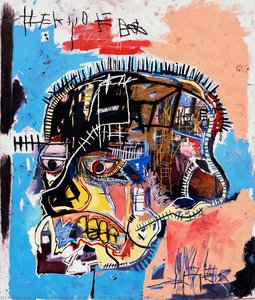
In the years since his death, Basquiat’s reputation has only grown. His work continues to captivate audiences with its raw energy, intellectual depth, and unflinching social commentary. In 2017, *Untitled* (1982), a powerful depiction of a skull, sold for $110.5 million at Sotheby's, setting a new record for any U.S. artist at auction—a testament to the enduring value and cultural significance of his work. Basquiat’s influence can be seen in the work of countless contemporary artists, particularly those who explore themes of identity, race, and social justice. He paved the way for a more diverse and inclusive art world, challenging traditional notions of artistic expression and representation. His ability to seamlessly blend high and low culture—graffiti, fine art, music, poetry—continues to inspire artists today. He remains a potent symbol of creative rebellion, intellectual curiosity, and the power of art to challenge the status quo. His paintings are not merely aesthetic objects; they are windows into a complex mind grappling with profound questions about humanity, society, and the search for meaning in a chaotic world.
jean michel basquiat
1960 - 1988 , Estados Unidos
Datos clave
- Artistic Movement Or Style: Neo-Expressionism
- Artists Who Influenced This Artist:
- Abstract Expressionists
- Graffiti art
- Date Of Birth: December 22, 1960
- Date Of Death: August 12, 1988
- Full Name: Jean-Michel Basquiat
- Nationality: American
- Notable Artworks:
- Untitled (Skull)
- Piscine versus the Best Hotels
- Portrait Derelict
- Place Of Birth: Brooklyn, USA
Artículos relacionados

Las 10 Pinturas Más Famosas Dominadas por el Negro | Arte y Decoración
Descubre las 10 pinturas más impactantes dominadas por el negro. Explora obras maestras de Rembrandt, Goya y Rothko, su historia y significado. Encuentra reproducciones de arte exclusivas para transformar tu hogar en .
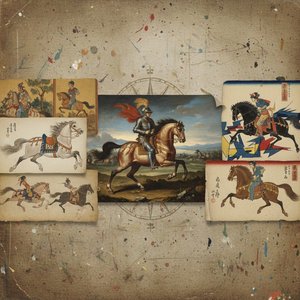
The Noble Steed on Canvas: A Historical & Artistic Exploration of Horse Painting Across Cultures
Explore the rich history of horse painting! Discover masterpieces from Stubbs to Munnings & learn about symbolism, techniques & artists. Find museum-quality reproductions at OriginalUniqueArt.

Expresionismo Alemán: 10 Obras Maestras que Transformaron el Arte | OriginalUniqueArt
Descubre las 10 obras maestras del Expresionismo Alemán: Kirchner, Munch y más. Explora la historia, técnica y emoción detrás de estos lienzos icónicos. Reproducciones de arte de museo en OriginalUniqueArt.com. ¡Inspira tu hogar con arte!
Las 10 Obras Maestras Dominadas por el Negro Marsella: Arte y Decoración
Descubre las 10 pinturas más famosas dominadas por el negro marsella. Explora la historia, técnica y simbolismo de obras maestras del expresionismo alemán, gótico y arte moderno. Reproducciones de museos en .
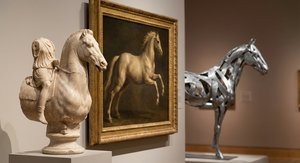
The Noble Steed: A Historical and Artistic Exploration of Horses in Fine Art
Explore the rich history of horses in fine art! From ancient depictions to Renaissance masterpieces & beyond, discover iconic artworks and artists. Learn about symbolism, techniques, and find museum-quality reproductions at OriginalUniqueArt.