
 Ver en contexto
 Enviar
 Compartir
 Detalles
 Guía
Guía

 Descargar
 Similares
 Radiografía
 Presentación de diapositivas
 Preguntas y respuestas
 Estadísticas
Corona

- 50.0 x 73.0 cm


 Ver más
La obra de arte que se muestra en esta página está protegida por las leyes de propiedad intelectual, lo que significa que no podemos crear ni vender legalmente una reproducción idéntica. Esta protección se hace cumplir en virtud de acuerdos internacionales como el Convenio de Berna y por las leyes nacionales, incluidas aquellas establecidas por el Ley de derechos de autor de los EE. UU. - Título 17.
Este método cumple plenamente con las normativas de derechos de autor, ya que no implica la copia ni la duplicación de la obra protegida. En su lugar, se trata de una reinterpretación creativa: una nueva pintura influenciada por la original, pero que no es idéntica a ella.
Giclée / Impresión de arte
Impresiones giclée o en lienzo de calidad de museo con producción rápida y opciones de acabado flexibles. ( Comprar pintura hecha a mano Cambiar a imagen digital)




P118B €10

P118H €10

P118W €10

P438Z €10

P508JH €12

P508YH €12

P805H €10

P805Z €10

P919BZ €10

P919G €10

P919XJ €10

P959ZH €10

P968JZ €12

W106C €8

W218G €10

W218JH €8

W218Y €10

W307PJ €10

W316G €10

W316PJ €8

W316Y €10

W398PJ €8

W4111J €10

W500HY €15

W500JH €15

W692G €12

W849H €8

W940BG €15

W953PJ €8




Elija entre nuestros tamaños predefinidos que respetan las proporciones originales de la obra.

Introduzca el ancho y el alto que necesite para adaptarse a su marco o pared. Una impresión solo puede recortarse, nunca hacerse más grande que la imagen original, por lo que un tamaño con una forma distinta perderá parte de la obra. Le enviaremos una maqueta digital para su aprobación antes de realizar cualquier impresión. La imagen que se muestra en esta página no refleja el recorte real; solo la maqueta lo hace.
Envío a todo el mundo () en 2 semanas en lugar de las 4/5 semanas estándar. (8 noviembre)

Envío exprés gratuito a todo el mundo

Lienzo de lino de alta calidad

Seguro de envío total

Garantía de reembolso de aranceles aduaneros

Garantía de fidelidad cromática exacta

Política de devolución de 100 días (solo por defectos)

Garantía de devolución del 100% del dinero

Descuento por cantidad
 La opción de vidrio solo está disponible en tamaños inferiores a 110 cm.

Corona
Giclée / Impresión de arte
Dimensiones de la reproducción
-


Precio total final
€ 72
El Pulso Crudo del Neoexpresionismo
En la atmósfera eléctrica y a menudo turbulenta de la escena artística de la Nueva York de los años 80, pocas figuras surgieron con un impacto tan visceral como Jean-Michel Basquiat. Su obra maestra de 1983, Corona, sirve como un profundo testimonio de esta era de agitación creativa. La obra presenta una composición cautivadoramente caótica donde una corona grande y estilizada, plasmada con líneas negras gruesas y sin concesiones, domina la atención del espectador. Este icono central no reposa pacíficamente sobre el lienzo; más bien, parece luchar por el dominio contra un trasfondo denso y frenético de texto manuscrito e imágenes fragmentadas. Es una obra que se niega a ser ignorada, arrastrando al observador hacia un torbellino visual de urgencia y energía pura y sin refinar.
La técnica empleada en Corona es una clase magistral de trazos espontáneos y narrativa por capas. Utilizando lo que parece ser pintura acrílica o al óleo junto con tinta, Basquiat emplea una aplicación gestual que se siente a la vez inmediata y profundamente intencionada. El fondo es un tapiz de tonos terrosos y apagados —beige, marrón y blanco roto— que proporciona un escenario sombrío, similar al pergamino, para la austera silueta negra de la corona. Esta técnica de superposición crea una sensación de profundidad superficial pero poderosa, donde el texto parece pulsar bajo la superficie, sugiriendo capas de significados ocultos que esperan ser decodificados por el ojo atento.
Simbolismo y el Peso de la Autoridad
Más allá de su impactante presencia visual, Corona está cargada de resonancia simbólica. La corona en sí es un emblema potente de la realeza, el poder y el estatus, pero en manos de Basquiat, se convierte en algo mucho más complejo. Situado contra un telón de fondo de texto disperso y desorden, el símbolo de la autoridad se siente tanto afirmado como interrogado. Uno no puede evitar percibir un profundo comentario social dentro de la obra; la yuxtaposición del icono real con los elementos textuales caóticos y casi claustrofóbicos evoca temas de opresión, rebelión y la lucha por la identidad en un mundo cada vez más fragmentado. Es como si la corona intentara imponer orden sobre un paisaje de confusión lingüística y social.
Para el coleccionista o el diseñador de interiores, esta pieza ofrece más que un simple valor estético; proporciona un punto focal de profundidad intelectual y emocional. La capacidad de la obra para evocar sentimientos que van desde una tensión inquietante hasta una profunda admiración la convierte en una adición extraordinaria para cualquier espacio curado. Ya sea colocada en un entorno de galería moderna o como una declaración audaz en un sofisticado interior residencial, Corona actúa como un detonante de conversación, invitando a la contemplación sobre la naturaleza del poder y el legado perdurable del movimiento neoexpresionista. Poseer una reproducción de alta calidad de una obra tan seminal permite llevar un fragmento de la rebelión más vibrante de la historia del arte al hogar contemporáneo.
Preguntas y respuestas
¿Cuál es el tono predominante de "Corona" de Jean Michel Basquiat?
"Corona" se inclina hacia un tono Del ocre al sepia.
¿Qué armonía cromática presenta "Corona" de Jean Michel Basquiat?
Los colores de "Corona" de Jean Michel Basquiat presentan una armonía Paleta unificada. La armonía describe la relación entre los colores.
¿Dónde puedo comprar una imagen digital de "Corona" de Jean Michel Basquiat?
"Corona" está disponible como descarga de una imagen digital en alta resolución, que puede adquirirse directamente en su página de Imagen digital de alta resolución.
Biografía del artista
A Brooklyn Beginning and the Rise of SAMO
Jean-Michel Basquiat emerged onto the 1980s art scene as a force of raw energy and intellectual depth, an impact that continues to resonate profoundly today. Born on December 22, 1960, in Brooklyn, New York, to Haitian and Puerto Rican parents, his upbringing was a vibrant tapestry woven with diverse cultures and languages—Spanish, English, and French filled his childhood home. This multilingual environment, coupled with his mother’s dedication to artistic pursuits—she enrolled him as a Junior Member of the Brooklyn Museum at age six—laid an early foundation for his creative journey. However, Basquiat’s life wasn’t without hardship; a car accident at eight years old resulted in a splenectomy and a period of convalescence during which he became captivated by a copy of *Gray’s Anatomy* gifted by his mother. The book’s detailed illustrations would later profoundly influence the anatomical imagery that frequently appears in his work, becoming a haunting motif throughout his career. Before achieving recognition as a painter, Basquiat made his mark under the pseudonym SAMO, alongside friend Al Diaz. Together they covered Lower Manhattan with cryptic, poetic graffiti—epigrams challenging societal norms and questioning established power structures. These weren’t mere tags; they were thought-provoking statements that captured the spirit of the burgeoning hip-hop culture and the gritty energy of 1970s New York City. SAMO was more than just street art; it was a philosophical intervention, a visual disruption designed to provoke dialogue and challenge perceptions.Neo-Expressionism and Artistic Innovation
By the early 1980s, Basquiat transitioned from graffiti to canvas, rapidly gaining recognition within the New York art world. His paintings weren’t easily categorized; they were a unique synthesis of influences ranging from Abstract Expressionism to tribal art, comic books, and historical painting. He became a central figure in the Neo-Expressionist movement, though he resisted easy labeling. His canvases are characterized by a frenetic energy—a chaotic layering of text, symbols, figures, and colors. Basquiat’s technique was deliberately raw and improvisational, often incorporating collage, scratching, and dripping paint. He wasn’t interested in technical perfection; instead, he sought to convey emotion, ideas, and social commentary with visceral immediacy. Recurring motifs—crowns, skulls, anatomical diagrams, words crossed out or repeated—became his signature visual language. The crown, perhaps his most iconic symbol, has been interpreted as a representation of aspiration, self-mythologization, and the complexities of Black identity in America. His work frequently grappled with themes of wealth versus poverty, integration versus segregation, and the internal struggles of the individual within society. Paintings like *Piscine versus the Best Hotels (or various loin)* exemplify his ability to juxtapose seemingly disparate elements—luxury and deprivation, beauty and decay—creating a powerful commentary on social inequalities. Basquiat’s art was not merely about what he depicted but how he depicted it, creating a visual language that was both deeply personal and universally resonant.Collaboration, Recognition, and a Tragic End
Basquiat’s ascent was meteoric. In 1982, at just twenty-one years old, he participated in Documenta in Kassel, Germany, becoming the youngest artist ever to exhibit there. The following year, he showcased his work at the Whitney Biennial, further solidifying his position within the art establishment. A pivotal moment came with his friendship and artistic collaboration with Andy Warhol. The two artists pushed each other creatively, exploring themes of consumerism, celebrity, and mass media in a series of collaborative paintings. While their partnership was complex and sometimes fraught with tension, it undoubtedly elevated both artists’ profiles. Despite achieving international acclaim and financial success, Basquiat struggled with the pressures of fame and his ongoing battle with drug addiction. His work became increasingly introspective and darker as he grappled with personal demons and societal injustices. Tragically, Jean-Michel Basquiat died on August 12, 1988, at the age of twenty-seven from a heroin overdose. His untimely death cemented his status as a tragic figure—a brilliant artist whose life was cut short by addiction and the complexities of navigating the art world.Legacy and Lasting Influence
In the years since his death, Basquiat’s reputation has only grown. His work continues to captivate audiences with its raw energy, intellectual depth, and unflinching social commentary. In 2017, *Untitled* (1982), a powerful depiction of a skull, sold for $110.5 million at Sotheby's, setting a new record for any U.S. artist at auction—a testament to the enduring value and cultural significance of his work. Basquiat’s influence can be seen in the work of countless contemporary artists, particularly those who explore themes of identity, race, and social justice. He paved the way for a more diverse and inclusive art world, challenging traditional notions of artistic expression and representation. His ability to seamlessly blend high and low culture—graffiti, fine art, music, poetry—continues to inspire artists today. He remains a potent symbol of creative rebellion, intellectual curiosity, and the power of art to challenge the status quo. His paintings are not merely aesthetic objects; they are windows into a complex mind grappling with profound questions about humanity, society, and the search for meaning in a chaotic world.
Jean Michel Basquiat
1960 - 1988 , Estados Unidos
Datos clave
- Artistic Movement Or Style: Neo-Expressionism
- Artists Who Influenced This Artist:
- Abstract Expressionists
- Graffiti art
- Date Of Birth: December 22, 1960
- Date Of Death: August 12, 1988
- Full Name: Jean-Michel Basquiat
- Nationality: American
- Notable Artworks:
- Untitled (Skull)
- Piscine versus the Best Hotels
- Portrait Derelict
- Place Of Birth: Brooklyn, USA
Artículos relacionados

Las 10 Pinturas Más Famosas Dominadas por el Negro | Arte y Decoración
Descubre las 10 pinturas más impactantes dominadas por el negro. Explora obras maestras de Rembrandt, Goya y Rothko, su historia y significado. Encuentra reproducciones de arte exclusivas para transformar tu hogar en .
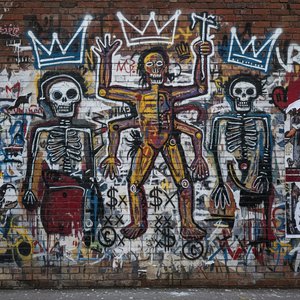
Jean-Michel Basquiat: Deconstructing Identity & Power Through Neo-Expressionist Graffiti
Explore the powerful work of Jean-Michel Basquiat & his impact on Neo-Expressionism. Discover how he deconstructed identity, challenged power structures, and left an enduring legacy in contemporary art. Expert analysis for collectors.
Las 10 Obras Maestras Dominadas por el Negro Marsella: Arte y Decoración
Descubre las 10 pinturas más famosas dominadas por el negro marsella. Explora la historia, técnica y simbolismo de obras maestras del expresionismo alemán, gótico y arte moderno. Reproducciones de museos en .

Basquiat & Raw Pop: The Electric Energy of Neo-Expressionism and the Legacy of Urban Rebellion
Explore the electric world of Jean-Michel Basquiat and Neo-Expressionism. Discover how raw urban energy and symbolic graffiti redefined contemporary art history through a deep, cultural lens.
Basquiat & Raw Pop: The Unfiltered Energy of Neo-Expressionism and the Legacy of Urban Rebellion
Explore the raw energy of Jean-Michel Basquiat and Neo-Expressionism. Discover how urban rebellion redefined modern art through a lens of luxury, identity, and profound emotional intensity for the discerning collector.


