

 Compartir
 Compartir
 Ver detalles
 Guía
Guía

 Descargar
 Ver artículos similares
 Presentación de diapositivas
 Estadísticas
Molière


 Leer más
Reproducción al óleo hecha a mano
Óleo sobre lienzo pintado a mano en el tamaño y marco de su elección, realizado por encargo por nuestros artistas. ( Cambiar a formato impreso Ver versión en imagen digital)




































Elija entre nuestros tamaños predefinidos que respetan las proporciones originales de la obra.

Escriba el ancho y el alto que necesite para adaptarse a su marco o a su pared. Al ser una obra pintada a mano, para un tamaño con una forma distinta, el artista puede pintar un poco más alrededor de la imagen o recortar un poco; usted elige. Le enviaremos una maqueta digital para su aprobación antes de comenzar la pintura. La imagen que se muestra en esta página no refleja el resultado real; solo la maqueta lo hace.
Tras realizar el pedido, el equipo de OriginalUniqueArt.com enviará un correo electrónico al cliente para solicitar instrucciones y proporcionarle una vista previa del boceto.
Envío a todo el mundo () en 3-4 semanas en lugar de las 5 semanas estándar. (24 octubre). Sin comprometer la calidad.

Envío exprés gratuito a todo el mundo

Lienzo de lino de alta calidad

Seguro de envío completo

Garantía de reembolso de impuestos aduaneros

Garantía de fidelidad cromática exacta

Política de devolución de 100 días (solo por defectos)

Garantía de devolución del 100% del dinero

Oferta por volumen
 La opción de vidrio solo está disponible en tamaños inferiores a 110 cm.

Molière
Técnica de reproducción
Tamaño de la reproducción
-


Precio total
€ 263
A Captivating Portrait: Jean-Jacques Caffieri’s Molière
The year is 1787. Paris pulses with artistic fervor, the Rococo style dominating the courts and salons of the aristocracy. Within the hallowed halls of the Louvre, a sculptor named Jean-Jacques Caffiéri meticulously captures the essence of one of France's most celebrated playwrights: Molière. This isn’t merely a likeness; it’s an embodiment of wit, intellect, and theatrical genius, rendered in exquisite detail with a masterful understanding of light, shadow, and human expression. Caffieri’s portrait bust is more than just a work of art—it's a window into the world of 18th-century French culture, offering a glimpse into the life and legacy of a man who continues to entertain and provoke audiences centuries later.
Caffiéri, a pivotal figure in the Rococo movement, was renowned for his ability to imbue his sculptures with a vibrant sense of realism and dramatic flair. Trained within a family steeped in metalworking tradition—his father, Philippe Caffiéri, was a prominent foundryman—Jean-Jacques inherited not only technical skill but also an appreciation for opulent detail and the expressive potential of bronze. His early years were spent honing his craft under his father’s guidance, mastering the intricacies of casting and finishing techniques that would become hallmarks of his distinctive style. This foundation allowed him to flourish as a court sculptor, securing commissions from influential figures like Louis XV and contributing significantly to the lavish decoration of royal palaces.
The Language of Light and Shadow
What immediately draws the eye is Caffiéri’s masterful manipulation of chiaroscuro – the dramatic contrast between light and dark. The sculpture is bathed in a warm, golden glow that highlights Molière's features, emphasizing his thoughtful gaze and the subtle lines etched around his eyes. This technique isn’t simply decorative; it serves to create a sense of depth and volume, lending the portrait an almost three-dimensional quality. Notice how the light catches the folds of his coat, revealing the intricate texture of the fabric, and how it subtly obscures certain areas of his face, adding an element of mystery and intrigue.
The artist’s attention to detail is truly remarkable. From the meticulously rendered wig – a symbol of status and fashion in the 18th century – to the carefully sculpted folds of his clothing, every element contributes to the overall sense of realism. The rich fabrics, the elaborate embroidery, and the subtle sheen of the bronze all speak to the wealth and sophistication of Molière’s world. Caffiéri doesn't just depict a man; he captures an entire era.
Symbolism and Context
Beyond its aesthetic beauty, the portrait is laden with symbolic meaning. Molière, holding a book in his hand, represents not only his profession as a playwright but also his dedication to knowledge and intellectual pursuits. The gesture of his hand – a subtle inclination towards the viewer – suggests both invitation and contemplation, inviting us to engage with his work and ponder its profound themes. The bust was commissioned for the ‘grands hommes’ series, a collection intended to celebrate prominent figures of French history and culture, reflecting the Enlightenment ideals of reason and humanism that were gaining momentum at the time.
Furthermore, the choice of bronze as the medium is significant. Bronze was considered a noble material, associated with strength, durability, and permanence – qualities that mirrored Molière’s enduring legacy as one of France's greatest playwrights. The fact that this particular bust was created for the Louvre, one of the world’s most prestigious museums, underscores its importance and elevates it to an iconic representation of French artistic achievement.
A Timeless Masterpiece
Caffiéri’s portrait of Molière is a testament to his exceptional skill as a sculptor and his deep understanding of human nature. It's a captivating work that transcends its historical context, continuing to resonate with viewers today through its beauty, elegance, and profound symbolism. Whether admired for its technical brilliance or appreciated for its evocative portrayal of a literary giant, this sculpture remains a cornerstone of Rococo art—a vibrant reminder of the power of art to capture both the outward appearance and the inner spirit of a remarkable individual.
Preguntas y respuestas
¿Para qué se recomienda una reproducción de "Molière" de Jean Jacques Caffiéri?
Se recomienda una reproducción de "Molière" de Jean Jacques Caffiéri para Statement. Esta sugerencia se deriva del tema, el ambiente y los colores de la obra.
¿Es "Molière" de Jean Jacques Caffiéri una composición en formato retrato, paisaje o cuadrado?
"Molière" de Jean Jacques Caffiéri tiene un formato Portrait. El formato describe las proporciones de la composición.
¿Cuál es la luminosidad percibida de "Molière" de Jean Jacques Caffiéri?
En términos generales, "Molière" se registra con una luminosidad de deep_shadow. La luminosidad percibida describe qué tan clara u oscura parece la obra.
Biografía del artista
Jean Jacques Caffiéri: Un Escultor Rococó en la Corte de Luis XV
Jean Jacques Caffiéri (1678-1755) se erige como una figura fundamental de la escultura francesa durante el periodo Rococó, encarnando la estética opulenta y la maestría artesanal que definieron su era. Nacido en París, hijo de Philippe Caffiéri, un prominente fundidor que estableció un linaje dedicado al arte de la metalurgia, la trayectoria artística de Caffiéri comenzó en el seno de una familia impregnada de tradición, un legado profundamente moldeado por las influencias italianas. Su formación temprana bajo la tutela de su padre consolidó sus habilidades fundamentales como fondeur-ciseleur (fundidor y cincelador), otorgándole acceso a los prestigiosos gremios de París que supervisaban tanto proyectos escultóricos monumentales como intrincados trabajos decorativos en metal. Esta experiencia formativa le infundió una comprensión inigualable de la técnica y la manipulación de los materiales, cualidades que caracterizarían toda su obra.- Vida temprana y formación: La crianza de Caffiéri dentro de una familia reconocida por su destreza artística aseguró que recibiera una instrucción integral en el arte de la fundición y el acabado del bronce, habilidades perfeccionadas bajo la mirada vigilante del propio Philippe Caffiéri.
- Reconocimiento gremial y encargos iniciales: Para 1715, Caffiéri alcanzó el estatus de maître fondeur-ciseleur, marcando su debut como escultor con un encargo para la Corporation des Fondeurs-Ciseleurs, un testimonio de su creciente reputación y del gran respeto que gozaban los artesanos parisinos.
El legado de la familia Caffieri: Escultura en bronce y artes decorativas
La contribución de la familia Caffiéri a la escultura francesa es innegable, atribuida en gran medida al hijo de Jacques Caffiéri, Philippe Caffiéri (1714–1777). Juntos formaron un dúo artístico formidable, particularmente activo al servicio de Luis XV. Su taller en la Rue des Canettes produjo un volumen asombroso de obras —principalmente monturas de bronce dorado para muebles y objetos decorativos— que adornaron residencias por todo París y elevaron los estándares de la artesanía Rococó. Notablemente, los diseños de Caffiérri para Versalles, Fontainebleau, Marly, Compiegne y Choisy ejemplifican la grandeza y la elegancia sinónimo de la corte de Luis XV. El Château de la Muette conserva un testimonio extraordinario de su espíritu colaborativo: su chimenea de bronce dorado permanece como un ejemplo magistral del estilo Rococó, caracterizada por un movimiento dinámico y una ornamentación elegante ejecutada con una habilidad excepcional.- Proyectos en Versalles: La participación de Caffiéri en la decoración de Versalles consolidó su reputación como un escultor de distinción, contribuyendo significativamente a la estética opulenta del palacio.
- Colaboración con Philippe Caffiéri: La asociación entre Jacques y Philippe Caffiéri fomentó la innovación y elevó la calidad de las artes decorativas durante su época.
Patrocinio real y logros artísticos
La dedicación de Caffiéri al servicio real se extendió más allá de los embellecimientos arquitectónicos; emprendió numerosos encargos para Luis XV, produciendo retratos y esculturas que capturando el espíritu de la época. Su trabajo obtuvo un reconocimiento considerable durante su vida, asegurándole un lugar entre los escultores más célebres de Francia. La Wallace Collection alberga la obra maestra de Caffiéri: la Commode Royale entregada por Antoine-Robert Gaudreau en 1739 para el dormitorio de Luis XV en Versalles, un ejemplo impresionante del diseño y la maestría Rococó. Sus intrincadas decoraciones en bronce dorado continúan inspirando admiración por su belleza y virtuosismo técnico.- Encargo de la Wallace Collection: La Commode Royale de Caffiéri ejemplifica la cúspide del arte Rococó, mostrando una habilidad excepcional en la metalurgia y las artes decorativas.
- Retratos notables: Los retratos de Caffiéri demuestran su capacidad para transmitir profundidad psicológica y elegancia, características que definen su legado artístico.
Influencia y trascendencia histórica
La influencia de Jean Jacques Caffiéri en las generaciones posteriores de escultores es considerable, estableciéndolo como una piedra angular de la historia del arte Rococó. Su meticulosa atención al detalle, combinada con su dominio de las técnicas de fundición de bronce —heredadas de su padre—, estableció una tradición que perduró durante décadas tras su muerte en 1755. La obra de Caffiéri sirve como un símbolo perdurable de la excelencia artística francesa durante la Ilustración, reflejando la fascinación del periodo por el naturalismo y la ornamentación refinada. Su legado continúa inspirando a los artistas de hoy, consolidando su lugar entre los escultores más venerados de Francia.
Jean Jacques Caffiéri
1678 - 1755 , Francia
Datos clave
- Artistic Movement Or Style: Rococó
- Artists Who Influenced This Artist: ['Jacques Caffieri']
- Date Of Birth: Paris, Francia (1678)
- Date Of Death: 1755
- Full Name: Jean Jacques Caffiéri
- Nationality: Francés
- Notable Artworks:
- Royal Commode
- Chimneypiece Decoration
- Portrait de Claude Adrien Helvétius
- Place Of Birth: París
Artículos relacionados

Las 10 Pinturas Más Famosas Dominadas por el Negro | Arte y Decoración
Descubre las 10 pinturas más impactantes dominadas por el negro. Explora obras maestras de Rembrandt, Goya y Rothko, su historia y significado. Encuentra reproducciones de arte exclusivas para transformar tu hogar en .
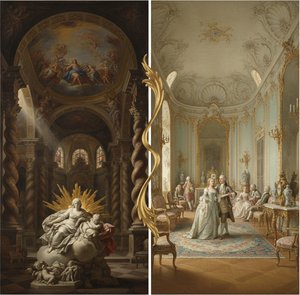
From Grandeur to Grace: Exploring the Evolution of Baroque & Rococo Art
Explore the captivating evolution from Baroque's drama to Rococo's grace! Discover key artists, characteristics & lasting influence of these art movements with expert insights at OriginalUniqueArt.

Barroco Sublime: 10 Obras Maestras que Definieron una Época |
Descubre las 10 obras maestras del Barroco que marcaron una época. Caravaggio, Bernini y Velázquez cobran vida en . Reproducciones de arte de calidad museo para decorar tu hogar con elegancia. ¡Explora la colección online!

The Dramatic Flourish: Exploring the Baroque Movement's Enduring Legacy in Art History
Explore the dramatic world of Baroque art! Discover iconic artists like Caravaggio & Rubens, defining techniques, and its lasting impact on art history. Expert insights for collectors & enthusiasts at OriginalUniqueArt.

Drama Barroca: Llevando la Grandeza y la Emoción a los Interiores Contemporáneos
Descubre cómo el drama y la grandeza del arte barroco pueden transformar tus interiores. Guía experta, inspiración y reproducciones de alta calidad en .

