

 Vista previa
 Compartir
 Compartir
 Ver detalles
 Guía
Guía

 Descargar
 Ver artículos similares
 Radiografía
 Presentación de diapositivas
 Estadísticas
Vence
 Impressionism
 1920
1920 53.0 x 64.0 cm
 Leer más
Giclée / Impresión de arte
Impresiones giclée o en lienzo de calidad de museo con producción rápida y opciones de acabado flexibles. ( Encargar reproducción pintada a mano Ver versión en imagen digital)




































Elija entre nuestros tamaños predefinidos que respetan las proporciones originales de la obra.

Puede introducir sus propias dimensiones para adaptarse a un marco o espacio específico. Si el tamaño seleccionado no coincide con las proporciones de la imagen original, recortaremos la obra de arte o extenderemos la imagen con un borde con efecto espejo o de color sólido. Se enviará una maqueta digital para su aprobación antes de que comience la producción.
Tenga en cuenta que la vista previa en pantalla no refleja el recorte o la extensión real. Solo la maqueta mostrará con precisión la composición final.
Aunque existen tamaños personalizados, recomendamos seleccionar una dimensión de la lista predefinida para preservar las proporciones originales.
Envío a todo el mundo () en 2 semanas en lugar de las 4/5 semanas estándar. (26 septiembre)

Envío exprés gratuito a todo el mundo

Lienzo de lino de alta calidad

Seguro de envío completo

Garantía de reembolso de impuestos aduaneros

Garantía de fidelidad cromática exacta

Política de devolución de 100 días (solo por defectos)

Garantía de devolución del 100% del dinero

Oferta por volumen
 La opción de vidrio solo está disponible en tamaños inferiores a 110 cm.

Vence
Giclée / Impresión de arte
Tamaño de la reproducción
-


Precio total
$ 80
Biografía del artista
The Parisian Pulse: The Life and Vision of Jean Hyppolyte Marchand
Jean Hyppolyte Marchand emerged from the vibrant, shifting currents of the early 20th-century Parisian art scene, a period defined by the tension between classical tradition and radical modernity. Born on November 21, 1883, Marchand’s artistic journey began within the prestigious halls of the École des Beaux-Arts. Under the rigorous guidance of Léon Bonnat, he absorbed the foundational principles of classical technique, yet his spirit was far too restless to remain tethered to the past. His early explorations were deeply rooted in the Impressionist tradition, finding profound beauty in the tranquil landscapes of the Midi region. In these early works, one can observe a meticulous devotion to tonal harmony and light, reminiscent of the masters Cézanne and Sisley, as he sought to capture the quiet, sun-drenched essence of rural France.
Beyond the canvas, Marchand’s formative years were enriched by a diverse engagement with the decorative arts. His experience in jewelry design and textiles provided him with a unique tactile understanding of pattern and form, an expertise that would later inform the structural integrity of his more experimental compositions. This intersection of fine art and decorative elegance allowed him to approach the canvas not just as a window into nature, and but as a space for complex geometric interplay.
A Convergence of Minds: The Bloomsbury Connection
One of the most defining chapters in Marchand’s biography was his profound association with the Bloomsbury Group. This legendary circle of intellectuals and artists—including Roger Fry, Clive Bell, Virginia Woolf, and Leonard Woolf—served as a catalyst for his artistic evolution. Through this connection, Marchand was thrust into an environment that championed aesthetic experimentation and challenged the rigid boundaries of Victorian morality and academic art. It was within this influential orbit that his work began to move away from the soft edges of Impressionism toward something far more intellectually rigorous.
The impact of Fry and Bell on Marchand’s trajectory cannot be overstated. Their advocacy for Post-Impressionism provided him with the conceptual framework to embrace the fractured planes and multiple perspectives that were beginning to redefine European art. This period of his life was marked by a daring intellectual fervor, as he grappled with the concepts of simultaneity and spatial ambiguity, seeking to represent the complexity of modern perception through a more structured, analytical lens.
The Cubist Breakthrough and Artistic Legacy
Around 1912, Marchand underwent a transformative stylistic shift, fully embracing the revolutionary language of Cubism. Drawing inspiration from the pioneering techniques of Picasso and Braque, he began to deconstruct his subjects into a series of overlapping planes and geometric facets. His still lifes from this era, such as the celebrated Still Life with Bananas (1910), demonstrate a masterful command of this new vocabulary. These works were not merely exercises in abstraction but were deeply engaged with the physical presence of objects, using light and shadow to navigate the tension between two-dimensional surfaces and three-dimensional depth.
His versatility extended well beyond oil painting into the delicate realms of printmaking and illustration. A notable achievement includes his evocative collaboration with the poet Paul Claudel on Le Chemin de la Croix, where Marchand’s ability to translate spiritual and emotional narratives into visual form was brilliantly displayed. Whether capturing the serene, sun-soaked atmosphere of a Mediterranean village in View in the Midi or exploring the poignant, structured forms of Maternity (La Maternité), Marchand’s oeuvre remains a testament to a life spent at the crossroads of tradition and innovation. His legacy persists as a vital link between the pastoral beauty of the 19th century and the fractured, exhilarating energy of the modern age.

jean hyppolyte marchand
1883 - 1940
Datos clave
- Artistic Movement Or Style: Cubism
- Artists Or Movements Influenced By This Artist: ['Bloomsbury Group']
- Artists Who Influenced This Artist: ['Léon Bonnat']
- Date Of Death: 1940
- Full Name: Jean Hippolyte Marchand
- Nationality: French
- Notable Artworks:
- Still Life with Bananas
- Olive Trees, Vence
- Place Of Birth: Paris, France
Artículos relacionados
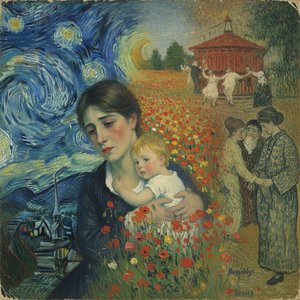
Capturing the Soul: The Most Emotionally Moving Impressionist and Post-Impressionist Masterpieces
Discover the profound emotional depth of Impressionist and Post-Impressionist masterpieces. Explore how legends like Monet, Van Gogh, and Gauguin captured light and soul through evocative landscapes and vibrant brushwork for a timeless connection to art history.
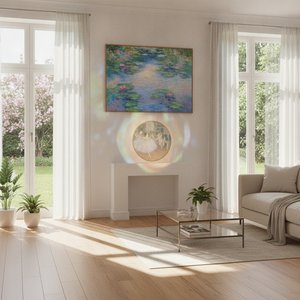
Painting with Light: How Impressionist Masterpieces Transform Your Home's Mood
Discover how Impressionist masterpieces transform your home's mood. Explore the luminous beauty of Monet and Renoir through our exquisite, hand-painted oil reproductions designed to bring light, warmth, and timeless elegance to your living space.

Los 10 Maestros del Paisaje Impresionista: Obras que Cambiaron la Historia del Arte
Descubre los 10 lienzos impresionistas que revolucionaron el arte. Explora la historia de Monet, Van Gogh y Renoir, sus técnicas y colores vibrantes. Encuentra reproducciones de alta calidad para decorar tu hogar en OriginalUniqueArt.com

Impressionistic Realism's Finest: 10 Masterpieces for Your Home | OriginalUniqueArt
Journey through Impressionistic Realism with 10 iconic masterpieces by Monet, Renoir & Van Gogh. Explore art history, techniques & find museum-quality reproductions for your home at OriginalUniqueArt.com. Discover all masterpieces online!

Los 10 Maestros del Paisaje Impresionista: Obras que Cambiaron la Historia del Arte
Descubre los 10 lienzos impresionistas que revolucionaron el arte. Monet, Renoir y más… Explora la historia, técnica y belleza de cada obra maestra. Encuentra reproducciones de alta calidad para tu hogar en OriginalUniqueArt.com.