Compartir
 Compartir
 Ver detalles
 Guía
Guía

 Descargar
 Ver artículos similares
 Presentación de diapositivas
 Estadísticas
Diana


 Leer más
Giclée / Impresión de arte
Impresiones giclée o en lienzo de calidad de museo con producción rápida y opciones de acabado flexibles. ( Encargar reproducción pintada a mano Ver versión en imagen digital)




































Elija entre nuestros tamaños predefinidos que respetan las proporciones originales de la obra.

Puede introducir sus propias dimensiones para adaptarse a un marco o espacio específico. Si el tamaño seleccionado no coincide con las proporciones de la imagen original, recortaremos la obra de arte o extenderemos la imagen con un borde con efecto espejo o de color sólido. Se enviará una maqueta digital para su aprobación antes de que comience la producción.
Tenga en cuenta que la vista previa en pantalla no refleja el recorte o la extensión real. Solo la maqueta mostrará con precisión la composición final.
Aunque existen tamaños personalizados, recomendamos seleccionar una dimensión de la lista predefinida para preservar las proporciones originales.
Envío a todo el mundo () en 2 semanas en lugar de las 4/5 semanas estándar. (21 septiembre)

Envío exprés gratuito a todo el mundo

Lienzo de lino de alta calidad

Seguro de envío completo

Garantía de reembolso de impuestos aduaneros

Garantía de fidelidad cromática exacta

Política de devolución de 100 días (solo por defectos)

Garantía de devolución del 100% del dinero

Oferta por volumen
 La opción de vidrio solo está disponible en tamaños inferiores a 110 cm.

Diana
Giclée / Impresión de arte
Tamaño de la reproducción
-


Precio total
$ 80
A Goddess in Motion: Jean-Antoine Houdon’s “Diana”
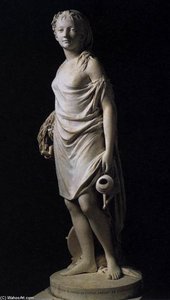
Jean-Antoine Houdon's "Diana," crafted around 1780 during the twilight of the Rococo era and the burgeoning rise of Neoclassicism, is more than just a marble sculpture; it’s a potent distillation of Roman mythology, Enlightenment ideals, and the artist’s profound understanding of human form. This captivating piece, originally commissioned for Catherine of Russia and later gracing the halls of the Hermitage Museum in St. Petersburg, embodies a revolutionary shift away from the idealized, static representations of antiquity towards a dynamic portrayal of the divine—a goddess caught in an exhilarating moment of pursuit.
Houdon’s genius lies not merely in his technical skill – though undeniably masterful – but in his ability to imbue stone with life and emotion. He deliberately departed from the prevailing artistic conventions, rejecting the smooth, polished surfaces and serene expressions favored by earlier sculptors. Instead, he opted for a raw, almost palpable energy, capturing Diana in a state of vigorous movement. The goddess is not poised or regal; she’s actively engaged in her hunt, her body coiled with power as she leaps forward, an arrow poised to strike. This departure from the traditional, passive depiction of Diana—often portrayed as a serene and untouchable virgin—immediately sparked controversy at the time, reflecting a broader societal unease with overt displays of female nudity.
The Anatomy of Rebellion: Technique and Material
The sculpture’s remarkable realism is achieved through Houdon's meticulous study of anatomy and his innovative approach to marble carving. He employed a subtractive technique, carefully removing material to reveal the underlying form, resulting in an astonishingly detailed depiction of musculature, tendons, and even the subtle wrinkles around Diana’s eyes. Notice the incredible precision with which he captures the weight of her body as she lands—a testament to his deep understanding of human movement. Crucially, Houdon addressed a significant technical challenge: the sheer scale of the figure. To accommodate the immense weight of the marble, he ingeniously incorporated support structures – a cluster of aquatic plants at the base and a quiver of arrows attached to her left arm – subtly integrated into the composition without detracting from the overall dynamism.
The choice of white marble itself is significant. The material’s inherent luminosity enhances the sculpture's impact, while its cool, smooth surface contrasts beautifully with the warm tones of Diana’s skin and clothing. Houdon expertly manipulated light and shadow to create a sense of depth and volume, emphasizing the contours of her body and conveying the feeling of movement with remarkable subtlety.
Symbolism and the Enlightenment Spirit
Diana, in Roman mythology, represents not only the hunt but also wilderness, fertility, and the moon. Her association with the lunar cycle—often linked to femininity and intuition—resonates deeply within the sculpture. The crescent moon adorning her head serves as a potent visual symbol of this connection, subtly reinforcing her divine status. Furthermore, Diana’s nudity, while initially controversial, can be interpreted through the lens of the Enlightenment – a period characterized by a renewed interest in classical antiquity and a questioning of traditional social norms. Houdon's portrayal challenged conventional notions of female virtue by presenting a powerful, independent goddess unburdened by restrictive societal expectations.
A Legacy of Realism: Historical Context and Influence
"Diana" stands as a pivotal work in the transition from Rococo to Neoclassicism. It exemplifies Houdon’s commitment to capturing not just outward appearances but also the inner essence of his subjects—their intellect, character, and emotional depth. His focus on realism and anatomical accuracy profoundly influenced subsequent generations of sculptors, paving the way for a new era of artistic expression. The sculpture's enduring popularity is a testament to Houdon’s genius and its ability to resonate with viewers across centuries. Reproductions today offer a remarkable opportunity to experience this iconic work of art, bringing its dynamism and emotional power into any space.
Biografía del artista
Jean-Antoine Houdon: Un Maestro de la Escultura Neoclásica
- Nacido: Versalles, Francia (1741)
- Fallecido: 1828
Jean-Antoine Houdon se erige como una figura clave en la escultura neoclásica francesa, celebrado por sus bustos y estatuas de retrato notablemente realistas e introspectivos. Su carrera abarcó la era de la Ilustración, capturando los rasgos de prominentes filósofos, inventores, figuras políticas y realeza, dejando atrás un legado que continúa inspirando asombro y admiración.
Primeros Años y Formación Artística
- Educación Formal: Houdon ingresó a la Académie Royale de Peinture et de Sculpture en 1752. Estudió bajo los renombrados escultores René-Michel Slodtz, Jean-Baptiste Lemoyne y Jean-Baptiste Pigalle, perfeccionando sus habilidades en técnicas clásicas.
- École Royale des Élèves Protégés: De 1761 a 1764, continuó su educación en la École Royale des Élèves Protégés, una prestigiosa institución para jóvenes artistas talentosos.
- Prix de Rome: En 1761, Houdon logró un hito significativo al ganar el Prix de Rome. Este premio le brindó la oportunidad de viajar a Italia y estudiar el arte clásico de primera mano, una experiencia formativa que influyó profundamente en su estilo artístico.
Obras Principales y Estilo Artístico
- Realismo Neoclásico: Las esculturas de Houdon se caracterizan por su excepcional realismo y atención al detalle. Capturó meticulosamente las características físicas y, a menudo, la esencia psicológica de sus sujetos, trascendiendo el mero parecido para transmitir personalidad e intelecto.
- Retratos Notables: Sus obras más famosas incluyen retratos de Denis Diderot (una escultura en terracota), Benjamin Franklin, Jean-Jacques Rousseau, Voltaire, Molière, George Washington (encargado por la Asamblea General de Virginia), Thomas Jefferson, Luis XVI, Robert Fulton y Napoleón Bonaparte. Estos retratos ofrecen valiosas perspectivas sobre las vidas y los tiempos de estas figuras influyentes.
- "Muscleman Sideview": Esta escultura en bronce ejemplifica la fascinación de Houdon por la anatomía y su capacidad para representar la forma humana en un estilo neoclásico.
- Influencia en la Iconografía Americana: La escultura de George Washington de Houdon sirvió como modelo para grabados utilizados en numerosos sellos postales estadounidenses durante finales del siglo XIX y principios del XX, consolidando su contribución a la iconografía estadounidense.
Reconocimiento y Vida Posterior
- Honores y Premios: Houdon recibió un amplio reconocimiento a lo largo de su carrera. Fue nombrado Chevalier de la Légion d'Honneur en 1804 y Chevalier de l'Empire en 1809, lo que significaba su estimado estatus dentro de la sociedad francesa.
- Continuación de la Producción Artística: Incluso más tarde en la vida, Houdon continuó creando obras significativas, demostrando su dedicación perdurable a su oficio.
- Muerte y Legado: Falleció en París el 15 de julio de 1828 y fue enterrado en el Cementerio de Montparnasse. Sus esculturas siguen siendo muy valoradas por su mérito artístico y su importancia histórica, proporcionando valiosas perspectivas sobre la era de la Ilustración.
Significado Histórico e Influencia
La contribución de Jean-Antoine Houdon a la historia del arte es innegable. Elevó la escultura de retrato a nuevas alturas de realismo y profundidad psicológica, influyendo en generaciones de artistas. Su capacidad para capturar la esencia de sus sujetos—su intelecto, carácter e incluso sus vulnerabilidades—lo convirtió en un artista muy solicitado entre las principales figuras de su tiempo. Su obra proporciona un registro visual único de la era de la Ilustración, preservando los rasgos de aquellos que moldearon el pensamiento y la cultura occidentales.

Jean-Antoine Houdon
1741 - 1828 , Francia
Datos clave
- Artistas Que Influyeron:
- René-Michel Slodtz
- Jean-Baptiste Lemoyne
- Jean-Baptiste Pigalle
- Fecha De Muerte: 15 de julio de 1828
- Fecha De Nacimiento: 20 de marzo de 1741
- Lugar De Nacimiento: Versailles, Francia
- Movimiento Artístico: Neoclásico
- Nacionalidad: Francés
- Nombre Completo: Jean-Antoine Houdon
- Obras Notables:
- Muscleman Sideview
- George Washington
- Denis Diderot
- Luis XVI
- Jean-Jacques Rousseau
- Bust of Mirabeau
Artículos relacionados

The Enduring Form: Exploring Themes & Techniques in Sculpture Across Historical Periods
Explore the rich history of sculpture from ancient masterpieces to contemporary innovations. Discover key techniques, influential artists & investment potential for discerning art collectors.

The Enduring Allure of Marble in Art History: From Classical Sculpture to Modern Abstraction
Explore the captivating history of marble sculpture from ancient Greece to modern art. Discover renowned artists like Canova & Michelangelo, carving techniques, and investment insights at OriginalUniqueArt.

Esculturas de Bronce Legendarias: 10 Obras Maestras que Transformaron el Arte | OriginalUniqueArt
Descubre las 10 esculturas de bronce más legendarias que revolucionaron el arte. Explora la historia de Rodin, Degas y otros maestros del bronce. Encuentra reproducciones de alta calidad e inspiración para tu hogar en OriginalUniqueArt.com.

The Enduring Form: Sculpture Across History, Technique & Emotional Resonance
Explore the rich history of sculpture with OriginalUniqueArt. Discover key techniques, influential artists & investment potential for discerning collectors. Expert insights into valuing and collecting timeless masterpieces.
Timeless Elegance: A Complete Guide to the Sublime Beauty and Artistry of Marble Sculpture
Discover the sublime beauty of marble art through an expert exploration of Renaissance and Neoclassical masterpieces. From the delicate textures of Carpeaux to the grandeur of Sansovino, immerse yourself in a guide to timeless elegance and sculptural perfection.