
 Vista previa
 Compartir
 Compartir
 Ver detalles

 Descargar
 Ver similares
 Radiografía
 Presentación de diapositivas
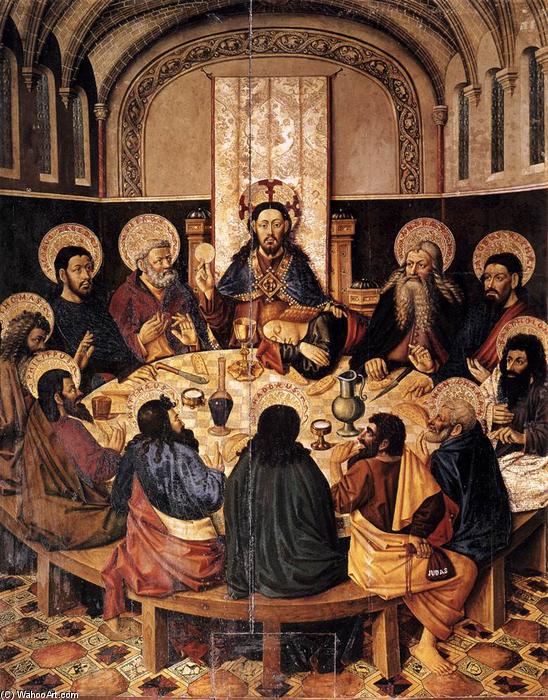
The Last Supper


 Leer más
Giclée / Impresión de arte
Impresiones giclée o en lienzo de calidad de museo con producción rápida y opciones de acabado flexibles. ( Encargar reproducción pintada a mano Comprar descarga)




































Elija entre nuestros tamaños predefinidos que respetan las proporciones originales de la obra.

Puede introducir sus propias dimensiones para adaptarse a un marco o espacio específico. Si el tamaño seleccionado no coincide con las proporciones de la imagen original, recortaremos la obra de arte o extenderemos la imagen con un borde con efecto espejo o de color sólido. Se enviará una maqueta digital para su aprobación antes de que comience la producción.
Tenga en cuenta que la vista previa en pantalla no refleja el recorte o la extensión real. Solo la maqueta mostrará con precisión la composición final.
Aunque existen tamaños personalizados, recomendamos seleccionar una dimensión de la lista predefinida para preservar las proporciones originales.
Envío a todo el mundo () en 2 semanas en lugar de las 4/5 semanas estándar. (16 agosto)

Envío exprés gratuito a todo el mundo

Lienzo de lino de alta calidad

Seguro de envío completo

Garantía de reembolso de aranceles aduaneros

Garantía de fidelidad cromática exacta

Política de devolución de 60 días (solo por defectos)

Garantía de devolución del 100% del dinero

Oferta por volumen
 La opción de vidrio solo está disponible en tamaños inferiores a 110 cm.

The Last Supper
Giclée / Impresión de arte
Tamaño de la reproducción
-


Precio total
$ 80
Biografía del artista
Jaume Baco Jacomart: A Valencian Master Bridging Gothic and Renaissance
Jaume Baçó, also spelled Jaume Baco or Jacomart (c. 1410–1461), was a Spanish painter from Valencia whose life remains shrouded in relative obscurity, leaving much of his artistic output to speculation and scholarly reconstruction. Despite the paucity of biographical details, his distinctive style—characterized by an unwavering commitment to early Netherlandish traditions while simultaneously absorbing subtle echoes of Italian Renaissance aesthetics—solidifies his position as a pivotal figure within Valencian art history and a testament to the dynamism of fifteenth-century European painting.
Born around 1410 in Valencia, Baçó’s origins are traced back to a family of artisans, suggesting an upbringing steeped in craftsmanship. Precise information regarding his formative years is scarce; however, he began his artistic career in Valencia itself, honing his skills amidst the flourishing Gothic art scene of the time. By 1442, he accepted a commission from Alfonso V of Aragon, embarking on a journey to Naples where he encountered the burgeoning Renaissance fervor emanating from the papal court.
Naples proved to be a crucible for Baçó’s artistic evolution. The influence of Lorenzo Monaco and other Florentine masters became palpable in his palette and compositional choices—a deliberate departure from the austere formalism of Valencian Gothic, yet firmly rooted in established stylistic precedents. This period witnessed him producing significant works, notably altarpieces that showcased his burgeoning mastery of perspective and color theory.
Returning to Valencia in 1445, Baçó continued to serve as court painter for John II, furthering his artistic endeavors and establishing himself as a respected artist within the region. His subsequent travels to Rome and Tivoli in 1451 cemented his connection with papal patronage and exposed him to the intellectual currents shaping European culture. He returned to Valencia permanently in 1451 and remained there until his death in 1461.
Baçó’s artistic legacy rests primarily on two monumental achievements: the Retable of Saint Anne, now tragically lost, and the Borgia Triptych housed in the Collegiate Church of Xàtiva. These paintings exemplify Baçó's stylistic synthesis—a masterful blend of Netherlandish realism and Italian humanist ideals. Furthermore, his contribution to the Cathedral of Valencia’s decoration – specifically the panels depicting Saint Benedict and Saint Ildephonsus – represents a cornerstone of Valencian artistic heritage.
While Baçó’s oeuvre remains relatively limited compared to contemporaries like Colantonio or Juan Rexach, his influence extended far beyond his immediate productions. He served as mentor to younger artists, shaping the stylistic trajectory of the Valencian school and ensuring that the traditions of early Netherlandish painting persisted in a period increasingly dominated by Renaissance innovation. Jaume Baçó Jacomart’s enduring artistic vision continues to inspire admiration for its expressive power and technical sophistication—a testament to his singular contribution to the visual arts of the fifteenth century.

Jaume Baçó Jacomart
1410 - 1461 , España
Datos clave
- Artistic Movement Or Style: Early Netherlandish Painting
- Artists Or Movements Influenced By This Artist: ['Italian Renaissance']
- Artists Who Influenced This Artist: ['Lorenzo Monaco']
- Date Of Birth: c. 1410
- Date Of Death: 1461
- Full Name: Jaume Baçó Escrivà
- Nationality: Spanish
- Notable Artworks:
- Retable of Catì
- Borgia Triptych
- Place Of Birth: Valencia, Spain

