Cambiar a impresiones
 Ver más







































 Para obras de arte o reproducciones que midan más de 105 cm (aproximadamente 41 pulgadas) en cualquiera de sus lados, el marco se enviará como un kit desmontado. Este método garantiza una entrega segura y evita daños durante el transporte.


A Moment Frozen in Time: The Spirit of the Dutch Golden Age
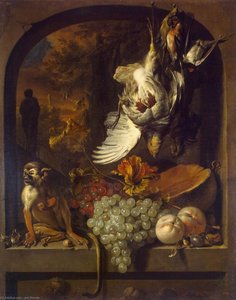
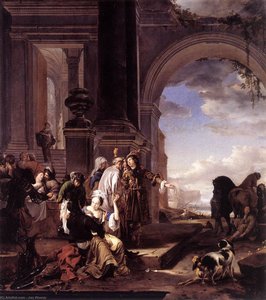
In the quiet, evocative atmosphere of Jan Weenix’s "After the Hunt," we are transported back to the year 1665, into a world where the boundaries between man, animal, and nature blur into a singular, harmonious moment. This masterful work serves as more than just a depiction of a post-hunt gathering; it is a window into the social fabric of the Dutch Golden Age. The scene captures a profound sense of camaraderie, where the adrenaline of the chase has subsided, leaving behind a lingering warmth of shared triumph and quiet companionship. As we gaze upon the man standing beside his loyal hounds, we feel the weight of tradition and the deep-seated connection to the land that defined the era.
The composition is a delicate dance of light and shadow, rendered with the meticulous precision that Jan Weenix inherited from his father’s workshop. Though the palette may appear restrained, it possesses a rich, tonal depth that breathes life into every texture—from the coarse fur of the hunting dogs to the soft, atmospheric haze of the background. The presence of other figures, engaged in low-toned conversation, adds layers of narrative complexity, suggesting a community bound by shared rituals and the seasonal rhythms of the hunt. A horse visible in the distance provides a sense of scale and depth, anchoring the group within a vast, breathing landscape.
Mastery of Realism and the Art of Detail
To behold this painting is to witness the pinnacle of Dutch Baroque realism. Weenix possessed an extraordinary ability to render the physical world with such clarity that the viewer can almost hear the soft panting of the dogs or the rustle of the basket held by the central figure. His technique, rooted in the tradition of observing nature with scientific accuracy, allows for a breathtaking interplay of textures. The way light catches the edges of the figures and settles into the folds of their attire creates a sense of three-dimensional presence that is both captivating and immersive.
For the discerning collector or interior designer, this piece offers an unparalleled opportunity to introduce a sense of historical grandeur and quiet sophistication into a space. The artwork does not merely decorate a wall; it commands attention through its subtle emotional resonance. It evokes a feeling of timelessness, making it an ideal centerpiece for a study, a library, or a formal dining room where conversation and reflection are encouraged. A high-quality reproduction of this work preserves the delicate nuances of Weenix’s brushwork, allowing the legacy of 17th-century Dutch mastery to reside within a modern setting.
Symbolism and the Emotional Landscape
Beyond its technical brilliance, "After the Hunt" is steeped in the symbolism of the era. The hunt itself was often a metaphor for the pursuit of virtue, social status, and the mastery of one's environment. The dogs, symbols of fidelity and instinct, stand as steadfast companions to the human spirit, representing the controlled wildness that exists within civilization. There is an underlying theme of peace following conflict—the transition from the intensity of the hunt to the restorative calm of the gathering.
The emotional impact of the painting lies in its ability to evoke nostalgia for a lost era of elegance and connection. It invites the viewer to pause, to breathe, and to appreciate the beauty found in the quiet intervals of life. Whether you are drawn to the historical significance of Jan Weenix’s lineage or the atmospheric allure of his landscapes, this painting remains a profound testament to the enduring power of art to capture the very essence of human experience.
Preguntas y respuestas
¿A qué estilo pertenece "After the Hunt"?
"After the Hunt" de Jan Weenix pertenece al movimiento Dutch Golden Age Realism. Este movimiento aporta el contexto estilístico de la obra.
¿Para qué uso se recomienda una impresión de "After the Hunt"?
Se recomienda utilizar una impresión de "After the Hunt" para Harmony.
¿Qué orientación tiene "After the Hunt" de Jan Weenix?
"After the Hunt" de Jan Weenix es una composición en Portrait. Se recomienda revisar las proporciones antes de elegir un tamaño de impresión.
 Ver en contexto
 Enviar
 Compartir
 Detalles
 Guía
Guía

 Descargar
 Similares
 Radiografía
 Presentación de diapositivas
 Preguntas y respuestas
 Estadísticas