Vista previa
 Compartir
 Compartir
 Ver detalles

 Descargar
 Ver similares
 Radiografía
 Presentación de diapositivas
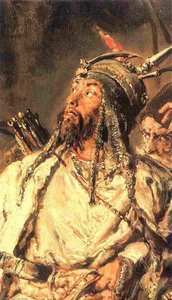
Copernicus in the tower at Frombork, or Conversations with God
 Oil On Canvas
- WallArt
- Romanticism
 1872
1872 221.0 x 315.0 cm
 Universidad Jaguelónica
 Leer más
Giclée / Impresión de arte
Impresiones giclée o en lienzo de calidad de museo con producción rápida y opciones de acabado flexibles. ( Encargar reproducción pintada a mano Comprar descarga)




P118B $10

P118H $10

P118W $10

P438Z $10

P508JH $12

P508YH $12

P805H $10

P805Z $10

P919BZ $10

P919G $10

P919XJ $10

P959ZH $10

P968JZ $12

W106C $8

W218G $10

W218JH $8

W218Y $10

W307PJ $10

W316G $10

W316PJ $8

W316Y $10

W398PJ $8

W4111J $10

W500HY $15

W500JH $15

W692G $12

W849H $8

W940BG $15

W953PJ $8




Elija entre nuestros tamaños predefinidos que respetan las proporciones originales de la obra.

Puede introducir sus propias dimensiones para adaptarse a un marco o espacio específico. Si el tamaño seleccionado no coincide con las proporciones de la imagen original, recortaremos la obra de arte o extenderemos la imagen con un borde con efecto espejo o de color sólido. Se enviará una maqueta digital para su aprobación antes de que comience la producción.
Tenga en cuenta que la vista previa en pantalla no refleja el recorte o la extensión real. Solo la maqueta mostrará con precisión la composición final.
Aunque existen tamaños personalizados, recomendamos seleccionar una dimensión de la lista predefinida para preservar las proporciones originales.
Envío a todo el mundo () en 2 semanas en lugar de las 4/5 semanas estándar. (22 agosto)

Envío exprés gratuito a todo el mundo

Lienzo de lino de alta calidad

Seguro de envío completo

Garantía de reembolso de aranceles aduaneros

Garantía de fidelidad cromática exacta

Política de devolución de 60 días (solo por defectos)

Garantía de devolución del 100% del dinero

Oferta por volumen
 La opción de vidrio solo está disponible en tamaños inferiores a 110 cm.

Copernicus in the tower at Frombork, or Conversations with God
Giclée / Impresión de arte
Tamaño de la reproducción
-


Precio total
$ 80
Descripción de la pieza
The Visionary Canvas: Jan Matejko’s “Copernicus in the Tower at Frombork”
Jan Matejko's "Copernicus in the Tower at Frombork, or Conversations with God" isn’t merely a painting; it’s a potent distillation of intellectual fervor and spiritual contemplation. Completed in 1873, this monumental oil on canvas transports us to the heart of Renaissance Poland, capturing a pivotal moment not just in astronomical history but also in the nation's burgeoning sense of self-awareness. The scene unfolds within the austere yet majestic confines of Frombork Cathedral’s tower, a location imbued with both religious significance and scientific curiosity – a perfect embodiment of the painting’s central theme: the harmonious intersection of faith and reason.

A Masterpiece of Romantic Drama
Matejko, a towering figure in 19th-century Polish art, masterfully employs the tenets of Romanticism to elevate this historical subject. The painting pulsates with dramatic lighting – a chiaroscuro effect that sculpts the figures and emphasizes the solemnity of the scene. The deep blues and purples of the night sky contrast sharply with the warm hues of Copernicus’s study, creating a visual tension that mirrors the intellectual struggle he embodies. Notice how Matejko uses loose brushstrokes to convey movement and emotion, imbuing the composition with a sense of dynamism rarely found in earlier historical paintings. The figures are rendered with an almost theatrical intensity, their gestures and expressions conveying profound thought and perhaps even a touch of awe.
The Anatomy of Inquiry: Symbolism and Detail
Beyond its dramatic impact, “Copernicus” is rich in symbolic detail. Nicolaus Copernicus himself, depicted as a man of quiet contemplation, sits at his desk surrounded by the tools of his trade – astronomical instruments, charts, and open books. The globe, prominently displayed, speaks to his revolutionary heliocentric model of the universe, challenging the established geocentric view. A partially visible diagram of the solar system hints at the complex calculations he undertook. The inclusion of a skullcap suggests the weight of religious tradition alongside the pursuit of scientific truth. Even the brick wall in the background serves as a grounding element, anchoring the scene within the physical reality of Frombork and reminding us of the earthly context of this extraordinary intellectual journey.
A Legacy Forged in Faith and Reason
The painting’s creation coincided with the 400th anniversary of Copernicus' birth, a moment of national pride for Poland. Matejko’s decision to portray Copernicus not as a triumphant discoverer but as a man engaged in dialogue with something greater than himself—perhaps even God—resonates deeply within Polish cultural identity. The painting became a symbol of the nation’s intellectual and spiritual heritage, embodying the spirit of inquiry and the courage to challenge established dogma. Its eventual acquisition by the Jagiellonian University – a bastion of learning since the 14th century – underscores its enduring significance as a testament to the power of human intellect and the pursuit of knowledge. Today, this magnificent work continues to inspire contemplation on the relationship between science, faith, and the boundless mysteries of the universe.
Biografía del artista
Primeros años y educación
Jan alojzy matejko, un renombrado pintor polaco, nació el 24 de junio de 1838 en krakúv, polonia. Su padre, franciszek ksawery matejko, era un tutor y maestro de música nacido en chequia. La vida temprana de jan se vio marcada por la revolución de krakúv de 1846 y el sitio de 1848 de krakúv por los austriacos, eventos que más tarde influirían en sus temas artísticos. Matejko asistió a la escuela secundaria st. ann pero abandonó en 1851 debido a su mal rendimiento académico. Sin embargo, demostró un talento excepcional para el arte desde una edad temprana. Estudió en la escuela de bellas artes de krakúv de 1852 a 1858, especializándose en pintura histórica bajo la tutela de wojciech korneli stattler y włodysław łuszczkiewicz.Carrera artística
El primer trabajo importante de matejko, los zares shuyski ante zygmunt iii, se completó en 1853. Comenzó a exhibir sus pinturas históricas en la sociedad de amigos de las bellas artes de krakúv en 1855. Obras notables incluyen:- Rejtan (1866): una gran pintura al óleo sobre lienzo que representa un momento crucial en la historia polaca.
- Unión de lublin (1869): una pieza significativa que muestra la habilidad de matejko para capturar eventos históricos.
- Batalla de grunwald (1878): una obra maestra que destaca su capacidad para transmitir la intensidad de las escenas de batalla.
Influencias y desarrollo artístico
El estilo de matejko estuvo profundamente influenciado por el romanticismo europeo, particularmente por artistas como eugène delacroix. Sin embargo, también se inspiró en el arte polaco anterior, especialmente en los trabajos de jan matthew gutenmacher. A medida que su carrera avanzaba, matejko desarrolló un enfoque distintivo caracterizado por composiciones grandiosas, una atención meticulosa al detalle histórico y un uso dramático del color y la luz. Sus pinturas a menudo representan momentos clave de la historia polaca, enfatizando el patriotismo y el orgullo nacional.Logros importantes y legado
Matejko pasó la mayor parte de su vida en krakúv, convirtiéndose finalmente en director de la academia de bellas artes jan matejko, anteriormente conocida como la academia de bellas artes de krakúv. Sus alumnos incluyeron a pintores destacados como maurycy gottlieb, jacek malczewski, józef mehoffer y stanisław wyspiański. Obras notables disponibles en OriginalUniqueArt:- Jan matejko: varna (romanticismo)
- Jan matejko: bodegón (romanticismo)
- Jan matejko: la unión de lublin (298 x 512 cm, romanticismo, óleo sobre lienzo)
Referencias:
descubriendo las obras maestras del muzeum narodowe krakúv, polonia (wikipedia.org)
Jan Matejko
1838 - 1893 , Polonia
Datos clave
- Artistas Influenciados:
- Maurycy Gottlieb
- Jacek Malczewski
- Artistas Que Influyeron:
- Wojciech Korneli Stattler
- Władysław Łuszczkiewicz
- Fecha De Fallecimiento: 1 de noviembre de 1893
- Fecha De Nacimiento: 24 de junio de 1838
- Lugar De Nacimiento: Kraków, Polonia
- Movimiento Artístico: Romanticismo
- Nacionalidad: Polaco
- Nombre Completo: Jan Alojzy Matejko
- Obras Notables:
- Rejtan (1866)
- Unión de Lublin (1869)
- Batalla de Grunwald (1878)
Artículos relacionados

The Enduring Power of Painting: A Historical & Contemporary Exploration of Form and Emotion
Explore the rich history & enduring techniques of oil painting with OriginalUniqueArt. Discover masterpieces, learn about art collecting, and find authentic handmade reproductions crafted by skilled artists.

The Enduring Legacy of Oil on Canvas: Technique, History & Aesthetic Impact
Explore the rich history & techniques of oil painting – from Renaissance masters to Impressionism. Discover pigments, layering methods, and why this timeless medium endures. Expert insights for artists & art enthusiasts.

El Óleo sobre Lienzo: Historia, Técnica y la Persistencia de un Medio Artístico Atemporal
Descubre la historia y técnica del óleo sobre lienzo. Explora reproducciones fieles hechas a mano, personalización artística y consejos de expertos con OriginalUniqueArt. ¡Colecciona arte con confianza!

El Legado Duradero del Óleo sobre Lienzo: Técnica, Historia y Práctica Contemporánea
Descubre la historia y técnica del óleo sobre lienzo. Explora reproducciones fieles hechas a mano, personalización artística y consejos de expertos con .
The Timeless Beauty of Oil on Canvas: A Masterclass in Texture, Impasto, and Artistic Mastery
Discover the profound allure of oil on canvas. Explore the mastery of impasto textures, the science of pigment longevity, and expert guides to selecting museum-quality reproductions that elevate your collection with timeless elegance and tactile depth.