

 Ver en contexto
 Enviar
 Compartir
 Detalles
 Guía
Guía

 Descargar
 Similares
 Radiografía
 Presentación de diapositivas
 Estadísticas
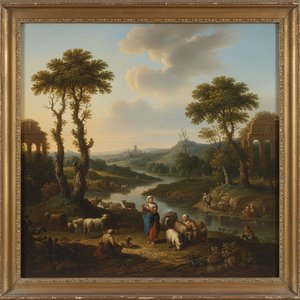
Italian Landscape
 Oil On Canvas
- WallArt
- Italianate Landscape
 31.0 x 40.0 cm
 Fitzwilliam College
 Ver más
Giclée / Impresión de arte
Impresiones giclée o en lienzo de calidad de museo con producción rápida y opciones de acabado flexibles. ( Comprar pintura hecha a mano Cambiar a imagen digital)




P118B €10

P118H €10

P118W €10

P438Z €10

P508JH €12

P508YH €12

P805H €10

P805Z €10

P919BZ €10

P919G €10

P919XJ €10

P959ZH €10

P968JZ €12

W106C €8

W218G €10

W218JH €8

W218Y €10

W307PJ €10

W316G €10

W316PJ €8

W316Y €10

W398PJ €8

W4111J €10

W500HY €15

W500JH €15

W692G €12

W849H €8

W940BG €15

W953PJ €8




Elija entre nuestros tamaños predefinidos que respetan las proporciones originales de la obra.

Introduzca el ancho y el alto que necesite para adaptarse a su marco o pared. Una impresión solo puede recortarse, nunca hacerse más grande que la imagen original, por lo que un tamaño con una forma distinta perderá parte de la obra. Le enviaremos una maqueta digital para su aprobación antes de realizar cualquier impresión. La imagen que se muestra en esta página no refleja el recorte real; solo la maqueta lo hace.
Envío a todo el mundo () en 2 semanas en lugar de las 4/5 semanas estándar. (26 octubre)

Envío exprés gratuito a todo el mundo

Lienzo de lino de alta calidad

Seguro de envío total

Garantía de reembolso de aranceles aduaneros

Garantía de fidelidad cromática exacta

Política de devolución de 100 días (solo por defectos)

Garantía de devolución del 100% del dinero

Descuento por cantidad
 La opción de vidrio solo está disponible en tamaños inferiores a 110 cm.

Italian Landscape
Giclée / Impresión de arte
Dimensiones de la reproducción
-


Precio total final
€ 70
A Glimpse of Italian Pastoral: Jan Asselijn’s “Italian Landscape”
Jan Asselijn's "Italian Landscape," painted circa 1625-1652, isn’t merely a depiction of a picturesque vista; it’s an invitation to step into a carefully constructed world of serene beauty and subtle drama. This oil on canvas transports the viewer to a hypothetical Italian landscape – a deliberate choice by Asselijn that speaks volumes about the evolving artistic sensibilities of the Dutch Golden Age. The painting, now housed in collections like Bonhams, exemplifies the influence of both the Venetian masters and the burgeoning tradition of “pure” landscape painting emerging from Italy itself.
Asselijn’s style is distinctly characterized by a meticulous attention to detail and a masterful command of atmospheric perspective. He leans heavily into the techniques pioneered by Bamboccio – a contemporary painter known for his evocative, almost dreamlike landscapes – creating an image that feels both familiar and subtly unsettling. The composition unfolds with deliberate grace: a modest, classically-inspired building anchors the left foreground, its geometric solidity providing a grounding element against the undulating hills and hazy distance. The artist skillfully employs a muted palette of browns, ochres, and blues, avoiding bright colors to emphasize the painting’s contemplative mood. This restrained approach allows the subtle shifts in tone – from the dark shadows cast by distant trees to the luminous highlights reflecting off water – to create a remarkably convincing sense of depth and atmosphere.
The Influence of Venetian Masters and Italianate Tradition
Asselijn's work is deeply rooted in the artistic currents flowing through Italy at the time. He was profoundly influenced by the Venetian landscape painters, particularly those who favored a looser, more atmospheric style than their predecessors. However, unlike many of his contemporaries who simply copied Italian scenes directly, Asselijn imbued them with a distinctly Dutch sensibility – a focus on light, texture, and a carefully considered composition. This blending of influences is evident in the painting’s balanced structure, its subtle use of color, and its overall sense of quiet contemplation.
Furthermore, “Italian Landscape” reflects the broader trend toward what became known as "Italianate landscape" within Dutch art circles. This style sought to emulate the idealized landscapes depicted by artists like Claude Lorrain, who had established a dominant visual language for representing Italian scenery in Northern Europe. Asselijn’s painting isn't a literal transcription of an Italian vista; rather, it’s a carefully constructed fantasy – a “imaginary Italian Landscape” as described in some historical sources – designed to evoke the spirit and beauty of Italy while adhering to Dutch artistic conventions.
Symbolism and Emotional Resonance
Beyond its technical merits, "Italian Landscape" is rich in symbolic meaning. The solitary building, often interpreted as a villa or farmhouse, suggests themes of rural life, tranquility, and perhaps even isolation. The distant mountains, shrouded in mist, evoke a sense of mystery and the sublime – a recognition of nature’s power and grandeur. The figures scattered across the foreground, riding horses and walking along the riverbank, add a touch of human presence to the scene, reminding us of our connection to the natural world.
The painting's overall effect is one of profound serenity and contemplative beauty. It invites the viewer to slow down, to appreciate the subtle details of the landscape, and to lose themselves in its timeless atmosphere. It’s a testament to Asselijn’s skill as an artist – his ability to capture not just the appearance of a scene but also its emotional essence.
A Reproduction for Today's Spaces
Reproductions of “Italian Landscape” offer a beautiful addition to any interior space. The painting’s calming colors and evocative imagery create a sense of tranquility and sophistication, making it ideal for living rooms, bedrooms, or studies. The detailed depiction of the landscape invites contemplation and provides a visual connection to the natural world – a welcome respite from the stresses of modern life. Consider framing this piece in a classic wooden frame to further enhance its timeless appeal.
Preguntas y respuestas
¿Qué paleta de colores y qué emoción evocan "Italian Landscape"?
La paleta Dark de "Italian Landscape" de Jan Asselyn armoniza con su tono emocional Melancholic. El color es una de las formas en que una obra transmite sentimiento.
¿Qué tema y atmósfera combina "Italian Landscape" de Jan Asselyn?
"Italian Landscape" muestra landscape, figures, ruin, italy, asselijn, pastoral, tranquility, scenic, y su atmósfera es Calm.
¿Es "Italian Landscape" de Jan Asselyn una obra de tonos claros u oscuros?
En términos generales, "Italian Landscape" presenta una luminosidad de shadow. La luminosidad percibida describe qué tan clara u oscura parece la obra.
Biografía del artista
A Life Forged in Landscape: The World of Jan Asselijn
Born Jean Asselin around 1610 in Dieppe, France, Jan Asselijn’s life unfolded against the backdrop of a turbulent era – the waning years of religious conflict and the burgeoning brilliance of the Dutch Golden Age. His family, Huguenots fleeing persecution, relocated to Amsterdam in 1621, immersing young Jean into a cosmopolitan city brimming with artistic ambition and intellectual ferment. This pivotal move instilled within him an appreciation for landscape painting’s evolving trajectory away from mere representation toward expressions of emotion and atmosphere – a path that would define his artistic vocation. Initially apprenticed under Jan Martszen the Younger, Asselijn honed his skills in battle scenes before discovering his true passion: capturing the grandeur and drama of both natural vistas and animal life with unparalleled sensitivity.The Italianate Embrace & The Bentvueghels
Like many ambitious Northern European painters of his time, Asselijn recognized the transformative potential of artistic pilgrimage to Italy. Around 1635 he embarked on this journey, immersing himself in the vibrant cultural landscape of Rome and encountering artists who profoundly shaped his aesthetic sensibilities. He joined the *Bentvueghels*, a remarkable society of Dutch and Flemish painters operating in Rome – “Birds of a Feather” united by unconventional behavior, satirical nicknames, and an unwavering commitment to painting directly from observation. Rejecting studio conventions, these artists championed spontaneity and embraced the challenge of conveying immediacy. Within this stimulating environment, Asselijn earned the moniker "Krabbetje" ("little crab") due to a physical disability affecting his hand – a detail that subtly acknowledged the limitations imposed upon him yet fueled his determination to excel creatively. He absorbed the influence of Pieter van Laer (Bamboccio), whose depictions of Roman peasant life and landscapes resonated deeply with Asselijn’s developing style, fostering an appreciation for nuanced observation and expressive brushwork. This formative period cemented his ability to infuse his canvases with palpable atmosphere and narrative depth.Mastering Light & Symbolism: Key Works
Upon returning to Amsterdam in 1640, Asselijn established himself as a respected artist, characterized by meticulous technique and a distinctive artistic vision. His paintings are distinguished by an exceptional command of light – a hallmark of the Dutch Golden Age that he skillfully employed to heighten emotional impact and convey visual splendor. While he produced historical and battle scenes reflecting his early training, it was his landscapes and animal depictions that cemented his reputation as one of the era’s foremost innovators. The Threatened Swan, completed around 1645, stands as Asselijn's most celebrated masterpiece – a poignant allegory for Dutch resilience during times of crisis. More than just a depiction of avian defense, this painting became a powerful symbol of national resistance against external threats and was interpreted as an emblem of Johan de Witt’s leadership. The swan’s defiant posture, confronting adversity with unwavering determination, captured the anxieties of the period and resonated powerfully with viewers. Further enriching his artistic repertoire were works like Cavalry Attack at Sunset, showcasing his formative training in battle painting with dramatic precision, and evocative portrayals of rural life – notably The Breach of the Saint Anthony’s Dike near Amsterdam – which brilliantly captured a moment of national peril and demonstrated Asselijn's ability to convey urgency and visual dynamism.Influence & Legacy: A Lasting Impression
Jan Asselijn’s artistic legacy extended beyond his own prolific output, influencing subsequent generations of painters. He was admired by Rembrandt van Rijn, who even created etchings depicting Asselijn at work – a gesture that subtly acknowledged the artist's physical impairment while simultaneously recognizing his exceptional talent. Notably, Rembrandt’s etching captures Asselijn’s hand obscured, reflecting a sensitivity to disability within the artistic milieu of the time. He served as a mentor to Frederik de Moucheron, fostering an appreciation for naturalistic observation and expressive brushwork—a contribution that ensured Asselijn's stylistic innovations endured. His works are now housed in prestigious collections such as the Rijksmuseum in Amsterdam, guaranteeing his enduring significance within Dutch art history. Jan Asselijn died peacefully in 1652, leaving behind a body of work that continues to captivate audiences with its beauty, psychological depth, and subtle layers of symbolism—a testament to his profound impact on the artistic landscape of the seventeenth century.
Jan Asselyn
1610 - 1652 , Francia
Datos clave
- Artistic Movement Or Style: Italianate paisaje
- Artists Or Movements Influenced By This Artist: ['Frederick de Moucheron']
- Artists Who Influenced This Artist:
- Esaias van de Velde
- Rembrandt
- Date Of Birth: Dieppe, Francia
- Date Of Death: 1652
- Full Name: Jan Asselin
- Nationality: Holandés
- Notable Artworks:
- El Cisne Amenazado
- El ataque de caballería al atardecer
- Place Of Birth: Amsterdam
Artículos relacionados

Mastering Light & Land: An Art Historian's Guide to the Dutch Golden Age Landscape
Explore the breathtaking mastery of Dutch Golden Age landscapes. From Italianate light to atmospheric realism, discover the techniques of 17th-century masters and learn how to bring these timeless, museum-quality masterpieces into your home through expert oil reproductions.

Los 10 Maestros del Siglo de Oro Holandés: Arte, Historia y Decoración Exclusiva
Descubre los 10 imprescindibles del Siglo de Oro Holandés: Rembrandt, Vermeer y más. Explora la historia, técnica y belleza de estos lienzos clásicos. Encuentra reproducciones de arte exclusivas para decorar tu hogar en .

Golden Light & Dutch Skies: The Timeless Magic of Dutch Golden Age Landscapes
Discover the breathtaking beauty of Dutch Golden Age landscapes. Explore the mastery of light, chiaroscuro, and 17th-century realism through an expert art history lens, celebrating the enduring legacy of the Dutch Masters for discerning collectors and art lovers.

Golden Light & Dutch Skies: Bringing the Magic of Dutch Golden Age Landscapes into Your Home
Transform your home with the breathtaking light of Dutch Golden Age landscapes. Discover how hand-painted oil reproductions of masterworks like Ruisdael and Vermeer bring timeless elegance, atmosphere, and soulful texture to modern interiors. Elevate your space with museum-quality art.
Nicolaes Berchem: Dutch Golden Age Pastoralism & the Evolution of Landscape Painting
Explore the captivating world of Nicolaes Berchem, a leading Dutch Golden Age painter. Discover his idyllic landscapes, masterful technique & lasting influence on art history. Learn more at OriginalUniqueArt.


