

 Ver en contexto
 Enviar
 Compartir
 Detalles
 Guía
Guía

 Descargar
 Similares
 Radiografía
 Presentación de diapositivas
 Q&A
Q&A Estadísticas
Eagle, a Celebrated Stallion
 Oil On Canvas
- WallArt
- Romantic Landscape
 1809
1809- 19th Century
 91.0 x 122.0 cm
 Yale Center for British Art
 Ver más
Reproducción al óleo hecha a mano
Óleo sobre lienzo pintado a mano en el tamaño y marco de su elección, realizado por encargo por nuestros artistas. ( Cambiar a impresiones Cambiar a imagen digital)




P118B €10

P118H €10

P118W €10

P438Z €10

P508JH €12

P508YH €12

P805H €10

P805Z €10

P919BZ €10

P919G €10

P919XJ €10

P959ZH €10

P968JZ €12

W106C €8

W218G €10

W218JH €8

W218Y €10

W307PJ €10

W316G €10

W316PJ €8

W316Y €10

W398PJ €8

W4111J €10

W500HY €15

W500JH €15

W692G €12

W849H €8

W940BG €15

W953PJ €8




Elija entre nuestros tamaños predefinidos que respetan las proporciones originales de la obra.

Indique el ancho y el alto que necesite para adaptarse a su marco o pared. Al tratarse de una obra pintada a mano, si requiere un tamaño con una proporción distinta, el artista puede pintar un poco más alrededor de la imagen o recortarla ligeramente; usted elige. Le enviaremos una maqueta digital para su aprobación antes de comenzar la pintura. La imagen que se muestra en esta página no refleja el resultado real; solo la maqueta lo hace.
Tras realizar el pedido, el equipo de OriginalUniqueArt.com enviará un correo electrónico al cliente para solicitar instrucciones y proporcionarle una vista previa del boceto.
Envío a todo el mundo () en 3-4 semanas en lugar de las 5 semanas estándar. (29 octubre). Sin comprometer la calidad.

Envío exprés gratuito a todo el mundo

Lienzo de lino de alta calidad

Seguro de envío total

Garantía de reembolso de aranceles aduaneros

Garantía de fidelidad cromática exacta

Política de devolución de 100 días (solo por defectos)

Garantía de devolución del 100% del dinero

Descuento por cantidad
 La opción de vidrio solo está disponible en tamaños inferiores a 110 cm.

Eagle, a Celebrated Stallion
Técnica de reproducción
Dimensiones de la reproducción
-


Precio total final
€ 264
The Spirit of Equestrian Majesty
In the realm of British Romanticism, few images capture the raw, untamed essence of nature as profoundly as James Ward’s “Eagle, a Celebrated Stallion.” This masterpiece is not merely a portrait of an animal; it is a visceral encounter with power and grace. The painting presents a magnificent brown and white stallion standing prominently in a verdant field, its head lifted toward the heavens in a moment of sublime alertness. As the eye wanders through the composition, one discovers other horses resting in the distance, adding a sense of depth and pastoral life to the scene. The atmosphere is thick with emotion, driven by a dramatic, cloudy sky that casts shifting lights and shadows across the landscape, enveloping the subject in a cinematic, almost spiritual glow.
Ward’s technique serves as a bridge between meticulous realism and an almost prophetic atmospheric sensitivity. He employs a masterful blend of tonal painting and detailed rendering, particularly evident in the way he captures the muscular tension and texture of the horse's coat. There is a palpable energy in his brushwork that anticipates the fluidity of later movements, allowing the viewer to feel the very breath of the animal. The interplay of light through the heavy clouds creates a sense of movement within the stillness, making the field feel alive with the quiet drama of the natural world.
Symbolism and the Romantic Vision
Beyond its physical beauty, “Eagle, a Celebrated Stallion” functions as a profound meditation on virtue and strength. Within the context of the era, the name "Eagle" and the horse's noble posture evoke themes of vigilance, nobility, and dominion. The stallion becomes an emblem of much more than biological reality; it represents a soaring spirit that mirrors the Romantic fascination with the sublime. The landscape itself—a tranquil yet powerful setting—symbolizes the harmonious, albeit wild, connection between all living things. For the discerning collector or interior designer, this work offers a commanding presence that transcends mere decoration.
To possess a reproduction of this work is to invite a sense of historical grandeur and emotional depth into a space. It provides an anchor of classical elegance, suitable for those seeking to evoke the sophisticated atmosphere of a traditional gallery or a refined contemporary study. The painting’s ability to communicate both the quietude of a pastoral afternoon and the thundering potential of a powerful beast ensures that it remains a timeless centerpiece, inspiring contemplation and awe in any setting.
Preguntas y respuestas
¿Cuáles son las dimensiones de la obra original "Eagle, a Celebrated Stallion"?
"Eagle, a Celebrated Stallion" mide 91 x 122 cm en su formato original. Las dimensiones originales son una referencia útil al elegir el tamaño de una reproducción.
¿Qué técnica se utilizó para "Eagle, a Celebrated Stallion" de James Ward?
James Ward utilizó la técnica de Oil On Canvas para "Eagle, a Celebrated Stallion". La técnica define la naturaleza material de la obra original.
¿A qué estilo pertenece "Eagle, a Celebrated Stallion"?
"Eagle, a Celebrated Stallion" de James Ward pertenece al movimiento Romantic Landscape. Este movimiento aporta el contexto estilístico de la obra.
Biografía del artista
James Ward: Una Vida en el Arte Británico
James Ward (1769-1859) fue un prominente pintor británico reconocido por sus cautivadoras pinturas de animales, paisajes románticos e introspectivos retratos. Aunque a menudo eclipsado por sus contemporáneos, su estilo y habilidad únicos impactaron significativamente el desarrollo del arte británico durante el siglo XIX.
Primeros Años y Formación
Nacido el 23 de octubre de 1769 en Londres, Reino Unido, James Ward era el hermano menor del grabador William Ward. Sus primeras inclinaciones artísticas fueron fomentadas dentro de un entorno familiar creativo. Si bien recibió algo de formación formal, su desarrollo fue en gran medida autodirigido e influenciado fuertemente por la observación y la práctica.
Desarrollo Artístico & Influencias
La carrera de Ward se divide convencionalmente en dos períodos distintos con respecto a la influencia. Inicialmente, hasta alrededor de 1803, su obra guardaba un fuerte parecido al de su cuñado, George Morland, caracterizada por escenas de género y un enfoque en la vida cotidiana. Tras este período, se inspiró profundamente en el maestro barroco Peter Paul Rubens, adoptando una composición más dinámica, una rica paleta de colores y un uso dramático de la luz y la sombra.
Obras Notables & Estilo Artístico
El estilo singular de Ward lo distinguió de muchos contemporáneos. Se destacó en varios géneros, incluyendo pintura histórica, retrato, paisaje y arte animal. Algunas de sus obras más celebradas incluyen:
- Gordale Scar (1814/15): Considerada su obra maestra, esta dramática representación de una garganta del Yorkshire ejemplifica las cualidades sublimes del Romanticismo inglés.
- The Deer Stealer (1823): Encargado por Theophilus Levett, este cuadro muestra la habilidad de Ward en la narrativa y la representación animal.
- John Levett Hunting at Wychnor, Staffordshire (1817): Un retrato de uno de sus mecenas, que demuestra su capacidad para capturar tanto el parecido como la atmósfera.
Sus pinturas se caracterizan por una meticulosa atención al detalle, particularmente en la representación de animales, combinada con una sensibilidad romántica que enfatiza la belleza y el poder de la naturaleza.
Comisiones & Exposiciones
Ward disfrutó del patrocinio de figuras prominentes como Theophilus Levett, lo que llevó a numerosas comisiones. Exhibió regularmente su obra en la Royal Academy, obteniendo reconocimiento por su habilidad y originalidad. Su admisión como miembro en 1811 consolidó su posición dentro del establecimiento artístico británico.
Últimos Años & Legado
Ward continuó pintando prolíficamente hasta que un derrame cerebral en 1855 truncó su carrera. Falleció el 17 de noviembre de 1859, en relativa pobreza a pesar de su éxito anterior.
A pesar de enfrentar dificultades financieras más adelante en la vida, la influencia de James Ward en el arte británico sigue siendo innegable. Su mezcla única de realismo y romanticismo allanó el camino para futuras generaciones de pintores de animales y artistas paisajistas. Sus obras ahora se conservan en prestigiosas colecciones como Tate Britain y el Yale Center for British Art.
Significado Histórico
James Ward ocupa una posición significativa dentro de la transición de la era Neoclásica a la Romántica en el arte británico. Cerró la brecha entre la pintura de género tradicional y el creciente interés por el paisaje y el naturalismo, dejando atrás un legado de obras cautivadoras que continúan inspirando y deleitando.

James Ward
1769 - 1859 , Reino Unido
Datos clave
- Artistic Movement Or Style: Romanticismo
- Artists Or Movements Influenced By This Artist:
- James Cook University Hospital
- La Fundación James H.W. Thompson
- Artists Who Influenced This Artist:
- George Morland
- Rubens
- Date Of Birth: 23 octubre 1769
- Date Of Death: 17 noviembre 1859
- Full Name: James Ward
- Nationality: Británico
- Notable Artworks:
- Gordale Scar
- El Venado Cazado
- Place Of Birth: Londres, Reino Unido
Artículos relacionados

John Constable: Las 25 Obras Maestras del Paisaje Inglés | OriginalUniqueArt
Descubre las 25 obras maestras de John Constable, el pintor romántico inglés que capturó la belleza del paisaje. Explora su técnica, historia y significado en OriginalUniqueArt.com. Reproducciones de arte de alta calidad para tu hogar.

Paisajes Románticos: 10 Obras Maestras que Definieron un Movimiento Artístico
Descubre los 10 paisajes románticos más influyentes de artistas como Caspar David Friedrich y Turner. Explora la belleza, el simbolismo y las técnicas del movimiento romántico. Reproducciones de arte exclusivas en OriginalUniqueArt.com.
Animalia: Explorando la Presencia Duradera de los Animales en el Arte y el Diseño de Interiores
Descubre la fascinante historia de los animales en el arte y cómo inspirar tu hogar con su simbolismo. Expertos en reproducciones y asesoramiento artístico.

Alfred Munnings: Las 25 Obras Maestras del Pintor de Caballos | OriginalUniqueArt
Descubre las 25 obras maestras de Alfred Munnings, el pintor británico de caballos por excelencia. Explora su impresionismo inglés, escenas campestres y técnica única. Encuentra reproducciones de arte de alta calidad en OriginalUniqueArt.com.
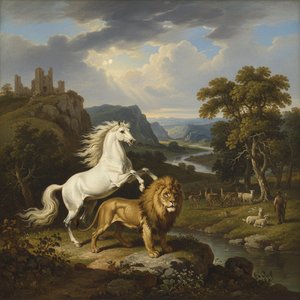
James Ward: A Study in British Romantic Landscape and Animal Painting
Explore the captivating world of James Ward (1769-1859), a master of British Romantic landscape & animal painting. Discover his iconic 'Gordale Scar' and exquisite portraits – a timeless art investment. Learn about his influences, style, and enduring legacy.


