
 Ver en contexto
 Enviar
 Compartir
 Detalles
 Guía
Guía

 Descargar
 Similares
 Radiografía
 Presentación de diapositivas
 Preguntas y respuestas
 Estadísticas
Still Life with Fruit


 Ver más
Giclée / Impresión de arte
Impresiones giclée o en lienzo de calidad de museo con producción rápida y opciones de acabado flexibles. ( Comprar pintura hecha a mano Cambiar a imagen digital)




P118B €10

P118H €10

P118W €10

P438Z €10

P508JH €12

P508YH €12

P805H €10

P805Z €10

P919BZ €10

P919G €10

P919XJ €10

P959ZH €10

P968JZ €12

W106C €8

W218G €10

W218JH €8

W218Y €10

W307PJ €10

W316G €10

W316PJ €8

W316Y €10

W398PJ €8

W4111J €10

W500HY €15

W500JH €15

W692G €12

W849H €8

W940BG €15

W953PJ €8




Elija entre nuestros tamaños predefinidos que respetan las proporciones originales de la obra.

Introduzca el ancho y el alto que necesite para adaptarse a su marco o pared. Una impresión solo puede recortarse, nunca hacerse más grande que la imagen original, por lo que un tamaño con una forma distinta perderá parte de la obra. Le enviaremos una maqueta digital para su aprobación antes de realizar cualquier impresión. La imagen que se muestra en esta página no refleja el recorte real; solo la maqueta lo hace.
Envío a todo el mundo () en 2 semanas en lugar de las 4/5 semanas estándar. (4 noviembre)

Envío exprés gratuito a todo el mundo

Lienzo de lino de alta calidad

Seguro de envío total

Garantía de reembolso de aranceles aduaneros

Garantía de fidelidad cromática exacta

Política de devolución de 100 días (solo por defectos)

Garantía de devolución del 100% del dinero

Descuento por cantidad
 La opción de vidrio solo está disponible en tamaños inferiores a 110 cm.

Still Life with Fruit
Giclée / Impresión de arte
Dimensiones de la reproducción
-


Precio total final
€ 72
A Symphony of Color and Form: James Peale’s Still Life with Fruit
James Peale's Still Life with Fruit, painted circa 1821, is more than just a depiction of perishable bounty; it’s a meticulously crafted window into the burgeoning aesthetic sensibilities of early America. This remarkable work, now housed within the collections of museums and art institutions worldwide, reveals a masterful blend of Neoclassical restraint and Baroque exuberance – a testament to Peale's artistic versatility and his deep understanding of both European traditions and the evolving American visual landscape.
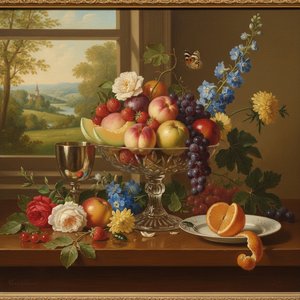
The painting immediately captivates with its rich palette. Deep crimson peaches glow alongside the vibrant yellows of ripe pears, while the verdant greens of grapes and leafy foliage provide a grounding counterpoint. Peale’s technique is characterized by an almost obsessive attention to detail; each fruit is rendered with astonishing realism – the subtle variations in skin texture, the delicate veins tracing across leaves, even the slight imperfections that speak to their natural origins. This commitment to accuracy wasn't merely technical; it reflected a broader fascination with the natural world prevalent during this period, fueled by advancements in scientific observation and botanical illustration.
The Miniature Master’s Grand Vision
While often associated with his exquisite miniature portraits – a genre where Peale truly excelled – Still Life with Fruit demonstrates his ambition to tackle larger-scale works. This shift reflects a growing interest in still life painting within the American art world, influenced by European trends and a desire to elevate the status of decorative arts. Peale’s background as a cabinetmaker undoubtedly informed his approach; he clearly valued craftsmanship and sought to imbue his paintings with a sense of tactile richness. The arrangement of the fruit itself is carefully considered – a deliberate composition designed to draw the eye across the canvas, creating a dynamic visual rhythm.
Interestingly, Peale’s career was punctuated by military service during the American Revolution, an experience that instilled in him a disciplined approach to observation and execution. This dedication translates into the painting's remarkable clarity and precision. The lighting is particularly noteworthy – a dramatic chiaroscuro effect that casts deep shadows and highlights the luminous surfaces of the fruit, adding depth and drama to the scene.
Symbolism and the American Spirit
Beyond its technical merits, Still Life with Fruit carries symbolic weight. Fruit, in this context, represents abundance, prosperity, and the rewards of labor – themes deeply resonant within the developing American identity. The variety of fruits—peaches, pears, grapes—suggests a connection to the land and a celebration of its bounty. It’s a visual affirmation of the nation's potential for growth and success.
Furthermore, the painting can be viewed as an embodiment of Neoclassical ideals – order, balance, and harmony. The carefully arranged composition, the restrained color palette, and the meticulous rendering of detail all contribute to this sense of formal elegance. However, Peale subtly infuses this formality with a touch of Baroque exuberance—the dramatic lighting, the rich colors, and the sheer abundance of fruit create an atmosphere of opulent delight.
A Timeless Appeal
Still Life with Fruit remains a captivating work of art, offering a glimpse into the artistic and cultural landscape of early America. Its meticulous detail, evocative symbolism, and masterful technique continue to resonate with viewers today. Whether admired for its historical significance or simply appreciated for its aesthetic beauty, this painting stands as a testament to James Peale’s artistry and his enduring legacy.
Preguntas y respuestas
¿De qué manera el estilo de "Still Life with Fruit" se relaciona con la época de su creador?
En "Still Life with Fruit" de James Peale, el movimiento Academic Realism se funde con la era Edad Moderna.
¿Con qué otros nombres se conoce a James Peale?
James Peale también es conocido por los nombres Charles Willson Peale, Raphaelle Peale, Rembrandt Peale.
¿Qué armonía cromática presenta "Still Life with Fruit" de James Peale?
La armonía cromática de "Still Life with Fruit" se describe como Strong Color Unity.
Biografía del artista
Una vida grabada en miniatura y quietud
James Peale, nacido en el floreciente paisaje colonial de Chestertown, Maryland, en 1749, ocupa una posición fascinante y, a menudo, sutil dentro del panteón del arte temprano estadounidense. Aunque la fama de su hermano mayor, Charles Willson Peale —una figura fundamental en el establecimiento de una identidad artística auténticamente americana— lo eclipsó en ocasiones, James forjó una carrera distinguida, marcada por delicadas miniaturas, luminosos bodegones y una silenciosa dedicación a capturar la esencia de su época. Su historia vital es un tejido donde se entrelazan el legado familiar, el servicio militar y una búsqueda persistente del refinamiento artístico. La temprana pérdida de su padre impulsó a la familia hacia Annapolis, donde el joven James se formó inicialmente en oficios prácticos, como la talabartería y la ebanistería; experiencias que, quizás, sembraron en él un profundo aprecio por el detalle meticuloso y la maestría artesanal, cualidades que más tarde definirían su enfoque artístico. Fue tras el regreso de Charles desde Londres, después de haber estudiado con Benjamin West, cuando James encontró su verdadera vocación, convirtiéndose en asistente de su hermano y emprendiendo el camino de una formación artística formal.Del campo de batalla a la pincelada
El creciente fervor revolucionario alteró drástmanente el curso de la vida de Peale. En 1776, cambió el pincel por el mosquete, aceptando el encargo de servir como alférez en el regimiento de William Smallwood dentro del Ejército Continental. Este no fue un mero gesto patriótico; fue un periodo de experiencias intensas que influirían sutilmente en su obra posterior. Ascendió rápidamente de rango hasta alcanzar la posición de capitán, participando en batallas cruciales —Long Island, White Plains, Trenton, Brandywine, Germantown, Princeton y Monmouth—, siendo testigo directo de las penurias y el heroísmo de la Revolución Americana. Este servicio militar le inculcó no solo valor, sino también una aguda capacidad de observación, esa facultad de registrar el detalle bajo presión, cualidades que le serían de gran utilidad en el retrato y el bodegón. Tras renunciar a su comisión en 1779, regresó a Filadelfia para reintegrarse al estudio de Charles, pero poseyendo ahora una perspectiva ampliada por las realidades de la guerra y la construcción de una nación. En 1788, realizó una notable colaboración con su hermano al diseñar carrozas para una gran procesión que celebraba la recién ratificada Constitución de los Estados Unidos, un testimonio de su compromiso compartido con los ideales de la nueva república.Un legado de delicada destreza
El desarrollo artístico de Peale se vio significativamente influenciado por la decisión de su hermano de abandonar la práctica del retrato en miniatura, lo que permitió a James dedicarse plenamente a esta exigente forma de arte. A lo largo de la década de 1790 y principios de los años 1800, se convirtió en un maestro de la acuarela sobre marfil, creando retratos exquisitamente detallados que capturaban no solo el parecido físico, sino también una sensación de personalidad y estatus social. Estas miniaturas eran muy codiciadas, reflejando la creciente demanda de representaciones íntimas y accesibles de los individuos dentro de la sociedad estadounidense. Sin embargo, el talento de Peale no se limitó a la miniatura. Sobresalió en las composiciones de bodegones, particularmente en aquellas que presentaban frutas, demostrando una capacidad excepcional para representar texturas, luz y forma con un realismo notable. Cuando su visión comenzó a declinar alrededor de 1810, transitó hacia retratos y bodegones de mayor escala, lo que le permitió continuar trabajando a pesar de los desafíos de una vista menguante. Sus obras tardías se caracterizan por una audacia en la ejecución y un compromiso inquebrantable con el detalle meticuloso.Una familia de artistas y una influencia perdurable
El legado artístico de la familia Peale se extiende mucho más allá del propio James. Se casó con Mary Claypoole en 1782, estableciendo su propio hogar y fomentando un entorno que nutrió la creatividad. Sorprendentemente, tres de sus seis hijos —Anna Claypoole Peale, Margaretta Angelica Peale y Sarah Miriam Peale— también se convirtieron en pintoras consumadas, cada una especializándose en géneros distintos pero todas heredando la dedicación de su padre hacia la excelencia artística. Maria Peale también se dedicó a la pintura, aunque con un reconocimiento menos extendido que el de sus hermanas. Esta constelación familiar de artistas subraya la importancia de la mentoría y la transmisión de habilidades dentro de los círculos del arte temprano en América. La obra de James Peale, aunque a menudo eclipsada por la de su hermano Charles y la de sus talentosas hijas, sigue siendo una contribución significativa al desarrollo de la identidad artística estadounidense. Él capturó un momento crucial de la historia —el nacimiento de una nación— a través de retratos que documentaron a sus ciudadanos y bodegones que celebraron la abundancia de su tierra. Su legado reside no solo en la belleza y la técnica de sus pinturas, sino también en la influencia perdurable que ejerció sobre generaciones de artistas, tanto dentro de su familia como más allá. Falleció en Filadelfia en 1831, dejando tras de sí una obra que continúa resonando en los espectadores de hoy.
James Peale
1749 - 1831 , Estados Unidos
Datos clave
- Artistic Movement Or Style: Bodegón
- Artists Or Movements Influenced By This Artist: ['John Singleton Copley']
- Artists Who Influenced This Artist: ['Charles Willson Peale']
- Date Of Birth: 1749
- Date Of Death: 1831
- Full Name: James Peale
- Nationality: American
- Notable Artworks: ['Still Life with Watermelon']
- Place Of Birth: Chestertown, Maryland
Artículos relacionados

Las 25 mejores obras de Sir Alfred James Munnings: Maestría y elegancia ecuestre
Explora las 25 obras maestras de Sir Alfred James Munnings y su arte ecuestre. ¡Descubre toda la colección en OriginalUniqueArt.com!

James Abbott McNeill Whistler: Las 25 Obras Maestras del Maestro del Arte y la Atmósfera | OriginalUniqueArt
Descubre las 25 obras maestras de James Abbott McNeill Whistler, el maestro del impresionismo y la armonía en arte. Explora retratos icónicos, nocturnos evocadores y su innovadora paleta de colores. Reproducciones de arte exclusivas en OriginalUniqueArt.com.
Severin Roesen: Evoking National Identity Through American Still Life Painting
Explore the captivating world of Severin Roesen, a major American still life painter influenced by Dutch masters. Discover his lush compositions and the symbolism within his art – a window into 19th-century America.

Charles Willson Peale: Portraiture, Enlightenment Ideals & Shaping American Identity
Explore the life & art of Charles Willson Peale – Revolutionary portraitist, scientist, and founder of America’s first museum. Discover his iconic paintings of Washington & the Enlightenment ideals that shaped a nation.
Titian Ramsay Peale II: A Legacy of Botanical Precision & Artistic Innovation
Explore the life & art of Titian Ramsay Peale II, a master of botanical precision and wildlife painting. Discover his legacy bridging art & natural history at OriginalUniqueArt.


