
 Ver en contexto
 Enviar
 Compartir
 Detalles
 Guía
Guía

 Descargar
 Similares
 Radiografía
 Presentación de diapositivas
 Estadísticas
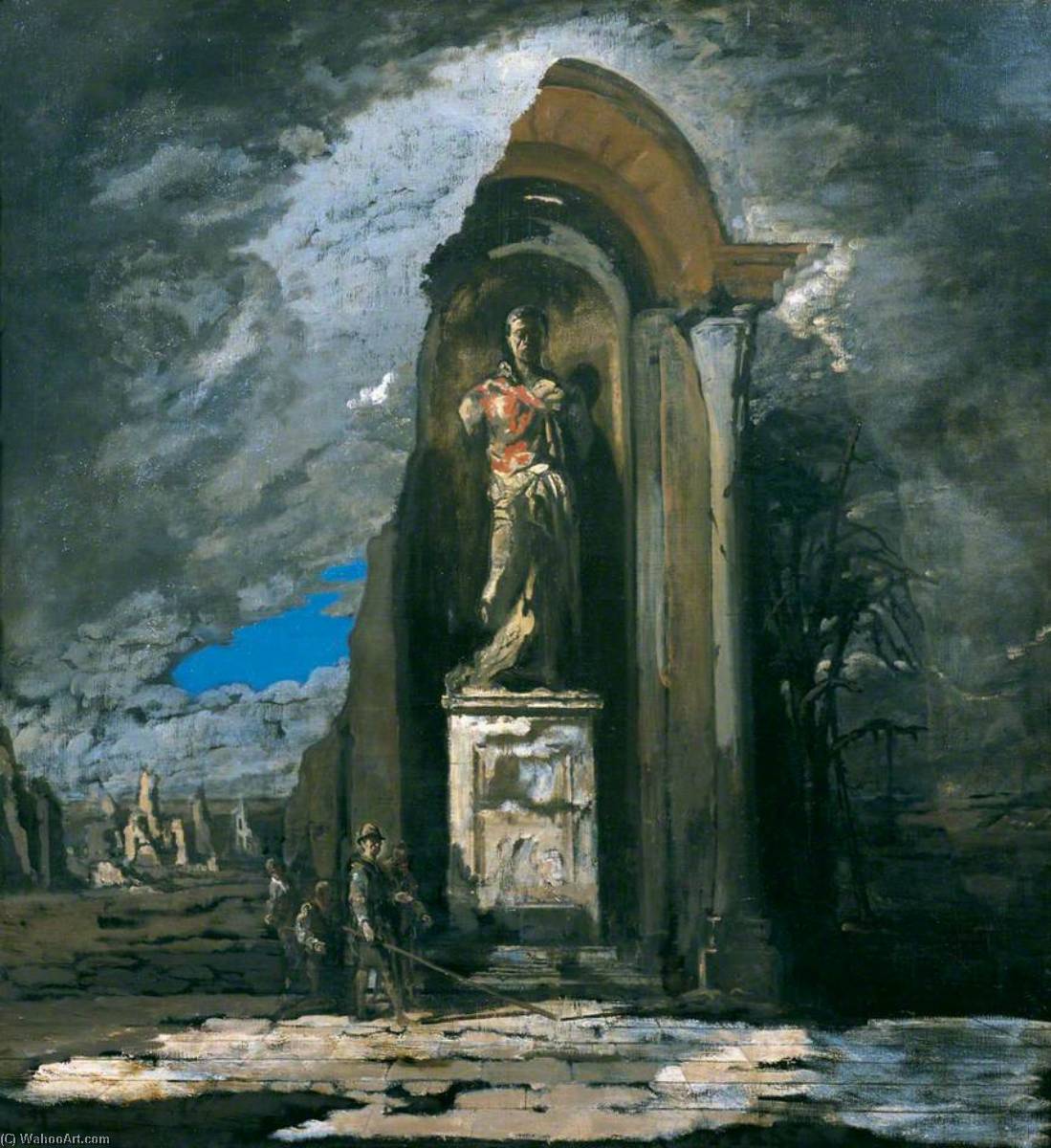
El Monumento
 Óleo sobre lienzo
- Arte de pared
- Glasgow School
 1917
1917 152.0 x 139.0 cm
 Colección de Arte del Gobierno
 Ver más
Giclée / Impresión de arte
Impresiones giclée o en lienzo de calidad de museo con producción rápida y opciones de acabado flexibles. ( Comprar pintura hecha a mano Cambiar a imagen digital)




P118B €10

P118H €10

P118W €10

P438Z €10

P508JH €12

P508YH €12

P805H €10

P805Z €10

P919BZ €10

P919G €10

P919XJ €10

P959ZH €10

P968JZ €12

W106C €8

W218G €10

W218JH €8

W218Y €10

W307PJ €10

W316G €10

W316PJ €8

W316Y €10

W398PJ €8

W4111J €10

W500HY €15

W500JH €15

W692G €12

W849H €8

W940BG €15

W953PJ €8




Elija entre nuestros tamaños predefinidos que respetan las proporciones originales de la obra.

Introduzca el ancho y el alto que necesite para adaptarse a su marco o pared. Una impresión solo puede recortarse, nunca hacerse más grande que la imagen original, por lo que un tamaño con una forma distinta perderá parte de la obra. Le enviaremos una maqueta digital para su aprobación antes de realizar cualquier impresión. La imagen que se muestra en esta página no refleja el recorte real; solo la maqueta lo hace.
Envío a todo el mundo () en 2 semanas en lugar de las 4/5 semanas estándar. (28 octubre)

Envío exprés gratuito a todo el mundo

Lienzo de lino de alta calidad

Seguro de envío total

Garantía de reembolso de aranceles aduaneros

Garantía de fidelidad cromática exacta

Política de devolución de 100 días (solo por defectos)

Garantía de devolución del 100% del dinero

Descuento por cantidad
 La opción de vidrio solo está disponible en tamaños inferiores a 110 cm.

El Monumento
Giclée / Impresión de arte
Dimensiones de la reproducción
-


Precio total final
€ 70
Una Monumental Alegoría de Esperanza en Piedra
La obra maestra de James Ferrier Pryde, "El Monolito", creada alrededor de 1916-1917, es mucho más que una representación visual; es un testimonio silencioso del espíritu artístico de la época y una profunda reflexión sobre el progreso humano. Esta impresionante pintura óleo sobre lienzo mide 152 x 139 cm y pertenece a la colección oficial del gobierno británico, ofreciendo una oportunidad única para apreciar la habilidad técnica y la visión artística del pintor escocés. El escenario elegido por Pryde es un edificio de piedra con arco triunfal, donde se alza majestuosamente un monolito de gran tamaño, símbolo de victoria y aspiración hacia lo alto. Una escalera ascendente guía los ojos del espectador hacia una escultura compleja que representa una figura femenina sosteniendo un niño, iluminada por una luz cálida y difusa que proyecta una atmósfera de solemnidad y esperanza. En el fondo se observan otros individuos, uno de ellos llevando un paraguas, añadiendo profundidad y movimiento a la composición. Pryde demuestra una maestría excepcional en la captura de detalles arquitectónicos y escultóricos, utilizando colores ricos y armoniosos para transmitir emociones poderosas. La pintura destaca por su estilo impresionista, caracterizado por pinceladas suaves y mezcladas que crean efectos luminosos y atmosféricos. Pryde emplea una técnica meticulosa para lograr una sensación realista pero también evocadora, buscando transmitir la belleza de la naturaleza y la fuerza del espíritu humano. Los colores predominantes son tonos cálidos como el dorado y el rojo oscuro, que refuerzan el mensaje simbólico de triunfo y renovación. La composición equilibrada y las líneas diagonales contribuyen a crear una sensación de movimiento ascendente hacia la luz y la verdad. Más allá de su belleza estética, "El Monolito" posee un significado profundo relacionado con el contexto histórico de la Primera Guerra Mundial. Esta obra fue creada durante un período de incertidumbre y desafío para Gran Bretaña, pero también representa una afirmación de valores fundamentales como la familia, la fe y la esperanza en un futuro mejor. El monolito simboliza la piedra angular del progreso humano, representando la fuerza necesaria para superar obstáculos y alcanzar objetivos elevados. Pryde invita al espectador a contemplar la obra con atención y sensibilidad, buscando comprender su mensaje universal sobre la importancia de la perseverancia y la confianza en sí mismo. La pintura sigue siendo una fuente de inspiración para artistas y diseñadores contemporáneos que buscan crear espacios llenos de belleza y significado. Su atmósfera evocadora y sus colores ricos ofrecen un punto de referencia perfecto para proyectos arquitectónicos y decoración interior, donde se puede transmitir una sensación de grandeza y armonía. Una reproducción de alta calidad permite apreciar los detalles más exquisitos de esta obra maestra del impresionismo británico, ofreciendo una oportunidad única para conectar con el espíritu artístico de principios del siglo XX.Preguntas y respuestas
¿Dónde se recomienda exhibir el formato Cuadrado de "El Monumento"?
Con su formato Cuadrado, se sugiere una reproducción de "El Monumento" para un Salón principal.
¿Es "El Monumento" más bien clara o más bien oscura en su conjunto?
"El Monumento" de James Ferrier Pryde presenta un nivel de brillo de sombra, con una luminancia de Sombra suave.
¿Qué tono emocional transmite el estilo Glasgow School de "El Monumento"?
La emoción Serenidad de "El Monumento" acompaña a su estilo Glasgow School.
Biografía del artista
James Ferrier Pryde (1866–1941): A Painter of Atmospheric Visions
James Ferrier Pryde (1866-1941) stands as a pivotal figure in the history of British art, particularly renowned for his groundbreaking collaboration with William Nicholson as “The Beggarstaffs” and his distinctive approach to architectural painting. Born in Edinburgh on December 4, 1866, into a family steeped in artistic heritage—his lineage tracing back to Robert Scott Lauder and James Eckford Lauder—Pryde’s formative years instilled within him an appreciation for creativity and intellectual stimulation. His father, David Pryde, served as headmaster of Edinburgh Ladies’ College, fostering a household valuing education and artistic pursuits. From a young age, Pryde demonstrated an innate talent for drawing and painting, nurtured by the encouragement of influential educators who recognized his potential.Early Artistic Training and Influences
Pryde’s formal artistic training commenced at the Royal Scottish Academy between 1885 and 1888, where he honed his skills under the tutelage of masters like James Guthrie and Edward Arthur Walton. These formative years exposed him to the prevailing stylistic currents of Glasgow School, shaping his initial artistic explorations and establishing a foundation for his subsequent endeavors. Beyond formal instruction, Pryde absorbed inspiration from diverse sources—including Whistler’s ethereal landscapes and Piranesi’s monumental architectural etchings—whose aesthetic sensibilities profoundly impacted his visual vocabulary. The influence of Bouguereau's meticulous realism served as another crucial element in developing Pryde’s artistic technique.The Beggarstaffs: Revolutionizing Poster Design
Pryde’s most celebrated partnership began in 1893 with William Nicholson, resulting in the formation of “The Beggarstaffs.” This alliance swiftly transformed the landscape of poster design, ushering in a new era characterized by bold compositions, striking imagery, and theatrical grandeur. Prior to The Beggarstaffs, posters were often cluttered and illustrative; Pryde and Nicholson deliberately stripped away superfluous ornamentation, prioritizing clarity and visual impact. Their designs transcended mere advertising—they functioned as artistic statements, elevating poster art from utilitarian necessity to a respected form of creative expression. Rejecting established conventions, they crafted works that captivated audiences with their arresting beauty and intellectual depth. The Beggarstaffs’ innovative approach extended beyond typography and illustration; they embraced dramatic lighting effects and compositional arrangements reminiscent of theatrical staging—a deliberate strategy aimed at maximizing visual impact and conveying emotion.Architectural Paintings: Exploring Mood and Scale
Pryde’s artistic passion centered around architectural paintings, where he pursued a singular vision—capturing not just the physical structure of buildings but also their emotional resonance and psychological significance. Unlike conventional depictions that prioritized accuracy, Pryde sought to evoke atmosphere and convey feeling through expansive brushwork and masterful use of light. His canvases frequently featured monumental structures dwarfing human figures, emphasizing our vulnerability against the grandeur of history and time—a motif directly influenced by Piranesi’s etchings. Pryde eschewed precise representation, prioritizing instead a subjective interpretation of space and emotion. He meticulously crafted scenes that felt like glimpses into dreamlike realms—hauntingly beautiful and subtly unsettling—reflecting his profound engagement with the psychological dimensions of art.Recognition and Legacy
Throughout his career, Pryde garnered acclaim from fellow artists and critics alike. His association with the International Society of Sculptors, Painters and Gravers solidified his position within the artistic community, while collaborations with luminaries like Edward Gordon Craig affirmed his talent as a painter—despite acknowledging limitations in theatrical performance. Pryde’s involvement in Edinburgh artistic circles ensured that he remained connected to the cultural landscape of his time. His paintings were exhibited at the Baillie Gallery in 1911 and the Leicester Galleries in 1933, securing his place within British art history. James Ferrier Pryde passed away peacefully on February 24, 1941, leaving behind a legacy as one of Britain’s foremost practitioners of atmospheric painting and a pioneer of graphic design—a testament to his enduring influence on the visual arts.
James Ferrier Pryde
1866 - 1941 , Reino Unido
Datos clave
- Artistic Movement Or Style: Atmospheric art
- Artists Or Movements Influenced By This Artist: ['William Nicholson']
- Artists Who Influenced This Artist:
- James Guthrie
- Edward Walton
- Whistler
- Bouguereau
- Piranesi
- Date Of Birth: March 30, 1866
- Date Of Death: February 24, 1941
- Full Name: James Ferrier Pryde
- Nationality: British
- Notable Artworks:
- Ruined Arch with Figure
- The Haunted House
- Moll Cutpurse
- Place Of Birth: Edinburgh, UK
Artículos relacionados

The Enduring Form: Sculpture Across History, Technique & Emotional Resonance
Explore the rich history of sculpture with OriginalUniqueArt. Discover key techniques, influential artists & investment potential for discerning collectors. Expert insights into valuing and collecting timeless masterpieces.

Las 10 Obras Maestras de Bronce que Revolucionaron la Historia del Arte | OriginalUniqueArt
Descubre las 10 esculturas de bronce más influyentes de la historia del arte. Explora obras maestras de Rodin, Degas y otros genios. Encuentra reproducciones de arte de calidad museo en OriginalUniqueArt.com.

Esculturas de Bronce Legendarias: 10 Obras Maestras que Transformaron el Arte | OriginalUniqueArt
Descubre las 10 esculturas de bronce más legendarias que revolucionaron el arte. Explora la historia de Rodin, Degas y otros maestros del bronce. Encuentra reproducciones de alta calidad e inspiración para tu hogar en OriginalUniqueArt.com.

The Enduring Form: Exploring Themes & Techniques in Sculpture Across Historical Periods
Explore the rich history of sculpture from ancient masterpieces to contemporary innovations. Discover key techniques, influential artists & investment potential for discerning art collectors.

James Abbott McNeill Whistler: Las 25 Obras Maestras del Maestro del Arte y la Atmósfera | OriginalUniqueArt
Descubre las 25 obras maestras de James Abbott McNeill Whistler, el maestro del impresionismo y la armonía en arte. Explora retratos icónicos, nocturnos evocadores y su innovadora paleta de colores. Reproducciones de arte exclusivas en OriginalUniqueArt.com.


