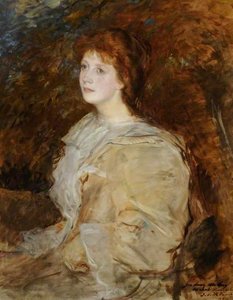
Vista previa
 Compartir
 Compartir
 Ver detalles
 Guía
Guía

 Descargar
 Ver artículos similares
 Radiografía
 Presentación de diapositivas
 Estadísticas
Walter Richard Sickert
 Oil On Canvas
- WallArt
- Realism
 1898
1898- 19th Century
 81.0 x 65.0 cm
 Leer más
Reproducción al óleo hecha a mano
Óleo sobre lienzo pintado a mano en el tamaño y marco de su elección, realizado por encargo por nuestros artistas. ( Cambiar a formato impreso Ver versión en imagen digital)




































Elija entre nuestros tamaños predefinidos que respetan las proporciones originales de la obra.

Escriba el ancho y el alto que necesite para adaptarse a su marco o a su pared. Al ser una obra pintada a mano, para un tamaño con una forma distinta, el artista puede pintar un poco más alrededor de la imagen o recortar un poco; usted elige. Le enviaremos una maqueta digital para su aprobación antes de comenzar la pintura. La imagen que se muestra en esta página no refleja el resultado real; solo la maqueta lo hace.
Tras realizar el pedido, el equipo de OriginalUniqueArt.com enviará un correo electrónico al cliente para solicitar instrucciones y proporcionarle una vista previa del boceto.
Envío a todo el mundo () en 3-4 semanas en lugar de las 5 semanas estándar. (23 octubre). Sin comprometer la calidad.

Envío exprés gratuito a todo el mundo

Lienzo de lino de alta calidad

Seguro de envío completo

Garantía de reembolso de impuestos aduaneros

Garantía de fidelidad cromática exacta

Política de devolución de 100 días (solo por defectos)

Garantía de devolución del 100% del dinero

Oferta por volumen
 La opción de vidrio solo está disponible en tamaños inferiores a 110 cm.

Walter Richard Sickert
Técnica de reproducción
Tamaño de la reproducción
-


Precio total
€ 264
A Gaze Through Time: The Introspective Soul of Jacques-Émile Blanche
In the quiet, shadowed corners of late nineteenth-century Parisian art, few works capture the profound weight of identity as poignantly as this 1898 portrait. While the title suggests a connection to the gritty realism of Walter Richard Sickert, the hand behind this masterful oil on canvas is none other than Jacques-Élamile Blanche, a painter whose lineage and training placed him at the very heart of the French Belle Époque. This piece serves as more than just a depiction of a man; it is an invitation into a private moment of contemplation. The subject sits in a poised, seated pose, his presence commanding the space through a subtle, angled perspective that pulls the viewer directly into his steady, searching gaze. It is a composition that feels both intimate and monumental, perfect for a collector seeking a centerpiece that breathes life and history into a sophisticated interior.
The technique employed here is a masterclass in the use of light and texture, reminiscent of the great masters who preceded him. Blanche utilizes a directional light source originating from the upper left, a choice that does not merely illuminate but actively sculpts the subject's features. This chiaroscuro effect creates deep, dramatic shadows that define the contours of the face and the heavy folds of the clothing, lending the figure a three-dimensional vitality. The artist’s brushwork is remarkably tactile; through an impasto-like application of oil paint, he achieves a rich, layered texture that invites the eye to wander over the canvas. One can almost feel the weight of the fabric and the warmth of the skin, as the organic curves of the subject's hands and face are set against the more structured, geometric lines of his attire.
Beyond its technical brilliance, the painting resonates with a deep sense of psychological depth. The background is intentionally dark and indistinct, a void that strips away the distractions of the outside world to focus entirely on the subject's internal state. This stylistic choice fosters an atmosphere of introspection and perhaps a touch of artistic vanity, as if the sitter is acutely aware of his own legacy being captured for eternity. Subtle symbolic elements, such as the formal hat, hint at the social standing and professional dignity of the era, yet the overall mood remains grounded in a raw, human realism. For the interior designer or art enthusiast, this work offers a profound emotional impact—it is a piece that does not merely decorate a wall but anchors a room with its silent, powerful narrative of character and permanence.
Preguntas y respuestas
¿En qué año se creó "Walter Richard Sickert" de Jacques-Émile Blanche?
"Walter Richard Sickert" data de 1898. La fecha sitúa la obra dentro de la trayectoria de Jacques-Émile Blanche y de su época.
¿Es "Walter Richard Sickert" de Jacques-Émile Blanche una obra de tonos claros u oscuros?
La luminosidad percibida de "Walter Richard Sickert" de Jacques-Émile Blanche es deep_shadow. Puede armonizarse con la luz del espacio destinado.
¿Quién es el autor de "Walter Richard Sickert" y a qué movimiento pertenece?
Detrás de "Walter Richard Sickert" se encuentran Jacques-Émile Blanche y el movimiento Realism.
Biografía del artista
Early Life and Training
Jacques Émile Blanche (1861–1942) was born in Paris on January 1, 1861, France. He descended from a family of successful physicians and grew up in the affluent Parisian neighborhood of Passy, surrounded by prominent families and celebrated artists. His father, Émile Blanche, a distinguished pathologist, nurtured his son’s artistic inclinations, fostering an environment rich in intellectual stimulation. As a young boy, Blanche encountered many notable writers and painters—including Jules Michelet, Charles Renouvier, Hector Berlioz, Camille Corot, Louis Français—who profoundly shaped his worldview and artistic sensibilities. Notably, he met Edouard Manet early on, whose influence would permeate Blanche’s oeuvre throughout his life.Artistic Career
Blanche pursued painting largely independently, honing his craft through observation and experimentation rather than formal instruction. Despite lacking a structured academic background, he cultivated an exceptional talent for capturing the essence of his subjects—primarily portraits—with remarkable sensitivity and precision. He began exhibiting his work at the Salon in 1882, establishing a prolific artistic career marked by consistent engagement with the Parisian art scene. His distinctive style—characterized by loose brushwork and subdued coloration—was heavily influenced by Impressionism and English painters like Thomas Gainsborough and John Singer Sargent, reflecting a fascination for both classical elegance and modern innovation. Blanche’s meticulous attention to detail and his ability to convey psychological depth cemented his reputation as one of the foremost portraitists of his era.Influences and Style
Blanche's artistic vision was decisively shaped by Edouard Manet and James McNeill Whistler, whom he admired greatly. Like these artists, Blanche sought to depict reality truthfully, employing bold brushstrokes and expressive color palettes to convey the inner lives of his subjects. His portraits—such as “Portrait of Marcel Proust”—are renowned for their nuanced portrayal of character and intellectual curiosity.Notable Works and Exhibitions
Blanche’s artistic legacy extends beyond individual paintings; he played a crucial role in establishing Dieppe as an internationally recognized art colony, attracting artists from across Europe who sought inspiration in its coastal landscapes and vibrant cultural atmosphere. His magnum opus—the monumental group portrait of Norwegian landscape painter Frits Thaulow and his family—remains a testament to his artistic prowess and enduring fascination with capturing the complexities of human relationships. Blanche’s paintings are housed in prestigious museums worldwide, including the Musée des Beaux-Arts de Rouen and Tate Gallery London, ensuring that his work continues to inspire admiration and scholarly study for generations to come.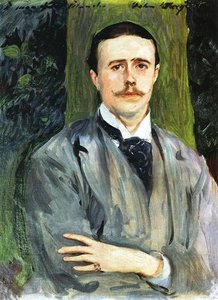
Jacques-Émile Blanche
1861 - 1942 , Francia
Datos clave
- Artistic Movement Or Style: Impressionism
- Artists Who Influenced This Artist:
- Edouard Manet
- James McNeill Whistler
- Date Of Birth: January 1, 1861
- Date Of Death: September 30, 1942
- Full Name: Jacques Émile Blanche
- Nationality: French
- Notable Artworks:
- The Kreutzer Sonata
- Portrait of Marcel Proust
- Place Of Birth: Paris, France
Artículos relacionados

Los 10 Maestros del Paisaje Impresionista: Obras que Cambiaron la Historia del Arte
Descubre los 10 lienzos impresionistas que revolucionaron el arte. Explora la historia de Monet, Van Gogh y Renoir, sus técnicas y colores vibrantes. Encuentra reproducciones de alta calidad para decorar tu hogar en OriginalUniqueArt.com
Renoir: Las 25 Obras Maestras del Impresionismo para Decorar tu Hogar con Arte
Descubre las 25 obras maestras de Renoir, el rey del impresionismo. Explora su técnica, historia y significado en cada pintura. Encuentra reproducciones de arte de alta calidad para decorar tu hogar con OriginalUniqueArt.com.
Jacques-Émile Blanche: Capturing Belle Époque Society & the Cult of Personality
Explore the captivating portraits of Jacques-Émile Blanche, a master Impressionist who captured the essence of Belle Époque society in Paris and London. Discover his unique style & lasting legacy.

Capturing Light: A Masterclass in the Ethereal Beauty of Impressionistic Landscapes
Explore the ethereal beauty of Impressionist landscapes. Discover how masters like Monet captured fleeting light through color and texture, and learn to curate these timeless, luminous masterpieces for your home collection.

Impressionistic Realism's Finest: 10 Masterpieces for Your Home | OriginalUniqueArt
Journey through Impressionistic Realism with 10 iconic masterpieces by Monet, Renoir & Van Gogh. Explore art history, techniques & find museum-quality reproductions for your home at OriginalUniqueArt.com. Discover all masterpieces online!