Ver en contexto
 Enviar
 Compartir
 Detalles
 Guía
Guía

 Descargar
 Similares
 Radiografía
 Presentación de diapositivas
 Q&A
Q&A Estadísticas
Sir Max Beerbohm
 Oil On Canvas
- WallArt
- Impressionist Landscape
 1903
1903- 19th Century
 101.0 x 82.0 cm
 El Museo Ashmolean de Arte y Arqueología
 Ver más
Giclée / Impresión de arte
Impresiones giclée o en lienzo de calidad de museo con producción rápida y opciones de acabado flexibles. ( Comprar pintura hecha a mano Cambiar a imagen digital)




P118B €10

P118H €10

P118W €10

P438Z €10

P508JH €12

P508YH €12

P805H €10

P805Z €10

P919BZ €10

P919G €10

P919XJ €10

P959ZH €10

P968JZ €12

W106C €8

W218G €10

W218JH €8

W218Y €10

W307PJ €10

W316G €10

W316PJ €8

W316Y €10

W398PJ €8

W4111J €10

W500HY €15

W500JH €15

W692G €12

W849H €8

W940BG €15

W953PJ €8




Elija entre nuestros tamaños predefinidos que respetan las proporciones originales de la obra.

Introduzca el ancho y el alto que necesite para adaptarse a su marco o pared. Una impresión solo puede recortarse, nunca hacerse más grande que la imagen original, por lo que un tamaño con una forma distinta perderá parte de la obra. Le enviaremos una maqueta digital para su aprobación antes de realizar cualquier impresión. La imagen que se muestra en esta página no refleja el recorte real; solo la maqueta lo hace.
Envío a todo el mundo () en 2 semanas en lugar de las 4/5 semanas estándar. (30 octubre)

Envío exprés gratuito a todo el mundo

Lienzo de lino de alta calidad

Seguro de envío total

Garantía de reembolso de aranceles aduaneros

Garantía de fidelidad cromática exacta

Política de devolución de 100 días (solo por defectos)

Garantía de devolución del 100% del dinero

Descuento por cantidad
 La opción de vidrio solo está disponible en tamaños inferiores a 110 cm.

Sir Max Beerbohm
Giclée / Impresión de arte
Dimensiones de la reproducción
-


Precio total final
€ 71
A Glimpse into Edwardian Confidence: Sir Max Beerbohm
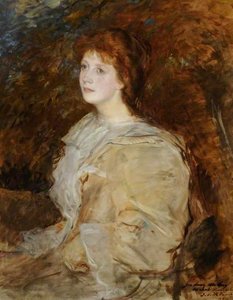
This captivating portrait of Sir Max Beerbohm, executed in 1903 by Jacques-Émile Blanche, transports the viewer directly into the sophisticated drawing rooms of the early twentieth century. The subject himself commands attention; he is depicted seated with an air of assured elegance, his posture suggesting a man accustomed to both intellectual pursuits and public admiration. Dressed impeccably in a suit and tie, and sporting a distinguished mustache, Beerbohm meets the gaze of the viewer with a directness that feels both intimate and commanding. It is more than just a likeness; it is a carefully constructed moment of poise, capturing the essence of an established literary figure at the height of his social standing.
The Artistry of Jacques-Émile Blanche
Jacques-Émile Blanche’s technique shines through in this work. While his biography notes his characteristic loose brushwork and restricted color palette, here it serves to lend a certain immediacy to the scene. The paint seems applied with confident strokes, allowing the sitter's personality to emerge from the texture itself. Observe the background elements: the secondary chair hinting at conversation yet unheld, and the dining table bearing a simple bowl—these details are not mere filler; they ground the portrait in a tangible reality. They suggest that this moment of stillness was plucked from a life rich with activity, perhaps pausing between witty exchanges or over a shared meal.
Historical Echoes and Social Portraiture
Painted at the turn of the century, this piece is steeped in the atmosphere of Edwardian society. The very act of commissioning such a portrait speaks volumes about status and legacy. Blanche masterfully navigates the conventions of formal portraiture while imbuing it with a subtle sense of the personal. For the collector or designer, owning this reproduction offers a tangible connection to an era defined by rigid social structures yet vibrant artistic expression. It allows one to curate not just a wall, but a narrative steeped in literary history and aristocratic grace.
Emotional Resonance for the Modern Space
The emotional impact of this painting lies in its perfect balance between formality and approachability. The subject’s direct gaze invites contemplation, prompting us to consider the weight of reputation and the art of self-presentation. For an interior setting—be it a study, a drawing room, or a sophisticated gallery space—this artwork acts as a focal point of cultured gravitas. It whispers tales of literary salons and refined gatherings, adding an undeniable layer of cultivated history and enduring charm to any decorated environment.
Preguntas y respuestas
¿Por qué "Sir Max Beerbohm" de Jacques-Émile Blanche es el regalo ideal?
Con su tono emocional Calm, "Sir Max Beerbohm" de Jacques-Émile Blanche es una opción ideal como regalo para Birthday.
¿A qué se debe el estado de los derechos de autor de "Sir Max Beerbohm"?
El estado de los derechos de autor de "Sir Max Beerbohm" - en el dominio público: sus derechos de autor han expirado - se determina a partir del fallecimiento del artista en 1942.
¿Qué emoción transmite la obra de Impressionist Landscape "Sir Max Beerbohm"?
"Sir Max Beerbohm" transmite un tono emocional Calm dentro del movimiento Impressionist Landscape.
Biografía del artista
Early Life and Training
Jacques Émile Blanche (1861–1942) was born in Paris on January 1, 1861, France. He descended from a family of successful physicians and grew up in the affluent Parisian neighborhood of Passy, surrounded by prominent families and celebrated artists. His father, Émile Blanche, a distinguished pathologist, nurtured his son’s artistic inclinations, fostering an environment rich in intellectual stimulation. As a young boy, Blanche encountered many notable writers and painters—including Jules Michelet, Charles Renouvier, Hector Berlioz, Camille Corot, Louis Français—who profoundly shaped his worldview and artistic sensibilities. Notably, he met Edouard Manet early on, whose influence would permeate Blanche’s oeuvre throughout his life.Artistic Career
Blanche pursued painting largely independently, honing his craft through observation and experimentation rather than formal instruction. Despite lacking a structured academic background, he cultivated an exceptional talent for capturing the essence of his subjects—primarily portraits—with remarkable sensitivity and precision. He began exhibiting his work at the Salon in 1882, establishing a prolific artistic career marked by consistent engagement with the Parisian art scene. His distinctive style—characterized by loose brushwork and subdued coloration—was heavily influenced by Impressionism and English painters like Thomas Gainsborough and John Singer Sargent, reflecting a fascination for both classical elegance and modern innovation. Blanche’s meticulous attention to detail and his ability to convey psychological depth cemented his reputation as one of the foremost portraitists of his era.Influences and Style
Blanche's artistic vision was decisively shaped by Edouard Manet and James McNeill Whistler, whom he admired greatly. Like these artists, Blanche sought to depict reality truthfully, employing bold brushstrokes and expressive color palettes to convey the inner lives of his subjects. His portraits—such as “Portrait of Marcel Proust”—are renowned for their nuanced portrayal of character and intellectual curiosity.Notable Works and Exhibitions
Blanche’s artistic legacy extends beyond individual paintings; he played a crucial role in establishing Dieppe as an internationally recognized art colony, attracting artists from across Europe who sought inspiration in its coastal landscapes and vibrant cultural atmosphere. His magnum opus—the monumental group portrait of Norwegian landscape painter Frits Thaulow and his family—remains a testament to his artistic prowess and enduring fascination with capturing the complexities of human relationships. Blanche’s paintings are housed in prestigious museums worldwide, including the Musée des Beaux-Arts de Rouen and Tate Gallery London, ensuring that his work continues to inspire admiration and scholarly study for generations to come.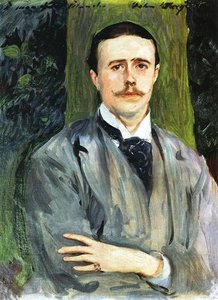
Jacques-Émile Blanche
1861 - 1942 , Francia
Datos clave
- Artistic Movement Or Style: Impressionism
- Artists Who Influenced This Artist:
- Edouard Manet
- James McNeill Whistler
- Date Of Birth: January 1, 1861
- Date Of Death: September 30, 1942
- Full Name: Jacques Émile Blanche
- Nationality: French
- Notable Artworks:
- The Kreutzer Sonata
- Portrait of Marcel Proust
- Place Of Birth: Paris, France
Artículos relacionados
The Enduring Legacy of Printmaking: Techniques, Themes & Artistic Innovation Across Centuries
Explore the rich history of printmaking with OriginalUniqueArt. Discover techniques from intaglio to lithography, learn about collecting valuable prints & find museum-quality reproductions. Expert insights for art enthusiasts and collectors.

Echoes of Time: Exploring the Enduring Appeal & Historical Context of Vintage Art Prints
Explore the captivating world of vintage art prints! Discover their history, collecting tips & enduring appeal. Expert insights on chromolithography and building a legacy collection with OriginalUniqueArt.

The Enduring Legacy of Fine Art Prints: Technique, History & Aesthetic Impact
Explore the rich history & techniques of fine art prints. Discover investment potential, assess authenticity, and learn how to preserve your collection with expert guidance. Trusted insights for discerning collectors.

Giclée Prints: Archival Quality & Aesthetic Nuances for the Discerning Collector
Explore the world of giclée prints with OriginalUniqueArt. Learn about archival quality, aesthetic nuances & investment potential. Expert guidance for discerning art collectors seeking museum-quality reproductions and lasting value.
Jacques-Émile Blanche: Capturing Belle Époque Society & the Cult of Personality
Explore the captivating portraits of Jacques-Émile Blanche, a master Impressionist who captured the essence of Belle Époque society in Paris and London. Discover his unique style & lasting legacy.