Tamaño del texto

() ·

Una pintura hecha para ti, a mano

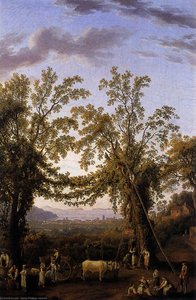
Grandes cascadas en Tívoli

Reproducción al óleo hecha a mano

Óleo sobre lienzo pintado a mano en el tamaño y marco de su elección, realizado por encargo por nuestros artistas. ( Cambiar a impresiones Cambiar a imagen digital)

Descripción del objeto

Descubre Grandes cascadas en Tívoli (1783) de Hackert. Un paisaje rococó con detalles magistrales y perspectiva atmosférica impresionante.

Biografía del artista

Jacob Philipp Hackert (1737-1807): Pintor alemán famoso por sus escenas italianas y estilo clásico. Artista cortesano de Fernando I, influenciado por Vernet y Goethe. Descubre sus obras maestras.

desde ·

Capítulo 1

¿Qué tamaño debería tener?

Deslice para cambiar el tamaño; la imagen de la izquierda muestra el marco con su anchura real. Se mantienen las proporciones originales.

Tamaño estándar
a medida
CM
INCH

Elija entre nuestros tamaños predefinidos que respetan las proporciones originales de la obra.

ancho
altura

Indique el ancho y el alto que necesite para adaptarse a su marco o pared. Al tratarse de una obra pintada a mano, si requiere un tamaño con una proporción distinta, el artista puede pintar un poco más alrededor de la imagen o recortarla ligeramente; usted elige. Le enviaremos una maqueta digital para su aprobación antes de comenzar la pintura. La imagen que se muestra en esta página no refleja el resultado real; solo la maqueta lo hace.

Capítulo 2

¿Cómo debe llegar?

Elige el acabado de los bordes del lienzo

Elige tu marco

Corner sample of the WhiteWrap canvas edge finish, stretched on madera maciza bars
Blanco €1
Corner sample of the BlurSideWrap canvas edge finish, stretched on madera maciza bars
Bordes difuminados €1
Corner sample of the ExtendedWrap canvas edge finish, stretched on madera maciza bars
Continuación de imagen €1
Corner sample of the P118B picture frame: poliestireno moldeado, 5 cm wide and 3 cm thick
P118B €10
Corner sample of the P118H picture frame: poliestireno moldeado, 5 cm wide and 3 cm thick
P118H €10
Corner sample of the P118W picture frame: poliestireno moldeado, 5 cm wide and 3 cm thick
P118W €10
Corner sample of the P438Z picture frame: poliestireno moldeado, 5.5 cm wide and 3.5 cm thick
P438Z €10
Corner sample of the P508JH picture frame: poliestireno moldeado, 7 cm wide and 3.5 cm thick
P508JH €12
Corner sample of the P508YH picture frame: poliestireno moldeado, 7 cm wide and 3.5 cm thick
P508YH €12
Corner sample of the P805H picture frame: poliestireno moldeado, 5 cm wide and 3.5 cm thick
P805H €10
Corner sample of the P805Z picture frame: poliestireno moldeado, 5 cm wide and 3.5 cm thick
P805Z €10
Corner sample of the P919BZ picture frame: poliestireno moldeado, 7 cm wide and 3.5 cm thick
P919BZ €10
Corner sample of the P919G picture frame: poliestireno moldeado, 7 cm wide and 3.5 cm thick
P919G €10
Corner sample of the P919XJ picture frame: poliestireno moldeado, 7 cm wide and 3.5 cm thick
P919XJ €10
Corner sample of the P959ZH picture frame: poliestireno moldeado, 5 cm wide and 3 cm thick
P959ZH €10
Corner sample of the P968JZ picture frame: poliestireno moldeado, 6 cm wide and 4 cm thick
P968JZ €12
Corner sample of the W106C picture frame: madera maciza, 5 cm wide and 3 cm thick
W106C €8
Corner sample of the W218G picture frame: madera maciza, 5 cm wide and 3 cm thick
W218G €10
Corner sample of the W218JH picture frame: madera maciza, 5 cm wide and 3 cm thick
W218JH €8
Corner sample of the W218Y picture frame: madera maciza, 5 cm wide and 3 cm thick
W218Y €10
Corner sample of the W307PJ picture frame: madera maciza, 6 cm wide and 3 cm thick
W307PJ €10
Corner sample of the W316G picture frame: madera maciza, 6 cm wide and 3 cm thick
W316G €10
Corner sample of the W316PJ picture frame: madera maciza, 6 cm wide and 3 cm thick
W316PJ €8
Corner sample of the W316Y picture frame: madera maciza, 6 cm wide and 3 cm thick
W316Y €10
Corner sample of the W398PJ picture frame: madera maciza, 5 cm wide and 3 cm thick
W398PJ €8
Corner sample of the W4111J picture frame: madera maciza, 6.5 cm wide and 3.5 cm thick
W4111J €10
Corner sample of the W500HY picture frame: madera maciza, 7 cm wide and 5 cm thick
W500HY €15
Corner sample of the W500JH picture frame: madera maciza, 7 cm wide and 5 cm thick
W500JH €15
Corner sample of the W692G picture frame: madera maciza, 8 cm wide and 4 cm thick
W692G €12
Corner sample of the W849H picture frame: madera maciza, 5 cm wide and 3 cm thick
W849H €8
Corner sample of the W940BG picture frame: madera maciza, 7.5 cm wide and 4.5 cm thick
W940BG €15
Corner sample of the W953PJ picture frame: madera maciza, 6 cm wide and 3.5 cm thick
W953PJ €8
Corner sample of the H24-GOLD picture frame: madera tallada con estuco, 10 cm wide and 6 cm thick
H24-GOLD €30
Corner sample of the H24-SILVER picture frame: madera tallada con estuco, 10 cm wide and 6 cm thick
H24-SILVER €30
Corner sample of the H36-GOLD picture frame: madera tallada con estuco, 15 cm wide and 6.5 cm thick
H36-GOLD €45
Corner sample of the H36-SILVER picture frame: madera tallada con estuco, 15 cm wide and 6.5 cm thick
H36-SILVER €45

Moldura: . Dimensiones totales con marco: .

Capítulo 3

¿Quién lo pinta y debería cambiar algo?

Ejemplos de lo que se puede cambiar: Reemplazar el rostro con la foto del cliente; Añadir una mascota (por ejemplo, cambiar un gato por un perro); Incluir un mensaje oculto en el fondo; Cambiar el paisaje o los elementos del fondo.
Tras realizar el pedido, el equipo de OriginalUniqueArt.com enviará un correo electrónico al cliente para solicitar instrucciones y proporcionar una vista previa del boceto

Envío a todo el mundo () en 3-4 semanas en lugar de las 5 semanas estándar. (6 noviembre). Sin comprometer la calidad.

Capítulo 4

Los últimos retoques

¿Una placa de identificación, como en un museo?

Detalles de la placa de bronce grabada

This elegant plaque features the artist's name and the title of the artwork, finely engraved for a timeless presentation.

It is made from bronze with a refined, elegant finish. The text is precisely laser-engraved for a sharp and permanent result. Measuring 9x2 cm, the plaque is compact yet easy to read. It's built to be durable and scratch-resistant, offering a professional, museum-quality look. Mounting is simple thanks to the included adhesive backing.

Detalles de la placa de acrílico transparente

The plaque includes essential engraved details such as the artist's name, the title of the artwork, the date it was created, the type of media used-like oil on canvas or watercolor-a brief description of the piece, and a QR code that links to the complete artwork information.

It is crafted from clear acrylic, offering a sleek, modern appearance. The text is UV-engraved in black to ensure strong visual contrast. With a size of 10x15 cm, it ensures optimal readability. It comes equipped with two metal hooks for secure wall mounting. The plaque is designed to be weather-resistant, making it suitable for various environments, and it includes interactive features that work seamlessly with smartphone scanning.

Detalles de la placa de acrílico negro

This elegant plaque includes engraved information such as the artist's name, the title of the artwork, the date it was created, the type of media used (like oil on canvas or watercolor), a short description of the artwork, and a QR code for quick access to more information.

The plaque itself is made from refined black acrylic with a premium finish. The text is laser-engraved in white for high contrast and readability. Its size is 10x15 cm, designed to be easy to read. It comes with two metal hooks for professional mounting. The design is sleek and fits any interior style. It is also weather-resistant and durable, with built-in digital integration for mobile compatibility.

¿Un barniz protector?

¿Para cuándo lo necesita?

Capítulo 5

Su pintura, tal como la solicitó

Grandes cascadas en Tívoli

Técnica de reproducción

Dimensiones de la reproducción

-

Selección de artistas premium

Mayor nivel de detalle, delicadeza y tiempo de producción adicional

-

Enmarcado de reproducción

-

-

Para obras de arte o reproducciones que midan más de 105 cm (aproximadamente 41 pulgadas) en cualquiera de sus lados, el marco se enviará como un kit desmontado. Este método garantiza una entrega segura y evita daños durante el transporte.

Se requiere montaje profesional: este no es un producto para hacer usted mismo (DIY).
El kit debe ser ensamblado y el lienzo tensado por un enmarcador profesional con experiencia, utilizando cola para madera (no incluida), una tenaza para tensar lienzos y sargentos para mantener los bastidores alineados mientras la cola se seca. Un montaje incorrecto o una tensión desigual del lienzo pueden dañar la obra de arte de forma permanente y no están cubiertos por nuestra garantía.

  • Se incluyen todos los listones de madera maciza, cortados con precisión según las medidas.

  • Se ensambla con los tornillos incluidos, además de cola para madera para las uniones de las esquinas, la cual no se incluye y debe ser proporcionada por su enmarcador.

  • Se requieren herramientas profesionales que no están incluidas: un alicate para tensar lienzos (tensor) y abrazaderas para mantener los bastidores alineados mientras se seca el pegamento.

Importante:
Las uniones de las esquinas requieren cola para madera, los listones deben sujetarse con prensas hasta que la cola esté completamente seca, y para tensar el lienzo en el bastidor ensamblado se requiere una pinza para tensar lienzos. Ninguno de estos elementos está incluido en el kit. Por favor, contacte con un profesional del enmarcado con experiencia antes de realizar un pedido de este tamaño.

Cartela

-

-

Barniz protector

Barniz brillante (realza los colores y protege contra la luz y la humedad)

-

Personalizar mi obra

Ejemplos de lo que se puede personalizar: sustituir el rostro por una foto del cliente; añadir una mascota (por ejemplo, cambiar un gato por un perro); incluir un mensaje oculto en el fondo; cambiar el paisaje o los elementos del fondo.

-

Envío urgente

Envío a todo el mundo () en 3 o 4 semanas, en lugar de las 5 semanas habituales. (6 noviembre). Sin comprometer la calidad.

-

Envío urgente

Envío internacional () en 5 semanas. (13 noviembre).

Incluido

Precio total final

€ 290

Precio total € 290

La opción de vidrio solo está disponible en tamaños inferiores a 110 cm.

Incluido en cada pedido

  • Envío exprés gratuito a todo el mundo
  • Lienzo de lino de alta calidad
  • Seguro de envío total
  • Garantía de reembolso de aranceles aduaneros
  • Garantía de fidelidad cromática exacta
  • Política de devolución de 100 días (solo por defectos)
  • Garantía de devolución del 100% del dinero
  • Descuento por cantidad

Una sinfonía de luz y piedra

En el gran tapiz de la pintura de paisaje de finales del siglo XVIII, pocas obras capturan la impresionante intersección entre el orden clásico y la floreciente emoción romántica con tanta maestría como las “Grandes cascadas en Tívoli” de Jacob Philipp Hackert. Pintado en 1783, este lienzo monumental sirve como una ventana a un mundo donde la naturaleza es, a la vez, una obra maestra estructurada y una fuerza indomable. La escena se despliega con una cascada dramática que reclama la atención del espectador, cayendo a través de un paisaje escarpado y exuberante. Hackert no se limita a representar una ubicación geográfica; orquesta una sinfonía visual donde el rugido del agua se siente a través de la mirada, y la fresca bruma de las caídas parece desprenderse de la superficie misma del óleo.

La composición es un testimonio de la influencia perdurable de maestros como Claude Lorrain y Nicolas Poussin. Hackert emplea una estructura piramidal tradicional, una técnica que aporta una sensación de estabilidad y equilibrio eterno a un sujeto que, de otro modo, sería turbulento. Este enfoque arquitectónico de la naturaleza guía el ojo hacia arriba, siguiendo el descenso del agua blanca hacia las colinas ondulantes y frondosas que enmarcan la escena. Mediante el uso experto de la perspectiva atmosférica, el artista crea una inmensa sensación de escala; las montañas distantes y los horizontes suaves y brumosos sugieren un mundo que se extiende mucho más allá de los bordes del marco, invitando al observador a perderse en la vastedad del paisaje italiano.

La maestría de la luz y la textura

Técnicamente, “Grandes cascadas en Tívoli” es un triunfo del claroscuro. Hackert utiliza contrastes dramáticos entre las grietas profundas y sombreadas de las rocas y los reflejos brillantes y luminosos que danzan sobre la superficie del agua. Este juego de luces hace algo más que crear profundidad; imbuye la pintura con una cualidad viva, palpitante. La pincelada del artista es notablemente versátil, transitando sin fisuras desde los reflejos suaves y vítreos en las pozas tranquilas hasta la representación texturizada y táctil de las piedras cubiertas de musgo y el denso follaje. Tal meticulosidad en el detalle asegura que cada elemento —desde los bordes afilados de un precipicio hasta las nubes suaves y efímeras en lo alto— contribuya a una realidad cohesiva e inmersiva.

Para el coleccionista exigente o el diseñador de interiores, esta pieza ofrece una sensación de grandeza sin igual. La paleta, rica en verdes terrosos, ocres profundos y blancos brillantes, proporciona un ancla sofisticada para cualquier espacio de alto nivel. Ya sea colocada en una galería bañada por el sol o en un estudio de atmósfera melancólica y decoración clásica, la pintura actúa como un punto focal que irradia tanto tranquilidad como poder. Es una obra que no se limita a decorar una pared; transforma un entorno, trayendo la majestuosidad sublime del mundo natural a la intimidad del hogar.

Un puente entre eras

Más allá de su esplendor estético, la obra posee una profunda importancia histórica. Hackert se sitúa en una encrucijada fascinante de la historia del arte, tendiendo un puente entre la elegancia refinada y decorativa de las eras del Rococó y el Barroco con el espíritu conmovedor y emotivo del Romanticismo. Si bien la pintura conserva la precisión pulida y el temple clásico de su formación en la Academia de las Artes de Prusia, existe un pulso innegable de sentimiento moderno en la forma en que captura la energía pura de las cascadas. Esta dualidad hace que la obra sea particularmente cautivadora; ofrece la satisfacción intelectual de la composición clásica junto con la respuesta visceral y emocional provocada por la belleza abrumadora de la naturaleza.

Poseer una reproducción de este calibre es tener en las manos una pieza de historia que celebra la armonía entre la humanidad y el medio ambiente. La sutil inclusión de elementos pastorales —pequeñas figuras y ganado moviéndose por el paisaje— sugiere un mundo donde la vida humana existe en un diálogo silencioso y respetuoso con la escala monumental de la naturaleza. Es una invitación a contemplar lo eterno, una obra maestra de luz y piedra que continúa inspirando asombro más de dos siglos después de su creación.

Preguntas y respuestas

¿A qué etapa de la trayectoria de Jacob Philipp Hackert pertenece "Grandes cascadas en Tívoli"?

"Grandes cascadas en Tívoli" pertenece al Periodo de madurez de la trayectoria de Jacob Philipp Hackert. Esta clasificación vincula la obra con el desarrollo del artista.

¿Cuál es la técnica y las dimensiones de "Grandes cascadas en Tívoli"?

La técnica de "Grandes cascadas en Tívoli" de Jacob Philipp Hackert es Óleo sobre lienzo y sus dimensiones registradas son 120 x 170 cm.

¿Es "Grandes cascadas en Tívoli" de Jacob Philipp Hackert una composición en formato vertical, horizontal o cuadrado?

"Grandes cascadas en Tívoli" de Jacob Philipp Hackert tiene un formato Formato horizontal. El formato describe las proporciones de la composición.

Más información sobre esta pintura

Ver en contexto Vista previa en RA Cambiar a impresiones Cambiar a imagen digital Enviar
Detalles Guía Añadir a favoritos Descargar Similares Radiografía Presentación de diapositivas Preguntas y respuestas Estadísticas

En cifras

  • 1783el año en que fue pintada
  • 29marcos disponibles para elegir
  • tamaños estándar, en sus propias proporciones
  • 5semanas para pintar y entregar la obra
Jacob Philipp Hackert

Jacob Philipp Hackert

1737 - 1807, Alemania

Datos rápidos sobre Jacob Philipp Hackert

  • Artistic Movement Or Style: Clasicismo, Romanticismo
  • Artists Or Movements Influenced By This Artist: ['Vedutismo']
  • Artists Who Influenced This Artist:
    • Vernet
    • Wille
    • Lorrain
  • Date Of Birth: 15 Sept 1737
  • Date Of Death: 28 abril 1807
  • Full Name: Jacob Philipp Hackert
  • Nationality: Germano
  • Notable Artworks:
    • Vista Mont Ventoux
    • Caserta
    • Chesma
  • Place Of Birth: Prenzlau, Alemania

Biografía del artista

Early Life and Artistic Foundations

Jacob Philipp Hackert’s story begins in Prenzlau, a small town within the Margraviate of Brandenburg (now part of Germany), on September 15, 1737. His early life was deeply intertwined with art; his father, Philipp Hackert, was both a portrait painter and an artist specializing in animal depictions – a lineage that immediately instilled in young Jacob a profound appreciation for visual representation. His uncle further nurtured this artistic inclination, providing additional guidance and instruction. Recognizing the potential within his nephew, the family ensured he received formal training at the prestigious Prussian Academy of Arts in Berlin, beginning in 1758. This rigorous education provided him with the foundational technical skills – perspective, anatomy, color theory – that would become the bedrock of his later artistic endeavors. However, Hackert’s early career wasn't solely confined to the studio walls; he actively sought experiences beyond the confines of academic training. He embarked on journeys through Swedish Pomerania and eventually found himself in Stockholm, Sweden, where he was commissioned to create decorative murals for the estate of Baron Adolf Friedrich von Olthof. This pivotal commission exposed him to a wider range of artistic sensibilities and provided invaluable practical experience in large-scale painting projects – a crucial stepping stone towards his future success.

The Italian Awakening: Paris, Rome, and Naples

A transformative period in Hackert’s life unfolded when he relocated to Paris between 1765 and 1768, accompanied by fellow Swiss artist Balthasar Anton Dunker. This immersion within the vibrant Parisian art scene proved profoundly influential. He found himself deeply inspired by Claude Joseph Vernet, a celebrated painter known for his dramatic landscapes and seascapes. Hackert meticulously absorbed Vernet’s techniques – his masterful use of light and shadow, his ability to convey atmospheric depth, and his dynamic compositions – integrating these elements into his own burgeoning style. Furthermore, he benefited from the tutelage of Johann Georg Wille, a renowned German engraver who refined his precision and attention to detail. In 1768, Hackert took a decisive step towards defining his artistic identity: he journeyed to Italy with his brother Georg, establishing himself primarily in Rome and Naples. This move marked the beginning of an extraordinarily prolific period fueled by numerous commissions from wealthy patrons – including Sir William Hamilton, a prominent British diplomat and art collector. He traveled extensively throughout Italy, meticulously documenting its diverse landscapes, architectural wonders, and vibrant cultural scenes. The light, colors, and atmosphere of the Italian peninsula captivated him, becoming the defining subject matter of his work.

Patronage, Recognition, and Artistic Flourishing

Hackert’s artistic career ascended to new heights through a combination of exceptional talent and strategic patronage. His ability to capture the sublime beauty of Italy resonated deeply with influential figures across Europe. A landmark commission arrived from Catherine the Great of Russia – a monumental cycle of paintings depicting the Battle of Chesma, a pivotal naval engagement in the Russo-Turkish War. This ambitious project solidified his reputation as one of the foremost landscape painters of his time and garnered him widespread acclaim throughout the continent. Further bolstering his standing was a fruitful relationship with Pope Pius VI, who commissioned numerous works from Hackert, showcasing his versatility and technical mastery. In 1786, Hackert reached the pinnacle of his career when he was appointed court painter to Ferdinand I of the Two Sicilies in Naples – a prestigious position that afforded him unparalleled access to royal commissions and influence within the Neapolitan artistic community. This role extended beyond mere painting; he was entrusted with advising on the creation of a painting restoration laboratory at the Museo di Capodimonte, demonstrating his deep understanding of art history and conservation practices. He produced notable paintings depicting Caserta and the Royal Palace of Caserta, as well as a series illustrating the Bourbon ports – all reflecting his meticulous observation of detail and his ability to capture the essence of Italian life. Intriguingly, Hackert also served as a secret informant for Russia during this time, maintaining contact with Andrey Razumovsky – a testament to the complex political landscape in which he operated.

Style, Legacy, and Historical Significance

Jacob Philipp Hackert’s artistic style represents a compelling synthesis of classical landscape painting and an emerging Romantic sensibility. Heavily influenced by the works of Claude Lorrain, his compositions are characterized by carefully balanced arrangements that blend observed reality with an idealized aesthetic vision. However, Hackert distinguished himself through an unwavering commitment to botanical accuracy and a desire for recognizable depictions of place. His paintings are marked by sharp renderings of natural details – meticulously depicted trees, flowers, and geological formations – and realistic portrayals of Italian scenery, often bathed in a warm, golden light that evokes a sense of tranquility and beauty. He is rightfully considered one of the greatest interpreters of the *vedutismo* genre – paintings that meticulously depict city views and landscapes with topographical precision. Hackert’s historical significance extends beyond his artistic contributions; he served as a vital cultural ambassador between Germany and Italy during the late 18th century, bridging artistic traditions and fostering cross-cultural exchange. He passed away on April 28, 1807, in San Pietro di Careggi near Florence, leaving behind a substantial body of work that continues to inspire awe and admiration for its beauty, technical mastery, and enduring historical importance. *His landscapes are not merely representations of scenery; they are windows into a world imbued with both classical grace and Romantic emotion.*

Datos clave

  • Título: Grandes cascadas en Tívoli
  • Artista: Jacob Philipp Hackert
  • Año: 1783
  • Movimiento: Romanticismo
  • Técnica: Óleo sobre lienzo

Test de conocimientos artísticos

Cada pregunta tiene una única respuesta correcta.

Pregunta 1:
¿Con qué movimiento artístico se asocia principalmente 'Grandes cascadas en Tívoli' de Hackert?
Pregunta 2:
¿Qué efecto logra la pintura mediante el uso de la perspectiva atmosférica?
Pregunta 3:
'Grandes cascadas en Tívoli' ejemplifica el estilo Rococó debido a su enfoque en:
Pregunta 4:
¿Quién encargó a Hackert la creación de murales decorativos para la finca de Olthof?
Pregunta 5:
¿Cuál es una influencia notable en el estilo artístico de Hackert, como lo demuestra su colaboración con Goethe?